
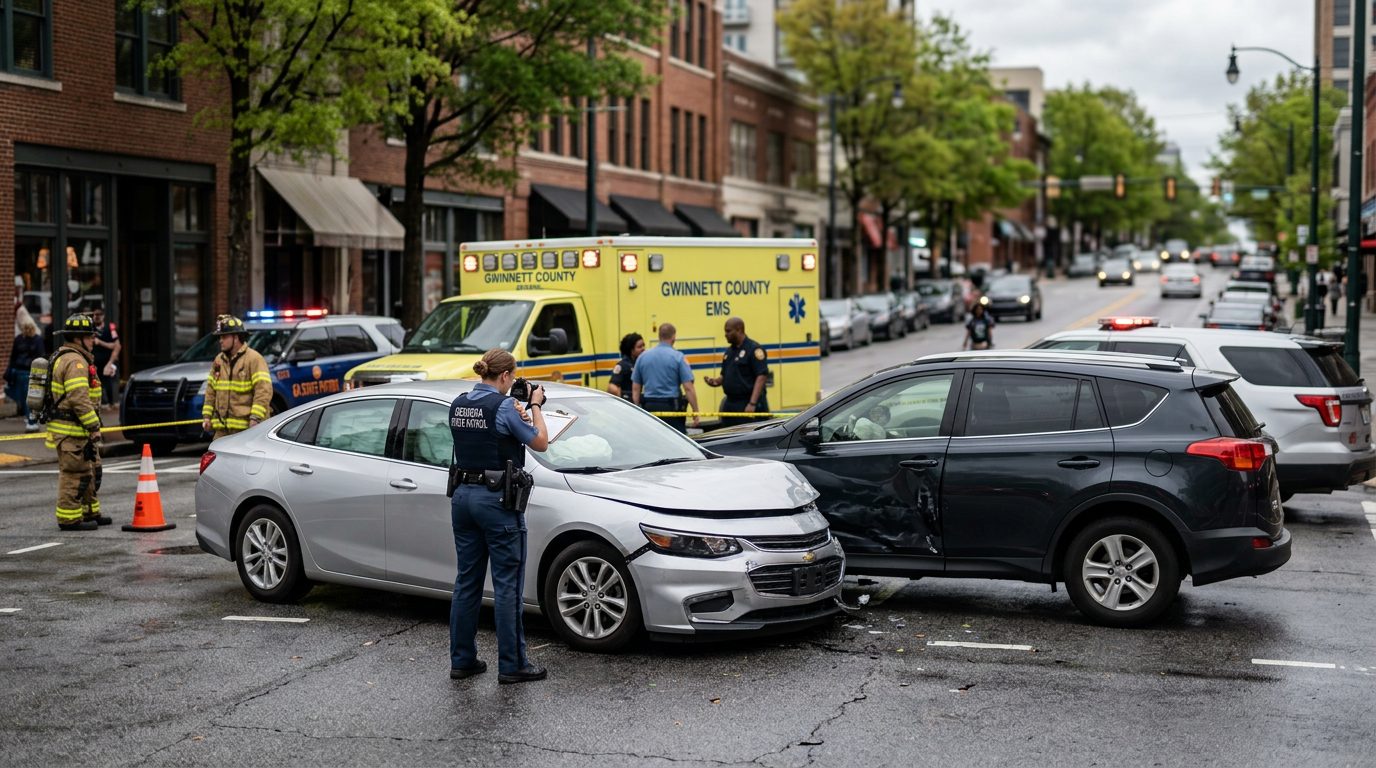
Car Accident Claims & Recovery
Injured in a Car Accident? We're Here to Help You Recover
Slam Dunk Attorney represents people across Georgia who've been hurt in car accidents. We handle the legal work so you can focus on healing.
By Peter F. Jaraysi · Published September 14, 2026
Car Accidents: What You Need to Know About Your Claim and Your Rights
After a car accident, you face immediate decisions about safety, medical care, and reporting—then longer-term questions about liability, insurance, and whether you’re entitled to compensation. Georgia law gives you specific rights, but navigating the claim process on your own can be complex. This guide walks you through what happens after a crash, how fault is determined, and what damages you may be able to recover, and it explains when you may want to consult a lawyer about your own case.

Not sure what your next step is?
Talk it through with our team — the first consultation is free, confidential, and carries no obligation.
What Happens After a Car Accident
Your first priority after a car accident is safety and getting emergency help if anyone is injured. Once the scene is secure, the steps you take in the first hours and days after a crash are worth thinking through carefully.
Immediately after the crash, move to safety if possible. Turn on hazard lights. If vehicles are drivable and traffic is light, move them out of the roadway to prevent further collisions. Call 911 if anyone is injured or if there’s significant property damage. Even if injuries seem minor, request an ambulance or police response—this creates an official record.
Document the scene thoroughly. Take photos and video of vehicle damage, road conditions, traffic signs, and the overall accident scene from multiple angles. Get the names, phone numbers, and addresses of all witnesses. Write down the other driver’s name, address, phone number, driver’s license number, license plate, vehicle make and model, and insurance company and policy number. Note the date, time, weather, and road conditions.
Report the accident to police. Georgia has reporting requirements for certain accidents, and whether one applies depends on the facts of your situation, so consider asking a lawyer about your case. Get the police report number and the officer’s name and badge number. Request a copy of the police report when it becomes available.
Seek medical attention promptly. Even if you feel fine, some injuries (like whiplash or internal bleeding) don’t show symptoms immediately. An emergency room visit or urgent care evaluation creates a medical record of your visit and the symptoms and injuries the provider documents. Keeping consistent records of your medical care is generally important in any claim, and how a treatment history is viewed depends on the facts of your case.
Notify your insurance company. Report the accident to your own insurer as soon as possible. Provide factual information about what happened, but avoid admitting fault or speculating about liability. Stick to what you observed.
Understanding Liability in Georgia Car Accidents
Georgia operates under an at-fault insurance system, meaning that, in general, the driver found to have caused the accident may be responsible for damages owed to the other party. How this applies depends on the facts of each case, so consult a lawyer about your own situation.
Under Georgia’s comparative fault rule, any recovery may be reduced by the plaintiff’s percentage of fault, and how this applies depends on the facts of each case, so consult a lawyer about your own situation.
This rule makes liability determination crucial. Fault can be disputed, and how it is assigned depends on the facts of each case.
How Fault Is Determined
Adjusters investigate by reviewing:
- The police report and officer’s observations
- Statements from both drivers
- Witness accounts
- Vehicle damage
- Traffic violations (running a red light, speeding, failure to yield)
- Road and weather conditions
- Vehicle maintenance records if relevant
In rear-end collisions, for example, questions about following distance often come up, but who is at fault depends on each case’s facts. In intersection accidents, traffic violations such as running a red light or failing to yield are among the factors considered, and outcomes depend on each case’s facts, so it’s worth discussing your situation with a lawyer. Multi-vehicle accidents are more complex: liability can be shared among multiple drivers depending on each person’s actions.
Why Liability Matters to Your Compensation
Who is found at fault is a central question in any claim. If the other driver is found 100% at fault, you may be able to recover damages, but no outcome is guaranteed. If liability is disputed or shared, your recovery may be reduced, depending on the facts of your case, so consult a lawyer about your own situation. An attorney may investigate independently and review evidence relating to your version of events.
Types of Damages You May Recover
Damages in a car accident claim fall into two categories: economic damages (measurable financial losses) and non-economic damages (pain, suffering, and quality-of-life impacts).
Economic Damages
Medical expenses include emergency room care, hospital stays, surgery, physical therapy, medications, imaging (X-rays, MRI), and ongoing specialist visits. If your injuries require long-term treatment or rehabilitation, future medical costs may be part of a claim, depending on the facts of your case, so consult a lawyer about your situation.
Lost wages cover income you lost while recovering from your injuries. If your injuries are permanent or long-term, you may also be able to seek lost earning capacity—the difference between what you would have earned if you hadn’t been injured and what you’re able to earn now. Whether this applies depends on the facts of your case, so consult a lawyer about your own situation.
Vehicle repair or replacement is the cost to fix your car or, if it’s totaled, its fair market value. How the pre-accident value of your vehicle applies to your claim depends on the facts of your case, so consult a lawyer about your own situation.
Out-of-pocket expenses include rental car costs while your vehicle is being repaired, transportation to medical appointments, and other accident-related costs.
Non-Economic Damages
Pain and suffering compensates you for physical pain, emotional distress, and reduced quality of life. There’s no formula; it depends on the severity and duration of your injuries.
Non-economic damages do not have a fixed dollar value, so how they are assessed depends on the facts of each case. An attorney helps quantify these losses based on the nature of your injuries, medical prognosis, and impact on your daily life.
Navigating the Insurance Claim Process
After you report the accident, the at-fault driver’s insurance company assigns an adjuster to investigate and value your claim.
What to Expect
The adjuster will request medical records, wage statements, repair estimates, and a recorded statement from you. Be cautious with recorded statements. What you say may be used in the claim, so be careful about what you say. Whether you are required to give a recorded statement depends on the facts of your case, so consult a lawyer about your situation. You may be able to provide written responses instead or have an attorney handle communication.
Provide documentation promptly, but don’t volunteer information beyond what’s requested. Stick to facts: dates of treatment, medical providers, and costs. Avoid speculation about your injuries or how the accident happened.
Initial Settlement Offers
An initial offer from an insurance company may not reflect the full scope of your losses. Early offers may not account for:
- Future medical treatment
- Long-term or permanent injury effects
- Lost earning capacity
- Non-economic damages like pain and suffering
Don’t accept the first offer without careful consideration. Compare it to your actual losses. If the offer falls short, you can counter-offer or pursue further negotiation.
When Legal Representation Helps
An insurance adjuster’s role is to evaluate the claim for the insurance company. A lawyer can help you understand your options and the steps involved in an injury claim.
Have questions about what happened?
Ask our team directly. The first conversation is free, confidential, and there is no obligation to continue.
Common Challenges in Car Accident Claims
Disputed Liability
When the other driver denies fault or gives a conflicting account, liability becomes contested. Witness statements and police reports help, but if they’re unclear, the claim can stall. An attorney investigates further, obtains surveillance footage if available, and may retain accident reconstruction experts to review how the crash occurred.
Questions About Injury Severity in Insurance Claims
Adjusters sometimes argue that your injuries aren’t as serious as your medical records suggest. They may claim pre-existing conditions caused your pain, not the accident. Ongoing treatment records and imaging studies (X-rays, MRI) may document your injuries and your ongoing care.
Delayed Medical Diagnosis
Some injuries don’t appear immediately. Whiplash, traumatic brain injury, and internal injuries can develop over days or weeks. If you didn’t seek immediate medical care, insurers may argue the accident didn’t cause your injuries. This is why prompt medical evaluation—even for seemingly minor symptoms—matters.
Hit-and-Run Accidents
If the other driver fled the scene, you may not know who hit you. In these cases, your own uninsured motorist (UM) coverage may apply. UM coverage may pay for injuries caused by an uninsured or hit-and-run driver, depending on your policy and the facts of your case; consult a lawyer about your own situation. Depending on your policy and the facts of your case, your insurer may ask you to file a claim and provide evidence about your efforts to identify the other driver; consult a lawyer about your own situation.
Multiple Vehicles and Complex Fault
Multi-vehicle accidents involve determining each driver’s role in the crash. Liability may be shared among three or four drivers. Reconstructing the sequence of events requires careful investigation and sometimes expert analysis.
Medical Documentation and Your Claim
Medical records document your injuries and treatment, and they are one part of how insurance companies review a claim. Insurance companies use medical records to determine whether your injuries are real, how serious they are, and how long recovery will take.
Seek medical attention immediately after the accident. Emergency room records create a contemporaneous link between the crash and your injuries. These records document your condition shortly after the accident.
Follow your doctor’s treatment recommendations. If your physician prescribes physical therapy, attend sessions consistently. If you’re prescribed medication, take it as directed. Gaps in treatment, meaning periods when you don’t seek care, may be raised by insurers during a claim, and how they are viewed depends on the facts of each case.
Maintain detailed records. Keep copies of all medical bills, imaging reports, lab results, and physician notes. Document how your injuries affect your daily activities: can you work? Exercise? Sleep? These details support claims for pain and suffering and lost earning capacity.
Request a medical opinion on causation. If your injuries have long-term effects, ask your physician to provide a written statement connecting your current condition to the accident. A written medical opinion can document the connection between your condition and the accident.
When to Consider Legal Representation
You don’t need an attorney for every fender-bender, but certain situations call for professional help.
Serious injuries or significant medical expenses. If your medical bills are substantial, it may be worth speaking with an attorney about your situation.
Disputed fault or liability questions. If the other driver denies responsibility or if multiple vehicles are involved, liability investigation becomes complex. An attorney gathers evidence and presents a compelling case for your version of events.
Insurance company resistance. If the adjuster is unresponsive, makes unreasonably low offers, or denies your claim outright, an attorney escalates the matter and prepares for litigation if necessary.
Permanent or long-term injury consequences. If your injuries may affect your earning capacity or quality of life long-term, an attorney can explain how future damages are considered.
Hit-and-run or uninsured motorist situations. These claims are more complex and require knowledge of UM coverage and Georgia law. An attorney can help you understand how to file these claims correctly.
Car Accidents Across Metro Atlanta and Georgia
Car accidents are common in metro Atlanta’s busy corridors. Interstate 75, Interstate 85, and local roads in Alpharetta, Marietta, Kennesaw, Johns Creek, Norcross, Dunwoody, and Lawrenceville see high traffic volumes and frequent collisions. Weather events—rain, occasional ice in winter—also contribute to accident risk.
Insurance practices vary by company and adjuster, but all operate under Georgia law.
Want to know where you stand?
Tell us what happened and our team will walk you through the options available to you, at no cost.
What to Expect When Working With an Attorney
If you decide to hire an attorney, here’s what the process typically looks like.
Free consultation. You’ll meet with an attorney to discuss your accident, injuries, and concerns. The attorney reviews your case, asks questions about what happened, and explains your rights and options. There’s no obligation or cost.
Investigation. The attorney gathers police reports, medical records, witness statements, and other evidence. If necessary, they may consult accident reconstruction experts or medical consultants.
Communication with insurance companies. The attorney notifies the at-fault driver’s insurer of representation and begins settlement discussions. You no longer communicate directly with adjusters; your attorney handles all negotiations.
Settlement negotiation. The attorney presents evidence of liability and damages, counters low offers, and negotiates on your behalf.
Litigation if necessary. If a fair settlement cannot be reached, the attorney files a lawsuit and prepares for trial. This includes discovery (exchanging evidence), depositions (recorded interviews), and pre-trial motions.
Transparent fee structure. You may still owe case costs (expert fees, filing fees, deposition costs), which your attorney will explain upfront.

Frequently Asked Questions
Do I need to give a recorded statement to the other driver’s insurance company?
You may be able to provide written responses or have an attorney communicate on your behalf, depending on the facts of your situation. Consult a lawyer about your own case before responding to an insurance company.
What is uninsured motorist coverage?
Uninsured motorist (UM) coverage may apply if you are hit by a driver without insurance or in a hit-and-run accident, depending on your policy terms and the facts of your case; consult a lawyer about your own situation. Depending on your policy terms and the facts of your case, it may cover medical expenses, lost wages, and pain and suffering, up to your policy limits.
How long does a car accident claim typically take?
Timing depends on the facts of each case, so consult a lawyer about your own situation. Serious injury claims depend on medical recovery, investigation complexity, and whether litigation is necessary, so timing varies from case to case.
If you’ve been injured in a car accident and have questions about fault or your options, reach out to Slam Dunk Attorney. People in your situation—facing medical bills, lost income, and uncertainty about their rights—can contact us for a free case review. We’ll evaluate your accident and explain your options. Contact us today for a free consultation.
Why Choose Slam Dunk Attorney for Your Car Accident Claim
Focused on Your Recovery
We focus exclusively on personal injury claims, including car accidents. Our entire practice is built around helping injured people navigate the claims process.
Free Case Review
Call us for a free review of your accident. We'll listen to what happened, explain your options, and answer your questions—with no obligation.
We Handle the Paperwork
Insurance claims, medical records, police reports, settlement negotiations—we manage the details so you don't have to.
Transparent, Empathetic Representation
We communicate clearly about your case, respect your decisions, and treat you with the care your situation deserves.
What to Do After a Car Accident
At the Scene
Check for injuries and call 911 if anyone is hurt. Move to safety if possible, exchange information with other drivers, take photos, and get contact details from witnesses.
After You Leave
Seek medical attention even if you feel fine—some injuries appear later. Report the accident to your insurance company and keep records of all medical treatment and expenses.
Before You Settle
Talk to an attorney. A settlement offer may not cover all of your losses, and whether an offer is fair depends on the facts of your case. We can review any settlement offer and advise you on whether it's fair.
Know Your Deadline
Consider contacting us early to discuss your situation.
Important: Act Within Georgia's Time Limit
). Georgia law sets time limits for filing injury claims, exceptions exist, and how they apply depends on the facts of your case, so consult a lawyer about your own situation.
Common Questions About Car Accident Claims
.
What damages can I recover?
You may be entitled to compensation for medical expenses, lost wages, vehicle repair or replacement, pain and suffering, and other losses caused by the accident. We'll evaluate your full situation to identify all available damages.
Do I need an attorney?
You’re not required to hire an attorney, but an attorney can help you understand your options. An attorney can negotiate on your behalf, handle complex paperwork, and protect your rights throughout the process.
How much will this cost?
Details about fees and case costs are set out in the written fee agreement, which we’ll review with you before you decide to move forward.