
Car Accidents | Duluth, Georgia and Metro Atlanta
I Caused a Crash. What Happens Now?
Feeling scared, ashamed, or unsure is normal after a crash you caused. Here is a plain-language look at what to expect, and how our team can help you take your next step.
By Peter F. Jaraysi · Published October 17, 2026
If you’re asking what happens if I crash my car and it’s my fault, the short answer is this: keep everyone safe, get help for anyone hurt, and report the crash. The longer answer covers your insurance, possible claims against you, and how Georgia divides fault between drivers. This page walks through each step in plain words. Georgia recorded 1,403 motor-vehicle crash deaths in 2024, according to the Insurance Institute for Highway Safety. That’s 12.5 deaths per 100,000 people.
What to Do Right After a Crash You Caused
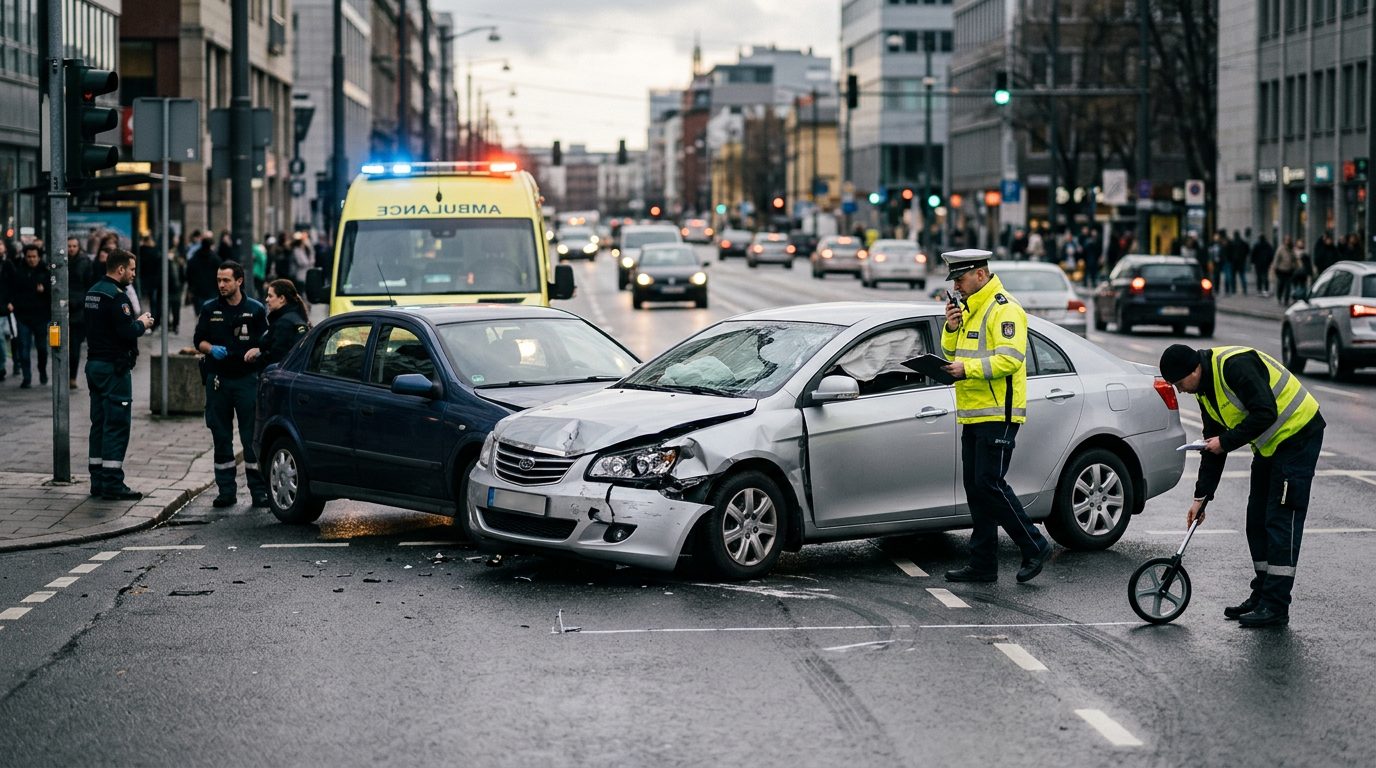
Your first priority is safety, and the facts come second. Move to a safe spot if you can, and check everyone for injuries. Call 911 whenever someone is hurt.
Next, exchange names, phone numbers, insurance details, and vehicle information with the other driver. Keep the exchange calm and factual. Avoid guessing out loud about who caused the crash. Let the investigation sort out the cause.
Take photos before anything is moved, if you safely can. Capture vehicle positions, damage, road conditions, traffic signals, and any visible injuries. Write down what you remember while it’s still fresh.
Get a medical check even if you feel fine. Some injuries don’t show up until hours or days later. A medical record from the day of the crash also helps anyone who reviews the case later.
In crashes with major injuries, the Georgia State Patrol may investigate. The Georgia Department of Public Safety states that victims and family members can get help checking the status of an investigation.
If you caused a crash that hurt someone, you don't have to work through the questions alone, and our team can talk through your facts with you. Talk it through with our team — the first consultation is free, confidential, and carries no obligation.
What “At Fault” Means Under Georgia Law
At fault usually means you were negligent.
Common examples include speeding, following too closely, looking at a phone, and running a red light. Each one can lead an insurer or a court to find a driver responsible.
A police crash report matters, but it doesn’t settle legal responsibility by itself. The officer records what he or she saw and what people said at the scene. Insurers and courts still weigh all the evidence before deciding who is responsible.
Fault is shown through evidence. That can include driver statements, photos, dashcam footage, vehicle data, witness accounts, and medical records. The records work together to tell the story of the crash.
Fault also doesn’t always sit with one driver. Several drivers can share the blame for the same crash. Georgia’s rules split that blame directly, as the next section explains.
How Georgia’s Modified Comparative Fault Rule Works
Georgia lets a partly at-fault person recover some damages, but the amount is reduced by that person’s share of fault. Under O.C.G.A. § 51-12-33, the judge reduces the damages in proportion to the injured person’s percentage of fault.
Here’s a simple illustration with no dollar amounts. Suppose a judge finds the injured person 20 percent at fault. The total damages would drop by 20 percent. Under O.C.G.A. § 51-12-33, when a plaintiff is to some degree responsible for the injury or damages claimed, the trier of fact determines the plaintiff’s percentage of fault, and the judge reduces the damages otherwise awarded to the plaintiff in proportion to that percentage. A person 50 percent or more at fault recovers nothing (O.C.G.A. § 51-12-33; Quynn v. Hulsey, 310 Ga. 473 (2020)).
Two more points matter if you’re the at-fault driver. First, the statute says the jury or judge must consider the fault of everyone who contributed to the harm. That includes people who weren’t named in the lawsuit. Second, each liable person’s share stands on its own. The statute says those shares are not joint liability and are not subject to contribution.
Will My Insurance Pay If I Am at Fault?
Liability coverage generally pays for injuries and property damage you legally cause to others, up to your policy limits. That’s the coverage most at-fault drivers rely on first.
Collision coverage can pay to repair your own vehicle, subject to your deductible and policy terms. Medical payments coverage or personal injury protection may help with your own medical bills, if your policy includes them. Check your declarations page to see which coverages you carry.
Reporting matters. Tell your insurer about the crash promptly and accurately. Insurers may investigate, reserve their rights, or dispute coverage in some situations. Early, accurate reports help prevent problems later.
Georgia’s Safety Responsibility Law covers what happens when a driver doesn’t satisfy a crash-damage claim. Open any letter from the state right away so you don’t miss that window.
Can I Be Sued After an At-Fault Crash?
Yes, people hurt in a crash you caused can bring a claim against you. That can include passengers in your car, other drivers, pedestrians, and property owners whose property was damaged.
Your policy limits set the ceiling on insurance coverage for a claim. If a claim is larger than your limits, your personal assets may be at risk. That’s why the amount of liability coverage you carry matters.
If someone else was driving your car, the rules change. The owner’s exposure turns on who was driving, whether that driver had permission, and the owner’s relationship to the driver. Those questions turn on the specific facts of the crash.
Time limits apply to these claims. Under O.C.G.A. § 9-3-33, actions for injuries to the person must be brought within two years after the right of action accrues. Don’t assume you have unlimited time to resolve a claim.
Feeling Guilty After a Crash You Caused
Guilt is a common reaction after a crash, even when the driver made an honest mistake. Many people also feel shame, anxiety, or trouble sleeping. Those feelings are real, and they don’t make you a bad person.
Talking with someone you trust can help. Writing down what happened, in order, can help too. It can organize your thoughts and make it easier to explain the crash later.
If stress is affecting your work, sleep, or daily life, a health professional can offer support. Reaching out is a sensible step for you and for the people who depend on you.
Keep your feelings and the legal questions separate. Feeling responsible for harm doesn’t automatically mean you’re legally liable for every consequence. Legal responsibility turns on evidence, fault rules, and insurance.
Not sure what your next step is?
Talk it through with our team — the first consultation is free, confidential, and carries no obligation.
Frequently Asked Questions
Is it normal to feel guilty after a car crash?
Yes. Guilt, shame, and anxiety are common after a crash you caused, even when the mistake was honest.
Can I be sued if someone else is driving my car?
Possibly. Whether you can be held responsible depends on who was driving, whether they had permission, and your relationship to them.
Will my insurance pay me if I am at fault?
Your liability coverage generally pays what you legally owe to others. Your own coverages, such as collision, may help with some of your own losses, depending on the policy you carry.
What happens if I crash my car and it’s my fault in Georgia?
You’ll need to make the scene safe, report the crash, and get checked medically. Fault, insurance, and possible claims then follow Georgia’s rules, covered above.
Talking Through Your Situation With Slam Dunk Attorney
If you were hurt in a crash, or you’re helping a family member through one, this can feel overwhelming. Georgia law addresses situations where an injured person is partly at fault, and damages may be reduced under O.C.G.A. § 51-12-33 (Quynn v. Hulsey, 310 Ga. 473 (2020)). You may be worried about injuries, insurance letters, and what comes next. You don’t have to sort all of it out alone.
A conversation about the specific crash, the injuries, and the insurance questions can make your next steps clearer. Our team can listen to your account of what happened and explain how Georgia’s rules may apply to your injuries. Nothing in that conversation is a promise of any outcome.
The first consultation is free, confidential, and carries no obligation to continue. Contact Slam Dunk Attorney to start that conversation.
Disclaimer: Peter F. Jaraysi is the responsible lawyer for this page. Slam Dunk Attorney is based in Duluth, Georgia, and represents people across metro Atlanta and Georgia. Our team, including support staff, assists the practice. Contact information is on our contact page. Every case turns on its own facts, and this page does not predict any result.
How Our Team Can Help
Plain-Language Answers
We explain your situation in clear terms, without legal jargon, so you understand your options before you decide anything.
Support Through a Difficult Time
Our team focuses exclusively on personal injury matters, including car, truck, and motorcycle accidents across Georgia.
Support From Our Team
Peter F. Jaraysi leads the firm, supported by our assistants and office staff, who help keep communication clear and manageable.
A Free, Confidential First Step
Your first consultation is free, confidential, and comes with no obligation to continue.
Be Careful What You Say
Right after a crash, it is natural to want to apologize or explain what happened. Before you give a recorded statement or discuss fault with anyone other than emergency responders or your own doctor, talk with someone who can explain how your words may be used.
Steps to Take After a Crash You Caused
Check for Injuries
Call 911 if anyone is hurt, and make sure everyone is safe and out of traffic when it is possible to do so.
Get Medical Care
Some injuries, such as whiplash or internal injuries, may not be obvious at first. Getting checked by a doctor protects your health and creates a record of your condition.
Keep Records
Save photos of the scene and vehicles, the other driver's insurance information, and any police report number. Keep copies of medical bills and visit notes.
Speak With a Lawyer Early
Talking with our team early can help you understand your situation, the insurance process, and the questions you may face before you respond to anyone.