
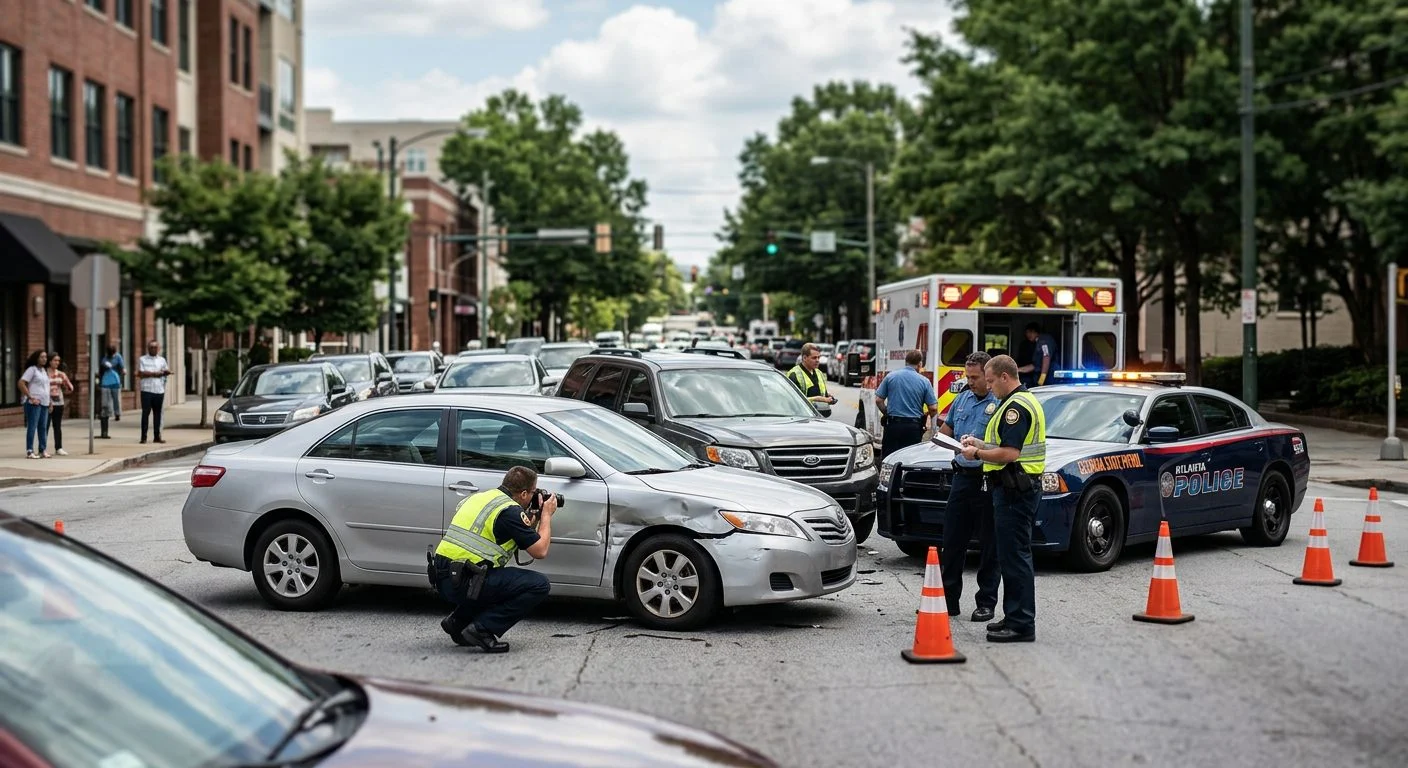
Injured Passenger | Car Accident Claim
You were hurt in someone else's car. We can help.
Passengers injured in car accidents have the right to pursue a claim. Slam Dunk Attorney represents injured passengers across Georgia—at no upfront cost.
By Peter F. Jaraysi · Published September 16, 2026
Who Pays When You’re Injured as a Passenger in a Georgia Car Accident?
When you’re injured as a passenger in a Georgia car accident, the at-fault driver’s liability insurance is the primary source of compensation for your medical bills, lost wages, and pain and suffering. However, multiple insurance policies may cover your injuries, and understanding which one applies—and in what order—is important to understanding your options.
Talk it through with our team — the first consultation is free, confidential, and carries no obligation.

The Passenger’s Position in a Georgia Car Accident
Passengers generally have no control over how the vehicle is driven. You had no control over the vehicle’s operation or the decisions that led to the crash. Georgia law recognizes this and allows injured passengers to pursue claims against the driver who caused the accident, regardless of whether you knew the driver or owned the vehicle you were traveling in.
Because you’re a passenger, you may be able to claim against the at-fault driver’s insurance, but whether that applies depends on the facts of your accident, so consult a lawyer about your situation. You can also claim against your own vehicle’s insurance in certain situations, creating multiple pathways to recovery.
The At-Fault Driver’s Insurance Typically Pays First
Georgia law generally requires drivers to carry liability insurance, but exceptions may apply, so consult a lawyer about how this applies to your situation. This insurance is designed to cover injuries and damages the driver causes to others—including passengers in other vehicles.
When you’re injured as a passenger, the at-fault driver’s liability coverage is your primary source of compensation. This insurance covers:
- Medical bills and ongoing treatment
- Lost wages from time off work
- Pain and suffering
- Other damages related to your injuries
However, liability insurance policies have coverage limits—a maximum dollar amount the insurer will pay. If your injuries are serious, the at-fault driver’s policy limits may not be enough to cover all your losses. This is where additional coverage options become important.
Your Own Vehicle’s Insurance May Also Cover You
If you were a passenger in a vehicle with uninsured motorist (UM) or underinsured motorist (UIM) coverage, you may be able to claim under that policy as well.
Uninsured motorist coverage applies if the at-fault driver has no insurance at all. It protects you by allowing you to claim against your own vehicle’s policy for injuries caused by an uninsured driver.
Underinsured motorist coverage applies when the at-fault driver’s insurance limits are too low to cover your injuries.
Your own vehicle’s medical payments coverage may also help with immediate expenses like emergency room visits and initial treatment, regardless of fault.
What If the At-Fault Driver Is Uninsured or Underinsured?
If the at-fault driver has no insurance, you’re not left without options. Under Georgia’s uninsured motorist law, you may be able to make a claim under your own vehicle’s policy if that policy includes UM coverage, but coverage terms and conditions vary, so consult a lawyer about your situation. You’re claiming against your own insurer, not trying to collect from an uninsured driver who may have no assets.
Similarly, if the at-fault driver’s insurance limits run out before your damages are fully covered, your underinsured motorist coverage may apply, depending on your policy’s terms and conditions, so consult a lawyer about your situation. These claims can be more complex than straightforward at-fault driver claims, and insurance companies often dispute the amount owed. But the protection is real, and many passengers don’t realize they have it.
Comparative Fault and Georgia’s Modified Comparative Negligence Rule
Under O.C.G.A. § 51-12-33, if you’re found partially at fault for the accident, you can still recover damages—but only if your fault is less than 50%. Your recovery is reduced by your percentage of fault (O.C.G.A. § 51-12-33; Quynn v. Hulsey, 310 Ga. 473 (2020)).
).
Passengers are rarely found at fault. You didn’t control the vehicle, and you typically had no role in the decisions that caused the accident. But in unusual circumstances—such as if you distracted the driver or grabbed the steering wheel—a small percentage of fault could be assigned to you. Even then, as long as your fault is under 50%, you retain the right to recover.
Not sure what your next step is?
Talk it through with our team — the first consultation is free, confidential, and carries no obligation.
Determining Fault and Liability
Fault is established through police reports, witness statements, accident scene evidence, and sometimes expert analysis. The at-fault driver is liable for passenger injuries regardless of the passenger’s relationship to them or whether the passenger was in the at-fault driver’s vehicle.
Insurance adjusters investigate the accident to determine who caused it and which policies apply. They review the police report, interview witnesses, examine vehicle damage, and assess liability. Disputes over fault are common, especially in multi-vehicle accidents or situations where both drivers claim the other caused the crash.
If the insurance company denies liability or offers too little, you may need to pursue the claim through negotiation or legal action.
The Claims Process for Injured Passengers
Here’s what typically happens after an accident:
- Report the accident to both the at-fault driver’s insurance company and your own insurer as soon as possible.
- Gather documentation: medical records, bills, receipts, photos of injuries, and records of lost wages.
- Provide a detailed account of the accident and your injuries to the insurance adjuster.
- The adjuster evaluates your claim and makes an offer based on liability, damages, and policy limits.
- You can negotiate, accept, or reject the offer. If you reject it and can’t reach agreement, the claim may go to litigation.
Throughout this process, keep detailed records of all communications with insurance companies. Don’t accept the first offer if it doesn’t fairly cover your losses.
Why Passenger Injury Claims Can Be Complicated
Multiple insurance policies and coverage limits create layered recovery options—which is good for you, but it also makes the process more complex. Insurance companies may dispute liability, the extent of your injuries, or which policy should pay first.
Determining the correct order of coverage (primary, secondary, and tertiary) requires knowledge of Georgia insurance law. Serious injuries often exceed individual policy limits, requiring coordination between multiple insurers and additional legal strategies.
Without professional guidance, many passengers settle too early or don’t realize they have additional coverage available.
Next Steps if You’re an Injured Passenger
- Seek medical attention immediately, even if injuries seem minor. Some injuries don’t show symptoms right away.
- Document everything: photos of the accident scene, vehicle damage, your injuries, medical records, and receipts for treatment and lost wages.
- Report the accident to both insurers promptly.
- Keep records of all communications, offers, and medical treatment.
- Consider speaking with a lawyer about the claims process and how it applies to your situation.

Frequently Asked Questions
Can I sue the driver of the car I was in if I was injured?
Yes. You can pursue a claim against any driver whose negligence caused your injuries, including the driver of the vehicle you were in. Passengers are not at fault for accidents they have no control over.
What if I was in the at-fault driver’s car—can I still claim against their insurance?
Yes. The at-fault driver’s liability insurance covers injuries to passengers in their vehicle, just as it covers injuries to occupants of other vehicles. Your status as a passenger doesn’t prevent you from claiming against their policy.
How long does a passenger injury claim take in Georgia?
Simple claims with clear liability and low damages may settle within weeks or months. Complex claims involving serious injuries, multiple policies, or disputed liability can take a year or longer, especially if litigation becomes necessary.
What damages can I recover?
You can recover medical expenses, lost wages, pain and suffering, permanent disability or disfigurement, and other losses directly caused by your injuries.
If you’re recovering from injuries you didn’t cause—you were a passenger in someone else’s vehicle when an accident happened—you may have options under one or more insurance policies. The process of identifying which policies apply and negotiating fair compensation is complex, and people in exactly your situation can reach out to us. Contact us for a free case review to discuss your options. There’s no obligation, and we can answer your questions about Georgia’s passenger injury laws and insurance coverage.
Why choose Slam Dunk Attorney for your passenger injury claim
We focus on car accident claims
Our practice centers on representing injured people in vehicle accidents across metro Atlanta and Georgia. We understand passenger injury claims and the insurance process.
No upfront fees
We work on contingency: no fees unless there is a recovery. You may still owe certain case costs. We'll discuss all costs clearly before you decide.
Free case review
Call us to discuss what happened, your injuries, and whether a claim makes sense for you. We'll answer your questions plainly.
We listen and advocate
We treat you as a person, not a case number. We work to pursue fair compensation for your medical bills, lost wages, and pain and suffering.
Common questions about passenger injury claims
Can I sue the driver of the car I was in?
Yes. If the driver's negligence caused your injuries, you can pursue a claim against that driver and their insurance. Passengers are not responsible for accidents they cannot control.
What if I was in the at-fault driver's vehicle?
Yes, you can still file a claim. Being a passenger in the at-fault driver's car does not bar you from seeking compensation for your injuries.
Who pays for my medical bills and lost wages?
Typically, the at-fault driver's liability insurance covers injured passengers' medical expenses, lost income, and other damages. We'll investigate to identify all sources of recovery.
How long do I have to file a claim?
Time limits apply. During your free consultation, we'll explain the timeline for your situation and make sure you understand the steps ahead.
Don't delay—act soon
Evidence fades, memories blur, and legal deadlines matter. The sooner you reach out, the sooner we can gather facts, review your case, and protect your rights.
Ready to discuss your case?
Related practice areas
- Car Accidents in Atlanta
- Car Accidents in Lawrenceville
- Medical Bills After Car Accident in Georgia | Payment