

Johns Creek, GA · Car Accidents
Rear-Ended in Johns Creek? Start With These Next Steps
Get medical care, write down what happened, and talk with a Georgia car accident attorney who can review the facts of your crash. Your first consultation is free.
By Peter F. Jaraysi · Published October 11, 2026
If another driver hit you from behind in Johns Creek, start with safety and medical care, then write down what happened. In Georgia, fault after a rear-end crash depends on the facts. No single rule says the driver who hit from behind always pays. This guide covers first steps, how fault is discussed, and when to talk with a lawyer. It’s general information, not legal advice, written for drivers who are looking for a Johns Creek GA car accident law firm and want to understand their options first.
What Should You Do First After a Rear-End Crash in Johns Creek?
Your first priorities are safety, medical care, and a clear record of the scene.
Move out of traffic if you can do it safely, and turn on your hazard lights. Call 911 if anyone is hurt. Ask for a police report and note the officer’s name and report number.
Then see a medical provider, even if you feel fine. Neck, back, and head symptoms can show up hours or days later. Tell the provider about every symptom, including ones that seem minor.
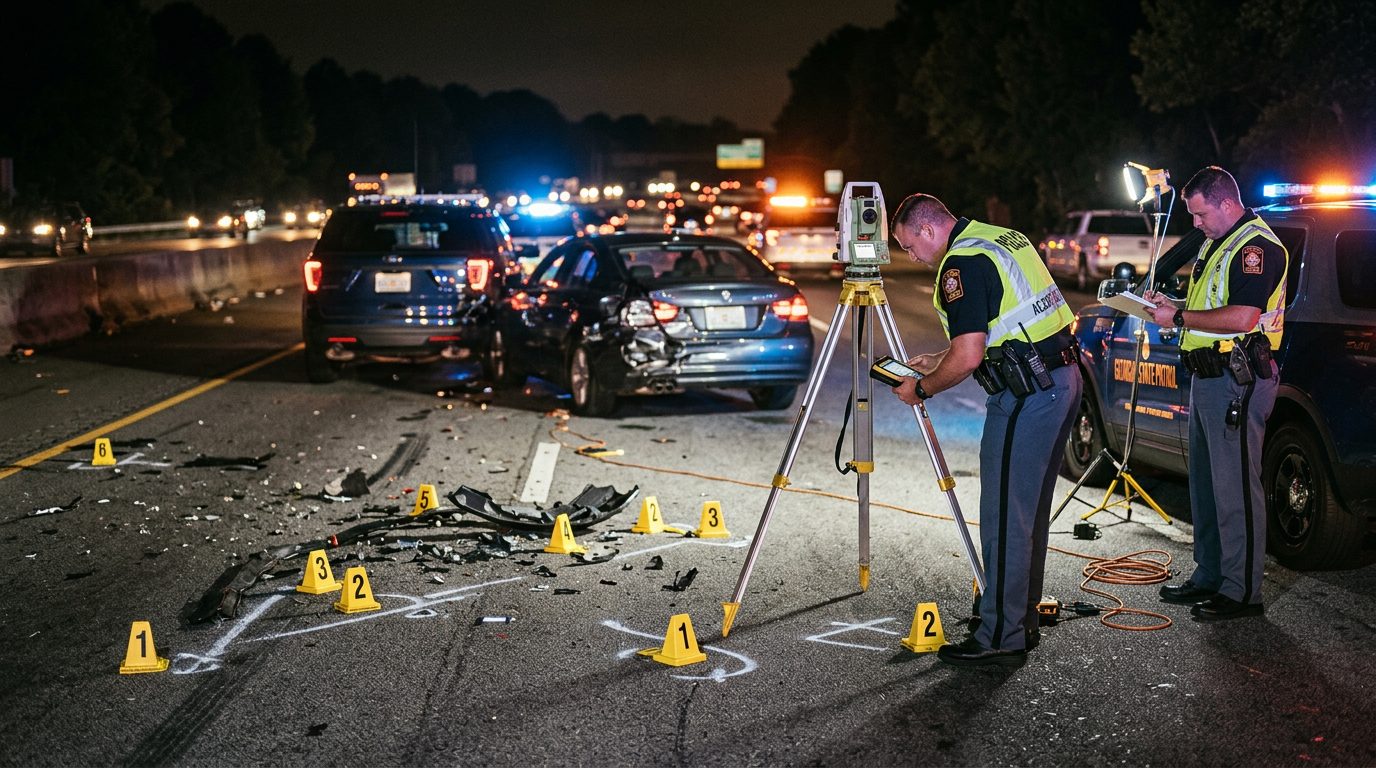
At the scene, photograph both vehicles, their final positions, traffic signals, skid marks if any, and visible damage. Record the other driver’s name, insurer, and plate number. Ask witnesses for their contact details.
Start a simple notebook with symptoms, appointments, missed work, and costs. Keep each entry factual and dated. The right order depends on your situation, so your steps may differ from these.
If you were hit from behind and now face medical visits, a damaged car, and insurance calls, you don't have to sort it out alone. Talk it through with our team — the first consultation is free, confidential, and carries no obligation.

How Is Fault Discussed in a Georgia Rear-End Collision?
Fault after a rear-end crash is decided by the facts, not by a fixed rule. Those facts can include following distance, braking, sudden stops, lane changes, weather, and traffic.
Georgia uses a modified comparative fault rule (O.C.G.A. § 51-12-33; Quynn v. Hulsey, 310 Ga. 473 (2020)). Georgia’s apportionment statute, O.C.G.A. § 51-12-33, generally provides that damages may be reduced in proportion to a plaintiff’s share of fault, but how it applies depends on the facts, exceptions may exist, and you should talk with a lawyer about your own case. The same section says a plaintiff who is 50 percent or more responsible is not entitled to receive damages. Whether that bar applies depends on the facts, and exceptions may apply.
Fault can also be shared among more than one driver. The statute says the fault of others who contributed to the injury can be considered. Damages assigned to each liable person are that person’s own, not joint.
Georgia also has an avoidance rule. Georgia’s avoidance rule, O.C.G.A. § 51-11-7, generally provides that a plaintiff who could have avoided the harm by ordinary care may not be entitled to recover, though its application depends on the facts and exceptions may exist, so consult a lawyer about your own situation. Otherwise, the defendant is not relieved just because the plaintiff contributed in some way. How that applies depends on what happened on the road.
Because these rules turn on the facts, talk with a Georgia lawyer about how they apply to your own collision.
How Should You Handle Calls From Insurance Adjusters?
Expect calls from the other driver’s insurer, and possibly your own. You can take time before you answer questions.
Each insurer runs its own process. Common requests include recorded statements, medical authorization forms, and early settlement offers. A recorded statement is a record of your words, so think about what you’ll say. Stick to facts you know. It’s fine to say you need time or to ask what the call is for.
Read any written offer slowly. Ask what it covers and whether it accounts for care you may need later. Don’t sign a release until you understand what it gives up. Some people feel pressure to answer fast. Insurers may have their own goals, and that’s a possibility to keep in mind, not a fixed pattern.
Check your own policy too. Georgia’s uninsured motorist statute, O.C.G.A. § 33-7-11, generally requires auto policies to include certain uninsured motorist provisions, but what a particular policy covers depends on its terms and the facts, so ask a lawyer to review your situation. Whether coverage applies to your crash depends on the policy language and the facts.
What Compensation Categories Come Up, and Can Anyone Name a Dollar Figure?
No reliable dollar figure can come from general information. Value depends on the facts of each case.
Some claims discuss categories such as medical expenses, lost income, and pain and suffering. Whether any category applies depends on your facts. Georgia law may limit recoverable medical expenses to the reasonable value of medically necessary care, but how any limit applies depends on the facts of each case, so consult a lawyer about your own situation. Who decides any amount, and how, may depend on the facts and the procedural posture of your case.
Bills, photos, and a police report describe what happened. They don’t promise any result, and no one can say in advance how a case will end. Slam Dunk Attorney does not publish case results, dollar figures, or percentages, and this page won’t offer examples. A general average can’t describe your crash.
How Long Do You Have to File, and When Should You Call a Lawyer?
Georgia generally gives two years to file a lawsuit for injuries to the person (O.C.G.A. § 9-3-33; Cameron v. JMP Pizza, Inc. (2026)), but exceptions may apply depending on the facts, so talk with a lawyer about the deadline in your own case. Talk with a lawyer about the deadline that may apply in your own case.
The statute begins with “except as otherwise provided,” so other rules may apply. Don’t assume you have full time, and don’t assume you have less. Ask a Georgia lawyer to review your deadline early.
A consultation is a chance to describe your crash, ask questions, and learn how Georgia’s rules may apply. Fee terms are set out in the written fee agreement. Case costs and expenses may apply, so read that agreement carefully before you sign.
Frequently Asked Questions
Do I need a lawyer after a rear-end crash in Johns Creek?
A lawyer can review how fault and deadline rules apply to your facts. Whether you need one is your decision.
Can I still recover damages if I was partly at fault?
Georgia’s comparative fault rule (O.C.G.A. § 51-12-33; Quynn v. Hulsey, 310 Ga. 473 (2020)) may reduce damages by your share of fault, depending on the facts; exceptions may apply, so talk with a lawyer about your own case. Please talk with a lawyer about your own situation.
How long do I have to file?
Georgia generally allows two years for most injury lawsuits, but exceptions exist. Ask a lawyer to review your exact deadline.
Can anyone tell me my claim’s dollar value?
Not from general information. No result can be promised.
Talk With Our Team About Your Johns Creek Rear-End Crash
If you were hit from behind and now face medical visits, a damaged car, and insurance calls, you don’t have to sort it out alone. Slam Dunk Attorney is a personal injury firm based in Duluth, Georgia. It represents people hurt in car accidents in Johns Creek and across metro Atlanta.
If your crash has you weighing medical care, insurer calls, and whether to speak with a lawyer, request a free consultation with Slam Dunk Attorney in Duluth, Georgia.
This page is general information, not legal advice. Responsible firm: Slam Dunk Attorney, Duluth, Georgia. Outcomes depend on the facts of each case, and no result can be promised. Fee terms are in the written fee agreement, and case costs or expenses may apply.
Right After a Rear-End Crash
Check for Injuries
Call 911 if anyone needs help. Get medical care promptly, even if you feel fine at the scene, because some symptoms can appear later.
Document the Scene
Note the date, time, location, and weather. Take photos of the vehicles and roadway, and collect the other driver's information and any witness names.
Keep Your Records
Save medical bills, appointment notes, and receipts. Write down what happened while the details are still clear in your mind.
Talk With a Lawyer
A Georgia attorney can explain how fault rules may apply to the facts of your crash. No outcome can be promised, but a conversation can help you understand your options.
Why Talk With Slam Dunk Attorney
Free Case Review
Call or request a free consultation to talk through the facts of your rear-end crash.
Clear Next Steps
We explain the process in plain language so you know what to expect at each stage.
Based in Duluth, Georgia
We represent people hurt in car, truck, and motorcycle accidents across metro Atlanta and Georgia.
Focused on Personal Injury
Our firm focuses exclusively on personal injury matters, including car accidents, truck accidents, and motorcycle accidents.
Don't Wait to Get Checked
Some injuries from a rear-end crash may not show symptoms right away. Getting a medical evaluation is important for your health. This page is general information, not legal advice. How Georgia law applies depends on the facts of your crash, so please consult a lawyer about your own situation.