
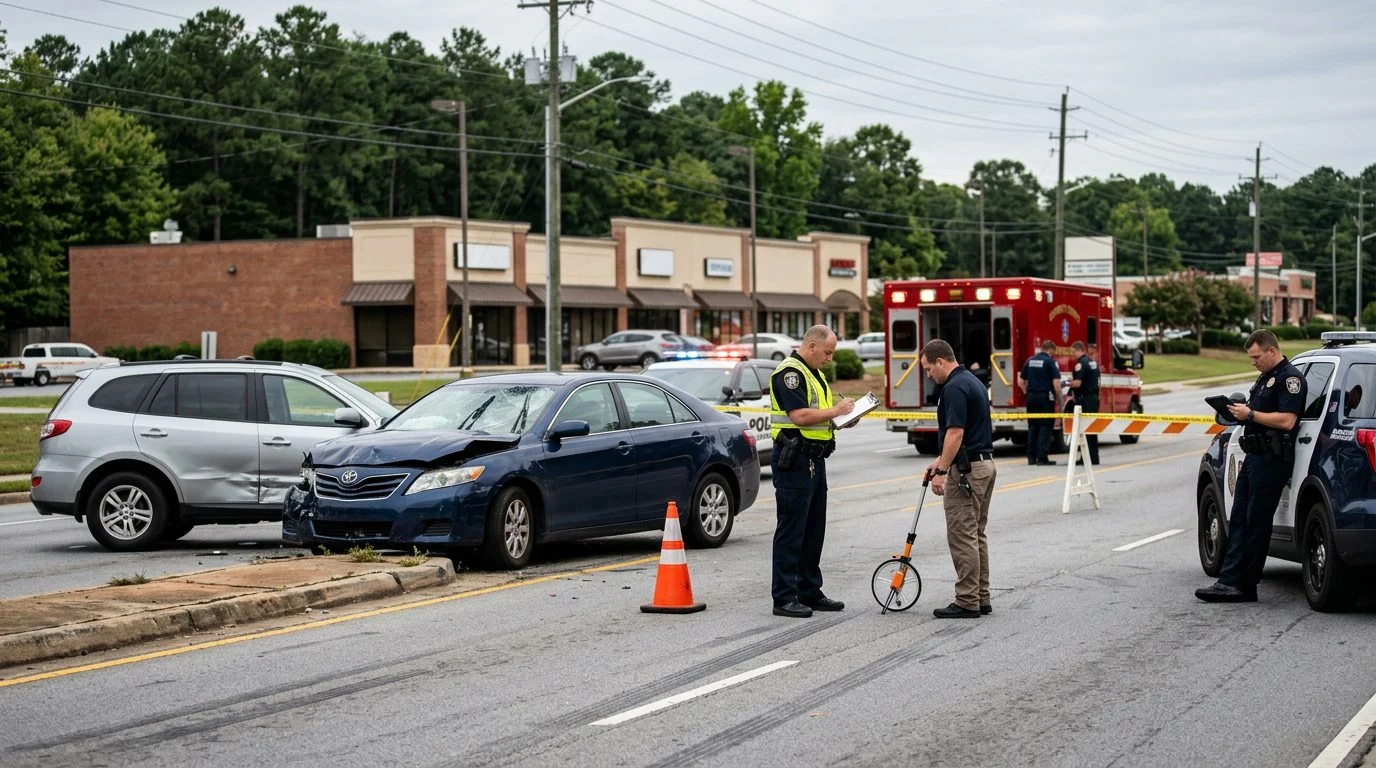
Lawrenceville and Gwinnett County Car Crashes
Hurt in a Lawrenceville Crash? Learn Which Court May Hear Your Case
Where a claim is filed can shape how it moves forward. Here is what to think through before you choose a path.
By Peter F. Jaraysi · Published November 21, 2026
If someone you love was hurt in a crash on a Lawrenceville road, you may be asking where a lawsuit would be filed. In most cases, it’s a Gwinnett County court, but the crash location is only one fact that shapes the choice.
In which court would a Lawrenceville or Gwinnett County car accident lawsuit be filed, and does the location of the crash affect venue?
A Lawrenceville or Gwinnett County car accident lawsuit is generally filed in a trial court in Gwinnett County. The crash location is one fact that can affect which county is the proper venue. Which court hears a case can depend on several factors, and questions about it are worth discussing during a consultation.
Many families reach this question early. They may be dealing with injuries, a damaged vehicle, or the death of someone they love. Crashes are common enough to matter. The Insurance Institute for Highway Safety reports 1,403 motor-vehicle crash deaths in Georgia in 2024, a rate of 12.5 deaths per 100,000 people.
Slam Dunk Attorney is based in Duluth, Georgia, and serves Gwinnett County and the wider metro Atlanta area. This page explains venue in plain terms, which courts hear these cases, and what to gather now. Venue is not the same as the type of court or the filing deadline, so we keep those ideas apart. Each one is covered below, one at a time.
If you're trying to work out where a claim from a Lawrenceville crash would be filed, our team can talk it through with you, in your own words. Talk it through with our team — the first consultation is free, confidential, and carries no obligation.
What is venue, and how is it different from jurisdiction?
Venue is the county where a lawsuit is brought. Jurisdiction is a court’s power to hear a particular kind of case and the parties in it.
Think of venue as the place the case is brought and jurisdiction as the court’s authority over it. Both have to fit before a case moves forward. A court can have authority over a claim and still be the wrong place for it if the county is wrong.
Here’s a simple example. Say a crash happens on a road in Lawrenceville, but the other driver lives in a different county. The crash happened in Gwinnett, but the driver’s home county may also be a place where a case could be brought. A lawyer weighs both facts before choosing a county.
Keep the two ideas separate as you read. Venue answers the question of where. Jurisdiction answers whether a court has the power to hear the case at all.
Which Gwinnett County courts hear car accident lawsuits?
Which court hears a car accident injury case depends on the specific facts, and questions about it are worth discussing during a consultation. Gwinnett County has both kinds of trial court. The local question is usually which of those fits the claim, not whether Gwinnett has a court for it.
Both are trial courts that hear civil cases, but they differ in the kinds of cases they take. Which one fits a claim turns on its size and the parties involved.
Many serious injury claims are larger than that limit, so they often do not fit there.
Picking the wrong court or county can add delay and extra motions. That is one reason to review the claim’s size and the parties before anything is filed.
How does the location of a crash affect venue in Georgia?
The place where a crash happened is one of the connections a court looks at when it decides venue. A crash inside Lawrenceville is inside Gwinnett County, so that fact points toward Gwinnett courts.
Other connections matter too. A crash location alone does not settle the question. Whether a particular crash location supports venue depends on the facts, including where each party lives and works.
Crashes that involve a city or the state add another step. A claim against a city must be presented in writing to the city’s governing authority within six months of the event, under O.C.G.A. § 36-33-5. A tort claim against the state needs written notice within 12 months of when the loss was discovered or should have been discovered, under O.C.G.A. § 50-21-26.
These notice rules work separately from venue. They can still come due much sooner than a lawsuit deadline, so they belong on your early checklist.
Where do the defendants live or do business, and why does that matter for venue?
Choosing the right court for a case depends on the specific facts, and questions about it are worth discussing during a consultation. The facts can change how that general rule applies to a given case.
A business or company defendant is often tied to the places where it has an office or does business. That place can sit in a different county from the crash. A trucking company with an office in another county, for example, may raise a different venue question than a driver who lives in Gwinnett.
Crashes with several parties can create more than one possible venue. A driver, a vehicle owner, an employer, or a rideshare company may each be named. Rideshare claims also follow separate state rules. Georgia law limits when a ride share network service can be liable for a driver’s operation of a personal car, under O.C.G.A. § 40-1-201. That statute sets conditions, so the full set of facts matters before a choice is made.
How does the filing deadline relate to choosing a court?
Georgia generally requires a personal injury lawsuit to be brought within two years after the right of action accrues, under O.C.G.A. § 9-3-33. A claim for injuries involving loss of consortium has four years under the same section.
Venue and the deadline are separate issues. But waiting to sort out venue can leave less time to file. Notice rules for cities and the state can also come due much sooner than two years.
Wrongful death claims follow their own rules. Georgia law says a surviving spouse, or a child or children if there is no surviving spouse, may recover for the homicide of a spouse or parent under O.C.G.A. § 51-4-2. Write down the crash date now. Time limits are counted from events like that crash, so the date matters later.
Not sure what your next step is?
Talk it through with our team — the first consultation is free, confidential, and carries no obligation.
What information helps answer the venue question early?
Gather the police crash report, and note the crash location exactly as it is written. That includes the road, the intersection, and the city. Those details are key venue facts.
Georgia requires a driver in a crash causing injury, death, or property damage of $500 or more to report it right away, under O.C.G.A. § 40-6-273. Keep a copy of any report you receive.
Collect the addresses and insurance details for each driver and vehicle owner, along with any business names involved. Georgia requires registered vehicles to keep continuous automobile liability insurance, according to the Georgia Department of Revenue.
Keep medical records, photos, and records of missed work. These help show what happened to you. They do not settle the venue question by themselves.
Frequently asked questions
Can a Lawrenceville car accident lawsuit be filed in Gwinnett County?
A Lawrenceville crash is in Gwinnett County, so Gwinnett is often a proper place to file. Whether it is the right county also depends on where the defendants live and do business.
How long do I have to file?
Georgia generally gives two years after the right of action accrues for a personal injury lawsuit. Notice rules for city and state claims can be shorter.
Does the crash location alone decide the county?
Not always. The crash location is one connection, and the defendants’ homes and business locations also matter.

Talk with our team about a Gwinnett County car accident
If you’re working out where a claim would be filed, you may be doing it for yourself or for someone you love. That’s a lot to carry while you’re hurt or grieving. You don’t have to sort out the court question alone.
Our team can talk through the crash location, the parties involved, and your questions, in your own words. Contact our team to start that conversation. The initial consultation is free, confidential, and without obligation to continue.
For the broader picture of car accident claims in Georgia, see our car accident overview.
This page is general information, not legal advice or a promise of any result. The responsible lawyer for this page is Peter F. Jaraysi of Slam Dunk Attorney, based in Duluth, Georgia. Reach the firm through its contact page.
Questions We Often Discuss Together
Where the crash happened
The location of the collision is an important starting point when we review where a claim may be filed.
Where the parties are located
The home base and business locations of the people or companies involved can also affect the discussion.
Who else may be involved
Commercial vehicles, rideshare companies or property owners can add layers to the analysis.
Your personal situation
Every crash has its own facts. We take time to listen and explain the options in plain language.
Keep Your Records Together
Photos, the police report number, medical records, repair estimates and any letters from insurance companies can help us review your situation sooner. Do not worry if you do not have everything yet. Bring what you have to your consultation.
Common Concerns Around Gwinnett County Car Crash Cases
Crashes Near Lawrenceville
Collisions on local roads and busy corridors in Gwinnett County often raise questions about which courts are available and how they compare.
Trucks and Commercial Vehicles
Crashes involving trucks or company vehicles can involve several parties, each with different insurers and records.
Rideshare Trips
If an Uber or Lyft driver was involved, the trip status and insurance details can shape the review of where a case belongs.
Timing Matters
Acting early helps preserve evidence and gives us time to review the options carefully before any decisions are made.