
Car Accidents | Duluth, Georgia
How to Protect Your Assets After a Car Accident
Here is how to think ahead while you focus on getting better.
By Peter F. Jaraysi · Published November 15, 2026
If a car accident leaves you facing a claim, your liability insurance is the first thing that protects your personal assets. It pays covered damages up to your policy limit. Georgia law adds some protections, but they are narrower than many people expect.
This guide explains how to protect your assets after a car accident in Georgia. It covers how Georgia divides fault, how insurance works, when umbrella coverage helps, and what to do right away. For more background, see our car accident claims guide. This article is general information, not legal advice for your case.
Why Asset Protection Matters After a Car Accident
A car accident can create a claim that costs more than your insurance pays. When that happens, your home, savings, and paycheck may be at risk. Knowing that early helps you make better decisions.
In a lawsuit, a court order that you owe money is called a judgment. A judgment is only one step.
Fault also shapes your exposure. Under O.C.G.A. § 51-12-33, a plaintiff who is 50 percent or more responsible for the injury cannot receive damages. Where several people share fault, each one pays only its own share. The statute says those damages are not joint liability, so you don’t pay someone else’s share.
Talk it through with our team — the first consultation is free, confidential, and carries no obligation.

How Georgia Law Protects Your Assets
Georgia law shields some property from collection, but it does not shield everything. Your insurance remains the main protection against a large claim.
Exempt property is property a creditor cannot take to satisfy a debt. State law sets these exemptions, and each one covers specific property, not all of your wealth.
Wages are another concern. State rules control how much of a paycheck can be taken, and those rules are technical.
Getting a judgment and collecting on it are different steps.
These protections are limited. They work best alongside insurance that covers the claim in the first place.
Your Insurance Is Your Primary Protection
Your auto liability insurance is your first line of defense because it pays covered damages you owe, up to your policy limit. Once that limit is used up, the rest of a covered claim can fall on you.
A policy limit is the most the insurer will pay under that policy for one accident. For example, a policy with a $25,000 per-person limit pays up to that amount for one injured person. If the damages are higher, the difference is not covered by that policy.
Higher limits give you more room. The gap between a $25,000 limit and a $100,000 limit can decide whether a serious injury claim stays within your insurance. Ask your insurance agent to explain how each limit applies to you.
Georgia also requires uninsured motorist coverage in auto policies unless the insured rejects it in writing. Under O.C.G.A. § 33-7-11, this coverage can apply when the at-fault driver has no insurance.
When insurance runs out, the injured person may pursue the remaining judgment. Non-exempt assets can become part of that effort, which is why adequate limits matter.
Umbrella and Excess Liability Insurance
Umbrella insurance is extra liability coverage that sits above your auto policy. It starts paying after your auto limits are used up.
Think of it as a second layer. Your auto policy pays first. If a covered claim is larger than that limit, the umbrella policy pays the next layer, up to its own limit. Umbrella policies generally cover liability claims against you, not your own injuries.
People with home equity, savings, rental property, or steady income often have more to lose in a lawsuit. Households with several vehicles or teen drivers may also face higher exposure. An umbrella policy can raise your coverage ceiling without changing every policy you have.
Umbrella policies often require underlying auto limits at a set level. Ask your insurer about these requirements before you buy.
Timing matters. Coverage generally applies to accidents that happen after the policy starts. That makes umbrella coverage a step to take before a crash, not after one.
Steps to Take Immediately After an Accident
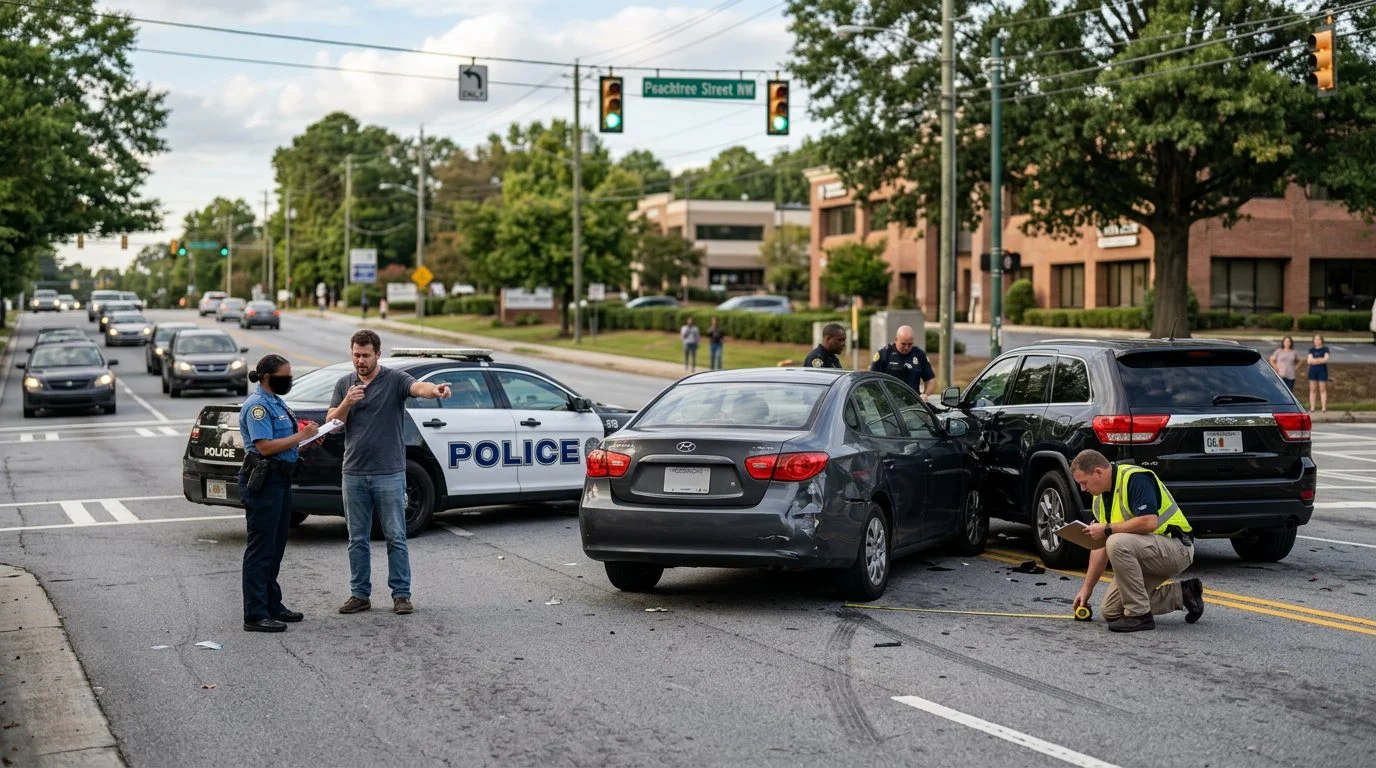
In the first hours after a crash, focus on safety, facts, and records. Avoid admitting fault or agreeing to a settlement until you understand your exposure.
- Check for injuries. Move to safety if you can, and call the police.
- Get the report. Ask for the accident report and write down the officer’s name and badge number.
- Document the scene. Take photos of the vehicles, the road, visible injuries, and any hazards. Note witness names and the other driver’s insurance details.
- Notify your insurer. Report the accident promptly. Stick to facts and avoid guessing about fault.
- Keep every record. Save medical records, bills, receipts, and notes about missed work.
Wear your seat belt every time you drive. Under O.C.G.A. § 40-8-76.1, a court may consider whether you wore a seat belt in a civil case, and that can reduce a recovery.
What Happens If You’re Sued
If someone sues you after a crash, your insurance company generally handles your defense in a covered lawsuit, up to your policy limit. Your job is to respond to the papers on time.
The lawsuit starts with a summons and complaint. Read them quickly and don’t ignore them. Missing a response deadline can lead to a default judgment against you.
Georgia’s fault rules apply in court. A jury assigns percentages of fault, and damages are reduced by the injured person’s share, as described above.
Punitive damages work differently. They punish rather than compensate. Under O.C.G.A. § 51-12-5.1, punitive damages may be awarded only if clear and convincing evidence shows willful misconduct, malice, fraud, wantonness, oppression, or an entire want of care showing conscious indifference to consequences, and in most such cases (other than product liability) they are capped at $250,000. That cap does not apply when the defendant acted with specific intent to cause harm, or while under the influence of alcohol, drugs other than lawfully prescribed drugs administered in accordance with prescription, or any intentionally consumed glue, aerosol, or other toxic vapor, to a degree that substantially impairs judgment; in those cases the punitive damages are not the liability of any defendant other than an active tort-feasor.
Not sure what your next step is?
Talk it through with our team — the first consultation is free, confidential, and carries no obligation.
Judgment-Proofing Misconceptions
Trying to do so is one of the costliest mistakes people make after a crash.
Some people think they can transfer a house to a relative or empty a bank account once a lawsuit appears.
Lawful planning is different. Buying adequate liability insurance, reviewing your policy limits, and considering umbrella coverage are open, legitimate steps. They work best before a crash, because coverage generally applies to accidents after the policy starts.
A simple test helps. If a step would look like hiding money from someone you might owe, skip it and get advice first.

When to Seek Legal Guidance
Speak with a lawyer early if the crash caused serious injuries, if damages may exceed your insurance, or if you have been served with a lawsuit. Early advice helps you understand your exposure before you make choices you can’t undo.
Time limits matter too. Under O.C.G.A. § 9-3-33, most actions for injuries to the person must be brought within two years after the right of action accrues. Waiting can close options, so don’t delay.
Can my house be taken after a car accident in Georgia?
Exemption rules are technical, so have them reviewed for your situation.
Do I need umbrella insurance after a car accident?
Umbrella coverage is an option for people with more to protect. It must be in place before a crash to apply to that accident.
How much of my paycheck can be taken?
State rules limit wage collection, and the details depend on your situation and the type of judgment.
How long does an injured person have to sue in Georgia?
For most injury claims, the deadline is two years from when the right of action accrues (O.C.G.A. § 9-3-33; Kenneth B. Cameron v. Jmp Pizza, Inc (2026)).
Our first consultation is free, confidential, and comes with no obligation to continue. If a crash has you worried about a lawsuit reaching your savings or paycheck, contact us here to talk through your options.
This page is general information, not legal advice. Peter F. Jaraysi is the responsible lawyer for Slam Dunk Attorney, a personal injury practice in Duluth, Georgia. Contact: https://slamdunkattorney.com/contact-us/. Learn more about how to protect your assets after a car accident by reaching out to us.
How Slam Dunk Attorney Can Help
Personal Injury Focus
Slam Dunk Attorney, based in Duluth, Georgia, focuses on representing people hurt in car, truck, and motorcycle accidents across metro Atlanta and the state.
Plain-Language Guidance
Our team explains your options in clear terms, so you know what questions to ask and what steps may matter for your finances.
Attention to the Whole Picture
Medical bills, lost income, and property damage all affect your future. We look at how each piece fits together.
Free, Confidential Consultation
The first consultation is free, confidential, and comes with no obligation to continue.
Be Careful Before You Talk to an Insurer
Adjusters may ask for a recorded statement or quick signatures. Speaking with a lawyer first can help you understand what you are agreeing to before you say or sign anything.
Review Your Insurance
Gather your auto, umbrella, and health policies. Knowing your coverage limits can shape what you do next.
Keep Clear Records
Save medical bills, pay stubs, repair estimates, and photos. Organized records help make your financial picture easier to understand.
Track Lost Income
Note missed work, reduced hours, and any time off. These details can matter when you discuss your losses with a lawyer.