
Car Accidents | Duluth, Georgia
Are All Car Accident Records Public in Georgia?
Not every record from a crash follows the same rules. Here is how crash reports, court files and insurance claim files differ, and what to check when you need one.
By Peter F. Jaraysi · Published October 10, 2026
Are all car accidents public record? No. A single crash can create several different records, and each one can follow different rules about who may see it and how to get it. Some crash records are often available on request, while court files and insurance claim files work differently. This page explains the main types and what to check.
The Short Answer: Not Every Car Accident Record Is Open to Everyone
“Public record” is a general label, not one rule that covers every document from a crash. A wreck can produce a police or crash report, a court file if a lawsuit is filed, and insurance claim paperwork. Each one may be kept by a different office and handled under different rules.
Access usually depends on four things: the type of record, the agency or office that holds it, whether a case is still pending, and who is asking. Exceptions exist for each of these, so a general answer cannot settle your question.
This page is general information, not legal advice. It does not create a lawyer-client relationship. Confirm current rules with the agency or court that holds the record, and talk with a lawyer about your own situation.
If you are sorting through a crash report while you recover from a wreck, we can talk through your records questions and what they could mean for your own situation. Talk it through with our team — the first consultation is free, confidential, and carries no obligation.
Who Is Likely Searching This Question, and Why It Matters
Most people who look up this question are in a stressful moment. Some were just in a crash and want a copy of the report. Others are a spouse, parent, or adult child handling paperwork for someone who is hurt. Some are checking a report before a call with an insurer.
Your role matters. A driver or passenger involved in the crash, a witness, and a family member may each face different request rules. The agency may ask who you are and why you want the record before it releases anything.
Before you request anything, decide who you are in relation to the crash. Then ask the agency what it needs from you. That one step can save time and prevent a rejected request.
Are Police and Crash Reports Public Record in Georgia?
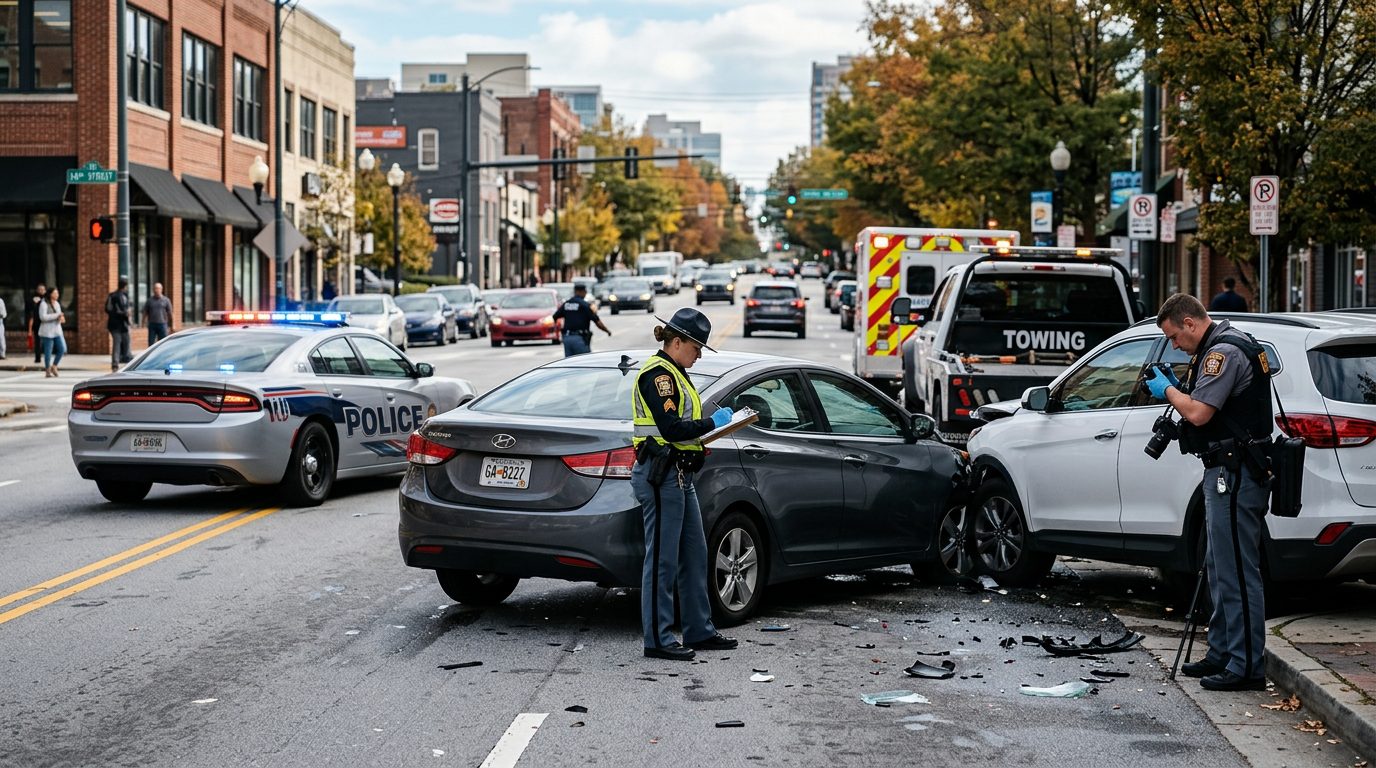
A crash report is usually written by the law enforcement agency that responded to the scene. In general, you obtain it by request from that agency rather than from a free public website. Some agencies also use third-party vendors, so the place you order from may differ.
Expect that requests can involve a fee, identification, and a waiting period before the report is ready. These details vary by agency and can change over time. Ask the agency directly about its current process, forms, and timing.
Access may be limited for some reports, such as those tied to pending investigations or certain protected details. The agency decides what it can release. If a request is denied, ask the agency for the reason in writing.
Keep in mind that a crash report is one document. It may be easy to obtain, but it does not settle who was at fault. That question depends on the facts of your case.
Who Can Request a Car Accident Report?
If you were involved in the crash, you may want to ask the responding agency about how to obtain a copy of the report. The rules differ by agency, so check what each agency requires.
Can someone who was not involved get a report? The answer depends on the agency and the rules that apply to the report. Some members of the public may be able to request one, while other requests may be limited. Do not assume you qualify. Ask the agency before you pay a fee.
If you are requesting for someone else, be ready to explain your connection to the crash. You may need written authorization or proof of your relationship. Agencies can set their own requirements for this.
When you ask, give the date, time, location, and names of the drivers involved. Those details help the agency find the right file quickly.
What Information Typically Appears on a Crash Report
A crash report usually lists the date, time, and location of the crash. It often identifies the vehicles, drivers, passengers, and any witnesses. It may also list insurance details and the vehicle damage the officer noted.
Most reports include the officer’s narrative, a description of what the officer saw and heard. Many also include a diagram of the scene. The exact layout and fields vary from one agency to another.
Your copy may look different from a copy someone else receives.
A report records what the officer observed and documented. It is not a final ruling on fault, and it does not decide how much a claim may be worth. Outcomes depend on the facts, and the officer’s view is only one piece of the picture.
Are Court Records and Lawsuits Public?
A lawsuit filed in court creates a court file. Whether you can view that file, and how, depends on the court, the type of case, and the filings in it. If you need case information, the court clerk’s office can explain the options for viewing it.
Cases involving minors or certain protected information can have limits on access. Exceptions exist, so check with the clerk of the court that handles the case.
A claim handled only with an insurance company usually does not create a court record. Court files typically begin only when someone files a lawsuit. That is why a quiet insurance claim may not show up in a court search.
Deadlines matter for lawsuits. § 9-3-33. That statute begins with “Except as otherwise provided in this article,” so other rules may apply. Talk with a lawyer about your own deadline early.
Not sure what your next step is?
Talk it through with our team — the first consultation is free, confidential, and carries no obligation.
What About Insurance Claim Files?
Insurance claim files are generally private business records. They are not usually open to the public the way a court file or crash report may be. Your own insurer or the other driver’s insurer can answer questions about what it holds.
You may be able to ask an insurer for certain information about your own claim. The insurer decides what it will share and how. Keep written records of every request and every answer.
Do not assume that hiring a lawyer will change how an insurer handles your claim. No outcome is guaranteed. A lawyer can explain what information you can ask for and how the process works in your case.
Keep your own copies of letters, estimates, medical bills, and claim numbers. Those documents often matter more to your records than any public search.
What to Do If the Crash Report Contains Errors
If a crash report has a mistake, ask the reporting agency how to request a correction or a supplement. The process depends on the agency. Some agencies require a written request, and some may need proof of the error.
Do not expect an error to be fixed automatically. Some errors, such as a wrong street name, are simpler to correct than disputed statements about how the crash happened. The agency decides what it will change.
A report’s contents do not decide liability or the value of a claim. Those questions depend on the facts, the evidence, and the law. Still, accurate records help, so raise errors promptly.
Keep a copy of the report as you received it. Save photos, witness contacts, and any other evidence that shows the error. Organized records make the issue easier to explain.
Steps to Take When Looking Up a Car Accident Record in Georgia
Start by gathering the basics: the date, the location, the names of the drivers, and any report or claim numbers you have. Write them down in one place. This makes every request faster.
Next, identify the agency that responded. This may be a city police department, a county sheriff, or the state patrol. Ask that agency how to request the report, what it costs, and how long it takes.
Then check whether a court case exists. Contact the clerk of the court in the county where the case would be filed. Ask what search options the clerk offers.
Watch the calendar. Timing matters in injury claims. Some claims against government entities have much shorter notice periods. The specific notice requirements depend on which government entity is involved and the facts of the claim. Exceptions and details apply, so get legal advice quickly.
Talking Through Your Crash Records With a Lawyer
Looking up crash records is hard when you are hurt, dealing with a damaged vehicle, or caring for a loved one. It is normal to feel overwhelmed by the paperwork and the deadlines.
If you want help sorting out what applies to your crash, you can reach out to Slam Dunk Attorney. We can talk through your records question in the context of your own crash, and explain how the process works for you.
No outcome is guaranteed. Any fee arrangement is described only in the written fee agreement, which we can review with you.
Disclaimer and Responsible Attorney
This page is provided by Slam Dunk Attorney, based in Duluth, Georgia. Contact information is available on our contact page.
This page is for general information only. It does not create an attorney-client relationship and is not legal advice. Laws and records rules can change, and results depend on the facts of each matter. No outcome is guaranteed.
The firm represents clients in Georgia only. This page does not address matters governed by the law of other states.
Frequently Asked Questions
Are all car accidents public record in Georgia? No. Crash reports, court files, and insurance claim files each follow different access rules.
Can I get a Georgia crash report if I wasn’t involved? It depends on the agency and the rules that apply. Ask the agency before you pay a fee.
Is a car accident lawsuit public record? A court file may be viewable through the clerk, but some filings can be restricted. Check with the clerk of the court.
How long do I have to file a car accident claim in Georgia? Georgia’s general injury deadline is a two-year injury deadline under O.C.G.A. § 9-3-33, with exceptions. Claims against government entities can have shorter notice periods, so speak with a lawyer early.
What This Page Covers
Several Records, Not One
A single crash can generate a police or crash report, court filings, insurance claim files and medical records. Each one can follow different rules.
Who Can Access Each Record
Access can depend on the type of record, who created it, and whether a case is open. Outcomes and availability depend on the facts.
Privacy and Limits
Reviewing those limits is part of understanding what you can request.
Practical Next Steps
Learn which agencies and parties hold each record so you can ask the right office for the right document.
Important: Rules Vary by Situation
This page offers general information, not legal advice. How a particular crash record is handled depends on the facts of your case and on Georgia law as it applies to you. Speak with a lawyer about your own situation before relying on any general statement here.
Common Types of Crash Records
Crash Reports
Reports prepared by responding law enforcement or investigating agencies often describe the scene, parties and basic facts of a collision. Availability and redactions can vary.
Insurance Claim Files
Claim files kept by insurers are generally treated differently from government records. Whether you can see them depends on your role in the claim and the applicable rules.