
Car Accident Claims | Duluth, Georgia
Asked for a Recorded Statement After a Car Accident?
Insurance adjusters often ask early. Learn how to protect your position before you say anything on the record.
By Peter F. Jaraysi · Published November 18, 2026
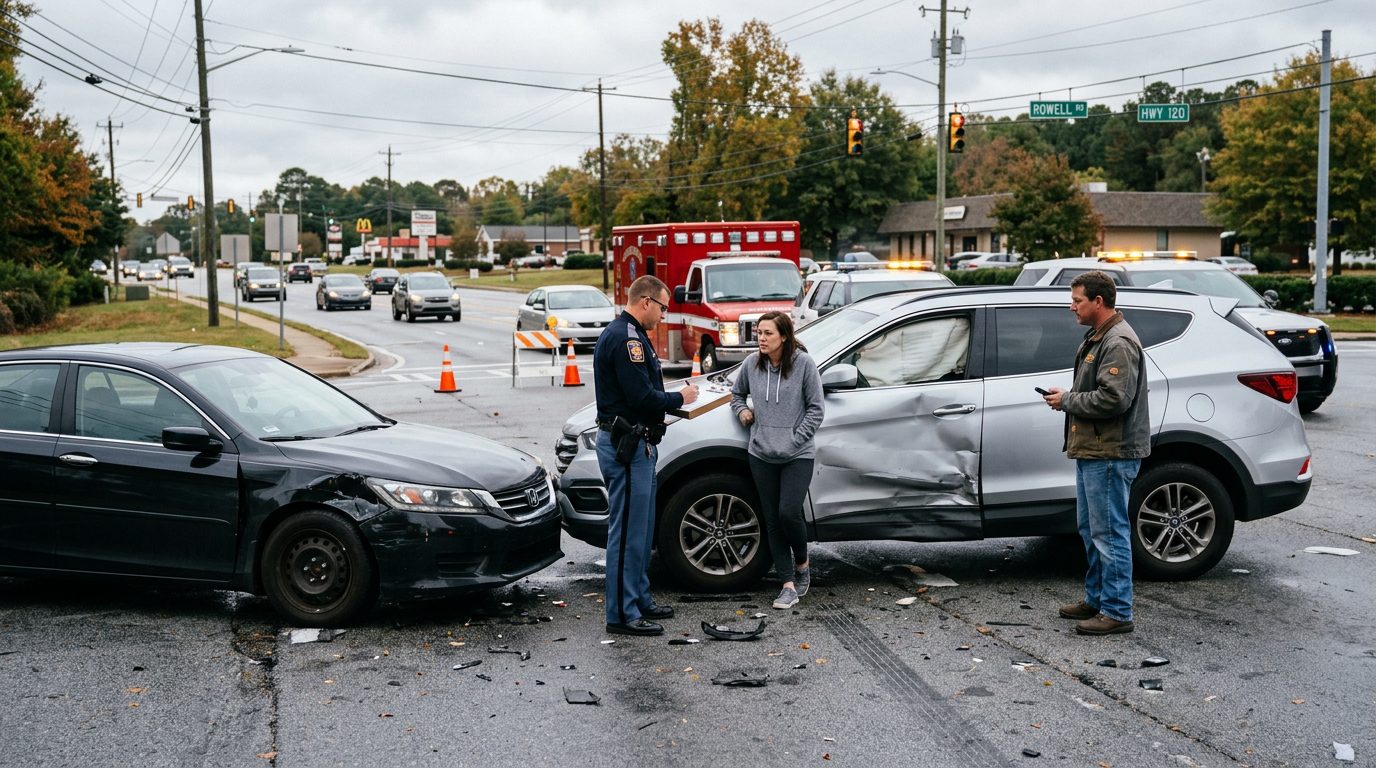
An adjuster has asked for a recorded statement about your car accident, and you’re not sure whether you have to say yes. You don’t have to answer on the spot. The request comes from the other driver’s insurer, not a court, so you can ask for it in writing and take time to decide.
This guide explains what a recorded statement is, how it can be used in a Georgia injury claim, and what to do before, during and after the call.
What a Recorded Statement Is and Why an Adjuster Asks for One
A recorded statement is a question-and-answer session with an insurance adjuster, usually by phone, that is recorded and often typed into a written transcript. The adjuster uses it to learn how the crash happened, who may be at fault, and how badly you were hurt.
Adjusters often ask for this early. That can be before your doctor has finished checking your injuries. Pain and symptoms often change over time, so you may not know the full picture yet.
A casual talk at the scene is different from a recorded call. The recording is a formal record. The words you say are kept in the claim file and can be reviewed later.
Crashes are common in Georgia. The Insurance Institute for Highway Safety reports 1,403 motor-vehicle crash deaths in Georgia in 2024, a rate of 12.5 per 100,000 people. Insurers handle many claims like yours, and they have set routines for collecting information.
If an adjuster has asked for a recorded call while your injuries are still unfolding, you don't have to decide alone. Talk with our team first about your accident and your options. Talk it through with our team — the first consultation is free, confidential, and carries no obligation.
Are You Required to Give a Recorded Statement in Georgia?
Questions from the other driver’s insurance company can feel urgent, and it is reasonable to talk with a lawyer before answering them. In that moment, you can say you would rather wait, or you can ask for the request in writing.
Your own auto policy may include a cooperation clause. That clause asks you to work with your own insurer on your claim. Those duties run to your own company. They are separate from what the other driver’s insurer asks of you.
Policy wording varies. The answer depends on the facts of your claim and the language of your policy, which is one reason to talk it through before you agree.
Ask the adjuster to send the request in writing. Tell them you need time to decide. Then you can review your options before you say anything on a recording.
What Adjusters Typically Ask and Why Small Details Matter
Adjusters usually ask about the crash, your injuries, and your health before the crash. They want facts they can check against other records.
Expect questions about the date, time and location. They may ask where you were going, which lane you were in, your speed, the traffic signal, the weather and the road conditions.
Expect questions about your health, prior injuries, prior accidents, medical treatment and how you feel now. Some adjusters also ask about phone use, distraction, alcohol or medication, and what you were doing in the minutes before the crash.
Small details matter. A time that is off by an hour, or a guess about speed, can look like a contradiction later. Adjusters often compare what you said with the police report and your medical records.
If the crash caused major injuries, the Georgia State Patrol may investigate. The Georgia Department of Public Safety says it can help victims and family members check the status of an investigation.
How a Recorded Statement Can Affect an Injury Claim in Georgia
A recorded statement becomes part of the record the insurer reviews when it decides fault and how serious your injuries are.
Georgia uses a modified comparative fault rule. Under O.C.G.A. § 51-12-33, a judge reduces damages in proportion to the injured person’s percentage of fault. The same statute says a plaintiff who is 50 percent or more responsible cannot receive any damages.
That is why a casual admission matters. A line like “I think I was going too fast” can be used when fault is being divided. Words that sound harmless on a call can carry weight later.
Statements about pain, activity or past health problems can also be compared with medical records. If the words and the records don’t match, the insurer may use that gap to argue your injuries are smaller than you describe.
A statement does not decide a claim by itself. It does become part of the record that the insurer reviews.
What Not to Say to an Insurance Adjuster After a Car Accident
Stick to what you saw and felt. Say “I don’t know” when you don’t know.
Don’t guess about speed, distance, timing or who had the right of way. A guess can later sound like a fact you agreed to.
Don’t say you are fine or not hurt. Injuries can appear or grow worse over days or weeks, so how you feel on the day of the call may change.
Don’t apologize or say “I didn’t see them” or “it was my fault” before the facts are clear. Those words are easy to repeat and hard to take back.
Don’t sign medical authorizations, releases or other documents you haven’t read and understood. Ask for them in writing and take time to review them.
It is reasonable to say you are still gathering information. You can ask for the questions in writing and answer them later.
How Adjusters Try to Catch You Off Guard and Early Settlement Offers
Early settlement offers often come before treatment is finished. An early offer may not reflect the full picture of your injury.
Some calls feel friendly and routine. The questions may seem simple, and the adjuster may ask you to confirm details you are not sure about. A short, relaxed call can still become a record you later wish you had handled differently.
Accepting a payment can close off further recovery under the terms of a settlement. Review any offer before you accept it. Georgia law sets out required terms for written settlement offers in motor vehicle injury claims, including a deadline to accept that is at least 30 days after receipt when sent by certified mail.
Adjusters may also look at social media. Posts about the crash, your activities or your injuries can be used in a claim. Consider pausing posts about the accident until your claim is resolved.
Not sure what your next step is?
Talk it through with our team — the first consultation is free, confidential, and carries no obligation.
What to Do If You Have Already Given a Recorded Statement
A recorded statement you have already given is not the end of your claim. It can be reviewed and clarified.
Write down what you remember while it is fresh. Include the date, the time, what was said, the adjuster’s name, and the claim number.
If an answer was wrong or incomplete, correct it through the claim process. Do this promptly. Don’t wait for the insurer to bring it up.
Keep track of deadlines. Under O.C.G.A. § 9-3-33, actions for injuries to the person must generally be brought within two years after the right of action accrues, except for injuries to the reputation, which must be brought within one year, and actions for injuries to the person involving loss of consortium, which must be brought within four years. That clock keeps running while the insurer reviews your claim.
Talk Through Your Accident Before You Answer Any Questions
Talking with a lawyer before a recorded call can help you understand your options before you decide what to say. Many people make this choice while they are hurting, stressed, and short on information.
Can an adjuster force me to give a recorded statement?
You can ask for it in writing and take time to decide.
Can a recorded statement be used against me?
It can be. Insurers may compare your words with police reports and medical records when they decide fault and injuries.
How long do I have to file an injury lawsuit in Georgia?
Under O.C.G.A. § 9-3-33, the general rule is two years after the right of action accrues for injuries to the person.
For background on the claim process after a crash, read our Georgia car accident guide. Our team works with people across metro Atlanta and Georgia, including Lawrenceville and Johns Creek.
The first consultation is free, confidential, and carries no obligation to continue. If an adjuster is waiting on your answer, you can contact our team to talk through your accident before you say anything on a recording.
This page is for general information and is not legal advice. Peter F. Jaraysi is the responsible lawyer for this page. Slam Dunk Attorney is located in Duluth, Georgia. Contact details are on our contact page.
How our team can help
Free, confidential first consultation
The initial consultation is free, confidential, and carries no obligation to continue.
Plain-language guidance
We explain what a recorded statement is, why insurers request one, and what questions to expect.
Serving metro Atlanta and Georgia
From Duluth, our firm represents people across Gwinnett, Fulton, Cobb and surrounding communities.
Attention to your situation
Our lawyers, Peter F. Jaraysi and Brian D. Wright, and our team take time to understand your injuries, your questions and your goals.
Before you speak with an adjuster
Do not guess about speed, distance, or how the crash happened. Stick to facts you are sure of, and ask for a few days to review before giving any recorded statement.
Questions to think through
Who is calling, and why?
The other driver's insurer works to limit its own exposure. Its questions are not written to help you explain your injuries.
How recordings get used
Insurers may compare your words with police reports, photos and medical records. Small differences can be used to question your account.
Your injuries may still be developing
Some symptoms appear days or weeks later. Describing an injury as minor before you have medical answers can cause problems later.
Not sure what to say?
Talk with our team before you give a statement.