
Truck Accidents | Duluth, Georgia and Metro Atlanta
Wondering How Long a Truck Accident Lawsuit Takes?
Every case moves at its own pace. Here is what shapes the timeline and how our lawyers keep you informed at each step.
By Peter F. Jaraysi · Published November 10, 2026
How long does a truck accident lawsuit take? There is no single answer. The timing depends on the facts of each case, including who is involved, what records exist, and whether the parties agree on how the crash happened. Exceptions exist.
If you’re reading this after a crash, you may be hurt, worried about bills, or helping a family member through a claim. Waiting for answers is hard. This guide explains how a truck accident claim may move, what may affect timing, and how Georgia’s filing limit works. It is general information, not advice about your own case.
How long does a truck accident lawsuit take? Why there is no single answer
A truck accident lawsuit has no fixed length. Its pace depends on the facts of each case. Two people hurt in similar crashes can face very different timelines. One case may involve a single driver and a short list of records. Another may involve several companies, several insurers, and disputed facts.
It helps to separate two ideas. A claim is a demand for compensation, and it may be presented to insurers. A lawsuit is a case filed in court. The two can move on different timelines. Some claims resolve before any lawsuit is filed. Others move into court and take longer.
Waiting can feel endless when medical visits, work, and insurance letters all compete for your attention. That pressure is common, and it is one reason the timing question deserves a clear answer. For a broader overview of car and truck accident claims, see our car accident guide.
Not sure what your next step is?
Talk it through with our team — the first consultation is free, confidential, and carries no obligation.

The stages a truck accident claim may move through
A truck accident claim may move through several stages. Not every case follows the same order, and some stages may overlap.
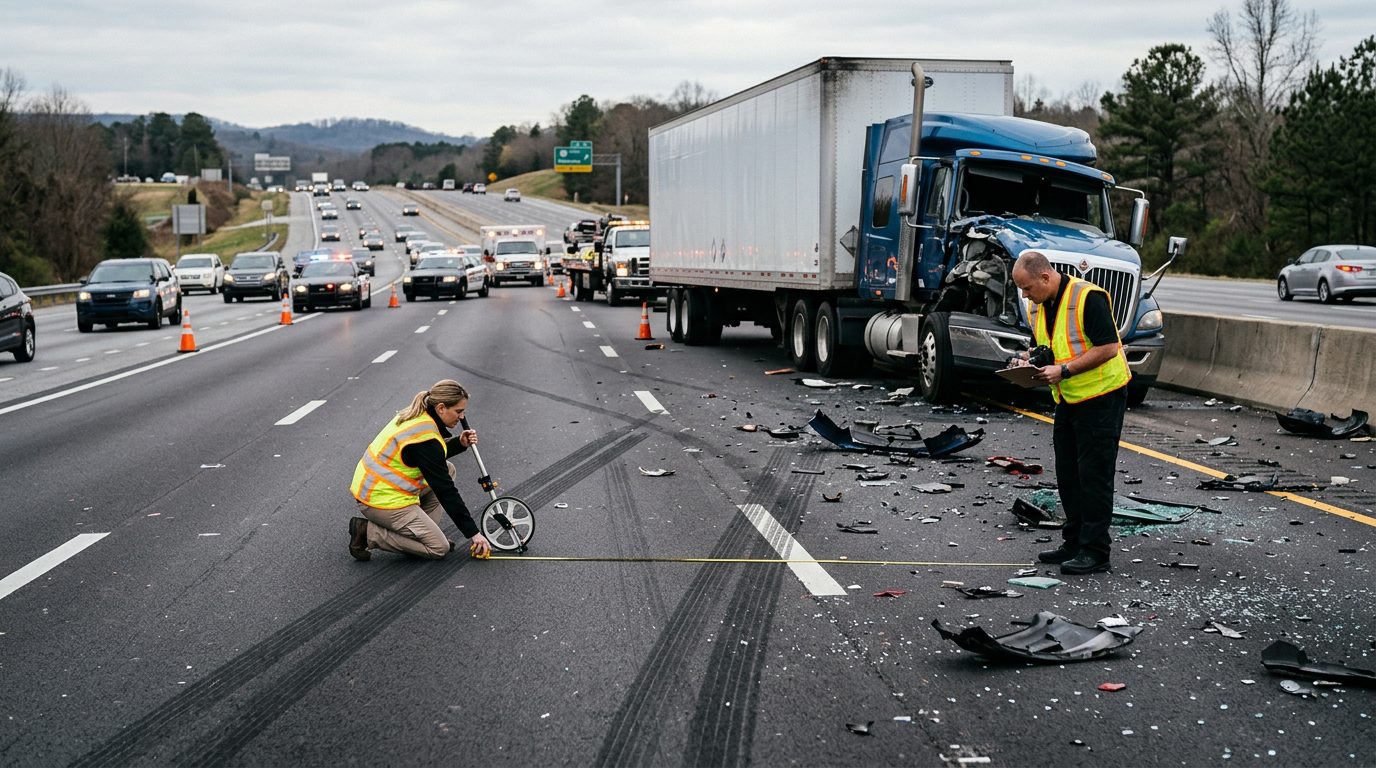
Early investigation. Gathering the crash report, photos, and witness details may start right away. The Georgia Department of Transportation’s crash reporting page describes Georgia police crash reports and how they can be obtained.
Medical treatment. Injured people may need care for weeks, months, or longer. The treatment timeline can affect when the full picture of injuries is known. Medical records document that care.
Claim presentation and negotiation. Discussions with insurers may happen before a lawsuit, or alongside one.
Filing and discovery. If a lawsuit is filed, both sides exchange information, records, and testimony. This phase can take considerable time, depending on the facts.
Mediation, motions, and scheduling. Parties may try mediation, a meeting with a neutral helper that may or may not lead to resolution. Court calendars shape the pace of each step.
Trial. Trial is one possible path if a case does not resolve earlier. It is not the only path.
Factors that may affect how long the case takes
Several factors may affect timing. Each one depends on the facts of the case.
Number of parties. A claim may involve the driver, the trucking company, and other vehicle owners. Each added party may mean more people to coordinate with.
Trucking records. Federal rules set minimum retention periods for some trucking records. How it applies depends on the facts of each case, so consult a lawyer about your own situation. Gathering and reviewing these records may take time, depending on what exists and how the case proceeds.
Whether and how that rule applies depends on the facts of each case, and exceptions may apply, so consult a lawyer about your own situation. After the required retention periods, a company may destroy those records, which may add steps to a case.
Insurance questions. The Georgia Office of the Commissioner of Insurance describes the state’s auto liability insurance and at-fault liability coverage. Which policies may apply depends on the policy and the facts.
Ongoing medical care. Whether treatment is complete may affect when the parties have enough information to discuss the claim.
Court schedules. Each court sets its own calendar. Those schedules can change and cannot be predicted in advance.
Filing deadlines and the Georgia time limit
Georgia generally requires actions for injuries to the person to be brought within two years, though injuries to reputation must be brought within one year and loss-of-consortium claims have four years.
Exceptions exist. O.C.G.A. § 9-3-33 begins with “except as otherwise provided in this article,” and other provisions may change the timing, depending on the facts of your case.
Because of that, timing questions are worth raising with a lawyer early in your own case. Whether any deadline applies to your claim depends on the facts, including the parties and the type of claim.
How settlement and trial timelines can differ
A settlement and a trial verdict are different events. Each one depends on the facts of the case, and each may take a different amount of time.
Some claims resolve through negotiation before a lawsuit is filed. Others resolve during litigation, through mediation or a settlement agreement. Some claims may go to trial.
Settlement papers may include a release, and its terms can limit what you may pursue later. Reading those terms carefully before signing is a point worth discussing with a lawyer. Each path has its own pace, and no path comes with a set time or result.
Questions to think about when you are trying to understand your own timeline
Start with the questions that shape your own timeline.
- Where the injured person is in medical care, and whether the treatment plan is still developing.
- Who may be involved, including the driver, the trucking company, and any other vehicle owners.
- When the crash happened, and which deadlines may apply to your claim.
- Whether insurance letters or forms with response dates have arrived.
- Which documents you already have, such as the crash report, medical bills, and records of care. Those records document care.
How long does a truck accident lawsuit take?
There is no single answer. Timing depends on the facts, the parties, the records, and the court calendar.
How long do you have to file a truck accident lawsuit in Georgia?
Exceptions exist, so the deadline for your claim depends on the facts.
Is a truck accident claim the same as a lawsuit?
No. A claim is a demand for compensation, while a lawsuit is a case filed in court.
Does every truck accident case go to trial?
No. Several paths exist, including negotiation and mediation. Trial is only one possible path.
Not sure what your next step is?
Talk it through with our team — the first consultation is free, confidential, and carries no obligation.

Talk with a lawyer about your truck accident timeline
Trying to plan around a truck crash, a recovery, and paperwork you never expected is a lot to carry. You don’t have to sort out the timing on your own. Our team can talk through the timing questions that apply to your situation in a free case review. The firm offers a free first consultation that is confidential and comes with no obligation to continue. You can reach out through our contact page.
For readers in Duluth and nearby, see our Duluth car accident page.
Disclaimer: Slam Dunk Attorney is based in Duluth, Georgia, and serves people across metro Atlanta and Georgia. Peter F. Jaraysi is the responsible lawyer for this page. Contact: slamdunkattorney.com/contact-us. This page is general information, not legal advice. No outcome or timeline is promised. Timing depends on the facts of each case, and you should consult a lawyer about your own situation.
What Shapes the Timeline
Evidence gathering
Trucking records, driver logs, maintenance files and electronic data can take time to request and review.
Medical treatment
Your recovery and the completeness of your medical records affect when the full picture of your injuries is clear.
Number of parties
Cases involving a driver, a trucking company, a cargo owner or several insurers often involve more steps.
Court schedules
When a case must be filed, court calendars and the judge's docket influence how quickly events happen.
A Helpful Tip Early On
Trucking companies and insurers often start gathering their own records right away. Keep photos, medical notes, receipts and any letters you receive, and avoid giving recorded statements before speaking with a lawyer.
What Usually Happens Along the Way
Investigation
We review the crash, the accident report and the available records to understand what happened and who may be involved.
Negotiation
Many claims are discussed with insurers before any lawsuit is filed. We keep you informed about every offer and every decision.
Litigation
If a lawsuit becomes necessary, our lawyers prepare the case for court, including discovery, depositions and any motions.
Your First Consultation Is Free, Confidential and Comes With No Obligation to Continue
Related practice areas
- Gwinnett County Car Accident Lawyer