
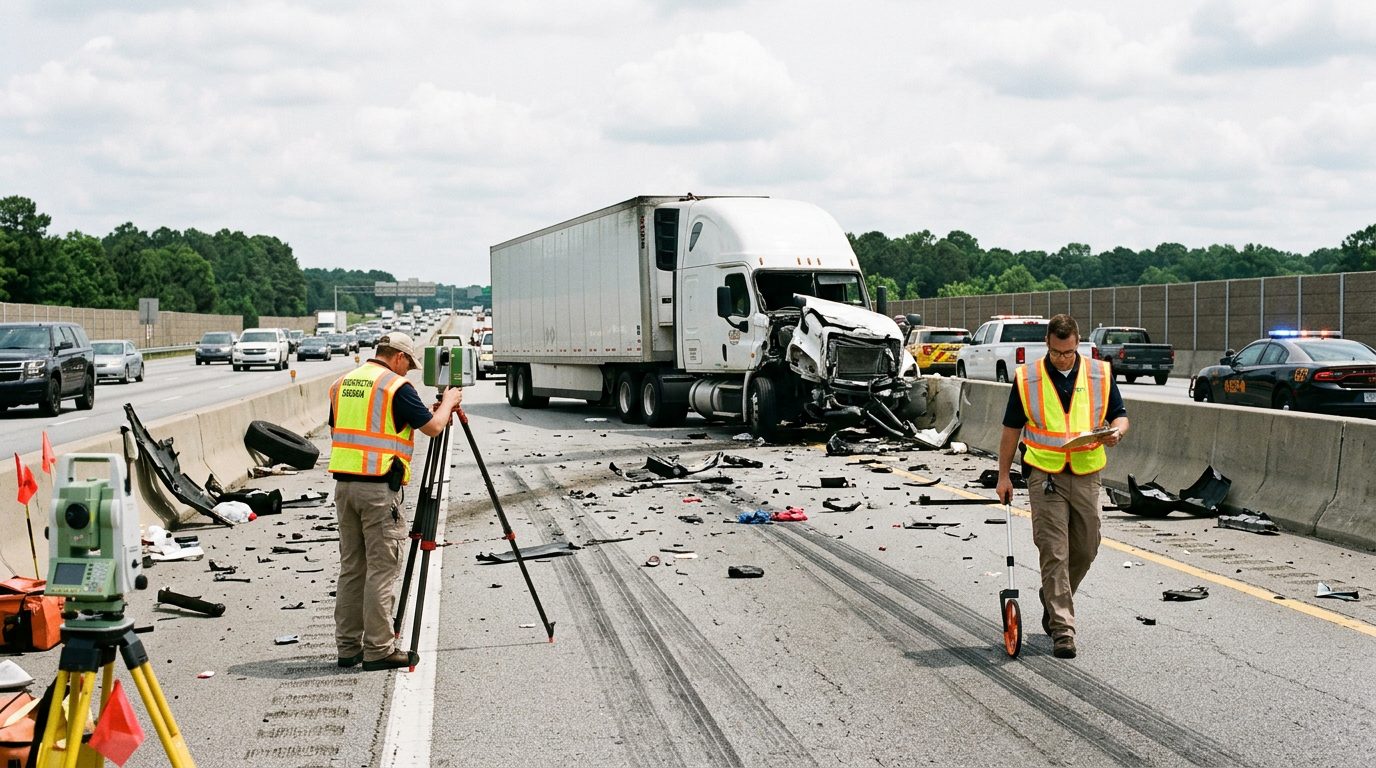
Truck Accident Lawyer
Truck Accident Lawyer in Georgia—Here to Help You Recover
If you've been injured in a truck accident across metro Atlanta and Georgia, Slam Dunk Attorney is ready to listen. We handle the legal work so you can focus on healing.
By Peter F. Jaraysi · Published September 14, 2026
Truck Accident Lawyer Georgia: Focused Legal Help for Serious Injuries
Truck accidents are fundamentally different from car accidents—they involve federal regulations, multiple liable parties, catastrophic injuries, and evidence that must be preserved within hours or it disappears forever. If you’ve been injured by a truck in Georgia, you need a lawyer who understands the unique complexity of these cases, not a generalist handling routine fender-benders.
At Slam Dunk Attorney, we represent injured people across metro Atlanta and Georgia who’ve been hit by 18-wheelers, semi-trucks, delivery vehicles, and other commercial trucks. We handle the investigation, negotiate with trucking company insurers, and prepare your case for trial if needed. You focus on healing. We focus on holding the responsible parties accountable.
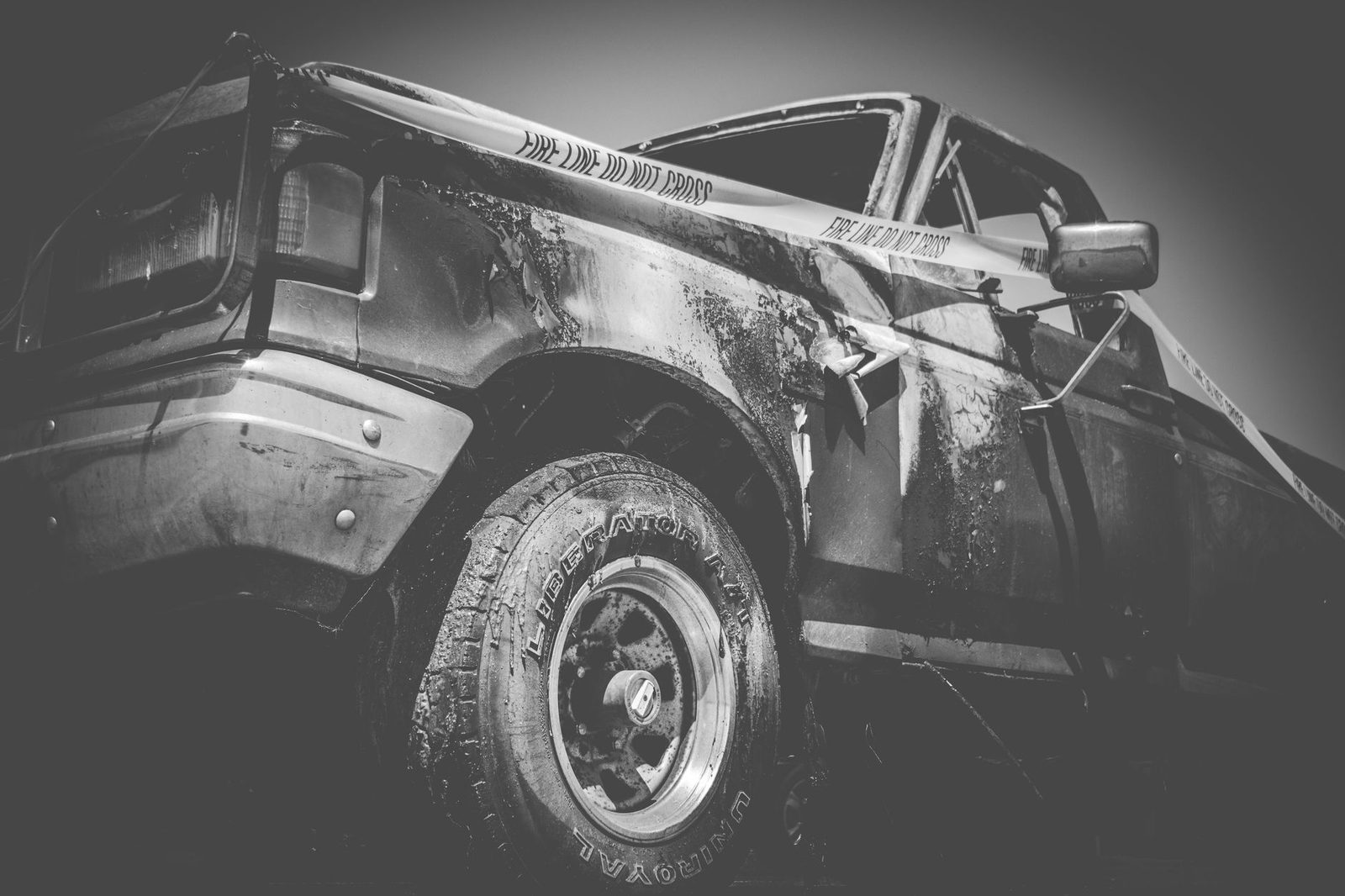
If you've been hit by a truck and you're unsure who's responsible or what your claim is worth, reach out. Talk it through with our team — the first consultation is free, confidential, and carries no obligation.
Why Truck Accidents Require Focused Legal Help
Truck accident cases demand experience that standard car accident lawyers often don’t have. These cases involve federal safety regulations, complex liability chains, and evidence that trucking companies routinely destroy.
The Federal Motor Carrier Safety Administration (FMCSA) sets strict rules for truck drivers and trucking companies—rules about how many hours a driver can work, how often they must rest, vehicle maintenance standards, and cargo loading procedures. When a truck driver or company violates these regulations, it creates a legal duty that strengthens your injury claim. Car accident cases don’t involve this federal framework.
Liability in truck accidents extends far beyond the driver. The trucking company itself can be responsible for negligent hiring, inadequate training, failure to maintain the vehicle, or pressuring drivers to violate hours-of-service rules. The vehicle manufacturer may be liable for defective brakes, tires, or steering. The company that loaded the cargo may be responsible for improper securing. A third-party contractor may have done poor maintenance work. Each of these parties has insurance, and each represents a potential source of compensation.
Injuries in truck accidents tend to be catastrophic. A fully loaded 18-wheeler weighs up to 80,000 pounds. When that collides with a passenger vehicle, the result is often spinal cord injury, traumatic brain injury, amputation, internal organ damage, or death. These injuries require focused legal representation to maximize compensation.
Finally, evidence in truck accidents must be preserved immediately. Electronic logging devices (ELDs) and truck black boxes (event data recorders) capture objective data on speed, braking, hours worked, and impact force. Trucking companies routinely delete or alter this data. Maintenance records disappear. Dispatch logs are destroyed. A lawyer who doesn’t act within hours loses evidence that can prove liability and damages.
Common Types of Truck Accidents We Handle
Truck accidents take many forms, and each presents unique liability and injury patterns.
18-wheeler and semi-truck collisions happen on highways and local roads. These involve the largest commercial vehicles and often result in multi-vehicle pile-ups and severe injuries.
Jackknife and underride accidents occur when a truck’s trailer swings out of control (jackknife) or when a passenger vehicle slides under the trailer bed (underride). Underride accidents are particularly deadly because the trailer can decapitate or crush the occupants of the smaller vehicle.
Delivery and box truck accidents involve smaller commercial vehicles operated in urban areas. These drivers often work under tight time pressure and may drive recklessly to meet delivery quotas.
Multi-vehicle pile-ups involving trucks create complex liability and causation questions. Determining which party caused the initial collision and which injuries resulted from which impact requires expert analysis.
Accidents caused by driver fatigue or hours-of-service violations occur when companies pressure drivers to work beyond safe limits. ELD data proves these violations and strengthens your claim.
Accidents involving improper cargo loading or securing happen when freight shifts during transport, destabilizing the truck or spilling onto other vehicles.
Fatal truck accidents and wrongful death claims require specialized handling to recover damages for loss of life, loss of companionship, and funeral expenses.
What Makes Truck Accident Claims Different from Car Accidents
Truck accident claims operate under a different legal and regulatory framework than car accidents, and the stakes are higher in every way.
Multiple liable parties. In a car accident, typically one driver is at fault. In a truck accident, you may have claims against the driver, the trucking company, the vehicle manufacturer, the cargo loader, a maintenance contractor, and others. A generalist lawyer often misses recoverable defendants.
Federal regulatory framework. The FMCSA creates specific duties for trucking companies and drivers. Violations of these regulations can establish negligence directly. Car accidents don’t involve this federal standard.
Objective evidence from black boxes and ELDs. Truck black boxes record speed, braking, throttle position, and impact data. ELDs record hours worked, rest periods, and location. This data is objective and difficult to dispute—if the trucking company doesn’t destroy it first.
Higher insurance coverage. Trucking companies carry commercial liability insurance with limits far exceeding standard auto policies. This means more compensation is available, but it also means the insurer will hire focused defense counsel and investigators immediately.
Aggressive defense. Trucking company insurers and their attorneys are experienced in defending these claims. They will not offer fair value without pressure from equally focused legal representation.
Catastrophic damages. Truck accident injuries are often permanent and life-altering. Damages may include hundreds of thousands or millions of dollars in medical expenses, lost earning capacity, pain and suffering, and loss of quality of life.
Extensive discovery. Truck accident litigation involves detailed review of driver records, training materials, maintenance logs, dispatch records, safety policies, and company communications. This is far more complex than a typical car accident case.
Liability in Truck Accidents: Who Is Responsible
Establishing liability in a truck accident requires investigation and analysis of federal regulations, industry standards, and the specific facts of your case.
The truck driver may be liable for negligent operation, speeding, distracted driving, fatigue, impairment, or failure to adjust for weather or road conditions. ELD and black box data often prove these violations.
The trucking company may be liable for negligent hiring (hiring a driver with a poor safety record), inadequate training, failure to maintain the vehicle, pressure to violate hours-of-service rules, or failure to enforce safety policies. Company communications, training records, and dispatch logs often reveal these failures.
The vehicle manufacturer may be liable for defective brakes, steering, tires, suspension, or design defects that contributed to the accident or worsened the injuries.
The cargo loader or shipper may be liable for improper loading that caused the truck to become unstable or for securing cargo inadequately so it shifted during transport.
Third-party contractors may be liable for poor maintenance or repair work that left the truck unsafe.
Establishing liability requires investigation, expert analysis, and knowledge of federal regulations. We handle this work so you don’t have to.
Evidence That Matters in Truck Accident Cases
The evidence that proves liability and damages in a truck accident case is often technical and must be preserved immediately.
Electronic logging device (ELD) data shows hours worked, rest periods, location, and vehicle movement. This data proves hours-of-service violations and fatigue.
Truck black box (event data recorder) data captures speed, braking force, throttle position, and impact data in the seconds before and after the collision. This data often proves the truck driver’s negligence.
Maintenance and inspection records reveal known defects, failed repairs, or deferred maintenance that contributed to the accident.
Driver logbooks and dispatch records show scheduling pressure, unrealistic delivery deadlines, and communications that pushed the driver to violate safety rules.
Dashcam and surveillance video from the scene, nearby businesses, or traffic cameras often captures the collision and the vehicles’ movements before impact.
Accident scene photographs and measurements document road conditions, sight lines, traffic signals, and vehicle damage patterns.
Medical records documenting your injuries, treatment, and prognosis establish the severity of your harm and the cost of recovery.
Expert reports on accident reconstruction, biomechanics, vehicle defects, or trucking industry standards provide professional analysis that supports your claim.
Evidence must be preserved immediately. Trucking companies routinely destroy or alter records. A lawyer who acts quickly protects your rights; one who delays loses critical proof.
Not sure what your next step is?
Talk it through with our team — the first consultation is free, confidential, and carries no obligation.
Common Causes of Truck Accidents in Georgia
Truck accidents in Georgia happen for many reasons, and understanding the cause is essential to establishing liability.
Driver fatigue and hours-of-service violations are leading causes. Federal law limits drivers to 11 hours of driving per 14-hour workday, with mandatory rest periods. Companies that ignore these limits create dangerous conditions.
Speeding or excessive speed for conditions occurs when drivers travel too fast for weather, traffic, or road conditions. Large trucks need more distance to stop; speeding makes collisions inevitable.
Improper braking or brake failure happens when trucks aren’t maintained properly or brakes are defective. A truck traveling at highway speed may need 300 feet or more to stop.
Distracted driving—phone use, eating, adjusting controls—diverts the driver’s attention at critical moments.
Impaired driving from alcohol, drugs, or prescription medication impairs judgment and reaction time.
Inadequate vehicle maintenance leaves trucks unsafe. Tires, steering, suspension, and brakes must be inspected and maintained regularly.
Improper cargo loading or securing can shift cargo during transport, destabilizing the truck or causing a jackknife.
Unsafe lane changes or merging occur when drivers fail to check blind spots or merge into occupied lanes.
Failure to adjust for weather or road conditions happens when drivers don’t slow down in rain, snow, or fog or don’t account for curves or hills.
Mechanical defects in tires, steering, or suspension may be the result of poor manufacturing or inadequate maintenance.
Injuries and Damages in Truck Accident Claims
Truck accidents produce injuries that are often severe, permanent, and life-altering.
Severe injuries include spinal cord damage (paralysis or partial paralysis), traumatic brain injury (cognitive impairment, memory loss, personality changes), amputation (loss of limbs), and internal organ damage (bleeding, organ failure).
Chronic pain and permanent disability affect your ability to work, care for yourself, and enjoy life. Some injuries require lifelong medical care and assistance.
Medical expenses include emergency care, surgery, hospitalization, rehabilitation, physical therapy, medications, and ongoing treatment. These costs can exceed hundreds of thousands of dollars.
Lost wages cover income you missed during recovery and treatment. Lost earning capacity covers income you’ll never earn if your injuries prevent you from returning to your former job.
Pain and suffering compensates you for physical pain, emotional distress, and loss of quality of life.
Emotional distress and PTSD are common after traumatic accidents and may require therapy or medication.
Wrongful death and loss of companionship apply in fatal accidents. Surviving family members may recover damages for the loss of the deceased’s income, companionship, and guidance.
Compensation depends on the severity of your injury, the strength of liability, and the insurance coverage available. We assess your case honestly and pursue the full value of your claim.
Our Approach to Truck Accident Cases
We handle truck accident cases with the in-depth experience and urgency these cases demand.
Immediate investigation and evidence preservation. We act within hours to preserve ELD data, black box recordings, maintenance records, and other evidence before trucking companies destroy it.
Retention of accident reconstruction and engineering experts. We work with specialists who analyze collision dynamics, vehicle defects, and causation.
Analysis of FMCSA regulations and trucking industry standards. We review federal safety rules and industry practices to establish liability and negligence.
Review of driver history, training records, and company safety practices. We investigate the driver’s background, the company’s hiring and training practices, and safety policies to establish negligent hiring or inadequate training.
Negotiation with trucking company insurers and defense counsel. We present a strong case backed by evidence and expert analysis. Most cases settle, but we’re prepared to go to trial.
Preparation for trial if settlement is not fair. We prepare every case as if it will be tried to a jury. This preparation strengthens our negotiating position and protects your interests.
Communication in plain language. We explain your case, your options, and what to expect in words you understand. You’ll never be confused about where your case stands or what happens next.
Truck Accident Cases in Metro Atlanta and Georgia
Georgia’s major highways and commercial corridors see heavy truck traffic and frequent accidents.
I-85, I-285, and GA-400 are major trucking routes with high-speed traffic and frequent collisions. Duluth, Lawrenceville, Alpharetta, Marietta, Johns Creek, Norcross, Kennesaw, and Dunwoody all have significant truck traffic.
Georgia negligence law allows you to recover damages if another party’s negligence caused your injury. Under Georgia’s comparative fault standard, if you are found partially at fault, your damages may be reduced by your percentage of fault—but you can still recover if you are less than 50% responsible (O.C.G.A. § 51-12-33; Quynn v. Hulsey, 310 Ga. 473 (2020)).
The statute of limitations for filing a personal injury lawsuit in Georgia is two years from the date of injury (O.C.G.A. § 9-3-33; Cameron v. JMP Pizza, Inc. (2026)). After that deadline, your claim is barred and cannot be pursued. Don’t wait.
Trucking companies and their insurers are experienced in defending claims and will not offer fair value without pressure. Most injured people don’t understand the complexity of truck accident cases and settle for far less than their claims are worth.
Why Choose Slam Dunk Attorney for Your Truck Accident Claim
We’re based in Duluth, Georgia, and we know the metro Atlanta area and Georgia courts. We focus our practice on truck accidents and other serious injury claims. We don’t handle everything; we do truck accidents well.
We handle the investigation and legal work. You focus on recovery. We manage evidence preservation, expert retention, negotiations, and court filings.
We communicate transparently. We explain your case in plain language. You’ll understand your options, what we’re doing, and what to expect at every step.
No upfront fees. We work on contingency—you pay only if we recover compensation for you. We may advance case costs (expert fees, court costs, investigation expenses), but you don’t owe those costs unless we win or settle your case.
We don’t settle cases for less than they’re worth. We’re not motivated to close cases quickly. We take the time to build a strong case and negotiate fairly. If a settlement offer is too low, we prepare for trial.
What to Do After a Truck Accident
Your actions immediately after a truck accident can protect your health and your legal rights.
Seek medical attention immediately, even if injuries seem minor. Some injuries (internal bleeding, spinal injury, traumatic brain injury) don’t show symptoms right away. A medical record also documents your injuries for your claim.
Call police and obtain the accident report number. The police report is official documentation of the accident, the parties involved, and the officer’s observations.
Take photographs of vehicle damage, the scene, road conditions, traffic signals, and any visible injuries. Photographs preserve evidence before it’s cleaned up or altered.
Get contact information from witnesses. Witness statements often prove liability. Ask for names, phone numbers, and email addresses.
Do not admit fault or discuss the accident with the truck driver, trucking company employees, or bystanders. Anything you say can be used against you.
Do not sign anything or give a recorded statement to the trucking company’s insurer. Insurance adjusters are trained to minimize claims. Anything you say can be used to reduce your compensation.
Preserve all medical records, bills, and documentation of lost wages. These documents prove the cost of your injury.
Contact a truck accident lawyer as soon as possible to protect your rights. We’ll guide you on what to do next and handle communications with the insurance company.
Have questions about what happened?
Ask our team directly. The first conversation is free, confidential, and there is no obligation to continue.
Frequently Asked Questions About Truck Accident Claims
How long do truck accident cases take to resolve?
Most truck accident cases settle within 6 months to 2 years, depending on injury severity, liability complexity, and whether settlement is reached or trial is necessary.
Can I still recover if I was partially at fault for the truck accident?
Yes. Georgia allows recovery under comparative fault; your damages may be reduced by your percentage of fault, but you can still recover if you are less than 50% responsible (O.C.G.A. § 51-12-33; Quynn v. Hulsey, 310 Ga. 473 (2020)).
What if the truck driver was an independent contractor?
The trucking company may still be liable under certain circumstances; we investigate the relationship between the driver and the company to determine liability.
How much is my truck accident case worth?
Value depends on medical expenses, lost wages, injury severity, and liability strength; we provide an honest assessment based on the facts of your case.
Do I have to go to trial?
Most cases settle, but we prepare every case for trial to maximize settlement value and protect your interests if settlement negotiations fail.
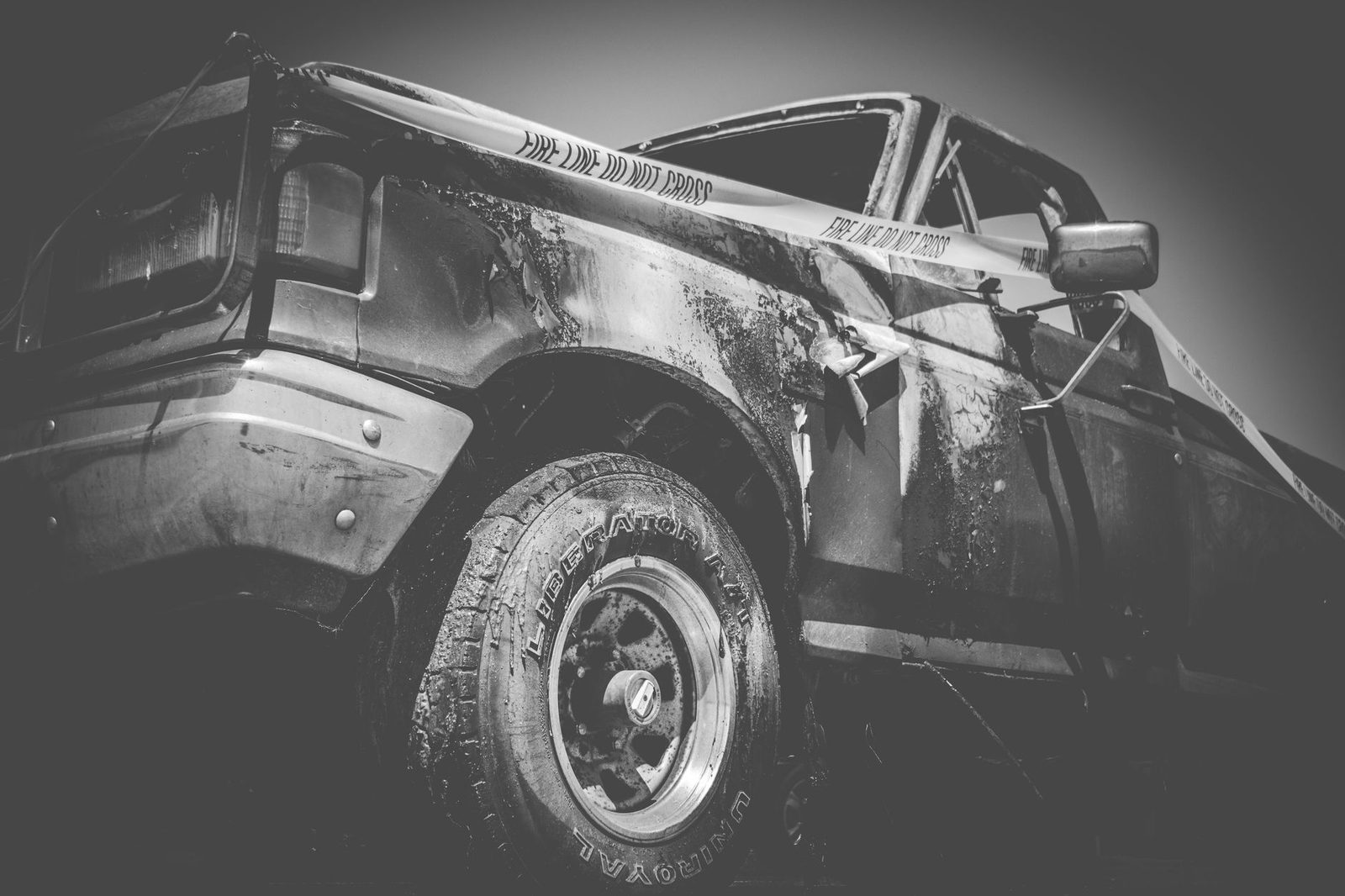
Contact Slam Dunk Attorney Today
If you’ve been hit by a truck and you’re unsure who’s responsible or what your claim is worth, reach out. People in your situation can contact us, and we’ll walk you through your options at no cost.
Request a free consultation with our team. We’ll review the facts of your accident, explain your legal options, and answer your questions—no obligation, no pressure.
You don’t have to face this alone. Let us handle the legal work while you focus on healing.
Why Choose Slam Dunk Attorney
Focused on Your Recovery
We focus exclusively on personal injury cases—truck accidents, car accidents, motorcycle accidents, and more. Your case gets the attention it deserves.
Transparent, Empathetic Representation
We explain your options in plain language, answer your questions honestly, and treat you with respect throughout the process.
No Fees Unless There Is a Recovery
We work on a contingent-fee basis. You pay no attorney fees unless there is a recovery. You may still owe case costs.
Serving Georgia and Metro Atlanta
Based in Duluth, Georgia, we represent injured people across the state, including Lawrenceville, Johns Creek, Alpharetta, Marietta, Norcross, Kennesaw, and Dunwoody.
Common Questions About Truck Accident Cases
How long do truck accident cases take to resolve?
Most truck accident cases settle within 6 months to 2 years, depending on injury severity, liability complexity, and whether settlement is reached or trial is necessary. We'll keep you informed every step of the way.
Can I still recover if I was partially at fault?
Yes. Georgia allows recovery under comparative fault—your damages may be reduced by your percentage of fault, but you can still pursue a claim (O.C.G.A. § 51-12-33; Quynn v. Hulsey, 310 Ga. 473 (2020)). We'll evaluate the facts of your case.
What damages can I recover?
Depending on your case, you may be able to recover for medical expenses, lost wages, pain and suffering, and other losses. We'll review your situation and explain what may apply to you.
What should I do right after a truck accident?
Seek medical attention, call the police, document the scene and injuries if you can, and get contact information from witnesses. Then contact us for a free case review—we'll guide you from there.
Important: Act Promptly
Georgia law sets time limits for filing personal injury claims. The sooner you reach out, the sooner we can protect your rights and begin investigating your case.