
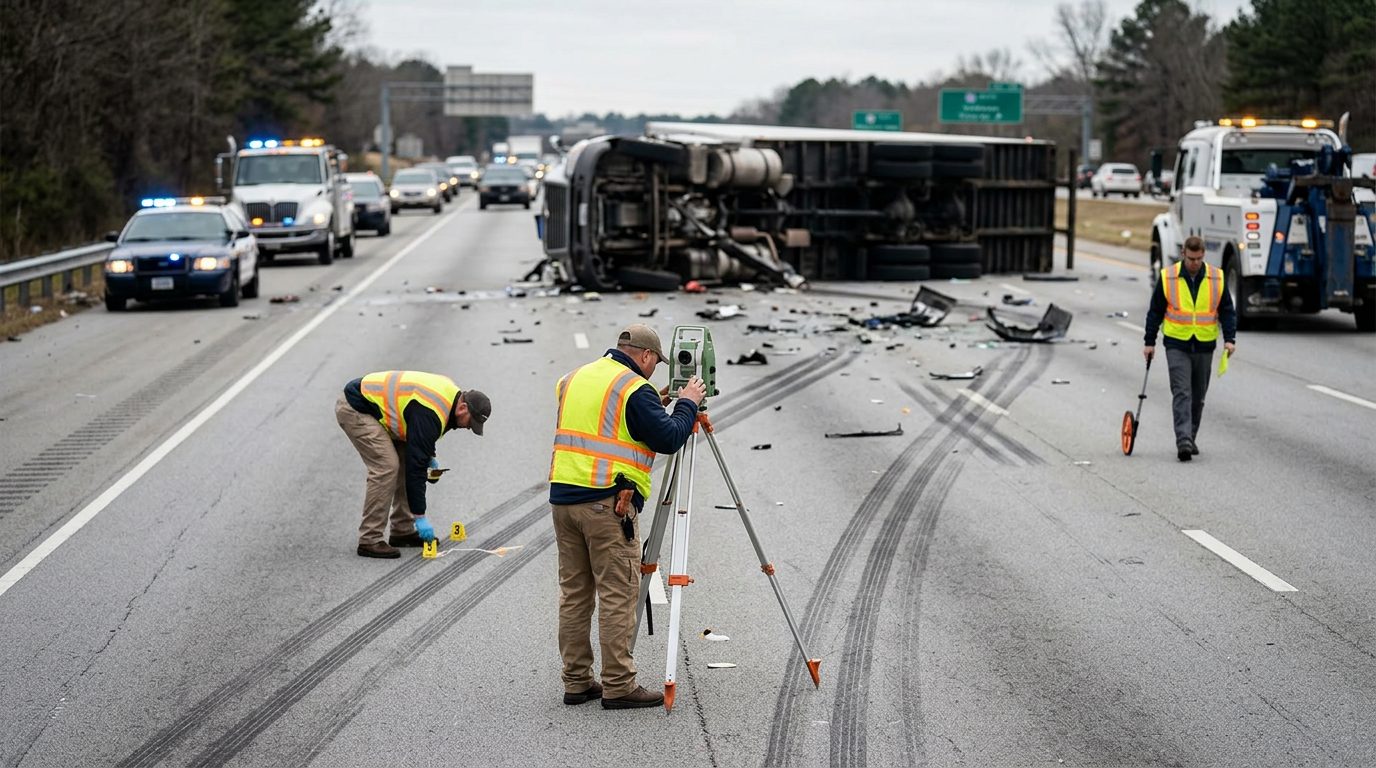
Truck Accidents | Duluth, Georgia and Metro Atlanta
DUI Truck Accident Attorneys Serving Georgia
Slam Dunk Attorney, a Duluth, Georgia personal injury firm, represents people hurt in crashes involving commercial trucks and impaired drivers across metro Atlanta and Georgia. Call for a free case review to talk through what happened.
By Peter F. Jaraysi · Published October 11, 2026
Were you hurt by a truck driver who had been drinking or using drugs? In Georgia, that driver and possibly others may be answerable in a civil injury claim. Impairment does not decide the result on its own, and no outcome is assured. This guide explains how DUI can factor into a truck accident case, which losses may be considered, and what to do next. Slam Dunk Attorney is based in Duluth, Georgia, and represents people hurt in truck, car, and motorcycle crashes across metro Atlanta and Georgia. If you are looking for DUI truck accident attorneys Georgia residents can reach, this page is a plain-language starting point.
How DUI Affects Liability in a Truck Accident
Impairment can be a central fact in deciding who is responsible after a truck crash, but it does not settle liability by itself. Federal safety rules set alcohol limits for commercial drivers.
Those rules may apply to your crash, or they may not. The answer depends on the trip, the vehicle, and the driver’s job. A lawyer can review which rules fit your facts.
Why does impairment matter so much? Alcohol and drugs can slow reaction time, reduce control, and cloud judgment. A loaded truck needs more room to stop and turn than a passenger car. Whether impairment caused your injuries depends on the facts of your crash.
Do not assume you must prove a specific blood alcohol level. What must be shown depends on the claims involved and the facts. A DUI arrest, a failed test, or a conviction may be part of what gets reviewed, but none of them decides the result alone.
If a truck driver who may have been drinking or using drugs hurt you, you may have a claim worth reviewing, and our team can walk you through your options. Talk it through with our team — the first consultation is free, confidential, and carries no obligation.

What Damages May Be Available After a DUI Truck Crash?
A civil claim may seek compensation for losses such as medical bills, lost income, and property damage. The amount depends on the facts of your case, and no amount is promised.
Economic losses are costs you can count. These can include emergency care, hospital stays, follow-up treatment, rehabilitation, and prescriptions. Lost wages cover income you missed. Some claims also address loss of earning capacity, which looks at future work ability if an injury limits it. Property damage covers vehicle repair or replacement.
Pain and suffering covers physical pain, emotional distress, and how an injury changes daily life. No single injury determines what this type of loss is worth.
Punitive damages work differently. Georgia law says they punish or deter a defendant rather than pay the injured person. They may be awarded only when it is proven by clear and convincing evidence of conduct such as willful misconduct, malice, or wantonness (O.C.G.A. § 51-12-5.1). Whether that standard fits your case depends on the facts.
If a crash is fatal, Georgia law sets out who may bring a wrongful death claim. It describes the recovery as the full value of the decedent’s life, as shown by the evidence (O.C.G.A. § 51-4-2). Who qualifies depends on the family, so ask a lawyer about your situation.
Who Else Can Be Held Responsible Besides the Driver?
Other parties, such as the trucking company, may share responsibility in some cases, depending on the facts. The driver is not always the only party to review.
A trucking company may face claims about how it hired, trained, supervised, or dispatched the driver. It may also answer for the driver’s work in some situations. The truck’s owner may be a different company from the operator, and that owner can be part of a review too. A dispatcher or fleet manager who knew or should have known about impairment may also be relevant.
In some situations, a business that served alcohol to the driver may be a possible party. Whether that applies depends on what happened and the rules that fit the facts.
Georgia law also divides fault among the people who contributed to an injury. Who is named can affect how a claim is organized. A lawyer can identify who may be responsible in your case.
What Evidence Can Matter in a DUI Truck Crash Claim?
Common evidence includes police records, test results, witness accounts, and truck records. No single item decides a claim, and each item depends on the facts.
The police report may describe the crash scene, any arrest, and what officers observed about the driver. Breath or blood test results, and any toxicology report, can show alcohol or drug levels. Witness statements may describe how the driver acted before or after the crash.
Truck records can also be relevant. An electronic logging device (ELD) records driving time. That data may show how long a driver had been on the road. Whether it shows that depends on the records themselves.
Video is another source. Dashcam or traffic camera footage can show the crash. Footage may be overwritten or deleted over time, which is one reason early requests matter.
Medical records describe your injuries, diagnosis, and treatment. Whether those records link your injuries to the crash depends on what providers document and on the other facts. Keep copies of everything you receive.
Criminal Case vs. Civil Claim: How They Differ
A criminal DUI case is brought by the state, while your injury claim is a separate civil case that addresses your own losses. The two can run at the same time.
The criminal case asks whether the driver broke the law. The civil claim asks who must pay for your injuries and losses. You pursue the civil claim yourself, and it is separate from any penalty the driver faces.
If the crash also led to a criminal case, you can ask a lawyer how that case may relate to any civil claim you are considering. Timing still depends on your facts, so a lawyer should review it.
Under Georgia law (O.C.G.A. § 9-3-99), the time to file a tort claim brought by the victim of an alleged crime may be tolled from the date of the alleged crime until the related prosecution becomes final or otherwise ends, but whether and how this applies depends on the facts and exceptions may exist, so talk with a lawyer about your own case. That pause cannot run longer than six years and applies only in some cases (O.C.G.A. § 9-3-99). Do not count on a pause. Ask a lawyer whether it may apply to you.
What Challenges Might Come Up in Your Case?
Insurers and other parties may dispute fault, the link between the crash and your injuries, or whether the driver was working at the time. These issues are common to plan for, but how they play out depends on the facts.
An insurance company may question how serious your injuries are or what caused them. Some parties argue the driver acted outside the scope of the job. Whether that argument fits your facts is a question for a lawyer.
Comparative fault, also called shared fault, is another issue (O.C.G.A. § 51-12-33; Quynn v. Hulsey, 310 Ga. 473 (2020)). Under Georgia law, an injured person’s damages may be lowered in proportion to that person’s share of fault (O.C.G.A. § 51-12-33). The same statute says a plaintiff who is 50 percent or more responsible generally may not receive damages. This rule is fact-dependent, and exceptions may apply. Evidence of impairment does not automatically resolve this issue.
Not sure what your next step is?
Talk it through with our team — the first consultation is free, confidential, and carries no obligation.
Why Timing Matters After a Crash
Timing matters because evidence can disappear and legal deadlines apply. Georgia law generally sets a two-year period for injury claims, but exceptions exist.
O.C.G.A. § 9-3-33 provides that actions for injuries to the person generally must be brought within two years after the right of action accrues. Exceptions exist, and the start date depends on the facts. Do not assume the same date fits every type of claim.
Evidence has its own clock. Video can be overwritten, and memories can fade. Keep appointment summaries, bills, pay records, and photos in one place. Early contact with a lawyer can help you understand which records to request while they are still available. Early contact does not assure any result.
Next Steps After a DUI Truck Crash
Start by getting medical care for your injuries, keeping records, and talking with a lawyer before you make decisions about a claim.
- Get medical care, and keep every visit summary and bill.
- Collect the police report number, photos, and names and phone numbers of witnesses.
- Write down what you remember while it is fresh, including what the driver said or did.
- Keep pay records and notes about missed work.
- Think before posting about the crash online. You can also choose to speak with a lawyer before giving a recorded statement to an insurance adjuster.
If a truck driver who may have been drinking or using drugs hurt you, you do not have to sort out the next steps alone. Slam Dunk Attorney represents people hurt in truck accidents across Georgia. Request a free consultation through the Slam Dunk Attorney contact page. We will review the crash details you have, explain the deadlines that may apply, and outline your options. No outcome is assured.
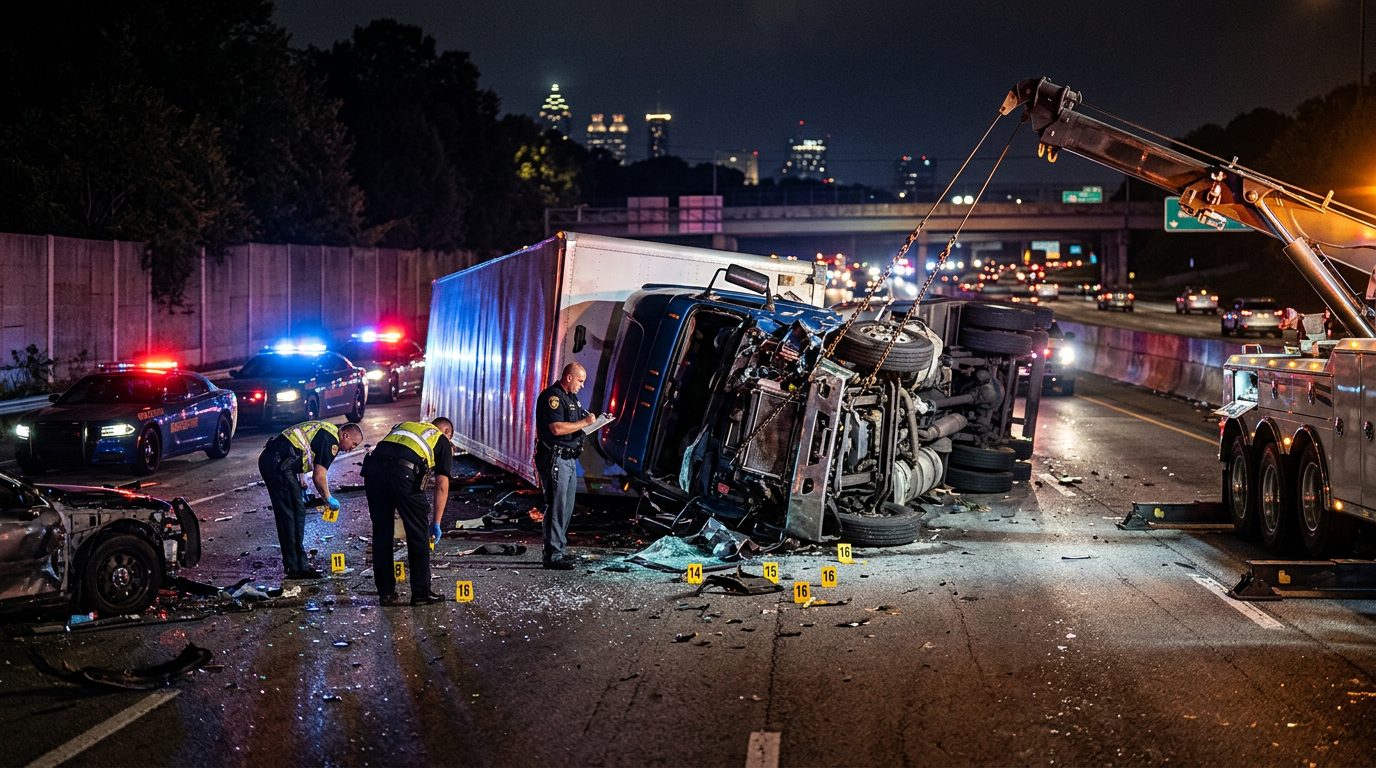
Frequently Asked Questions
Can I sue a truck driver for a DUI crash before the criminal case ends?
How a criminal case and a civil claim relate to each other depends on the facts, so consider discussing your own situation with a lawyer. Timing depends on your facts, so ask a lawyer.
How long do I have to file an injury claim in Georgia?
Georgia law generally sets two years for injury claims, but exceptions exist. Ask a lawyer which date applies to your situation.
Can the trucking company be responsible too?
It may be, depending on how it hired, trained, supervised, or dispatched the driver. The facts of the crash decide the question.
Are punitive damages available in these cases?
They may be, but only when clear and convincing evidence shows conduct such as willful misconduct or wantonness. Whether that applies depends on your facts.
This page is general information, not legal advice. Slam Dunk Attorney is based in Duluth, Georgia. Contact the firm through the Slam Dunk Attorney contact page. Laws, deadlines, and outcomes depend on the facts of each case. Consult a lawyer about your own situation.
Situations We Handle
Commercial Truck Crashes
Collisions involving tractor-trailers, delivery trucks and other commercial vehicles can raise questions about the driver, the carrier and the vehicle's maintenance. Each case depends on its own facts.
Impaired Driver Crashes
When a driver is suspected of driving under the influence, the criminal case and any civil claim may proceed on different timelines. How they relate depends on the facts of your situation.
Multiple Parties
Crashes can involve more than one driver, a trucking company, or other businesses. Identifying who may be responsible often takes careful review of the available records.
Your Next Step
Contact our Duluth office for a free case review. We will listen to your account, explain the general process and discuss the questions that matter for your situation.
Fee Terms and Case Costs
There are no fees unless there is a recovery, but you may still be responsible for court costs and case expenses. Please review the written fee agreement carefully before you decide.