
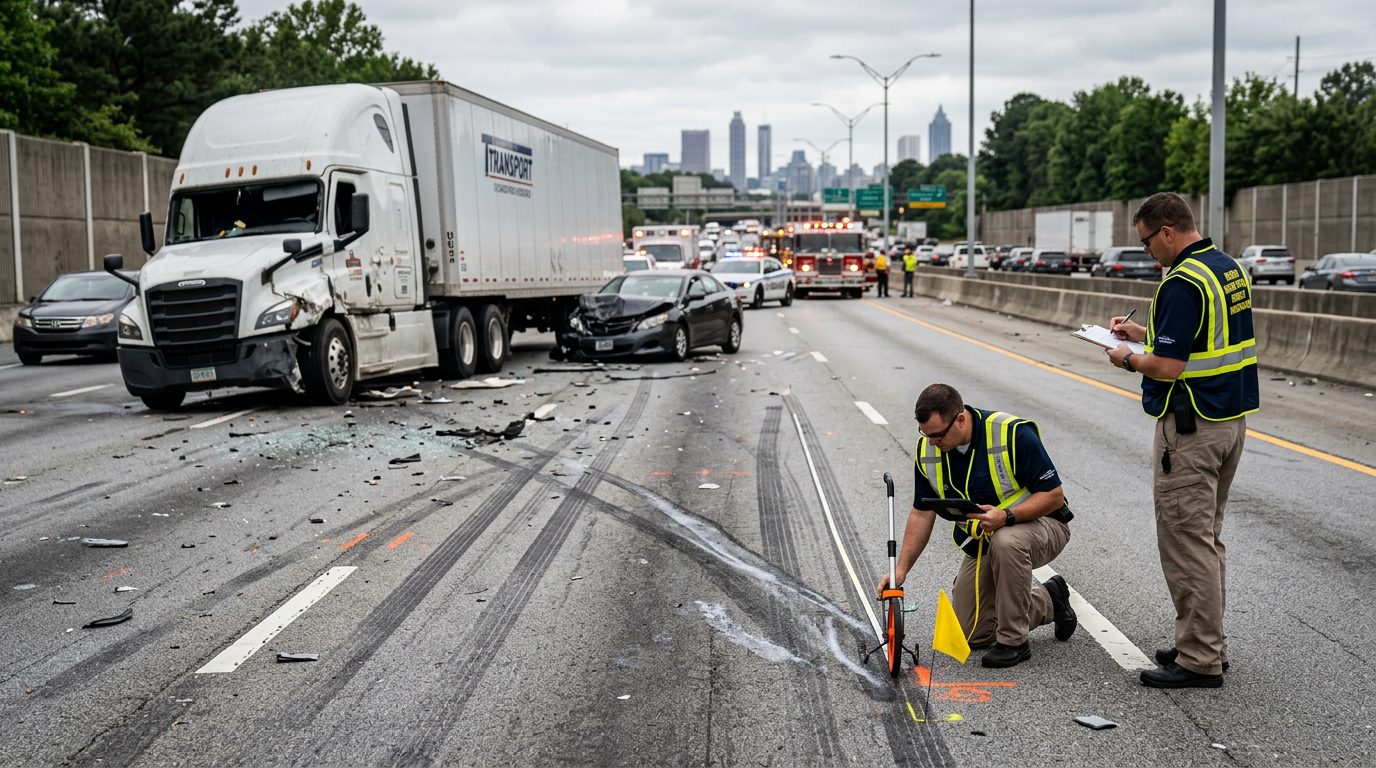
Truck Accidents | Atlanta and Georgia
Hurt in a Truck Crash on I-85? Talk With Our Team Today
Slam Dunk Attorney, led by Peter F. Jaraysi, represents people injured in truck accidents across metro Atlanta and Georgia. Your first consultation is free, confidential, and comes with no obligation to continue.
By Peter F. Jaraysi · Published October 17, 2026
A truck crash on Interstate 85 can cause serious injuries, large medical bills, and lost income. If another driver or a trucking company caused your harm, you may have a claim under Georgia law. This guide explains how these cases usually work, from common causes to deadlines and fault rules. It is general information, not legal advice. Our team at Slam Dunk Attorney, led by Peter F. Jaraysi, helps people hurt in truck crashes across metro Atlanta and Georgia. If you are looking for an Atlanta I-85 truck accident lawyer to talk through your options, the next step is covered at the end of this page.
Why Truck Crashes on I-85 Raise Different Questions
A truck crash on I-85 usually involves more parties and more records than a car crash. I-85 carries heavy commercial traffic through Gwinnett County and north metro Atlanta. Drivers in Lawrenceville and Duluth know the merges and sudden slowdowns that make every lane change risky.
A big rig crash often involves the driver, the trucking company, and sometimes a shipper, a broker, or a maintenance contractor. Each one may have played a role in what happened. That is why a truck crash can raise questions that a simple fender-bender does not.
Two sets of rules apply at once. Federal motor carrier rules set standards for how trucks are driven, loaded, and documented. Georgia negligence law decides who is at fault and how damages are reduced. Both matter to your case.
Timing matters too. Trucking companies and their insurers begin gathering their own evidence soon after a crash. Acting early helps protect the proof that shows what happened.
If a tractor-trailer crash on I-85 left you with medical bills and missed shifts, you may have a claim, and our team can review it with you at no cost. Talk it through with our team — the first consultation is free, confidential, and carries no obligation.

Common Causes and Types of I-85 Truck Crashes
Most I-85 truck crashes come from driver choices, equipment problems, or poorly secured cargo. Driver fatigue is one of the biggest risks. Federal rules limit how long a driver may drive. A driver may not drive after 14 consecutive hours on duty that follow 10 consecutive hours off duty. Within that window, a driver may drive no more than 11 hours. Driving also must stop for a 30-minute break after 8 hours of driving time. 49 C.F.R. § 395.3
Other common causes include following too closely, unsafe lane changes, blind spots, distracted driving, and speeding. Equipment failure is another. Brakes or tires that fail can cause a crash, and the failure may point to poor maintenance.
Cargo is a cause people often miss. Cargo must be secured so it does not leak, spill, blow, or fall from the truck. It must also be contained so it does not shift and hurt the vehicle’s stability or maneuverability. 49 C.F.R. § 393.100
Common crash patterns on I-85 include rear-end collisions, sideswipes during lane changes, jackknifes, rollovers, and underride crashes. In an underride crash, a car slides under the trailer. Rain, construction zones, and heavy congestion can make each pattern more likely. They can also make it harder to sort out who was at fault.
Injuries Commonly Seen in Interstate Truck Collisions
Truck crashes often cause serious injuries because of the size and weight difference between a big rig and a passenger car. Common injuries include spinal injuries, traumatic brain injuries, broken bones, and internal injuries. Some of these are not obvious at the scene.
Concussions and soft-tissue injuries can take hours or days to show symptoms. Headaches, dizziness, neck pain, and sleep changes may appear later. Seeing a doctor soon after a crash creates a clear medical record, even if you feel mostly fine at first.
Keep a file of every visit, diagnosis, prescription, and treatment plan. Write down the work you missed and the activities you can no longer do. These notes show how the crash changed your daily life.
Georgia’s Governor’s Office of Highway Safety publishes large truck crash data that breaks out who was hurt in these crashes.
Who May Be Responsible After a Truck Accident
The truck driver is not always the only party who may be responsible. A driver who acts carelessly may be liable for the harm.
Georgia courts also allow claims against the company itself. These claims look at what the company did, not only what the driver did.
Other parties can be involved depending on the facts. A cargo loader, a maintenance or repair company, or a vehicle maker may have played a role. Each case needs its own review.
Evidence is what usually shows who did what. Key records include electronic logging device data, driver logs, inspection and maintenance records, and dashcam footage. Federal rules require drivers to record their duty status, and they bar false reports about it. 49 C.F.R. § 395.8
Records do not last forever. After required retention periods, a company may destroy its records at its own discretion. 49 C.F.R. § 379.3 That is one reason early preservation matters.
How Georgia’s Comparative Fault Rule Works
Georgia reduces your damages by your share of fault. It bars recovery if you are 50 percent or more responsible. This is called modified comparative fault, or shared blame. Under O.C.G.A. § 51-12-33, the trier of fact sets the injured person’s percentage of fault. The judge then reduces the award in proportion to that percentage.
Here is a simple example. Under O.C.G.A. § 51-12-33, if the plaintiff is to some degree responsible for the injury or damages claimed, the judge reduces the amount of damages otherwise awarded to the plaintiff in proportion to his or her percentage of fault. If you were 50 percent at fault or more, you could not recover damages.
The statute also says each liable person pays only their own share. Those shares are not joint liability, and they are not subject to contribution. The fault of everyone who contributed to the injury counts, even people who were never named in the suit. A trucking company, a loader, or another driver may each carry a share.
Insurers often argue that an injured driver shared the blame. Keep your statements short and factual. Do not guess about speed, fault, or your injuries.
Deadlines for Filing a Georgia Truck Accident Claim
For most injury claims in Georgia, a lawsuit must be brought within two years. O.C.G.A. § 9-3-33 sets that two-year rule for injuries to the person. Missing it can bar the lawsuit.
The rules change when a government entity is involved. Under O.C.G.A. § 50-21-26, a written notice of a claim against the state generally must be given within 12 months of when the loss was discovered or should have been discovered. A crash involving a state-owned vehicle is one example where this matters.
Waiting also makes proof harder to get. Trucking records may be destroyed after their retention periods end. Acting early gives you the best chance to request those records in time.
Not sure what your next step is?
Talk it through with our team — the first consultation is free, confidential, and carries no obligation.
What a Truck Accident Claim May Include
Lost earning power can matter too, if an injury keeps you from working the way you did before.
Georgia law also covers families of people who die. Under O.C.G.A. § 51-4-2, a surviving spouse, or a child or children if there is no spouse, may recover the full value of the life of the decedent. The value is shown by the evidence. Under O.C.G.A. § 51-4-5, the personal representative may recover funeral, medical, and other necessary expenses from the injury and death.
The value of any claim depends on the facts. Those include how serious the injuries were, the treatment needed, and the evidence of fault. No one can say in advance what a claim will be worth.
Questions Injured People Often Ask
How long do I have to file a lawsuit after an I-85 accident?
Georgia generally gives two years to bring an injury lawsuit (O.C.G.A. § 9-3-33; Cameron v. JMP Pizza, Inc. (2026)). Claims against the state can require written notice within 12 months.
What should I avoid saying to an insurance adjuster?
Keep your statements brief and factual. Do not guess about fault, speed, or how hurt you are. Talk about what you saw and what you felt.
How much do accident lawyers charge in Georgia?
Fee arrangements vary from lawyer to lawyer. Ask about fees and case costs before you agree to anything. An Atlanta I-85 truck accident lawyer can explain how those terms work in your case.
How much are truck accident settlements?
Outcomes depend on the facts of each case. No one can predict a settlement amount in advance.
Steps to Take in the First Days After an I-85 Crash
Get medical care first, then protect your evidence. Follow the treatment plan your doctor gives you, even if your symptoms seem mild.
Photograph the scene, the vehicles, the road conditions, and any company name or cargo markings on the truck. Get witness names and contact information when you can do so safely.
Write down what you remember while it is fresh. Include the time, lane, direction of travel, weather, and what the other driver said. Keep copies of the police report, medical bills, and records of work time you missed.
Know that the trucking company has its own testing duties. In listed situations, such as a fatal crash or certain injury or tow-away crashes where the driver gets a citation, the employer must test surviving drivers for alcohol and drugs as soon as practicable. The federal alcohol-testing rule for commercial drivers, found in federal regulations on commercial motor vehicle testing, requires employers to test certain surviving drivers for alcohol as soon as practicable after a commercial motor vehicle accident on a public road. The Federal Motor Carrier Safety Administration describes the federal testing requirements for commercial drivers.

Talking Through Your I-85 Crash With Our Team
If you are still deciding what to do, a first conversation can help you see your options clearly. Many people hurt on I-85 are still in treatment, missing work, and fielding calls from an insurer or a trucking company.
Peter F. Jaraysi and our team at Slam Dunk Attorney, based in Duluth, Georgia, can review the facts of your crash with you. The first consultation is free, confidential, and carries no obligation to continue. You can reach out through our contact page to start that conversation.
This page is general information, not legal advice, and it does not promise any result. Peter F. Jaraysi is the responsible lawyer for this page. Slam Dunk Attorney is located in Duluth, Georgia.
How Our Practice Can Help
Focused on Injury Claims
Our practice focuses on people hurt in truck, car, motorcycle and pedestrian accidents, along with dog bites, premises liability, negligent security, nursing home abuse and wrongful death.
Clear Explanations
We explain each step of a truck accident claim in plain language, so you can make informed decisions about your case.
Support From Our Team
Our team of assistants and office staff helps keep your case organized and your questions answered.
Serving Metro Atlanta and Georgia
We represent injured people in Atlanta, Duluth, Lawrenceville, Johns Creek, Alpharetta, Marietta, Norcross, Kennesaw, Dunwoody and communities across Georgia.
Before You Speak With an Insurer
Trucking companies and their insurers often act quickly after a crash. Before you give a recorded statement or sign any paperwork, consider talking with a lawyer about what you are being asked to do.
Common Causes of Interstate Truck Crashes
Driver Fatigue
Long hauls and tight schedules can lead to exhausted drivers who lose focus or fall asleep at the wheel.
Distracted Driving
Phone use, dispatch communication and other distractions can keep a driver from noticing traffic slowing ahead.
Improper Loading
Cargo that is unbalanced, unsecured or overweight can shift and cause a driver to lose control.
Mechanical Failure
Brake, tire and steering problems can be linked to poor maintenance or inspection practices.