
Truck Accidents | Duluth, Georgia and Metro Atlanta
Truck Accident Insurance Claims in Georgia: A Step-by-Step Guide
Trucking insurance claims can be complicated, with several companies and policies involved. Here is a plain-language overview of what to expect, and how our team at Slam Dunk Attorney can help you through each step.
By Peter F. Jaraysi · Published October 21, 2026
How Insurance Claims Work After a Truck Accident in Georgia
After a truck accident in Georgia, the insurance claim process can feel overwhelming—especially if you’re injured, your vehicle is damaged, or you’re managing the situation for a family member. Understanding what happens next, what to expect, and when you might need legal guidance can help you navigate the process with more confidence.
If you're working through a truck accident claim right now and aren't sure whether the insurance company's offer is fair or whether you have a stronger claim than they're acknowledging, reach out to talk through your situation. Talk it through with our team — the first consultation is free, confidential, and carries no obligation.

What Happens Immediately After a Truck Accident in Georgia
Your first priority is safety and documentation. Move to a safe location if possible, call 911 if anyone is injured, and wait for police to arrive.
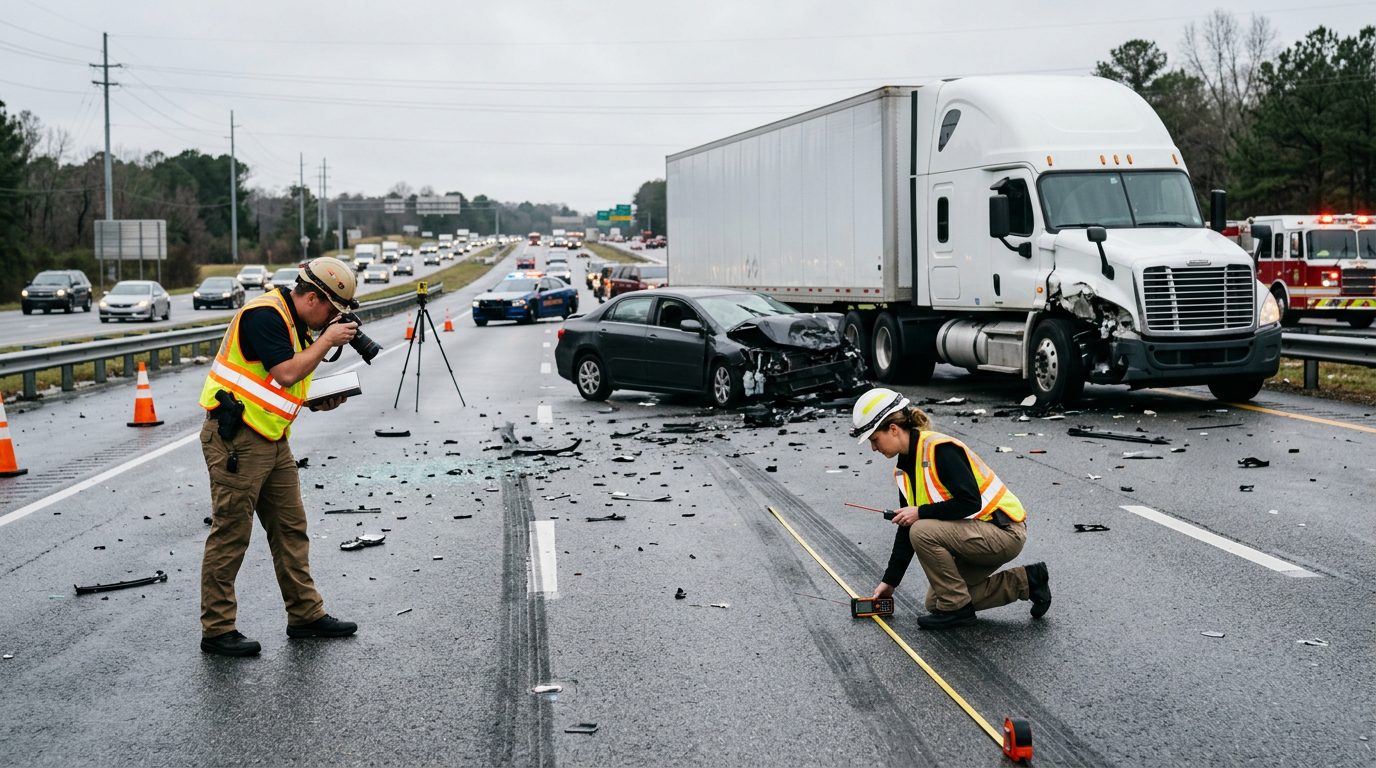
Once everyone is safe, document the scene thoroughly. Take photos of all vehicle damage, road conditions, traffic signals, the other driver’s vehicle, and license plates. Exchange information with the truck driver: name, phone number, address, insurance company, policy number, and vehicle details. Get contact information from any witnesses—their accounts can be crucial later.
File a police report if there’s injury, death, or significant damage. Request the report number and keep it handy; you’ll need it for your insurance claim. As soon as possible, notify your own insurance company. Most policies require prompt notice, and delays can complicate your claim.
Understanding Georgia’s Insurance Requirements for Truck Accidents
The minimum coverage is $25,000 for bodily injury per person, $50,000 per accident, and $25,000 for property damage (Georgia Commissioner of Insurance). Commercial trucks often carry much higher limits because of their size, cargo, and the greater potential for serious injury.
If the truck driver doesn’t have enough insurance to cover your damages, uninsured or underinsured motorist coverage on your own policy can help. This coverage protects you if the at-fault driver lacks adequate insurance. Your own collision or comprehensive coverage may also apply depending on your policy terms.
The Insurance Claim Process: Step by Step
Filing a truck accident insurance claim in Georgia follows a structured path, though the timeline varies based on the complexity of your case.
Report the claim promptly. Contact your insurance company or the at-fault driver’s insurer within the required timeframe—typically within days of the accident. Provide a detailed account of what happened, including the police report number and the other driver’s information.
Submit documentation. Gather and submit photos of the accident scene, the police report, medical records (if you were injured), repair estimates, and any witness statements. The more complete your documentation, the stronger your claim.
An adjuster is assigned. The insurance company assigns an adjuster to investigate liability and assess damages. This person will review your documentation, inspect vehicle damage, and contact witnesses.
Liability is determined. The adjuster investigates to determine who was at fault.
A settlement offer is made—or the claim is denied. Once the investigation is complete, the insurer either offers a settlement or denies the claim. If you accept, the claim closes. If you disagree, you have options.
Liability and Fault in Georgia Truck Accidents
Georgia’s liability rules can significantly affect your claim outcome. Under Georgia’s comparative negligence law, you can recover damages even if you’re partially at fault—but your recovery is reduced by your percentage of fault (O.C.G.A. § 51-12-33; Quynn v. Hulsey, 310 Ga. 473 (2020)). However, if you’re found to be 50% or more responsible for the accident, you recover nothing.
Truck accidents often involve complex liability. The fault might lie with the driver, the trucking company (if the driver was negligent or inadequately trained), a mechanical failure, improper cargo loading, or a combination of factors. Insurance adjusters investigate all of these possibilities.
The police report is important but not binding on the insurance company. Witness statements, photos, and evidence of how the accident occurred all matter. If liability is disputed, this investigation becomes critical.
What Damages Can Be Covered in a Truck Accident Claim
Your truck accident insurance claim can cover several types of damages:
- Property damage: repair or replacement value of your vehicle
- Medical expenses: emergency care, ongoing treatment, rehabilitation, and follow-up care
- Lost wages: income lost while you recover or are unable to work
- Pain and suffering: compensation for physical and emotional injury (this varies widely by case)
- Permanent disability or disfigurement: if applicable
- Wrongful death benefits: if the accident resulted in a fatality
Medical expenses are limited to the reasonable value of medically necessary care, treatment, or services. The amount you recover depends on what treatment was actually necessary and what was paid.
Not sure what your next step is?
Talk it through with our team — the first consultation is free, confidential, and carries no obligation.
Common Reasons Insurance Claims Are Delayed or Denied
Understanding why claims get stuck or rejected can help you avoid these pitfalls:
- Incomplete documentation: missing police report, photos, or medical records
- Disputed liability: both parties claim the other was at fault, requiring deeper investigation
- Pre-existing conditions: the insurer argues your injury wasn’t caused by the accident
- Policy exclusions or coverage limits: your damages exceed what the policy covers
- Failure to report promptly: delays in notifying the insurer can trigger claim denial
- Inconsistent statements or evidence gaps: conflicting accounts or missing details weaken your position
Avoid these issues by reporting immediately, documenting thoroughly, and being consistent in your account of the accident.
Timeline: How Long Does a Truck Accident Claim Take?
The time it takes to resolve a truck accident insurance claim varies widely:
- Simple claims with clear liability: 2–4 weeks
- Claims involving injury or disputed fault: 2–6 months
- Complex claims with multiple parties or serious injury: 6 months to over a year
Delays often occur during investigation, while you complete medical treatment, or during settlement negotiation. If your claim is taking longer than expected, ask the adjuster for an update and a timeline.
When to Consider Legal Help with Your Truck Accident Claim
You don’t need a lawyer for every truck accident claim, but certain situations call for legal guidance:
- Your claim is denied or you believe the settlement offer significantly undervalues your damages
- You suffered serious injury or ongoing medical needs
- Liability is disputed or unclear
- Multiple parties are involved (truck driver, trucking company, cargo company, maintenance contractor)
- The insurance company is not responding promptly or appears to be acting in bad faith
- You’re unsure whether the settlement offer is fair or covers all your losses
- The truck accident involved a commercial motor carrier subject to federal safety regulations
In these situations, an attorney can review your claim, investigate liability, negotiate with the insurer, and protect your rights.

Frequently Asked Questions
What if the truck driver was an employee of a trucking company?
The trucking company may be liable for the driver’s negligence under the legal principle of respondeat superior.
What should I do if the insurance company denies my claim?
Review the denial letter carefully to understand their reason. If you disagree, gather additional evidence, document your position in writing, and consider consulting an attorney. You have the right to appeal or pursue a lawsuit.
If you’re navigating a truck accident insurance claim in Georgia right now and feel uncertain about whether the insurer’s offer reflects the true value of your claim or your injuries, we’re here to listen. Reach out to discuss your situation without pressure—many people in your position find that a straightforward conversation clarifies their options and next steps.
The Claims Process, Step by Step
1. Get medical care and document your injuries
Your health comes first. Seek medical attention right away, even if your injuries seem minor at first. Keep every record, bill and appointment note, since these documents help show how the crash affected you.
2. Gather evidence from the scene
Photos of the vehicles, the road and your injuries, along with witness names and the police report number, can be valuable later. Trucks often carry dashcams, electronic logging data and maintenance records, which may be relevant to your claim.
3. Identify every insurance policy involved
A truck crash can involve the driver's personal auto policy, the trucking company's commercial policy and sometimes other parties, such as a cargo owner or a maintenance contractor. Knowing who is insured helps clarify where a claim may be presented.
4. Be careful with insurance adjusters
Adjusters work for the insurance companies, not for you. Before giving a recorded statement or signing any release, talk with a lawyer about what you should and should not say.
5. Review offers and any denial carefully
A first offer may not reflect the full impact of your injuries. If a claim is denied, read the letter closely to understand the stated reason, and keep copies of all correspondence.
6. Talk with a lawyer about your options
A free, confidential first consultation with our team at Slam Dunk Attorney gives you a chance to review your situation, ask questions and understand the next steps, with no obligation to continue.
How Our Team Can Help
Organizing your records
We help you collect and organize medical bills, police reports, photos and insurance correspondence in one place.
Dealing with the insurers
We communicate with insurance companies on your behalf so you can focus on recovering.
Keeping the process moving
We track each step of your claim and explain what is happening in plain language.
Looking at the full picture
Serious truck crashes can involve long-term medical care, lost income and lasting changes to daily life. We take the whole picture into account.
A free first consultation
Our first consultation is free, confidential and comes with no obligation to continue.
Important: Be Careful Before You Sign
Do not sign any settlement release or accept a quick payment before you understand your injuries and the full scope of your claim. Once a release is signed, it can be difficult to revisit.