
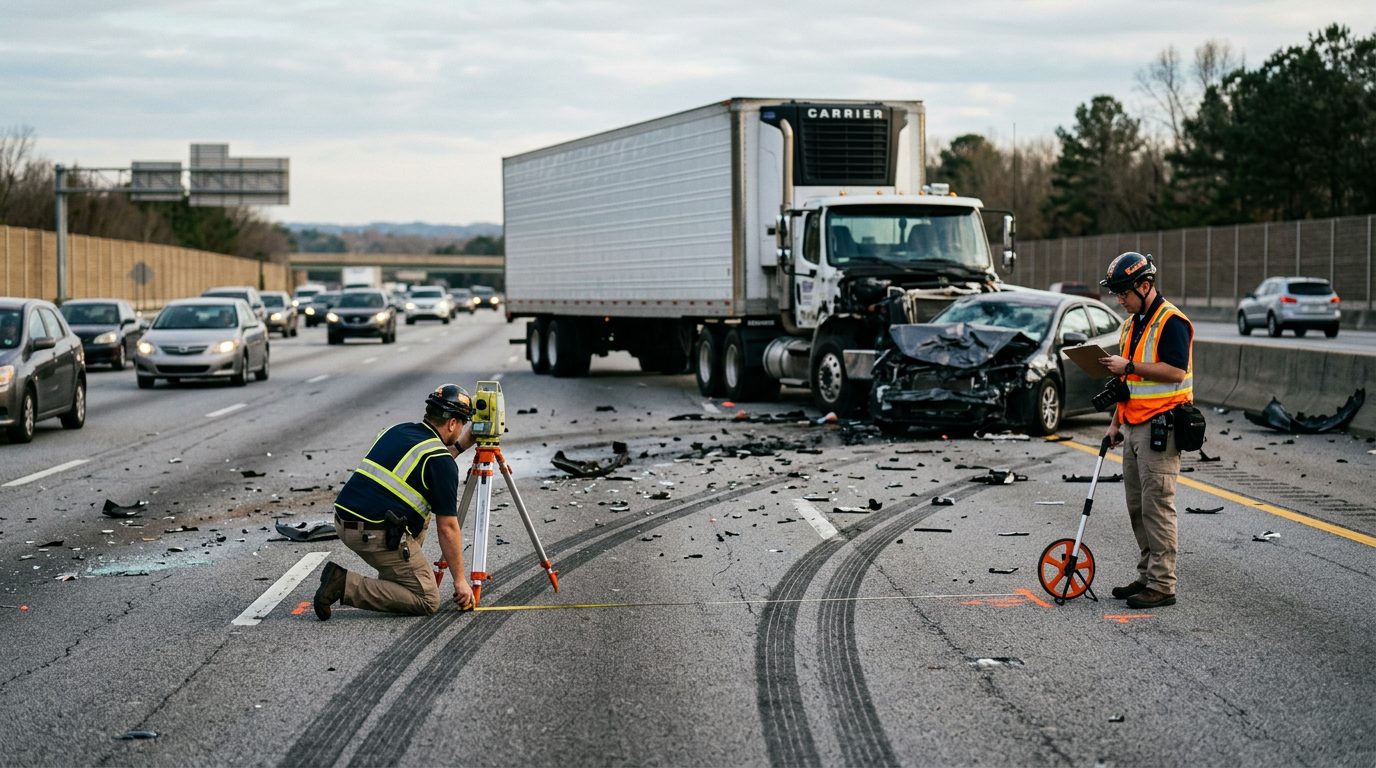
Truck Accident Injuries & Compensation
Serious Truck Accident Injuries Deserve Serious Legal Help
If you or a loved one was hurt in a truck collision in Georgia, we understand the physical, financial, and emotional toll. Slam Dunk Attorney focuses exclusively on truck accident claims across metro Atlanta and Georgia.
By Peter F. Jaraysi · Published September 29, 2026
Truck Accident Injuries & Compensation in Georgia
A collision with a commercial truck can cause injuries ranging from soft tissue damage to permanent disability—and Georgia law recognizes your right to recover compensation for medical costs, lost wages, pain and suffering, and other damages. Understanding what types of injuries commonly result from truck accidents, what factors affect severity, and what compensation may be available can help you assess whether your situation warrants legal guidance.
If you're facing medical bills, lost wages, or ongoing pain after a truck accident in Georgia, you don't have to navigate the insurance process alone—reach out to discuss what your situation may mean for a claim. Talk it through with our team — the first consultation is free, confidential, and carries no obligation.
Why Truck Accidents Cause Severe Injuries
Commercial trucks weigh 20–30 times more than passenger vehicles, creating a force differential that makes collisions far more destructive than typical car accidents. When a fully loaded tractor-trailer traveling at highway speed strikes a passenger vehicle, the physics alone explain why injuries are often catastrophic.
These accidents happen in high-impact scenarios: a truck rear-ending a car at 60 mph, an underride collision where a vehicle slides beneath a truck’s trailer, a jackknife or rollover that crushes nearby cars, or a multi-vehicle pile-up on a congested interstate. Passenger vehicles lack the structural reinforcement of commercial trucks, leaving occupants vulnerable to the force of impact. The National Highway Traffic Safety Administration (NHTSA) reports that large truck crashes result in higher rates of serious injury and fatality compared to passenger vehicle crashes, particularly in multi-vehicle incidents.
Common Truck Accident Injury Types
Truck accident injuries span a spectrum. Some are immediately obvious; others develop over weeks or months.
Soft tissue injuries—whiplash, neck strain, back strain—are common even in moderate-impact collisions. Many people underestimate these injuries, assuming they’ll heal quickly. In reality, soft tissue damage can become chronic, causing persistent pain, limited mobility, and ongoing treatment costs.
Fractures and broken bones occur frequently in truck accidents due to the force of impact. Ribs, pelvis, arms, and legs are vulnerable. Fractures often require surgery, immobilization, and extended rehabilitation. Complications like infection or improper healing can prolong recovery.
Spinal cord injuries range from partial to complete paralysis. A spinal cord injury from a truck accident may result in permanent disability, loss of sensation or motor function, and lifelong care needs—including home modifications, assistive devices, and ongoing medical support.
Traumatic brain injury (TBI) occurs when the brain is jolted or struck inside the skull. TBI can cause concussion, diffuse axonal injury (microscopic tears in brain tissue), cognitive impairment, memory loss, behavioral changes, and permanent neurological disability. Recovery is often prolonged and unpredictable.
Internal injuries—organ damage, internal bleeding, ruptured organs—may not be immediately apparent. A person might feel fine at the scene but develop life-threatening complications hours later. Emergency imaging and ongoing monitoring are critical.
Burn injuries can result from fuel leaks, fires, or explosions in truck accidents, especially those involving tanker trucks or hazardous cargo.
Crush injuries and amputations occur when limbs are caught in wreckage or machinery. These injuries often require emergency surgery and may result in permanent loss of function or limb.
Psychological trauma—post-traumatic stress disorder (PTSD), anxiety, depression—is a real injury. Many truck accident survivors experience nightmares, flashbacks, and fear of driving or riding in vehicles. Mental health treatment is a legitimate part of recovery and a compensable damage.
Factors That Affect Injury Severity
Not every truck accident results in the same injury profile. Severity depends on several factors:
- Speed at impact and angle of collision: A head-on collision at 70 mph causes more damage than a side-swipe at 30 mph.
- Type of truck: A tractor-trailer, dump truck, tanker, or box truck each present different hazards and impact dynamics.
- Restraint use: Seatbelts and airbags reduce injury severity, but they don’t eliminate risk in high-speed truck collisions.
- Pre-existing health conditions: Osteoporosis, heart disease, or prior injuries can complicate recovery and increase damage.
- Immediate medical response: Quick access to trauma care improves outcomes. Rural accidents may have longer response times.
- Time elapsed before treatment: Delaying medical care allows injuries to worsen and can undermine a claim.
What Compensation Covers in Georgia
Georgia law permits recovery for a range of damages when a truck accident is caused by someone else’s negligence:
Medical expenses include emergency care, hospitalization, surgery, imaging, rehabilitation, physical therapy, mental health counseling, and ongoing treatment. For catastrophic injuries, this category can extend to home care, nursing services, and long-term facility costs.
Lost wages cover income you lost during recovery and time away from work. If your injury prevents you from returning to your prior job, you may recover reduced earning capacity—the difference between what you earned before the accident and what you can earn now.
Pain and suffering compensates for physical pain, emotional distress, and loss of enjoyment of life. This category recognizes that injury isn’t only about medical bills; it’s about the disruption to your daily life.
Permanent disfigurement or scarring may be compensable, especially if visible and affect your appearance or function.
Home care and long-term care costs for catastrophic injuries—including modifications to your home, assistive devices, and ongoing attendant care—are recoverable.
Wrongful death damages apply if the accident is fatal. Surviving family members may recover funeral and burial costs, the financial support the deceased would have provided, and loss of companionship.
How Georgia Law Determines Liability and Damages
Georgia recognizes negligence-based liability: the at-fault party must have owed you a duty of care, breached it, and caused your injury. In truck accidents, multiple parties may be liable.
Truck driver negligence includes speeding, driving while fatigued, distracted driving, improper lane changes, and failure to maintain a safe following distance. Violations of federal hours-of-service rules (which limit how long a driver can work without rest) are also negligent.
Trucking company liability arises from inadequate vehicle maintenance, negligent hiring or training of drivers, pressure on drivers to violate safety rules, overloading cargo, or failure to inspect equipment.
Georgia follows a modified comparative fault rule: you can recover damages even if you were partially at fault, as long as you are less than 50% responsible; if you are 50% or more at fault, you recover nothing. Your recovery is reduced by your percentage of fault. For example, if you were 20% at fault and your damages total $100,000, you recover $80,000.
Not sure what your next step is?
Talk it through with our team — the first consultation is free, confidential, and carries no obligation.
The Role of Insurance and Liability Limits
Commercial trucks carry higher liability insurance than passenger vehicles. Federal minimum liability coverage for interstate commercial trucks is $750,000 for injury or death, though coverage varies by cargo type and may be higher.
In a truck accident claim, multiple parties may be liable: the driver, the trucking company, the cargo loader, a maintenance contractor, or the truck manufacturer. Each may carry separate insurance policies.
If the truck’s insurance is insufficient to cover your damages, your own underinsured motorist coverage may apply, providing additional recovery.
Early investigation is critical. An attorney can preserve evidence—truck maintenance records, driver logs, electronic data recorders (black boxes), witness statements, and scene documentation—before it’s lost or destroyed. This evidence often determines who is liable and how much your claim is worth.
Steps to Take After a Truck Accident
Immediately after a truck accident, prioritize your safety and health:
- Seek medical attention, even if injuries seem minor. Some injuries develop over hours or days.
- Report the accident to police and obtain the police report number.
- Document the scene: take photos of vehicle damage, road conditions, truck position, skid marks, and any visible injuries.
- Collect contact information from the truck driver, witnesses, and any other parties present.
- Do not admit fault or sign anything without legal review.
- Preserve evidence: keep medical records, photos, text messages, and communications with insurance companies.
- Consult an attorney before giving a recorded statement to the insurance company. Insurers may use your words against you.
When to Seek Legal Guidance
You should consider consulting a truck accident attorney if:
- Your injury is serious or permanent (surgery, hospitalization, ongoing treatment, disability).
- Medical bills or lost income are significant.
- Liability is unclear or the at-fault party disputes responsibility.
- The insurance company delays, denies, or offers a settlement you believe is too low.
- Multiple parties may be liable (driver, company, manufacturer, maintenance contractor).
- The accident resulted in a fatality. Wrongful death claims require prompt action to preserve evidence and meet Georgia’s statute of limitations.
FAQ
What is the most common injury from a truck accident?
Soft tissue injuries like whiplash and back strain are common, but serious injuries—fractures, spinal cord injury, and traumatic brain injury—occur frequently in high-speed collisions.
Can I recover damages if I was partially at fault in a truck accident in Georgia?
Yes. Under Georgia’s modified comparative fault rule, you can recover as long as you are less than 50% at fault; once you are 50% or more responsible, you recover nothing, and otherwise your damages are reduced by your percentage of fault.
How long do I have to file a truck accident injury claim in Georgia?
Georgia’s statute of limitations for personal injury claims is two years from the date of injury. Acting promptly protects your right to recover.
What if the truck driver’s insurance isn’t enough to cover my damages?
Your own underinsured motorist coverage may provide additional recovery if the truck’s insurance is insufficient.
Is psychological trauma from a truck accident a compensable injury?
Yes. PTSD, anxiety, and depression resulting from a truck accident are legitimate injuries, and treatment costs and pain and suffering are recoverable.
If you’ve been injured in a truck accident in Georgia and are trying to understand what happened, what your medical bills might mean for your finances, or whether you have a claim worth pursuing, many people in your situation reach out to discuss their options. We’re here to listen and help you understand your next steps.
Common Truck Accident Injuries
Soft Tissue & Spine Injuries
Whiplash, back strain, and neck injuries are frequent in truck collisions, even at moderate speeds. These injuries can cause chronic pain and require ongoing treatment.
Fractures & Broken Bones
The force of a truck impact often causes fractures to arms, legs, ribs, and pelvis. Severe breaks may require surgery and extended recovery.
Traumatic Brain Injury (TBI)
Head trauma from truck accidents can result in concussion, cognitive changes, memory loss, and long-term neurological effects.
Spinal Cord Injury
Damage to the spinal cord can cause partial or complete paralysis, requiring lifetime medical care and adaptive equipment.
Time Matters in Truck Accident Claims
Evidence at the scene—truck maintenance records, driver logs, cargo weight documentation, and witness statements—can disappear quickly. The sooner you contact us, the sooner we can preserve critical evidence and begin building your case.
Why Choose Slam Dunk Attorney for Your Truck Accident Claim
Focused on Truck Accidents
We focus exclusively on personal injury claims, including truck accidents. We understand the unique factors—federal trucking regulations, commercial insurance, and catastrophic injuries—that shape these cases.
Thorough Investigation
We work to identify all liable parties—the driver, trucking company, maintenance contractor, or cargo loader—and gather evidence to support your claim.
Transparent, Empathetic Representation
We explain your options in plain language and keep you informed every step of the way. Your recovery and peace of mind are our priority.
Serving Metro Atlanta & Georgia
Based in Duluth, we represent injured people throughout the Atlanta region and across Georgia in truck accident claims.
What You May Be Able to Recover
Medical Expenses
Emergency care, hospitalization, surgery, rehabilitation, ongoing treatment, and future medical needs related to your injury.
Lost Wages & Income
Compensation for time missed from work during recovery, and lost earning capacity if your injury affects your ability to work long-term.
Pain & Suffering
Damages for physical pain, emotional distress, and reduced quality of life caused by your injury.
Property Damage
Repair or replacement of your vehicle and personal property damaged in the accident.