
Truck Accident Claims
Understanding the Legal Steps of a Truck Accident Claim in Georgia
A clear roadmap from incident to resolution. Learn what happens at each stage and how to protect your rights.
By Peter F. Jaraysi · Published September 25, 2026
Legal Steps of a Truck Accident Claim in Georgia: What Happens After the Crash
After a truck accident, the path forward isn’t always clear. Understanding the legal steps—from the scene to settlement or trial—helps you protect your rights and avoid costly mistakes. Georgia law sets specific deadlines and procedures that govern how your claim moves forward. This guide walks you through each phase so you know what to expect.
If you've been injured in a truck accident and are unsure what comes next, reach out to discuss your claim—people in your situation contact us regularly. Talk it through with our team — the first consultation is free, confidential, and carries no obligation.

Why the Process Matters After a Truck Accident
Truck accidents aren’t like typical car crashes. Commercial trucks operate under federal safety regulations, carry multiple insurance policies, and often cause severe injuries. The complexity means more evidence to gather, more parties to investigate, and higher stakes for damages. Understanding the steps helps you protect your rights early and avoid decisions that weaken your claim later.
Each phase of a truck accident claim has legal deadlines under Georgia law. Missing one can cost you your right to recover. That’s why knowing the process matters before you need it.
Step 1: Immediate Actions at the Scene and After
Your first hours after a truck accident are critical. Call 911 if anyone is hurt; a police response creates an official record. While waiting for help, document everything: photograph the truck’s position, your vehicle damage, road conditions, debris, and weather. Get the truck driver’s name, contact information, and insurance details. Collect names and phone numbers from any witnesses—they may disappear later.
Seek medical attention even if you feel fine. Many injuries—whiplash, internal bleeding, concussion—appear hours or days after impact. A medical evaluation creates a documented record of your injuries, which becomes central evidence later.
Do not admit fault or sign anything except for police and medical personnel. Report the accident to your own insurance company promptly, but stick to the facts. Don’t speculate about what happened or who was responsible.
Step 2: Medical Evaluation and Treatment
A thorough medical evaluation is the foundation of your claim. Your doctor documents your injuries, performs imaging (X-rays, MRI), and prescribes treatment. Keep every medical record: visit notes, prescriptions, therapy sessions, specialist consultations. These records prove your damages and connect your injuries directly to the accident.
Follow your doctor’s treatment plan. Gaps in treatment—missing appointments, stopping therapy early—give insurance companies ammunition to argue your injuries weren’t serious. Insurers may point to treatment gaps as a reason to question the severity of your injuries and reduce the value they place on a claim. Consistent, documented care protects your claim.
Step 3: Investigation and Evidence Gathering
Once you’ve stabilized medically, investigation begins. Obtain a copy of the police report from the Georgia police department that responded. The report documents the scene, officer observations, and sometimes preliminary fault findings.
Commercial trucks are subject to Federal Motor Carrier Safety Administration (FMCSA) regulations. Violations—faulty brakes, inadequate maintenance, driver fatigue—indicate negligence. Request the truck’s maintenance and inspection records. These often reveal safety violations that prove the trucking company’s liability.
Commercial drivers have licensing records and violation histories. A driver with multiple safety violations or a suspended license strengthens your claim. Electronic logging devices (ELDs) and event data recorders on modern trucks capture speed, braking, acceleration, and lane changes. This data is often decisive in liability disputes.
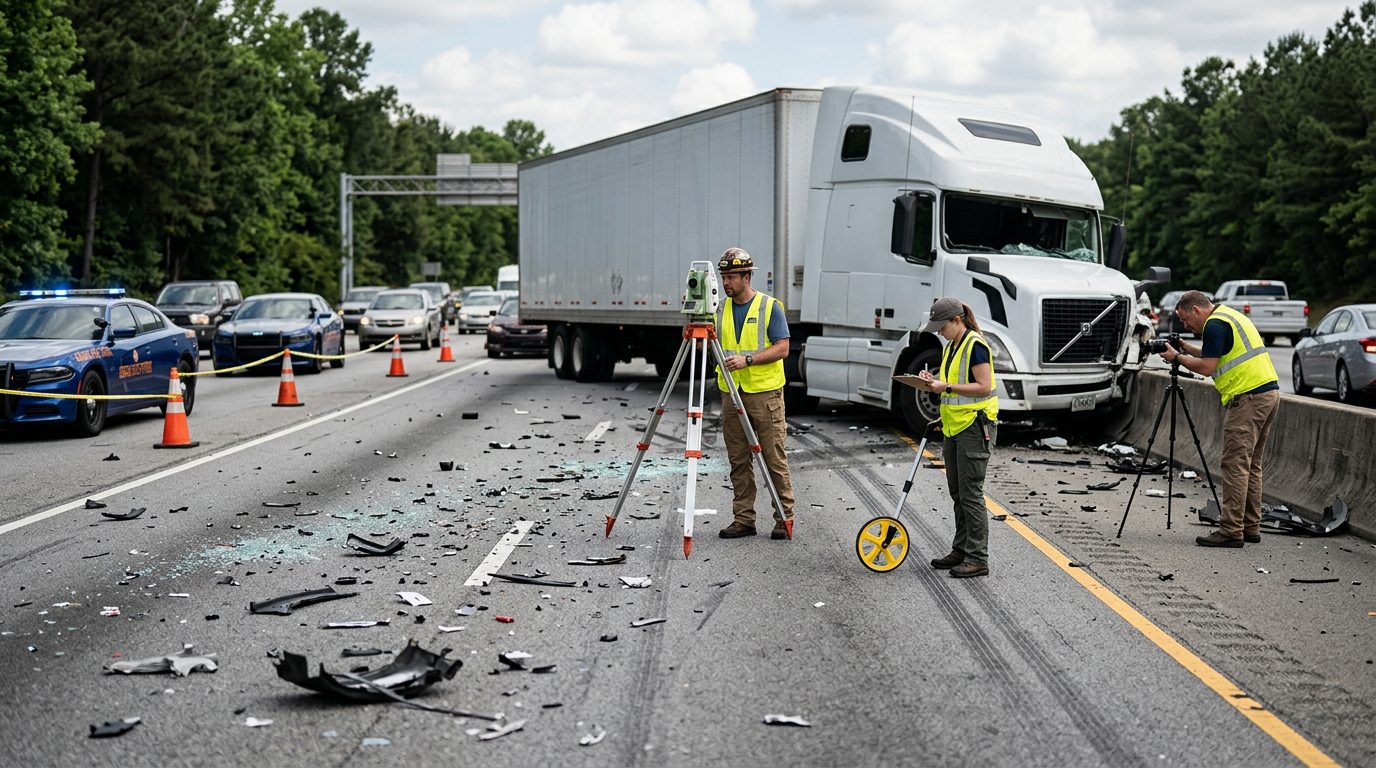
Witness statements matter too. Formal interviews with other drivers, passengers, or bystanders create a stronger factual record than casual recollections. Scene reconstruction—measurements, photos, and expert analysis—may be needed if liability is disputed.
Step 4: Demand Letter and Negotiation
Your attorney prepares a demand letter outlining liability, your injuries, and your damages. This letter goes to the truck driver’s insurance company and any other liable parties. The insurer investigates your claim and responds with an offer or a denial.
Negotiation may take weeks or months. Most truck accident claims settle at this stage—before litigation. Your attorney handles all communication with the insurer. You control whether to accept an offer; you’re never obligated to take the first number or any number that doesn’t fairly compensate your injuries.
Not sure what your next step is?
Talk it through with our team — the first consultation is free, confidential, and carries no obligation.
Step 5: Filing a Lawsuit (If Settlement Fails)
If negotiation doesn’t yield fair resolution, a lawsuit is filed in Georgia state or federal court. Georgia’s statute of limitations gives you two years from the date of injury to file suit. Miss this deadline and you lose your right to recover—no exceptions.
Filing initiates the discovery process. Both sides exchange documents, medical records, and witness statements. Depositions follow: sworn testimony from you, the truck driver, witnesses, and experts. The court sets discovery deadlines, typically 6–12 months before trial. The case may be scheduled for mediation, a neutral settlement conference where a third party helps both sides reach agreement.
Step 6: Trial (If Necessary)
If settlement isn’t reached, the case goes to trial before a judge or jury. Both sides present evidence, call witnesses, and make arguments about liability and damages. The jury or judge decides whether the truck driver or trucking company is responsible and what amount you recover. Trial is the final step; appeals are possible but rare and complex.
Key Deadlines and Statutes in Georgia Truck Accident Claims
Georgia’s statute of limitations is two years from the date of injury to file suit. This is your absolute deadline. Once it passes, you cannot sue, period.
After filing, the defendant must be served with notice within 120 days. The court sets discovery deadlines—typically 6–12 months before trial. Missing any deadline can result in dismissal or default judgment. Early legal guidance ensures nothing falls through the cracks.
Why You Need an Attorney for Truck Accident Claims
Insurance companies have teams of adjusters and lawyers. You should too. Truck accident liability often involves federal regulations, commercial driver standards, and multiple defendants—the trucking company, the driver, the truck manufacturer, the maintenance contractor. Untangling liability requires knowledge most people don’t have.
Damages in truck accidents can include medical bills, lost wages, pain and suffering, and long-term care costs. An attorney ensures nothing is overlooked. They handle all communication, investigation, and negotiation so you can focus on recovery.
Most personal injury attorneys work on contingency: you pay no upfront fee. The attorney is paid only if you recover money. This aligns your attorney’s interests with yours—they succeed only if you do.

Frequently Asked Questions
How long does a truck accident claim typically take?
Most claims settle within 6–12 months after a demand letter is sent. Lawsuits that go to trial can take 1–3 years from filing to verdict.
What if the truck driver was an independent contractor?
You may have claims against the driver, the trucking company, and the company that hired the driver, depending on the facts and Georgia law.
Can I still pursue a claim if I was partly at fault?
Georgia follows comparative fault rules. You can recover even if you’re partially responsible, though your award is reduced by your percentage of fault.
What if the truck driver doesn’t have enough insurance?
Your own uninsured or underinsured motorist coverage may apply, or you may pursue the trucking company’s assets directly.
If you’ve been injured in a truck accident and are unsure what comes next, reach out to discuss your claim—people in your situation contact us regularly. Request a free consultation with our team to understand your options and next steps.
The Main Stages of a Truck Accident Claim
1. Immediate Reporting & Documentation
After a truck accident, call 911 and seek medical attention. Document the scene with photos, gather witness contact information, and obtain the police report. Preserve all medical records and bills related to your injuries.
2. Investigation & Demand
Your attorney investigates the accident, reviews trucking company records, driver logs, and maintenance files. Once investigation is complete, a demand letter is sent to the at-fault party's insurance company outlining your injuries, damages, and settlement request.
3. Settlement Negotiation
The insurance company responds to your demand. Most claims settle within 6–12 months after the demand letter is sent. Your attorney negotiates on your behalf to reach a fair resolution.
4. Litigation (If Needed)
If settlement talks stall, your case may proceed to lawsuit. Discovery, depositions, and pre-trial motions follow. Cases that go to trial typically take 1–3 years from filing to verdict.
Important: Multiple Parties May Be Liable
In truck accidents, you may have claims against the truck driver, the trucking company, the company that hired the driver, maintenance contractors, or manufacturers—depending on the facts. An attorney can identify all responsible parties to maximize your recovery.
What You Should Know About Truck Accident Claims
Federal Regulations Apply
Truck drivers and companies must follow strict federal safety rules (FMCSA regulations). Violations can strengthen your claim and show negligence.
Higher Insurance Limits
Commercial trucks typically carry much higher insurance coverage than passenger vehicles, which can mean greater compensation available for your injuries and losses.
Statute of Limitations Applies
Georgia law sets time limits for filing a lawsuit. Acting promptly ensures you preserve your right to pursue a claim and gather critical evidence.
Case Costs Are Separate
If your case is handled on a contingent fee basis (no fees unless there is a recovery), you may still owe case costs such as filing fees, expert reports, and investigation expenses.
Common Questions About Truck Accident Claims
How long does a truck accident claim typically take?
Most claims settle within 6–12 months after a demand letter is sent. Lawsuits that go to trial can take 1–3 years from filing to verdict.
What if the truck driver was an independent contractor?
You may have claims against the driver, the trucking company, and the company that hired the driver, depending on the facts of your accident and the contractual relationships involved.
What damages can I recover?
You may recover compensation for medical expenses, lost wages, property damage, pain and suffering, and other losses caused by the accident. Your attorney will evaluate all damages in your case.
Do I need an attorney?
Truck accident claims are complex and involve multiple parties and high insurance limits. An attorney protects your rights, handles negotiations, and ensures you understand each step of the process.