
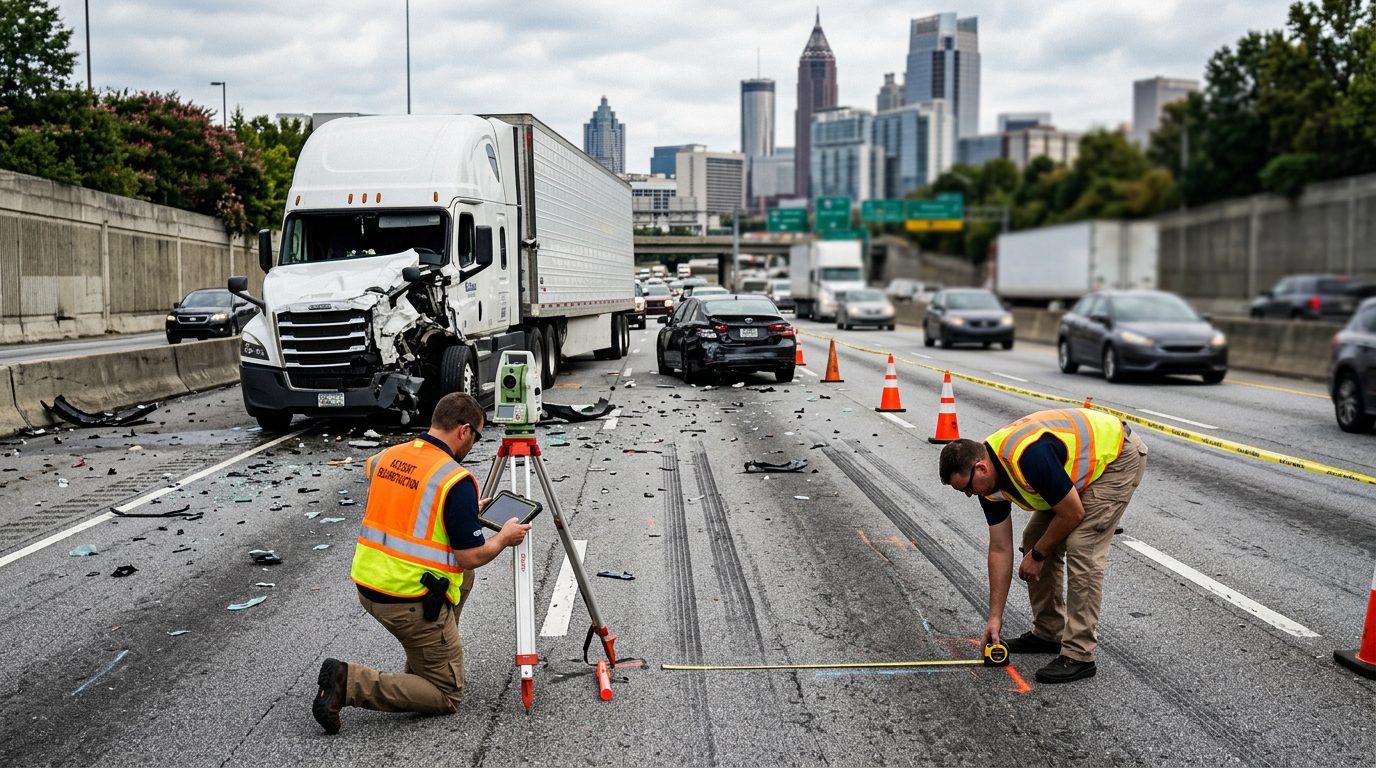
Truck Accidents | Atlanta and Georgia
Truck Accident Settlements in Atlanta: How the Process Works
A plain-language guide from Slam Dunk Attorney, a Duluth, Georgia firm that represents people hurt in truck accidents across metro Atlanta and the state. Learn what a settlement is, who is involved, and what steps usually come first.
By Peter F. Jaraysi · Published October 22, 2026
A truck accident settlement is a negotiated agreement that resolves an injury claim for a payment, usually made by insurance companies, without a trial. Most truck crash claims in Georgia end this way, though some move into a lawsuit when the sides can’t agree.
This page explains how that process generally works in metro Atlanta. It does not predict what any one claim is worth, because every crash and every injury is different. For the wider picture, see our Georgia truck accident guide.
If you were hurt in a truck crash, or you’re helping a family member who was, this can feel like too much at once. Medical visits, bills, and calls from an adjuster can pile up fast.
What a Truck Accident Settlement Is
A truck accident settlement is a signed agreement that ends an injury claim in exchange for payment. Insurers usually fund it. Both sides agree on the terms, and the case closes without a judge or jury deciding it.
Negotiation drives most of these claims. The injured person presents their losses. The insurer reviews them, makes an offer, and often pushes back. This back and forth continues until both sides agree or talks stall.
If talks stall, a lawsuit may be filed in the appropriate Georgia court. A settlement can happen before or after a suit is filed.
The signed document matters a great deal. A release is the paper where you agree to give up further claims for the matters it covers. Read it slowly, and ask about anything unclear before you sign.
Every claim is different. The steps here describe a general process, not a forecast for your case.
If an insurance offer has reached you while you're still healing, you don't have to sort it out alone. Our team offers a free, confidential first consultation, with no obligation to continue. Talk it through with our team — the first consultation is free, confidential, and carries no obligation.

Who May Be Responsible in a Metro Atlanta Truck Crash
More than one party can share responsibility after a truck crash. The driver is only one possibility. Others may include:
- The motor carrier, the company that operates the truck
- The vehicle owner, if it’s a different company or person
- Maintenance contractors who inspected or repaired the truck
- Cargo loaders or freight brokers, in some cases
Several parties can mean several insurance policies. A claim may involve the driver’s policy, the company’s policy, and others. Early work to identify everyone involved helps protect the claim.
Federal trucking rules often become evidence. Under 49 C.F.R. § 395.3, a driver of a property-carrying commercial motor vehicle may not drive after 14 consecutive hours that follow coming on duty after 10 consecutive hours off duty. Under 49 C.F.R. § 396.3, every motor carrier must systematically inspect, repair, and maintain its vehicles. Records like these can show whether those rules were followed.
Trucks travel I-285, I-75, and I-85 through metro Atlanta. The route shapes which records may exist and who may have seen the crash.
What Goes Into the Value of a Claim
A claim’s value comes from losses you can prove and harm that is harder to measure. Under O.C.G.A. § 51-12-2, general damages may be recovered without proof of an amount. Special damages, such as bills and lost pay, must be proved.
Economic losses commonly include:
- Medical bills already paid or still owed
- Future care, such as rehabilitation and follow-up treatment
- Lost wages and reduced ability to earn later
- Damage to the vehicle and personal property
Medical bills follow special rules. Under O.C.G.A. § 51-12-1.1, medical expenses are limited to the reasonable value of medically necessary care.
Catastrophic injuries change the math. Spinal cord injury, traumatic brain injury, amputation, and severe burns often need years of planning. Under O.C.G.A. § 51-12-13, future economic losses may be reduced to present value.
Insurance limits set a practical ceiling. Federal rules set minimum financial responsibility levels for trucking companies, in 49 C.F.R. § 387.9. Actual policy limits can be higher, so the coverage should be checked early.
If a loved one died, a personal representative may recover funeral and other necessary expenses. Georgia allows this when death results from a crime or from criminal or other negligence, under O.C.G.A. § 51-4-5.
How Georgia’s Fault Rules Affect a Settlement
Under Georgia’s modified comparative fault rule, your award drops by your share of fault. If you are 50 percent or more responsible, you cannot recover damages, under O.C.G.A. § 51-12-33.
Insurers often argue that the injured person shared the blame. They may point to speed, lane position, or a late reaction. Each argument can lower the offer.
Fault is weighed across everyone involved. Georgia also does not treat these damages as joint liability. Each liable person owes only the share assigned to them, and that share is not subject to contribution.
Evidence shapes these arguments. The police report, dash camera footage, and witness statements often shape the early story of who did what. How fault is decided depends on the facts of each crash.
From Claim to Settlement Offer: The Usual Steps
Most truck claims follow the same order: preserve evidence, get treatment, send a demand, then negotiate. Acting early matters because some records are kept only for limited periods.
Under 49 C.F.R. § 396.3, maintenance records must be kept for 1 year where the vehicle is housed, and for 6 months after it leaves the carrier’s control. Electronic logging devices also record the date, time, location, and engine hours, under 49 C.F.R. § 395.26.
Save dash cam video, photos, and witness names. Keep every medical visit, bill, and missed day of work. Gaps in care can give an insurer something to question.
Next comes the demand letter. It’s a written summary of your injuries, your losses, and the amount you’re asking for. Insurers often respond with an offer that’s lower.
Some providers treat patients under a letter of protection, a promise of payment from a future settlement. Georgia makes those arrangements relevant and discoverable, under O.C.G.A. § 51-12-1.1.
Timelines vary widely. Some claims wait on medical conclusions before anyone can value them.
Georgia Time Limits to Keep in Mind
Most Georgia injury claims must be brought within two years after the right of action accrues, under O.C.G.A. § 9-3-33. Loss of consortium claims tied to an injury have four years.
Wrongful death claims also have statutory time limits. The deadline can depend on the details of the claim.
Waiting for an insurer to respond doesn’t stop the clock. Settlement talks and court deadlines run separately. An early review helps you see which deadline applies to your situation.
Not sure what your next step is?
Talk it through with our team — the first consultation is free, confidential, and carries no obligation.
Questions to Ask Before Accepting Any Offer
Before you accept an offer, check these points:
- Whether it covers future medical needs, not only bills to date
- The release language, since signing usually ends the claim for the matters it covers
- Medical liens and reimbursement claims.
- How attorney fees and case costs are calculated and paid from any recovery, in writing. Case costs may be owed even when fees are handled differently
- The total insurance coverage available, including other policies that may apply
Common questions
How long do I have to file in Georgia?
Most injury claims must be filed within two years after the right of action accrues.
How long does a settlement take?
Timelines vary widely, depending on how fast medical conclusions arrive.

If You Are Weighing an Offer Right Now
If an offer is in front of you now, you may be still recovering, managing bills, or grieving a loss. The pressure to decide quickly can feel real. Taking time to understand each term is a reasonable step.
Our team at Slam Dunk Attorney offers a free, confidential first consultation. It carries no obligation to continue. We can review the offer, the release, and your deadlines with you.
For the broader picture, read the Georgia truck accident guide.
Disclaimer: This page is general information, not legal advice, and it does not promise any result. Responsible lawyer: Peter F. Jaraysi, Slam Dunk Attorney, Duluth, Georgia. Contact information is available on the firm’s website.
How our team approaches a truck accident claim
We start with your well-being
Recovering from a serious crash comes first. We focus on your medical care and your questions before anything else.
We gather the evidence
Crash reports, driver logs, maintenance records, and photos can all matter. Our team works to preserve this information early.
We document your losses
Medical bills, lost income, and the way your injuries affect daily life all need to be recorded clearly.
We handle the insurance companies
Our lawyers communicate with adjusters so you do not have to negotiate alone while you heal.
We keep you informed
You will hear about offers, decisions, and next steps in plain language, so you can choose what works for you.
Be careful before you speak with an insurer
An insurance adjuster may ask for a recorded statement soon after a crash. Anything you say can be used to evaluate your claim. Consider speaking with a lawyer before you give a statement or sign any release.
The main stages of a truck accident settlement
Investigation
Our lawyers look into how the crash happened, who may be responsible, and what records need to be preserved.
Medical treatment and documentation
Your treatment, diagnoses, and bills form the foundation of your claim, so keeping organized records helps.
Demand and negotiation
After your losses are documented, a demand is presented to the insurance companies, followed by back-and-forth negotiation.
Resolution
If a fair agreement can be reached, a settlement is finalized. If it cannot, your options may include filing a lawsuit.
Your first consultation is free, confidential, and comes with no obligation to continue. Call for a free case review today.
Related practice areas
- Truck Accident Lawyers in Marietta: A Georgia Guide