
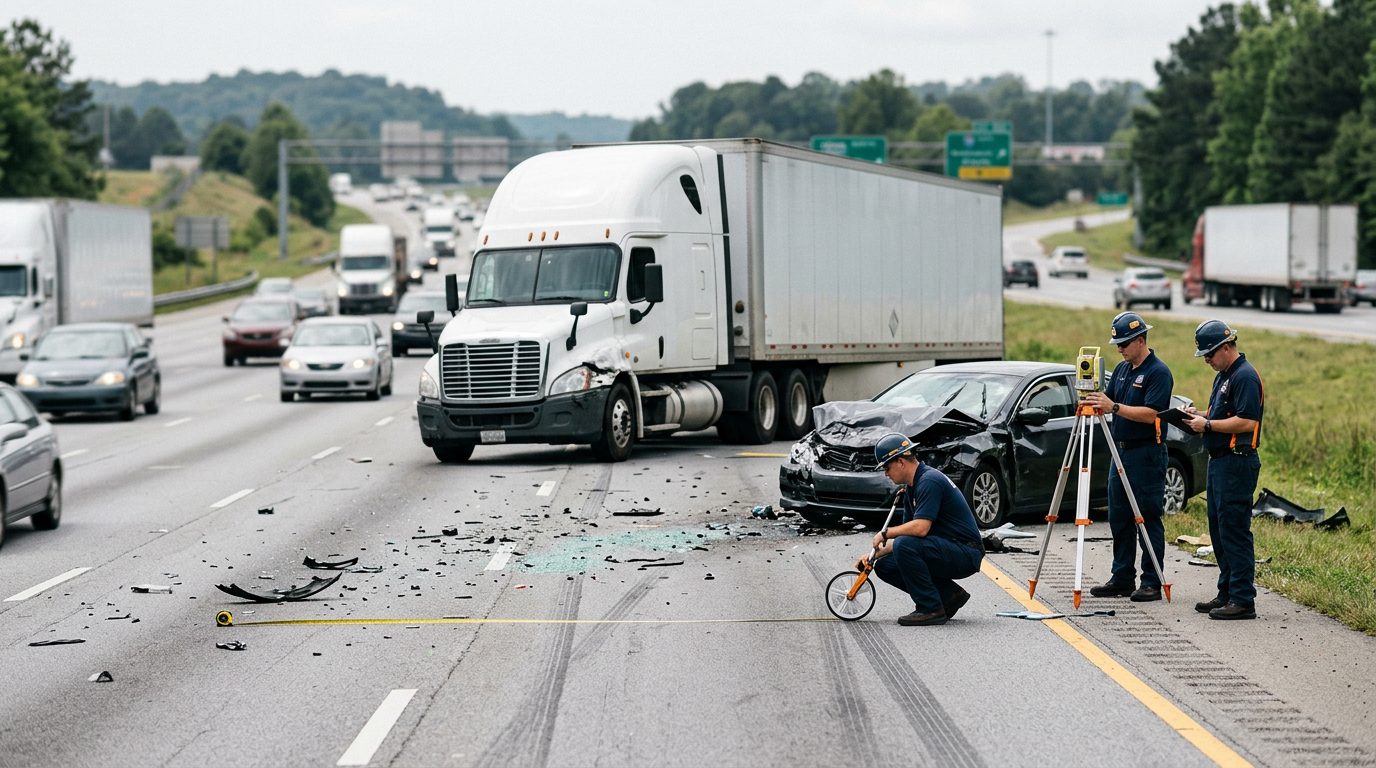
Truck Accidents | Cobb County and Metro Atlanta
Hurt in a Truck Crash? Understand Your Options Before You Talk to an Insurer
Commercial truck collisions involve complex insurance, federal safety rules and multiple potentially responsible parties. Our Duluth, Georgia firm focuses on helping injured people and their families sort through the process.
By Peter F. Jaraysi · Published October 22, 2026
Georgia generally allows two years after the right of action accrues to file a personal injury lawsuit (O.C.G.A. § 9-3-33). A truck crash, though, involves more companies, more paperwork, and more moving parts than a typical car wreck. That makes early steps matter.
If you are hurt, or you are caring for someone who is, the weeks after a crash can feel overwhelming. Medical bills arrive. Insurance letters pile up. Someone asks for a recorded statement. This guide explains what usually matters most, from the first steps to the Georgia rules that shape a claim. It is general information, not legal advice.
Why a Cobb County Truck Crash Is Different From a Car Accident
A truck crash differs from a car crash because the truck usually belongs to a business. That business’s rules and records can matter as much as the driver’s conduct.
Semi-trucks, box trucks, and dump trucks are heavy. Their size and weight often lead to serious injuries when they collide with a passenger car, a motorcycle, or a pedestrian. The Governor’s Office of Highway Safety tracks fatalities and serious injuries involving large trucks in its 2021 large truck safety report.
Many commercial carriers must follow federal safety regulations. Those rules cover drivers, vehicles, and records. Commercial trucks travel many Cobb County roads, including I-75. For broader questions, read our truck accident guide for Georgia.
If a commercial truck crash on a Cobb County road has left you or someone you love hurt, our team can talk through what comes next with you. Talk it through with our team — the first consultation is free, confidential, and carries no obligation.

The First Steps That Protect Your Health and Your Claim
Get a medical evaluation soon after the crash, even if your injuries seem minor. Some injuries show up hours or days later. Keep every bill, record, and referral.
Get the police report. Write down the investigating agency and the report number. Cobb County’s accident reports page explains how reports become available.
Write down the truck’s company name, USDOT number, unit number, and license plate. Many commercial trucks display these details on the vehicle.
Take photos of the vehicle damage, the road, and your injuries. Write down how the crash happened while you still remember it.
Be careful with recorded statements. Talk with a lawyer about your rights before you give one to an insurer or a trucking company representative.
Who Can Be Responsible in a Georgia Truck Crash
More than one party can share responsibility after a Georgia truck crash. The driver is only one possibility.
Georgia law makes a person liable for torts committed by a servant in the prosecution and within the scope of his business. Under O.C.G.A. § 51-2-2, a company can answer for a driver’s negligent conduct on the job. This is a common theory in commercial truck cases.
Other parties may also be involved. These can include a motor carrier, a company that leases the equipment, a cargo loading company, a maintenance provider, or a freight broker. Brake or tire failures can lead to maintenance records and sometimes to manufacturers or repair shops.
Brokers can be part of the picture too.
Each claim depends on its own evidence. Finding every responsible party is part of how a lawyer evaluates a case.
Evidence That Can Disappear Quickly After a Truck Accident
Truck crash evidence can disappear quickly. Sending a written request to preserve records early is a practical step.
Many trucks carry electronic logging devices. Under 49 C.F.R. § 395.26, these devices automatically record date, time, location, engine hours, vehicle miles, driver and vehicle identification, and motor carrier identification data. Dispatch messages, GPS data, and maintenance logs can also matter.
Inspection records have a limited life. Under 49 C.F.R. § 396.21, the motor carrier, intermodal equipment provider, or other entity responsible for the inspection must keep the original or a copy of the inspection report for fourteen months from the report date.
Retention rules have limits too. Under 49 C.F.R. § 379.3, companies keep records for minimum periods. After the required retention periods, records may be destroyed at the discretion of each company’s management, but companies must maintain records that adequately support financial and operational data required by the Secretary, and this does not excuse compliance with the lawful requirements of any other governmental body prescribing longer retention periods for any category of records.
You can also keep your own records. Save phone photos, texts, receipts, and a simple daily journal of symptoms and missed work.
Georgia Deadlines and Fault Rules to Know
Georgia generally gives two years to file a personal injury lawsuit. Under O.C.G.A. § 9-3-33, actions for injuries to the person must be brought within two years after the right of action accrues, except for actions for injuries to the person involving loss of consortium, which must be brought within four years after the right of action accrues.
Georgia also reduces recovery based on fault. Under O.C.G.A. § 51-12-33, the judge reduces damages in proportion to the plaintiff’s percentage of fault. A plaintiff who is 50 percent or more responsible for the injury cannot receive any damages.
The same statute requires the fact-finder to consider the fault of everyone who contributed to the harm. Each liable person answers only for its own share, and those shares are not joint liability.
An insurer’s early offer is not a court deadline.
Deadlines and fault questions depend on the facts of each crash. That is one reason an early consultation helps.
What a Cobb County Truck Accident Lawyer Can Help With
A Cobb County truck accident lawyer can identify responsible parties, request and preserve records, handle contact with insurers, and coordinate with medical providers. The work varies with each case.
Slam Dunk Attorney is based in Duluth, Georgia. The firm represents people hurt in truck, car, motorcycle, rideshare, and other crashes across metro Atlanta and Georgia, including Cobb County.
Peter F. Jaraysi is the responsible lawyer for this page. The firm’s lawyers, including Brian D. Wright, can be reached through the firm’s office.
The first consultation is free, confidential, and carries no obligation to continue.
Not sure what your next step is?
Talk it through with our team — the first consultation is free, confidential, and carries no obligation.

Related Guides and Next Steps
Many readers are not the injured person. A spouse, parent, or adult child is often the one sorting through medical care, time off work, and letters from insurers. If that is your situation, you are not alone in it.
For readers outside Cobb County, the firm also represents people across metro Atlanta, including Marietta, Smyrna, Kennesaw, and Duluth.
Common Questions
How long do I have to sue after a truck crash in Georgia?
Georgia generally allows two years after the right of action accrues to file a personal injury lawsuit, and four years for actions involving loss of consortium (O.C.G.A. § 9-3-33; Cameron v. JMP Pizza, Inc. (2026)). Your facts can affect how the rule applies.
Can the trucking company be responsible for its driver?
It can be, when the driver was acting within the scope of the job. Georgia law addresses this under O.C.G.A. § 51-2-2.
Does being partly at fault end my claim?
Not always. Georgia reduces damages by your share of fault, but bars recovery at 50 percent or more (O.C.G.A. § 51-12-33).
Should I get a copy of the police report?
Yes. The report documents the crash, and Cobb County explains how to obtain accident reports.
If a truck crash has you handling bills, missed work, and insurance letters, you do not have to sort it out alone. Contact Slam Dunk Attorney to request a free consultation through our contact page.
This page is general information, not legal advice. Responsible lawyer: Peter F. Jaraysi, Slam Dunk Attorney, Duluth, Georgia. Contact details are on the contact page.
How Our Firm Approaches Truck Accident Claims
Investigation of the Crash
Truck crashes often leave behind valuable evidence, including driver logs, maintenance records, cargo details and electronic data. We work to identify and preserve what matters to your claim.
Identifying Every Responsible Party
Depending on the facts, a claim may involve the driver, the trucking company, a cargo loader, a maintenance contractor or another party. Our lawyers look at the full picture.
Attention to Your Recovery
We understand that medical care and daily life come first. We keep you informed and handle the insurance communications so you can focus on healing.
Clear Answers About Fees and Costs
Our fees are contingent, meaning there are no fees unless there is a recovery. You may still be responsible for court costs and case expenses, and we explain these in writing before you decide.
A Key Tip Before You Speak With an Insurer
Trucking companies and their insurers often contact injured people quickly. Before you give a recorded statement or sign any document, consider speaking with a lawyer who can explain what you are being asked to agree to.
Practical Steps After a Truck Accident
Get Medical Care
Seek medical attention even if your injuries feel minor. Some injuries, including head and back injuries, may not show symptoms right away.
Document the Scene
If you are able, take photos of vehicle damage, road conditions, skid marks and any visible injuries. Write down the trucking company name, unit number and license plate.
Keep Your Records
Save medical bills, prescription receipts, pay stubs showing missed work and notes about how the injury affects your daily life.
Talk With a Lawyer Early
Early conversations help preserve evidence that trucking companies may otherwise overwrite or discard. Our team can explain your situation during a free consultation.