
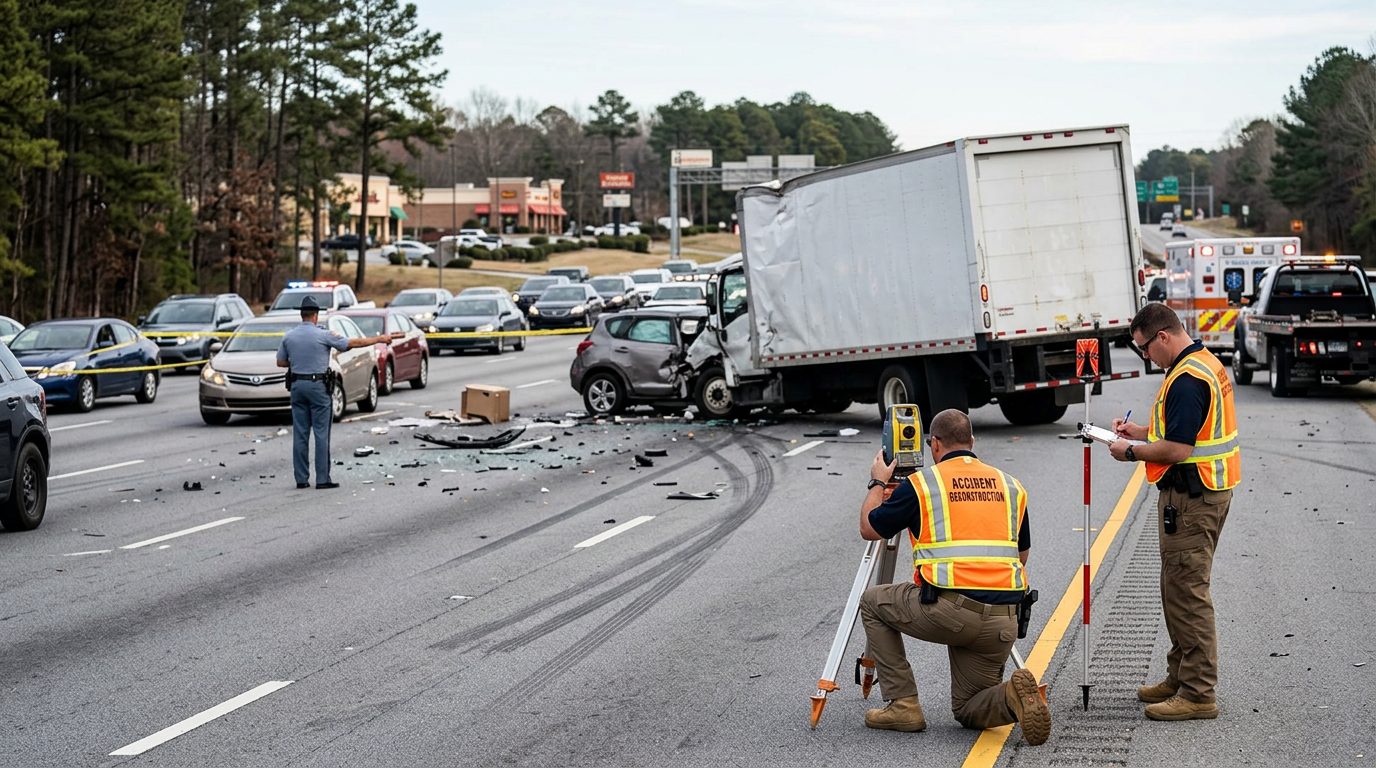
Truck Accidents | Duluth, Georgia
Hurt in a Delivery Truck Crash? Talk With Our Team for Free
Delivery trucks share busy metro Atlanta roads with cars, motorcycles and pedestrians. Here is how our firm can help you understand your options.
By Peter F. Jaraysi · Published November 12, 2026
A delivery van or box truck crash can leave you hurt, out of work, and fielding calls from insurers. Lawyers for delivery truck accidents in Georgia look beyond the driver, because more than one company may share responsibility. Georgia generally gives two years to file a personal injury lawsuit, under O.C.G.A. § 9-3-33.
Crashes on Georgia roads are deadly. The Insurance Institute for Highway Safety reports 1,403 motor-vehicle crash deaths in Georgia in 2024, a rate of 12.5 per 100,000 people. Knowing who may be responsible, early, helps you protect your rights.
What a Delivery Van or Box Truck Crash Claim Covers
A claim covers injuries or a death caused by a crash involving a delivery van, box truck, or last-mile carrier vehicle on Georgia roads. These are the vehicles that make the final leg of a delivery, including vans that carry packages for Amazon and other delivery networks.
The claim can belong to drivers, passengers, motorcyclists, cyclists, and pedestrians hit by these vehicles. After a fatal crash, surviving family members may have a claim too.
Slam Dunk Attorney handles car, truck, motorcycle, and pedestrian accident claims, plus wrongful death claims. For the broader picture, read our Georgia truck accident guide.
Delivery vehicles raise different questions. They often carry heavy loads on tight schedules. Common crash patterns include rear-end collisions, lane changes, backing accidents, and rollovers.
Some delivery vehicles fall under federal rules. The Federal Motor Carrier Safety Regulations apply to employers, employees, and commercial motor vehicles that transport property or passengers in interstate commerce. Whether a particular van is covered depends on the facts of how it is used.
If a delivery van or box truck crash left you hurt or grieving, you don't have to work out who is responsible alone. Request your free consultation with our team today. Talk it through with our team — the first consultation is free, confidential, and carries no obligation.
Who May Be Responsible After a Last-Mile Delivery Crash
More than one party may be responsible after a last-mile delivery crash. The driver is only one of them.
The usual parties include the driver, the business that employed or dispatched the driver, the company whose packages were on board, the vehicle owner, and repair or maintenance vendors.
Many last-mile vans run through independent delivery businesses, and that structure matters. Under O.C.G.A. § 51-2-5, an employer can be liable for a contractor’s negligence in certain cases. One case is when the employer keeps the right to direct or control the time and manner of the work.
Under O.C.G.A. § 51-2-4, an employer generally is not responsible for an employee who runs an independent business outside its immediate direction and control. Under O.C.G.A. § 51-2-2, a business can be liable for torts its servant commits within the scope of the business.
Companies can also face claims for their own fault. In Quynn v. Hulsey, the Supreme Court of Georgia addressed a narrower question: whether direct negligence claims against an employer that has admitted respondeat superior liability are barred. The court held that the “Respondeat Superior Rule has been abrogated by OCGA § 51-12-33” as to that question, and the decision does not eliminate respondeat superior liability itself. Under O.C.G.A. § 51-12-33, the jury will apportion its award of damages among the persons who are liable according to each one’s percentage of fault, which can include an employer’s own fault. The separate duty not to keep an employee the employer knew posed a risk of harm comes from case law such as Munroe v. Universal Health Services, not from this statute.
Under O.C.G.A. § 51-12-33, each liable party answers for its own share of fault. Those damages are not joint, so finding every party early matters.
Evidence That Matters in Delivery Van and Box Truck Cases
The most useful evidence usually includes the police report, vehicle data, driver records, and medical records. Each one tells part of the story.
- Police report and scene photos: vehicle positions, damage patterns, and any citations.
- Vehicle data: GPS, telematics, speed and braking data, and dash camera footage.
- Driver records: logs where they apply, delivery route and schedule data, training files, and prior incidents.
- Vehicle records: maintenance, inspection, brake, and tire history, and recall notices.
- Medical records: a treatment timeline that connects your injuries to the crash.
Ask the company in writing to keep vehicle data and driver files. This data is easy to lose if nobody asks for it to be kept. Keep your own records too: photos, receipts, phone records, and a daily symptom journal.
Categories of Compensation a Claim May Include
A claim can seek money for medical costs, lost income, property damage, and pain and suffering.
- Medical expenses: emergency care, surgery, rehabilitation, medication, and future care a physician supports. Under O.C.G.A. § 51-12-1.1, medical expense damages are limited to the reasonable value of medically necessary care.
- Lost income: time off work and any reduced ability to earn after a serious injury.
- Pain and suffering: the physical and emotional effects of the injury and its impact on daily life.
- Property and transport: vehicle damage, personal items, and rental or travel costs.
After a spinal cord injury, traumatic brain injury, amputation, or severe burn, long-term and life-care needs are reviewed with medical input.
After a death, Georgia law sets out who may bring the claim. Under O.C.G.A. § 51-4-2, a surviving spouse, or a child if there is no spouse, may recover for the homicide of a spouse or parent the full value of the life of the decedent, as shown by the evidence.
How a Delivery Truck Claim Works, Step by Step
A typical claim moves from medical care to a consultation, investigation, insurer talks, and, if needed, a lawsuit. Each step builds on the one before.
- Get medical care and document the crash. Your health comes first.
- Free consultation. Share the crash facts, the delivery company’s details, photos, and medical records so the firm can review your situation.
- Investigation. Letters ask companies to keep vehicle data and driver files.
- Find the parties and insurance. Commercial coverage for the vehicle and the delivery business is reviewed.
- Demand and negotiation. Medical documentation supports the claim with insurers.
- Filing suit, if needed. Georgia generally allows two years for a personal injury suit under O.C.G.A. § 9-3-33.
- Discovery and resolution. This can include depositions, mediation, or trial preparation.
Timelines vary widely. A case that goes to litigation can take many months, and sometimes more than a year.
Why Work With Slam Dunk Attorney on a Delivery Van or Box Truck Claim
Slam Dunk Attorney is a personal injury firm based in Duluth, Georgia. It represents injured people across metro Atlanta and Georgia.
Responsible lawyers named on this page are Peter F. Jaraysi and Brian D. Wright, lawyers with the firm. The firm’s assistants and office staff support each matter.
The firm handles car, truck, motorcycle, pedestrian, rideshare, dog bite, premises liability, negligent security, nursing home abuse, wrongful death, and catastrophic injury claims.
The firm serves Lawrenceville, Johns Creek, Alpharetta, Marietta, Norcross, Kennesaw, Dunwoody, and surrounding communities.
The firm does not promise results. Each case turns on its own facts, and you can ask questions before you decide anything.
Not sure what your next step is?
Talk it through with our team — the first consultation is free, confidential, and carries no obligation.
Common Questions About Delivery Van and Box Truck Accident Claims
How long do I have to file?
Georgia generally allows two years for a personal injury claim under O.C.G.A. § 9-3-33. Some claims follow different timing, so an early review helps.
What if I was partly at fault?
Georgia reduces your damages by your share of fault under O.C.G.A. § 51-12-33. You cannot recover damages if you are 50 percent or more responsible.
Does the delivery company’s insurance cover this?
Coverage depends on the policies involved. The firm reviews them during the investigation.
How long does a delivery truck lawsuit take?
Timelines vary with your injuries, the insurer’s response, and whether the case goes to trial.
Do I have to go to court?
Many claims resolve before trial. Preparing for trial is still part of the work.
What does a free consultation cost?
The first consultation is free, confidential, and carries no obligation to continue.
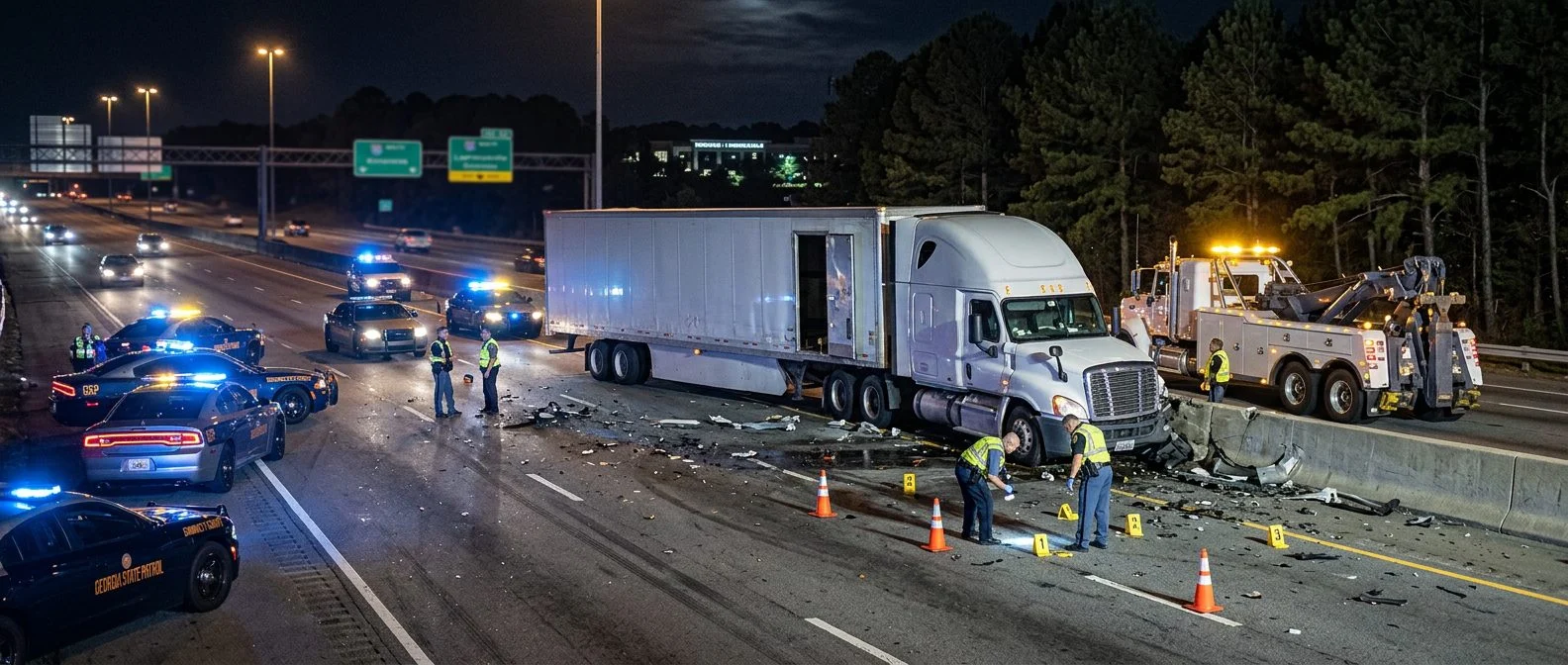
Talk to Our Team About Your Delivery Van or Box Truck Crash
If a delivery van or box truck crash has left you hurt, or a family member has died, the next step is a conversation about who may be responsible. Our lawyers can review the facts with you and explain your options.
Request your free consultation through our contact page, or contact our Duluth office to set up a free case review.
*Attorney advertising. Responsible lawyer: Peter F. Jaraysi, Slam Dunk Attorney, Duluth, Georgia. Contact: slamdunkattorney.com/contact-us. This page is general information, not legal advice. No outcome is promised or predicted.
How Our Firm Approaches Delivery Truck Cases
A Free, Confidential First Consultation
Your initial consultation is free, confidential and comes with no obligation to continue. You can ask questions and decide what makes sense for you.
Serving Metro Atlanta and Georgia
Our firm is based in Duluth, Georgia, and represents injured people across Lawrenceville, Johns Creek, Alpharetta, Marietta, Norcross, Kennesaw, Dunwoody and throughout the state.
Focused on Serious Truck Injuries
We handle delivery truck crashes involving company vehicles, contracted drivers and multiple insurers, where the paperwork and the stakes can be significant.
Lawyers and Staff Working Together
Our lawyers and support team keep you informed in plain language, from the first call through each step of your case.
Be Careful With the Insurance Company
A delivery company's insurer may contact you soon after a crash. Before you give a recorded statement or sign any release, speak with a lawyer. Keep your medical records, photos and any messages about the crash.
Steps That Can Help After a Delivery Truck Crash
Get Medical Care
See a doctor even if your injuries seem minor. Some injuries, including brain and spinal injuries, may not show symptoms right away.
Document the Scene
If you are able, take photos of the vehicles, the road, traffic signs and your injuries. Write down what you remember while it is fresh.
Record the Details
Note the delivery company's name, the truck's number and the driver's information if available, plus the names and contact details of any witnesses.
Talk With Our Team
Contact our firm for a free consultation so we can review what happened and explain the next steps in plain language.