
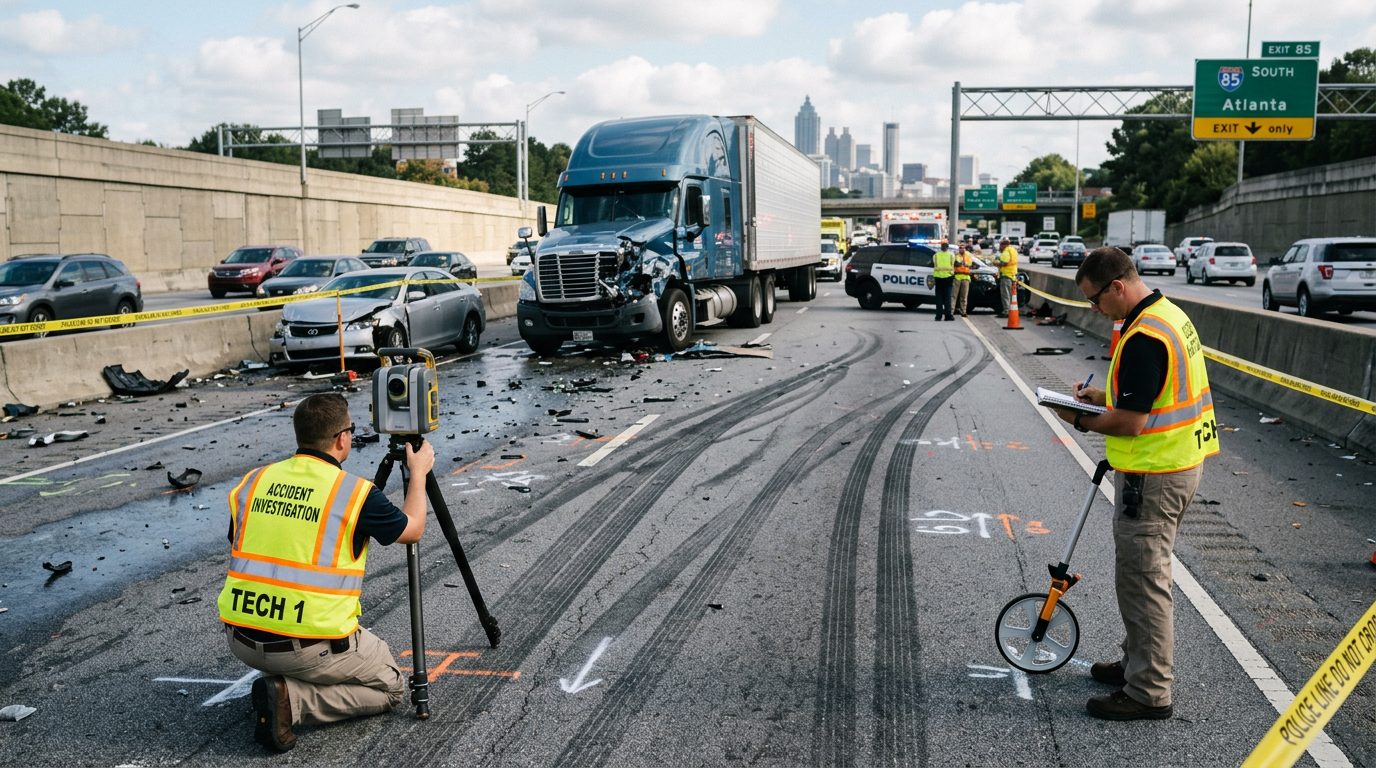
Truck Accidents | Atlanta and Metro Atlanta
Hurt in an I-85 Truck Accident? Talk With Our Team About Your Case
Slam Dunk Attorney is a Duluth, Georgia personal injury firm that represents people hurt in truck crashes on I-85 and across metro Atlanta, from Lawrenceville and Norcross to Alpharetta, Johns Creek, Marietta, Kennesaw and Dunwoody. Our first consultation is free, confidential and comes with no obligation to continue.
By Peter F. Jaraysi · Published November 1, 2026
An Atlanta I-85 truck accident lawyer helps people hurt by commercial trucks pursue compensation through a claim or a lawsuit. Slam Dunk Attorney represents injured people and families of people killed in truck crashes, from its base in Duluth, Georgia. Crashes involving 18-wheelers, dump trucks, concrete mixers and garbage trucks can cause serious harm. Georgia’s deadlines and fault rules are strict, so early decisions matter. This page explains what the claim covers, how it moves, and the Georgia rules that shape it.
What an Atlanta I-85 Truck Accident Claim Covers and Who It Is For
A truck accident claim seeks compensation for people hurt when a commercial vehicle crashes into them or into the vehicle they are riding in. Commercial vehicles include tractor-trailers, 18-wheelers, dump trucks, concrete mixer trucks and garbage trucks.
The claim may cover:
- A driver or passenger in a car hit by a truck
- A motorcyclist or pedestrian struck by a truck
- A family bringing a wrongful death claim after a fatal truck crash
Interstate 285, the Perimeter, loops around Atlanta and meets I-85, I-75 and I-20. Trucks use these routes to move freight through the metro area, so crashes there can involve commercial vehicles.
Slam Dunk Attorney is a personal injury firm based in Duluth, Georgia. It represents people across metro Atlanta and Georgia, including residents of Lawrenceville, Johns Creek, Alpharetta, Marietta, Norcross, Kennesaw and Dunwoody.
If a commercial truck hit you on I-85 or I-285, or took someone you love, your claim may still be worth a careful look, and our team can review it with you at no cost. Talk it through with our team — the first consultation is free, confidential, and carries no obligation.
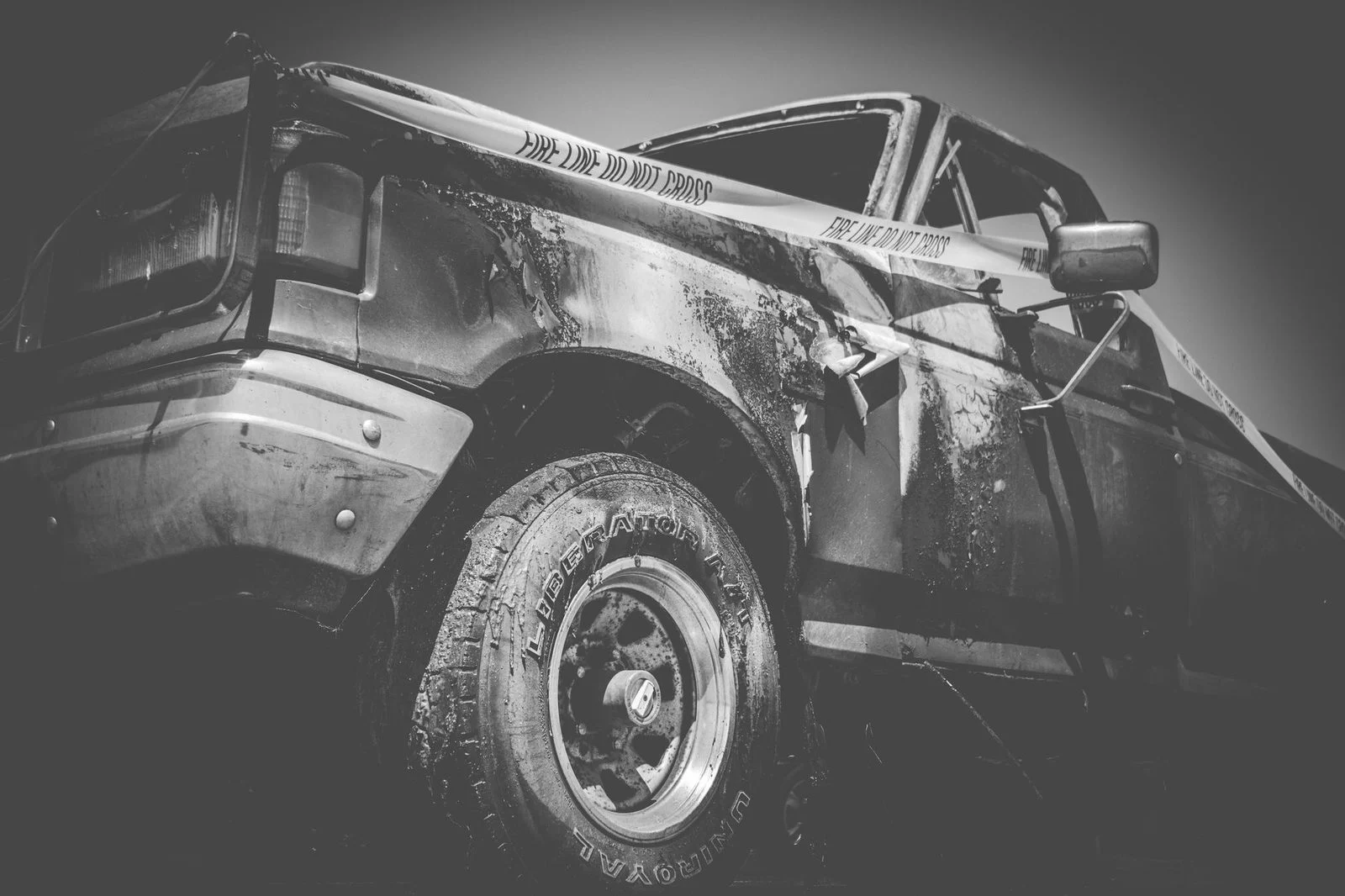
Common Truck Crash Patterns on Atlanta’s Perimeter and I-85
Truck crashes on these roads often follow a few patterns. These include rear-end collisions in slowdowns, lane-change and blind-spot crashes, jackknifes, rollovers and cargo spills. A loaded truck needs much more distance to stop than a passenger car, so a rear-end impact can cause severe harm.
Federal rules limit how long a driver may drive. Under 49 C.F.R. § 395.3, except as otherwise provided in § 395.1, a driver of a property-carrying commercial motor vehicle may drive a total of 11 hours during the 14 consecutive hours after coming on-duty following 10 consecutive hours off-duty.
Federal rules also ban texting while driving a commercial motor vehicle (49 C.F.R. § 392.80). Hand-held phone use is banned too (49 C.F.R. § 392.82).
Responsibility can reach beyond the driver. Under Georgia law, an employer can be liable for a contractor’s negligence in listed situations. One example is when the employer keeps the right to direct or control the time and manner of the work (O.C.G.A. § 51-2-5).
Dump trucks, concrete mixers and garbage trucks often work on construction sites and municipal routes. A crash with one of these vehicles can involve a contractor as well as the driver.
What Our Team Handles in a Truck Accident Case
Our team handles the early evidence work, insurance communication and damages documentation in a truck claim. Evidence matters most at the start, because trucking companies keep records that show what happened.
Records that can matter include:
- Electronic logging device data. Federal rules required carriers to use these devices to record driver duty status no later than December 18, 2017, though a carrier may require manual records in limited cases, such as when a driver’s records fall within not more than 8 days in any 30-day period (49 C.F.R. § 395.8).
- Driver qualification files. A carrier must keep a file for each driver while the driver works there and for three years afterward (49 C.F.R. § 391.51).
- Post-accident testing results. After certain serious crashes, including a crash involving a loss of life, the employer must test surviving drivers for alcohol and controlled substances as soon as practicable; if a controlled substances test is not administered within 32 hours following the accident, the employer shall cease attempts to administer it (49 C.F.R. § 382.303).
Carriers may keep records on any technology that accurately reflects the information and stays accessible (49 C.F.R. § 379.7).
Our team also gathers police reports, scene photos, witness statements and vehicle damage records. It identifies every party that may share responsibility.
Damages can include medical bills, future care, lost wages, lost earning capacity and property damage. For catastrophic injuries such as spinal cord injury and paralysis, traumatic brain injury, amputation and severe burns, planning for future medical needs is a central part of the claim.
In a fatal crash, Georgia law lets a surviving spouse, or children if there is no surviving spouse, recover the full value of the life of the person killed, as shown by the evidence (O.C.G.A. § 51-4-2).
How a Truck Accident Claim Moves Forward, Step by Step
A truck accident claim usually moves through a free consultation, early evidence requests, a damages review, a settlement demand and, if needed, a lawsuit.
- Free consultation. You describe the crash, your injuries and any papers you have received. We explain the next steps.
- Early evidence requests. Preservation requests go out so trucking records are not lost. Early action matters.
- Medical and damages review. Treatment records, bills and wage records build a picture of current and expected losses.
- Settlement demand. A documented demand goes to the responsible insurers. The team answers their responses.
- Lawsuit if needed. If a fair resolution is not reached, a suit is filed in the proper Georgia court. Discovery, depositions and pretrial steps follow.
Many claims take months. Complex and catastrophic claims can take longer, and timing depends on the facts.
Georgia uses modified comparative fault. Your damages are reduced by your percentage of fault. You recover nothing if you are 50 percent or more responsible (O.C.G.A. § 51-12-33).
Georgia’s general deadline for actions for injuries to the person is two years after the right of action accrues; injuries to reputation must be brought within one year, and loss of consortium actions within four years (O.C.G.A. § 9-3-33). That deadline is why early contact matters. That deadline is why early contact matters.
Why People Bring Their Truck Crash Claims to Slam Dunk Attorney
Slam Dunk Attorney is a Duluth, Georgia personal injury firm. It handles car, truck, motorcycle, pedestrian, rideshare and short-term rental accident claims, along with dog bites, premises liability, nursing home abuse and wrongful death.
Peter F. Jaraysi is the responsible lawyer for this page. Brian D. Wright is also one of the firm’s lawyers. The firm also has support staff, including assistants and office staff.
Clients can expect plain-language answers to their questions. They also receive updates on developments in their claim and clear explanations of the choices ahead. The firm does not make claims about results. It describes what it does and where it works.
Questions People Ask About Atlanta I-85 Truck Accident Claims
Below are short answers to common questions about these claims.
How long do I have to file?
Georgia’s general deadline for injury claims is two years. A claim against the State requires written notice within 12 months of when the loss was discovered or should have been discovered (O.C.G.A. § 50-21-26).
What if I was partly at fault?
Georgia reduces your damages by your share of fault. You recover nothing if you are 50 percent or more responsible (O.C.G.A. § 51-12-33; Quynn v. Hulsey (2020)).
Do I have to go to court?
Some claims resolve without a trial. Others need a lawsuit. Filing suit is one step the team takes when a fair resolution is not reached.
Should I talk to the trucking company’s insurer?
Insurers represent the trucking company’s interests. It helps to have your claim handled by someone on your side before you give statements.
Can a family file after a fatal crash?
Yes. Under Georgia law, a surviving spouse may recover the full value of the life of the decedent, as shown by the evidence; if there is no surviving spouse, a child or children may recover that value.
What does the first consultation cost?
The first consultation is free, confidential and carries no obligation to continue.
Not sure what your next step is?
Talk it through with our team — the first consultation is free, confidential, and carries no obligation.

Talk With Our Team About Your Truck Crash
If a truck struck you on I-85 or I-285, or took someone you love, the evidence and deadlines need attention now. Our team can review what happened and explain your options. Request your free consultation to start the conversation.
Responsible lawyer: Peter F. Jaraysi, Slam Dunk Attorney, Duluth, Georgia. Contact: slamdunkattorney.com/contact-us. This page is general information, not legal advice.
How We Approach Truck Accident Cases
Early Evidence Review
Commercial truck crashes often involve trucking company records, driver logs and maintenance files. We focus on identifying and preserving the information that matters to your claim.
Attention to Every Party
Truck accidents can involve drivers, carriers, cargo loaders, maintenance contractors and insurers. We look at each possible source of responsibility, not just the first one that appears.
Plain-Language Updates
We explain each step in clear terms so you know what is happening, what comes next and what decisions are yours to make.
Focus on Your Recovery
Serious injuries take time to heal. Our team works to keep the legal process manageable while you concentrate on medical care and your family.
Be Careful With Insurance Adjusters
Trucking company insurers often contact injured people quickly. Before you give a recorded statement or sign any release, talk with a lawyer about what you are being asked to agree to.
What to Do After a Truck Crash
Get Medical Care
See a doctor even if your injuries feel minor. Some serious conditions, including head and spinal injuries, may not show symptoms right away.
Document the Scene
If you are able, take photos of vehicles, the roadway, lane markings, skid marks and any visible damage. Write down the time, weather and what you remember.
Keep Your Records
Save medical bills, prescriptions, repair estimates, pay stubs and any letters from insurers in one place so nothing is lost.
Speak With Our Team
Contact Slam Dunk Attorney for a free, confidential consultation. We can explain your options and answer your questions with no obligation to continue.
Speak With Peter F. Jaraysi and Our Team About Your I-85 Truck Accident
Related practice areas
- Truck Accident Lawyers in Duluth & Metro Atlanta, GA