
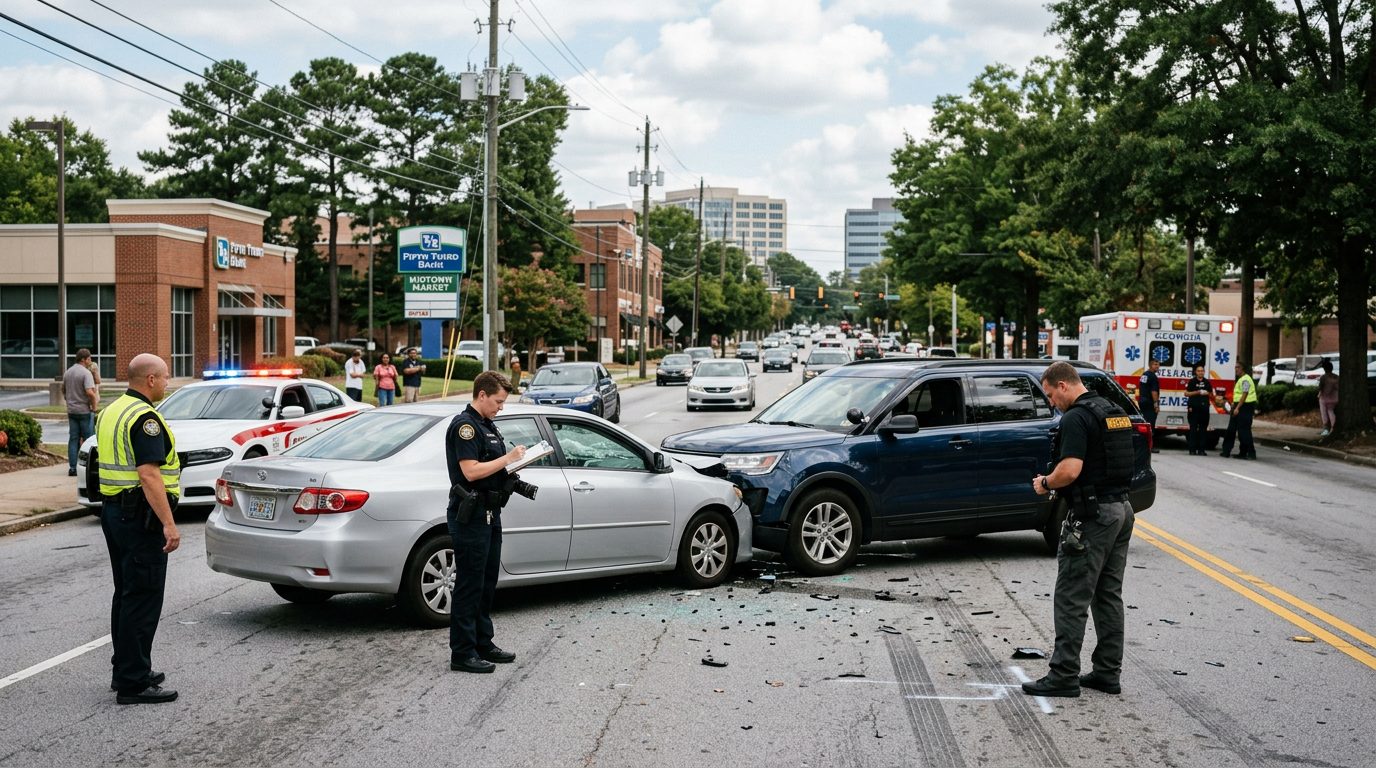
Car Accidents | Duluth, Georgia and Metro Atlanta
Who Handles a Car Accident Claim in Georgia?
Not sure which lawyer to call, or what happens once an insurance company gets involved? Here is how these claims are usually organized and where to begin.
By Peter F. Jaraysi · Published November 11, 2026
After a car crash, many people face medical visits, insurance calls, and bills all at once. If you’re asking what type of lawyer handles car accidents, the answer is usually a personal injury lawyer. That lawyer represents people hurt by another person’s carelessness. In Georgia, the claim often goes to the at-fault driver’s liability insurance.
This guide explains what that lawyer does, when legal help matters most, and which Georgia rules shape a claim. It’s written for injured people and the family members who help them.
A Personal Injury Lawyer Handles the Injury Claim
A personal injury lawyer handles the injury side of a car accident claim, usually against the at-fault driver’s liability insurer. Liability insurance pays for harm a driver causes to others. That’s why much of the work centers on the insurance, medical proof, and negotiation.
The lawyer reviews how the crash happened, documents the injuries and losses, and presents the claim for payment. If a fair resolution can’t be reached, the lawyer can file a lawsuit and carry the case through court. Many claims are resolved without one, but the option matters.
Slam Dunk Attorney is a personal injury firm based in Duluth, Georgia. Our lawyers handle car, truck, motorcycle, pedestrian, and rideshare accident claims for clients across metro Atlanta and Georgia.
If you're recovering from a crash and fielding insurer calls, we can talk through your options in a free, confidential first consultation with no obligation to continue. Talk it through with our team — the first consultation is free, confidential, and carries no obligation.
Do I Need a Lawyer After a Car Accident?
Some people handle a minor crash with little damage and no injuries on their own. Legal help tends to matter most when one or more of these is true:
- The injury is serious or may last a long time.
- You have lost income or missed work.
- Fault is disputed, or the other driver denies responsibility.
- The insurer denies, delays, or undervalues the claim.
- A commercial truck, rideshare vehicle, or government vehicle is involved.
If you’re reading this while in pain and handling calls and bills, you aren’t alone in feeling unsure. A short talk with a lawyer can help you see which step comes first. Early medical care and a clear record of the crash help any claim.
Who Is Usually at Fault If a Car Hits the Back of You?
In a rear-end crash, fault depends on the facts of that crash, so no single answer fits every case. Rear-end collisions are common claims. Investigators look at the following driver’s distance and attention. They also look at whether the front driver stopped suddenly, signaled, or had working brake lights.
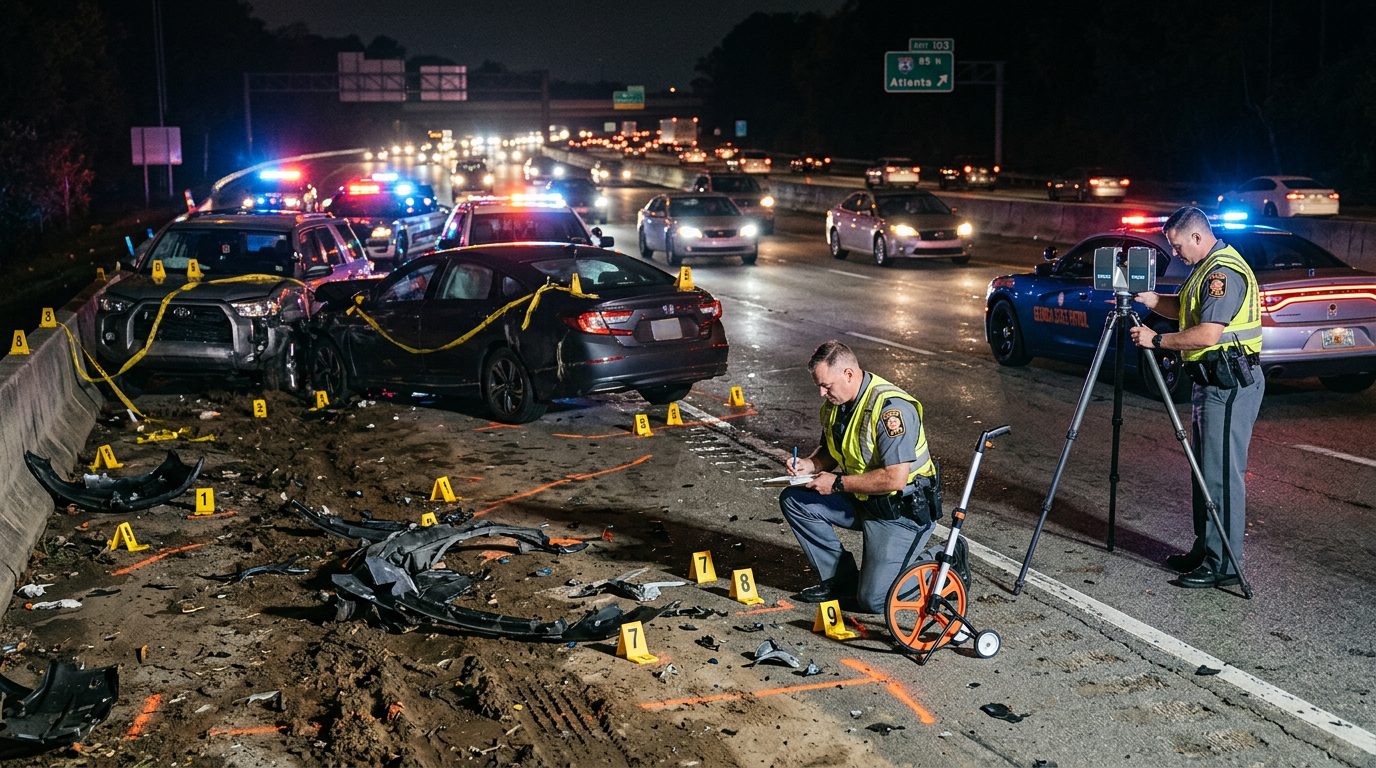
Police reports, photos, vehicle damage, road conditions, and witness statements or camera footage help show what happened.
Georgia uses a fault-sharing rule. The trier of fact, meaning the jury or judge deciding the facts, sets each person’s percentage of fault. The judge then reduces the award in proportion to the injured person’s share (O.C.G.A. § 51-12-33). Under the same statute, an injured person who is 50 percent or more responsible may not receive any damages.
Insurers sometimes argue that the injured person shared the blame. Because any share of fault can reduce recovery, notes, photos, and witness names from the scene matter.
When the Vehicle Changes the Case: Trucks, Motorcycles, Pedestrians, and Rideshare
The type of vehicle changes who may be responsible and what proof exists.
Trucks. Truck crashes often involve a motor carrier, company policies, and driver paperwork. Federal rules require carriers to keep records of duty status for at least six months from receipt (49 C.F.R. § 395.8). The FMCSA hours-of-service rules set driving limits and required rest for commercial drivers.
Motorcycles. Motorcycle claims often raise questions about how fault is viewed. Road rash, fractures, and head injuries need careful medical records from the first visit.
Pedestrians. Georgia law requires every driver to exercise due care to avoid colliding with a pedestrian on any roadway (O.C.G.A. § 40-6-93). Crosswalk, signal, and visibility facts usually matter.
Rideshare. Rideshare claims often depend on whether the driver was logged in to the app. Georgia law lets insurers exclude a personal auto policy for losses while a driver is logged on or providing rides (O.C.G.A. § 33-1-24). A separate statute, O.C.G.A. § 40-1-201, limits when a ride share network service is liable.
Deaths. If a crash causes death, certain survivors may recover the full value of the decedent’s life, as shown by the evidence (O.C.G.A. § 51-4-2).
How a Lawyer Works With the Insurance Companies
A lawyer usually handles communication with insurers, so you don’t have to give recorded statements or weigh offers alone. The work starts with the police report, photos, vehicle data, witness contacts, and any surveillance or traffic camera footage that may still exist.
Next comes the demand package. It goes to the insurer with a settlement request.
Georgia sets rules for written settlement offers in motor vehicle injury claims. An offer prepared with a lawyer’s help, before the named defendant files an answer (or, with multiple named defendants, before all of them have filed their initial answers or been found to be in default), must include a payment date at least 40 days after it is received (O.C.G.A. § 9-11-67.1).
Insurers work on their own schedules, and response times vary. A lawyer can follow up and keep the claim moving.
How Injuries Are Documented and Proven
Medical records, imaging, treatment notes, and bills form the core proof of an injury. A lawyer often works with treating doctors and other medical professionals. They explain how the crash caused the injury and what future care may be needed.
Georgia limits medical expense damages to the reasonable value of medically necessary care, as the trier of fact determines (O.C.G.A. § 51-12-1.1). So the records need to show why each treatment was needed. If treatment is provided under a letter of protection, a promise to pay from a future settlement, the letter and itemized charges are relevant evidence under the same statute.
Some crashes cause spinal cord injury. The Christopher & Dana Reeve Foundation describes how this type of injury can affect motor, sensory, and autonomic function.
Insurers often point to gaps in treatment. Keep appointments, follow recommended care, and log missed work and out-of-pocket costs. Explain any gap honestly to your lawyer.
Not sure what your next step is?
Talk it through with our team — the first consultation is free, confidential, and carries no obligation.
Georgia Deadlines for Car Accident Injury Claims
In Georgia, most injury lawsuits must be brought within two years after the right of action accrues (O.C.G.A. § 9-3-33).
Many claims settle before any lawsuit is filed. The deadline still matters, because a lawsuit may be needed if talks stall. Missing a deadline can cost you the right to sue.
For claims against the state under this article, written notice must first be presented to the state, and a suit may not begin until the Department of Administrative Services denies the claim or more than 90 days pass after the notice is presented (O.C.G.A. § 50-21-26); this rule applies only to state claims under that article, not to claims against private drivers or other private parties.
Other claims, such as wrongful death, can involve their own timing. Don’t assume one date covers everything.
What to Share With Your Lawyer and What to Hold Off On
Share a complete and accurate account of the crash with your lawyer, including facts that seem unhelpful. A lawyer needs the full picture to judge the claim. Facts learned late can be harder to address than facts shared at the start.
With insurers and others, stick to what you know. Avoid guessing about speed, distance, or fault, and don’t fill silences with estimates.
Keep photos, receipts, pay stubs, medical paperwork, and a simple daily log of symptoms and limits. Also keep copies of every letter from insurers, and note the date of each call.
Review any recorded statement or signed release with your lawyer before you give or sign it. A release can close a claim, and a recorded statement can be used later.
How Settlement Money Is Calculated and What Comes Out of It
A settlement amount depends on the injuries, treatment, fault, available insurance, and the facts of the case. No lawyer can promise a specific amount. Two people with similar injuries can end up with different claims because of fault, coverage, and proof.
Money from a settlement may go toward attorney fees under the written fee agreement, case costs and expenses, and any medical or insurance liens. Ask how each one is calculated, and get the terms in writing before you agree to anything. Ask how any letter of protection works before you sign one.
Our firm offers a free first consultation, which is confidential and has no obligation to continue. It’s a chance to ask how these deductions would apply to your facts.
Talk With a Metro Atlanta Car Accident Lawyer About Your Situation
If you were hurt in a car accident, a talk with a lawyer can help you sort out your next steps. Slam Dunk Attorney is based in Duluth, Georgia. The firm handles car, truck, motorcycle, pedestrian, and rideshare accident claims across metro Atlanta and Georgia.
What type of lawyer handles car accident injury claims?
A personal injury lawyer usually handles car accident injury claims. The lawyer works mainly with the at-fault driver’s insurer.
Do I need a lawyer after a car accident in Georgia?
Not every crash needs one. Serious injuries, disputed fault, or insurer pushback make legal help more useful.
Is Georgia’s fault rule all or nothing?
No. Georgia reduces damages by the injured person’s share of fault. A person who is 50 percent or more responsible may not recover damages (O.C.G.A. § 51-12-33; Quynn v. Hulsey (2020)).
How long do I have to file a car accident lawsuit in Georgia?
Generally two years after the right of action accrues. Some claims, such as those against state entities, have extra steps.
Is the first consultation free?
Yes. The first consultation is free, confidential, and has no obligation to continue.
If you’re recovering from a crash, answering insurer calls, or helping a family member decide what comes next, you can request a free case review through our contact page.
Disclaimer: This page is general information, not legal advice, and it does not create an attorney-client relationship. Responsible lawyer: Peter F. Jaraysi, Slam Dunk Attorney, Duluth, Georgia. Contact: https://slamdunkattorney.com/contact-us/.
How Our Lawyers Help After a Crash
Insurance Company Contact
Our lawyers can handle communication with insurance adjusters so you are not left answering calls while you recover.
Reviewing the Records
We look at the crash report, medical records and bills to build a clear picture of what happened and what it has cost you.
Plain-Language Updates
Our team explains each step in everyday terms, so you always know where your claim stands and what comes next.
Metro Atlanta and Georgia
We represent people hurt in crashes across Atlanta and Georgia, including Lawrenceville, Johns Creek, Alpharetta, Marietta, Norcross, Kennesaw and Dunwoody.
A Patient Approach
We understand that a crash affects your health, your work and your family, and we take the time to listen before recommending a path forward.
Talk to a Lawyer Before a Recorded Statement
Insurance adjusters may ask you for a recorded statement soon after a crash. Before you answer questions about your injuries or how the collision happened, you can speak with a lawyer first.
Who Handles Different Types of Crashes
Personal Injury Lawyers
Most car accident injury claims are handled by a personal injury lawyer, who usually works mainly with the at-fault driver's insurer.
Truck and Commercial Vehicle Crashes
Collisions with large trucks or commercial vehicles can involve more parties and more records, so they often need a more detailed investigation.
Rideshare Crashes
If an Uber or Lyft driver was involved, more than one insurance source may be part of the picture, which makes an early review helpful.
Serious and Catastrophic Injuries
Spinal cord injuries, traumatic brain injuries, amputations and wrongful death claims often call for a longer, more thorough case review.