
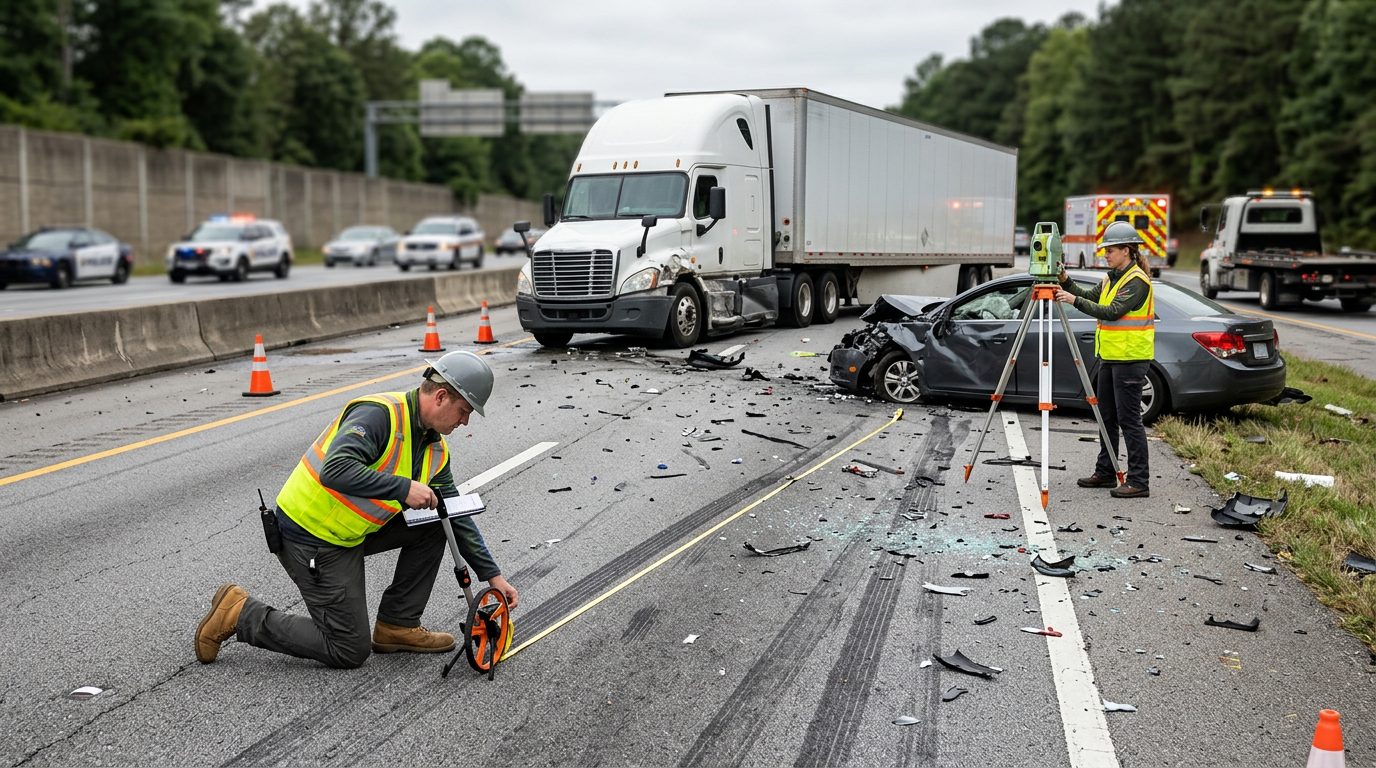
Truck Accidents in Georgia
Settlement vs. Trial: What Happens After a Truck Accident
Understanding your options when pursuing a claim for injuries from a truck accident.
By Peter F. Jaraysi · Published October 04, 2026
Truck Accident Settlement vs. Trial in Georgia: What to Expect
Most truck accident cases in Georgia resolve through settlement rather than trial, but the path you take—settlement or trial—will affect your timeline, costs, and how much control you have over the outcome. Understanding what happens in each process helps you and your attorney make decisions that fit your situation.
If you're weighing whether to settle or pursue trial after a truck accident in Georgia, you're facing a decision that will shape the next several years of your case—and many people in exactly your situation reach out to discuss their options with us. Talk it through with our team — the first consultation is free, confidential, and carries no obligation.

Settlement vs. Trial: The Two Paths After a Truck Accident in Georgia
Settlement and trial differ fundamentally in how they work, how long they take, and what you can expect at the end.
In a settlement, you and the at-fault party’s insurance company (or their attorney) negotiate a dollar amount to resolve your claim without going to court. You reach an agreement, sign a release, and the case closes. In a trial, a judge or jury hears evidence from both sides and decides who was at fault and how much you’re owed. The outcome is decided by the court, not by negotiation.
The choice between these paths depends on liability clarity, injury severity, insurance company responsiveness, and whether the settlement offer fairly reflects your damages. This page compares what happens in each process so you can understand your options.
What Happens in a Truck Accident Settlement
A settlement begins after your medical treatment has stabilized and your attorney has gathered the evidence needed to value your claim.
Your attorney collects medical records, the police accident report, witness statements, photos of the accident scene, and vehicle damage documentation. For truck accidents, this also includes trucking company records—driver logs, vehicle maintenance records, dispatch data, and safety inspection reports—to establish liability and the company’s negligence.
Once your attorney has this documentation, they prepare a demand letter. This letter outlines your injuries, medical treatment, lost wages, and other damages, and states the amount you’re seeking to resolve the claim. The insurance company responds with a counteroffer. Negotiation continues, with each side adjusting their position, until you reach an agreement or decide to proceed to trial.
When both sides agree on a number, you sign a release agreement—a legal document stating you accept the settlement amount and release the other party from further liability. You receive payment, and the case is closed. Settlement is confidential; the terms and amount are not public record.
What Happens When a Truck Accident Case Goes to Trial
Trial occurs when settlement negotiations fail and the case proceeds to court.
Before trial, both sides go through discovery—a process where attorneys exchange documents, medical records, expert reports, and written questions (called interrogatories) to build their cases. Pre-trial motions may be filed to resolve legal issues or exclude evidence. These steps can take months or years.
At trial, a judge or jury hears evidence from both sides. Your attorney presents your case—testimony from you, medical providers, accident reconstruction experts, and witnesses. The defendant’s attorney presents their defense. Both sides make arguments about liability (who was at fault) and damages (how much you’re owed).
Under Georgia law, the jury or judge applies the rule of modified comparative fault. This means if you’re found partially responsible for the accident, your damages are reduced by your percentage of fault. If you’re found 50 percent or more at fault, you recover nothing.
After trial, the judge or jury issues a verdict. Either side may appeal the decision under certain circumstances, which can extend the case another 1–2 years or more.
Settlement vs. Trial: Side-by-Side Comparison
| Factor | Settlement | Trial |
|---|---|---|
| Timeline | 6 months to 2 years | 2–5+ years from accident to verdict |
| Cost | Lower attorney fees and case costs | Higher costs: expert witnesses, court filings, discovery disputes |
| Control | You and your attorney control the outcome through negotiation | Judge or jury decides liability and damages |
| Certainty | Known outcome; you know what you’re receiving | Unpredictable; verdict could be higher or lower than expected |
| Privacy | Confidential; terms are not public | Public record; verdict and case details are open to the public |
| Finality | Case ends immediately upon settlement | May be followed by appeal, extending resolution further |
How Long Does a Truck Accident Settlement Take in Georgia?
Settlement timelines vary widely, but most Georgia truck accident cases resolve within 6 months to 2 years.
Medical records and the demand package can add weeks or months before negotiation even begins. Your attorney needs complete medical documentation—diagnoses, treatment records, imaging results, and provider notes—to accurately value your claim. If you’re still undergoing treatment, your attorney may wait until your condition stabilizes before sending the demand.
Building the liability case also takes time. For truck accidents, this means obtaining the police report, witness statements, accident reconstruction analysis, and trucking company records (maintenance logs, driver qualification files, electronic logging device data, and safety violations). This investigation can take several months.
Once the demand is submitted, settlement negotiations usually take weeks to months. Some cases settle quickly if liability is clear and the insurance company’s first offer is reasonable. Others involve multiple rounds of negotiation.
Faster settlements often occur when: – Liability is clear (the truck driver was obviously at fault) – Your injuries are straightforward and well-documented – Medical treatment is complete – Insurance policy limits are adequate to cover your damages
Longer settlements typically happen when: – Liability is disputed – Your injuries are severe or long-term – Medical treatment is ongoing – Insurance company is unresponsive or makes unreasonably low offers
Not sure what your next step is?
Talk it through with our team — the first consultation is free, confidential, and carries no obligation.
When Does a Truck Accident Case Actually Go to Trial?
Most truck accident cases do not go to trial; the majority settle during negotiation or mediation.
Trial becomes necessary when the parties cannot agree on liability, damages, or both. This might happen because: – The insurance company refuses a settlement offer you and your attorney believe is fair – Liability is genuinely disputed and cannot be resolved through negotiation – You decide the settlement offer does not adequately reflect your injuries and losses
Even after a lawsuit is filed, trial may not occur for 2–5 years or longer. Georgia courts have case backlogs, and pre-trial motions, discovery disputes, and scheduling delays extend the timeline further.
Factors That Point Toward Settlement
Settlement may be the right choice if:
- Liability is clear. The truck driver or trucking company is obviously at fault, and the insurance company acknowledges this.
- Your injuries are documented. Medical records support your claim and prognosis is clear.
- Insurance coverage is adequate. The policy limits are sufficient to cover your damages.
- Both sides have realistic valuations. You and the insurance company are in the same ballpark on what the case is worth.
- You prefer certainty and speed. You want to know the outcome, avoid trial costs, and move forward sooner.
- Your condition is stable. Your medical prognosis is established, so future damages can be calculated.
Factors That Point Toward Trial
Trial may be necessary or appropriate if:
- Liability is disputed. Fault is unclear or the insurance company contests responsibility.
- The settlement offer is too low. The insurance company’s offer significantly undervalues your claim compared to what you and your attorney believe it’s worth.
- Your injuries are severe. Long-term or catastrophic injuries require expert testimony to establish future medical costs, lost earning capacity, and pain and suffering.
- You need a public record. You want the court to officially find the defendant at fault and document their wrongdoing.
- Complex legal issues exist. The case involves trucking company negligence, federal safety violations, or potential punitive damages (damages meant to punish wrongdoing, not just compensate injury).
- You’re willing to accept uncertainty. You understand trial outcome is unpredictable but you’re prepared for that risk in exchange for the possibility of a larger verdict.
Can I Still Settle After Already Filing a Lawsuit?
Yes. Most cases that are filed as lawsuits still settle before trial.
Filing a lawsuit often motivates settlement because it signals you’re serious and willing to go to court. This can push the insurance company to make a more reasonable offer. Settlement can occur at any point: during discovery, after expert reports are exchanged, during mediation, or even during trial. Your attorney can negotiate settlement terms at any stage.
What You Should Know About Settlement Amounts
Settlement amounts depend on the specific facts of your case: injury severity, medical expenses, lost wages, liability strength, and insurance coverage.
No two truck accident cases are identical. Comparing your settlement to another person’s settlement is not reliable for valuing your own case. Insurance companies use formulas and guidelines, but your attorney negotiates based on your actual damages and the strength of your evidence under Georgia law.
Your attorney will evaluate your case based on Georgia’s two-year statute of limitations for personal injury claims, the applicable law on liability and damages, and the realistic risks and costs of trial. This analysis—not a generic “average settlement”—is what determines a fair offer for you.
If you're weighing whether to settle or pursue trial after a truck accident in Georgia, you're facing a decision that will shape the next several years of your case—and many people in exactly your situation reach out to discuss their options with us. Talk it through with our team — the first consultation is free, confidential, and carries no obligation.
Medical Treatment and Settlement Value
Completing medical treatment before settling usually results in a more accurate damage valuation.
If you need ongoing or future medical care—surgery, physical therapy, long-term care, or pain management—this must be documented and projected. Insurance companies may discount settlements if treatment is incomplete or your long-term prognosis is uncertain. Your attorney will advise on timing: settling too early may undervalue future damages; waiting too long may delay resolution unnecessarily.
Next Steps: Understanding Your Options
If you’re currently in settlement negotiations or considering whether to file a lawsuit, the decision depends on your specific circumstances.
An attorney who understands Georgia truck accident law can evaluate your case, explain the realistic timeline and costs of each path, and help you understand what makes sense for your situation. You don’t have to make this decision alone, and you don’t have to accept the first settlement offer.

Frequently Asked Questions
How long does a typical truck accident settlement take in Georgia?
Most settle within 6 months to 2 years, depending on medical documentation completeness, liability clarity, and insurance company responsiveness.
What’s the difference between settling and going to trial?
Settlement is a negotiated agreement that ends the case quickly and confidentially; trial is a public court proceeding where a judge or jury decides the outcome, which typically takes 2–5+ years.
Can I settle after filing a lawsuit?
Yes, most cases that are filed still settle before trial, at any stage of the process.
What does Georgia’s comparative fault rule mean for my settlement?
Under modified comparative fault, if you’re found partially at fault, your damages are reduced by your percentage of fault; if you’re 50 percent or more at fault, you recover nothing.
Should I settle or go to trial?
That depends on liability clarity, injury severity, the insurance company’s offer, your tolerance for uncertainty, and your attorney’s assessment of trial risk and potential recovery.
If you’re weighing whether to settle or pursue trial after a truck accident in Georgia, you’re facing a decision that will shape the next several years of your case. Many people in exactly your situation reach out to discuss their options. Contact us for a free consultation to talk through your case and understand what settlement or trial might look like for you.
Settlement and Trial: Key Differences
Settlement
A negotiated agreement between you and the at-fault party's insurance company. The case ends confidentially, usually within months. You avoid the uncertainty and time commitment of trial.
Trial
A formal court proceeding where a judge or jury hears evidence and decides liability and damages. Trials take longer but may result in a different outcome than settlement negotiations.
Timeline
Settlements often resolve within 6 months to 2 years, depending on medical documentation, liability clarity, and insurance responsiveness. Trials typically take 1–3 years or longer.
Cost and Certainty
Settlements are predictable and avoid trial expenses. Trials involve court costs and carry the risk that a jury may award less—or more—than expected.
How We Help You Evaluate Your Options
Thorough Case Review
We gather medical records, police reports, and evidence to build a clear picture of liability and damages—the foundation for any settlement or trial strategy.
Transparent Communication
We explain the strengths and weaknesses of your case in plain language, so you understand the realistic range of outcomes and can make an informed decision.
Negotiation and Representation
Whether pursuing settlement or preparing for trial, we handle discussions with insurance companies and represent your interests in court.
Timely Action
We move your case forward efficiently, meeting deadlines and keeping pressure on the other side to resolve or prepare for trial.
Important: Fees and Costs
We work on a contingency basis—no fees unless there is a recovery. However, you may still be responsible for court costs and case expenses, which are separate from attorney fees. We'll discuss these details with you upfront.
Common Questions About Settlement and Trial
How long does a typical settlement take?
Most truck accident settlements resolve within 6 months to 2 years, depending on how quickly medical treatment is documented, liability is clear, and the insurance company responds to settlement demands.
Should I settle or go to trial?
That depends on your case. A settlement offers speed and certainty; a trial offers the chance to present your case to a judge or jury. We'll discuss the pros and cons based on the facts of your accident.
What happens if I reject a settlement offer?
If you decline an offer, your case proceeds toward trial. We'll prepare thoroughly and represent you in court, but trials take longer and carry more uncertainty than settlements.
Can I change my mind after settling?
Once you sign a settlement agreement, the case is closed and you cannot pursue further claims related to that accident. It's important to understand the terms before you agree.
Ready to Discuss Your Truck Accident Claim?
Related practice areas
- Truck Accident Lawyers in Duluth & Metro Atlanta, GA