
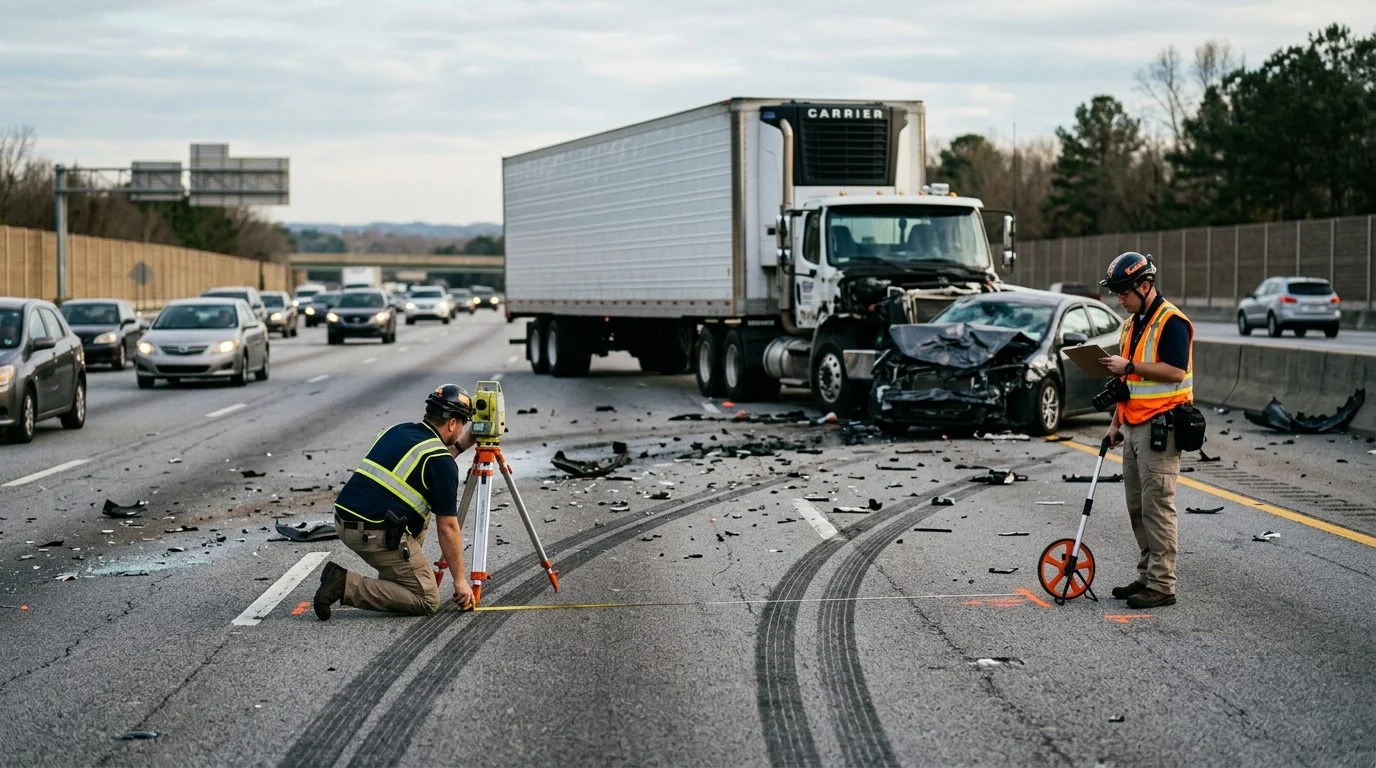
Truck Accidents
Truck Accident Injuries & Compensation in Georgia
When a truck collision leaves you injured, you deserve clear answers about your rights and recovery options. Slam Dunk Attorney represents injured people across metro Atlanta and Georgia.
By Peter F. Jaraysi · Published September 28, 2026
Truck Accident Injuries and Compensation in Georgia
Truck accidents cause severe injuries far more often than passenger vehicle crashes because of the massive weight and force involved. When a truck weighing 20–30 times more than a car collides with you, the impact creates injuries that affect not only your health but also your eligibility for compensation under Georgia law. Understanding what types of injuries occur, how they’re treated, and what compensation means can help you recognize whether you have a claim worth pursuing.
Not sure what your next step is?
Talk it through with our team — the first consultation is free, confidential, and carries no obligation.

Why Truck Accident Injuries Are Often Severe
Trucks weigh significantly more and travel at high speeds, creating exponentially greater collision forces than passenger vehicle accidents. According to the National Center for Statistics and Analysis, large trucks were involved in 5,837 fatal crashes in 2022, accounting for 13% of all traffic fatalities despite representing only a small fraction of vehicles on the road.
When a truck hits a passenger vehicle, the occupants absorb forces their bodies aren’t designed to withstand. This is why truck accident injuries tend to be catastrophic—not minor fender-bender injuries. The severity of your injury directly affects your compensation claim. More serious injuries mean higher medical bills, longer recovery times, lost wages, and potential permanent disability. Each of these factors expands the scope of damages you may recover.
Injury documentation matters from the very first moment after the crash. Emergency room records, imaging scans, and physician notes created immediately after the accident become critical evidence. They establish what happened to your body and prove causation—the direct link between the truck accident and your injuries. Without this documentation, it’s harder to prove your claim, even if your injuries are real.
Common Truck Accident Injuries
Truck accidents produce a wide range of injuries, from moderate to life-altering. Here are the most common types:
Whiplash and Neck Injuries
Whiplash occurs when your head and neck snap forward and backward suddenly during impact. The cervical spine (neck) contains delicate nerves and soft tissue that tear or strain. You might feel pain immediately or days later. Whiplash can lead to chronic neck pain, headaches, and reduced range of motion. While whiplash is often considered a “soft tissue” injury, it’s taken seriously in compensation claims when medical records document the injury and its effects on your daily life.
Back and Spinal Injuries
The impact of a truck collision can injure your lower back, mid-back, or the discs between vertebrae. A herniated disc occurs when the cushioning material inside a spinal disc ruptures and presses on nerves, causing pain, numbness, or weakness in your legs or arms. Vertebral fractures (broken bones in the spine) are more serious and may require surgery. Back injuries often result in chronic pain and limited work capacity, which significantly affects compensation claims because they reduce your ability to earn income long-term.
Head and Traumatic Brain Injuries
A traumatic brain injury (TBI) occurs when your head strikes an object or experiences sudden acceleration-deceleration forces. Traumatic brain injuries range from concussion to diffuse axonal injury, each with different severity levels and recovery timelines. A concussion may cause temporary confusion, headache, and dizziness. Severe TBI can result in permanent cognitive changes, memory loss, personality changes, and loss of physical function. These injuries are invisible on the outside but profoundly affect your ability to work, think, and live independently. Compensation for TBI often reflects lifetime care needs.
Broken Bones and Fractures
Truck accidents frequently break ribs, arms, legs, pelvis, and collarbone. Fractures require immobilization, surgery, and months of physical therapy. Compound fractures (where bone breaks through the skin) risk infection and permanent scarring. Even after healing, some fractures leave you with reduced strength or chronic pain. The medical costs and lost work time from broken bones add up quickly.
Internal Injuries and Organ Damage
The blunt force of a truck collision can rupture internal organs, cause internal bleeding, or damage the liver, spleen, kidneys, or lungs. Internal injuries often require emergency surgery and extended hospitalization. You may not feel symptoms immediately, which is why emergency medical evaluation after any truck accident is critical. Undiagnosed internal bleeding can be fatal. Survivors of internal injuries often face long-term complications, reduced work capacity, and ongoing medical care.
Burn Injuries
When a truck carrying fuel or flammable materials is involved in a collision, fires can start. Burn injuries require specialized burn care, skin grafts, and long-term wound management. Severe burns leave permanent scarring and disfigurement. Beyond medical costs, burn survivors often experience psychological trauma, loss of self-image, and social isolation. Compensation for burn injuries reflects both the medical expenses and the emotional and social impact.
Crush Injuries and Amputations
If your limb is trapped between the truck and another object, crush injuries can occur. Crush injuries cause tissue death, infection risk, and often require amputation (surgical removal of the limb). Amputation is a permanent disability that changes your entire life—your work capacity, mobility, independence, and psychological well-being. Compensation for amputation reflects lifetime prosthetics, assistive devices, home modifications, and care assistance.
Severe and Catastrophic Truck Accident Injuries
Some truck accident injuries are so severe that they permanently alter your life. These are called catastrophic injuries.
Spinal Cord Injuries and Paralysis
A spinal cord injury occurs when the impact damages the nerve bundle running through your vertebrae. Depending on the location and severity, spinal cord injuries can result in partial or complete paralysis. Paraplegia (paralysis of the lower body) and tetraplegia (paralysis of all four limbs) are permanent conditions. Spinal cord injury survivors require lifetime medical care, wheelchair accessibility, assistive devices, home modifications, and often personal care assistance. The lifetime costs are substantial—medical care, equipment, home modifications, and lost earning capacity. Compensation claims for spinal cord injuries reflect these long-term needs.
Permanent Disability and Loss of Function
Some truck accident injuries don’t heal completely. You may recover physically but never regain full function. Permanent disability means you can’t return to your previous job or any job requiring similar physical or cognitive demands. Loss of earning capacity—the difference between what you earned before and what you can earn now—becomes a major component of your compensation claim.
Disfigurement and Scarring
Severe lacerations, burns, or crush injuries leave visible scars and disfigurement. While disfigurement doesn’t always affect physical function, it affects your appearance, self-image, and social life. Georgia law recognizes disfigurement as a non-economic damage (explained below), and compensation reflects the emotional and social impact.
Wrongful Death
When a truck accident is fatal, surviving family members have the right to file a wrongful death claim. Wrongful death claims recover economic losses (the deceased’s lost income, funeral expenses, and medical bills) and non-economic losses (loss of companionship, mental anguish, and loss of parental guidance for minor children). Wrongful death is a distinct legal claim, and family members should understand their rights immediately after a fatal accident.
What “Compensation” Means in a Truck Accident Injury Claim
Compensation in Georgia personal injury law means money damages awarded to an injured person to make them “whole” again—or as whole as possible. Compensation has two main categories:
Economic Damages
Economic damages are measurable financial losses directly caused by the accident:
- Medical expenses: emergency care, surgery, hospitalization, doctor visits, physical therapy, medications, and ongoing treatment
- Lost wages: income you lost while recovering and unable to work
- Future medical costs: ongoing treatment, medications, assistive devices, home modifications, and lifetime care for catastrophic injuries
- Loss of earning capacity: the difference between what you could have earned if you hadn’t been injured and what you can earn now
Economic damages are the easiest to prove because they’re documented in medical bills, pay stubs, and expert projections.
Non-Economic Damages
Non-economic damages compensate you for harm that doesn’t have a price tag:
- Pain and suffering: physical pain from your injury and recovery
- Emotional distress: anxiety, depression, trauma, and psychological impact
- Loss of enjoyment of life: inability to participate in activities you enjoyed before the accident
- Disfigurement: permanent scarring or visible injury affecting appearance
- Loss of consortium: impact on your relationship with your spouse
Georgia law recognizes non-economic damages and does not cap them in most personal injury cases, meaning there’s no legal maximum on what you can recover for pain and suffering or emotional harm.
How Liability and Negligence Affect Compensation
To recover compensation, you must prove that someone else was negligent—that they owed you a duty of care, breached that duty, and caused your injury. In truck accidents, negligence might include speeding, unsafe lane changes, driver fatigue, mechanical failure, or improper cargo loading. The truck driver, the trucking company, the vehicle manufacturer, or a maintenance contractor could all be liable depending on the facts.
Georgia follows a comparative negligence rule, which means you can recover compensation even if you were partially at fault. However, your damages are reduced by your percentage of fault. For example, if you were 20% at fault and your total damages are $100,000, you can recover $80,000. This rule encourages injured people to pursue claims even when they bear some responsibility for the accident.
How Injury Type Affects Your Truck Accident Claim
The type and severity of your injury directly influence your compensation claim.
Minor vs. Serious Injuries
Minor injuries—such as minor whiplash or small lacerations—typically result in lower compensation because medical costs are lower and recovery is faster. Serious injuries—such as broken bones, herniated discs, or TBI—result in higher compensation because medical costs are substantial and recovery is prolonged or incomplete.
The Importance of Immediate Medical Evaluation
Seeking medical attention immediately after a truck accident serves two purposes: it protects your health and it protects your claim. A medical evaluation creates a documented record of your injuries on the day of the accident. This record is evidence. If you delay seeking care, insurance companies may argue that your injuries weren’t serious or weren’t caused by the accident. Immediate medical documentation eliminates that argument.
Pre-Existing Conditions
If you had a pre-existing condition (a health problem you had before the accident), Georgia law still allows you to recover compensation for how the truck accident worsened or aggravated that condition. You don’t have to be in perfect health before an accident to have a valid claim. However, medical records showing your condition before the accident help establish what changed because of the truck accident.
Why Detailed Medical Records Strengthen Your Claim
Medical records are the backbone of your compensation claim. They document:
- What injuries you sustained
- How severe they are
- What treatment you received
- How you’re responding to treatment
- Your prognosis (expected recovery outcome)
- Any permanent effects
Detailed records make it harder for insurance companies to deny or minimize your claim. They also help your attorney calculate fair compensation because they show the full scope of your medical needs.
When Long-Term or Permanent Injury Changes Your Claim
If your injury is permanent or long-term, your compensation claim expands significantly. You’re not just recovering past medical costs and lost wages—you’re also recovering future medical costs, future lost earning capacity, and lifetime care needs. For catastrophic injuries like spinal cord injury or amputation, these future costs can be substantial. Compensation claims for permanent injuries often involve expert testimony from life-care planners and economists who project lifetime costs.
Not sure what your next step is?
Talk it through with our team — the first consultation is free, confidential, and carries no obligation.
Next Steps After a Truck Accident Injury
If you’ve been injured in a truck accident in Georgia, here’s what matters:
Seek Immediate Medical Attention
Your health is the priority. Emergency care also creates the medical documentation your claim will need. Don’t delay seeking care because you think your injuries are minor—some serious injuries don’t show symptoms immediately.
Document the Accident and Your Injuries
Take photos of the accident scene, vehicle damage, and your visible injuries. Write down what happened while it’s fresh in your memory. Keep all medical records, bills, and receipts. Document how your injuries affect your daily life and work.
Report to Police and Insurance
File a police report and notify your insurance company. Provide factual information but avoid detailed statements about fault or your injuries until you understand your rights.
Avoid Recorded Statements and Premature Settlements
Insurance adjusters may contact you asking for a recorded statement or offering a quick settlement. Don’t agree to either without legal guidance. Early settlement offers are often far below what your claim is worth, especially if your injuries are serious or long-term.
Understand Your Rights to Pursue Compensation
Georgia law gives you the right to pursue compensation for your injuries. You have a limited time to file a claim—Georgia’s statute of limitations for personal injury claims is generally two years from the date of injury. Understanding your rights and the value of your claim requires professional guidance.

FAQ
What’s the difference between economic and non-economic damages?
Economic damages are measurable financial losses like medical bills and lost wages. Non-economic damages compensate for pain, suffering, and emotional harm that don’t have a price tag but are real and recoverable under Georgia law.
Can I recover compensation if I was partially at fault?
Yes. Georgia’s comparative negligence rule allows you to recover even if you were partially responsible, though your damages are reduced by your percentage of fault.
How long do I have to file a truck accident injury claim in Georgia?
Georgia’s statute of limitations for personal injury claims is generally two years from the date of injury, but this can vary depending on circumstances—it’s important to act promptly.
What medical documentation do I need for a truck accident injury claim?
Emergency room records, imaging scans (X-rays, MRI, CT scans), physician notes, treatment records, and bills from all medical providers who treated you are essential evidence.
Are catastrophic injuries worth more in compensation?
Yes. Catastrophic injuries like spinal cord injury, amputation, or severe TBI result in higher compensation because they involve lifetime medical care, assistive devices, home modifications, and permanent loss of earning capacity.
If you’ve been injured in a truck accident in Georgia and you’re trying to understand whether your injuries qualify for compensation, our attorneys can review your case and explain your rights at no cost. People facing truck accident injuries reach out to us regularly—we’re here to help you understand what happened and what comes next. Contact us for a free case review.
Why Truck Accident Claims Are Different
Complex Liability
Truck accidents often involve multiple parties—the driver, the trucking company, maintenance contractors, and cargo loaders. Determining who is responsible requires careful investigation and knowledge of federal trucking regulations.
Strict Record Requirements
Commercial trucking is heavily regulated. Driver logs, maintenance records, inspection reports, and black box data are critical evidence—and they disappear quickly if not preserved immediately.
Serious Injuries Are Common
The size and weight of commercial trucks mean collisions often cause severe injuries: spinal damage, traumatic brain injury, multiple fractures, and internal injuries that require long-term care and recovery.
Insurance & Legal Strategy
Trucking companies carry substantial insurance and employ aggressive defense teams. You need representation that understands both the medical reality of your injuries and the legal tactics used to minimize claims.
Types of Truck Accident Injuries We Handle
Catastrophic & Permanent Injuries
Spinal cord damage, paralysis, traumatic brain injury, amputations, and severe burns. These injuries reshape your life and require compensation that reflects long-term care, lost earning capacity, and ongoing medical needs.
Orthopedic & Soft-Tissue Injuries
Broken bones, torn ligaments, herniated discs, and whiplash. Even injuries that seem to heal can cause chronic pain and limit your ability to work or enjoy daily life.
Internal & Organ Injuries
Blunt-force trauma from truck collisions can cause internal bleeding, organ damage, and complications that may not appear immediately. Prompt medical evaluation and documentation are essential.
Psychological Trauma
Post-traumatic stress, anxiety, and depression following a serious truck accident are real injuries. Georgia law recognizes emotional harm as part of your recovery and compensation.
Damages You May Recover
Economic Damages
Medical bills (emergency care, surgery, rehabilitation, ongoing treatment), lost wages and lost earning capacity, property damage, transportation costs, and home modification expenses if your injuries require accessibility changes.
Non-Economic Damages
Compensation for pain and suffering, emotional distress, loss of enjoyment of life, scarring and disfigurement, and the impact on your relationships and daily activities. These are real losses under Georgia law, even though they don't have a simple price tag.
Wrongful Death
If a truck accident results in death, surviving family members may recover funeral and burial expenses, loss of financial support, loss of companionship, and mental anguish. We handle these deeply difficult cases with care and respect.
Act Quickly—Evidence Disappears
Trucking companies and their insurers move fast to secure evidence, interview witnesses, and shape the narrative. Black box data, driver logs, and maintenance records are often destroyed or hidden within days. The sooner you contact us, the sooner we can preserve critical evidence and protect your claim.
What Happens After a Truck Accident
Immediate Investigation
We obtain police reports, photos, witness statements, and scene evidence. We also send a preservation notice to the trucking company and insurers to ensure black box data, driver logs, and vehicle maintenance records are retained.
Medical & Damage Assessment
We work with your doctors to document the full extent of your injuries and treatment needs. We also gather repair estimates, lost wage records, and other proof of your financial losses.
Liability Analysis & Negotiation
We investigate whether the driver, trucking company, maintenance contractor, or others were negligent. We then present a clear, evidence-backed claim to the insurance company and negotiate for fair compensation.
Settlement or Trial
If the insurance company refuses a fair offer, we are prepared to take your case to trial. Most cases settle, but we never pressure you to accept less than your claim is worth.
How We Work With You
Free Case Review
Call us to discuss what happened, your injuries, and your questions. There is no cost and no obligation.
No Upfront Fees
We work on a contingent fee basis: no fees unless there is a recovery. You may still owe case costs (like medical records, expert reports, and court filing fees); we'll discuss those with you upfront.
Clear Communication
We explain the law and your options in plain language. You'll know what's happening with your case and what to expect at each stage.
Local & Accessible
We're based in Duluth and serve injured people across metro Atlanta and Georgia. We meet clients at our office, by phone, or by video—whatever works for you.
Georgia's Comparative Fault Rule
Under Georgia law, you can still recover compensation even if you were partially at fault for the accident—as long as you were less than 50% responsible; if you are 50% or more at fault, you recover nothing. Your recovery is reduced by your percentage of fault. This is one reason early investigation is critical: we need to establish the truck driver's or trucking company's negligence clearly.