
Truck Accidents | Duluth, Georgia
Hurt in a Truck Rollover? Talk With a Duluth Truck Accident Lawyer Today
A rollover can turn a normal drive into a crisis of injuries, medical bills and unanswered questions. Our team listens first, explains your options in plain language and handles the details while you focus on recovery.
About Slam Dunk Attorney
Free
First consultation, confidential and with no obligation to continue
Duluth, GA
Our firm is based in Duluth and represents injured people across metro Atlanta and Georgia
Confidential
Your story stays private as we talk through your situation
By Peter F. Jaraysi · Published November 11, 2026
A truck rollover crash can happen in seconds, and the injuries often change a family’s life just as fast. If you or someone you love was hurt, the first questions are usually who is responsible and what deadline applies. Georgia generally gives injury claims two years to be filed, and fault can be divided among several parties. This guide explains the basics in plain language. A truck rollover accident lawyer can walk you through each step.
What a Truck Rollover Accident Is and Who It Affects
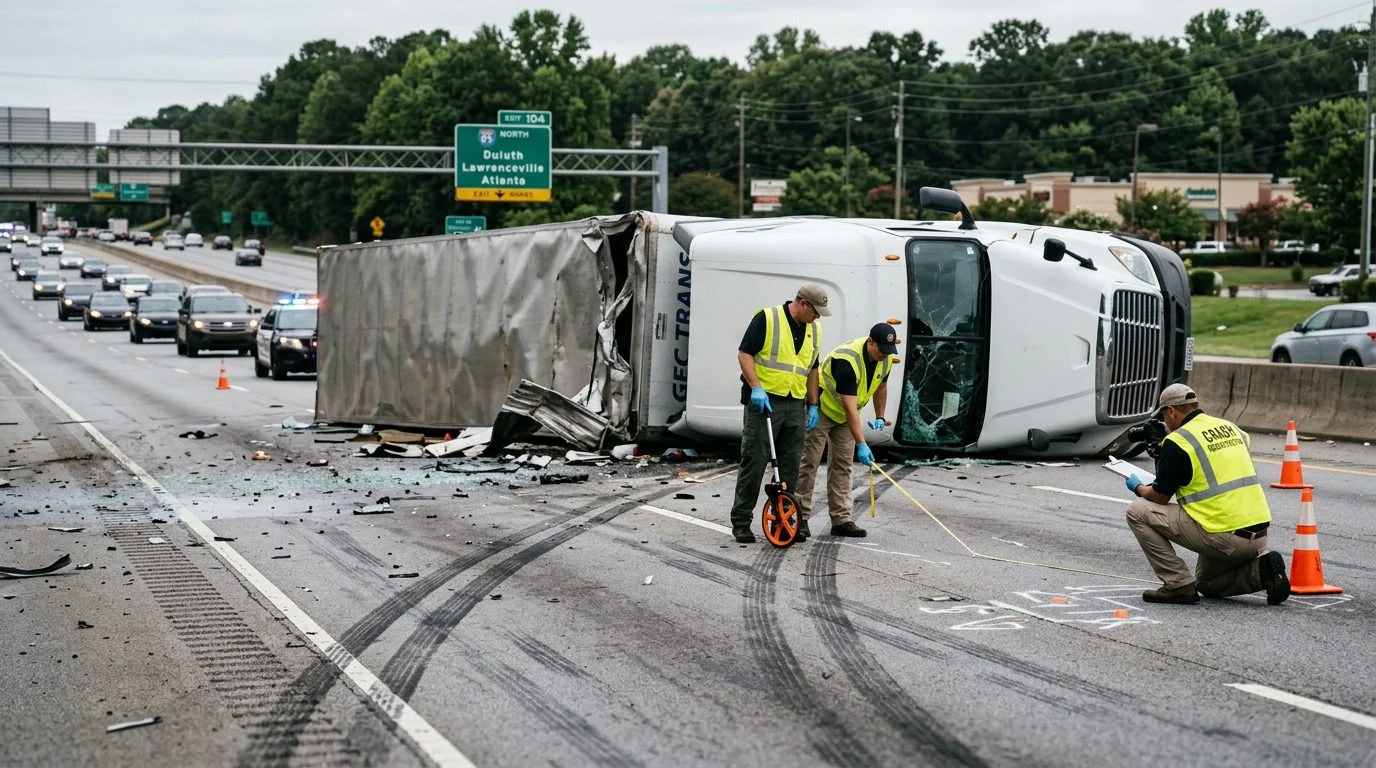
A truck rollover accident happens when a truck tips onto its side or roof. It often happens when the driver turns, changes lanes, or takes a curve or ramp too fast.
Tractor-trailers sit high and carry long, heavy trailers. That makes them easier to tip than a passenger car, especially when the load shifts. Rollovers on metro Atlanta routes like I-85, I-285, and GA-400 can block several lanes, so one crash can hurt many people.
People most often hurt in these crashes include:
- The truck driver
- Drivers and passengers in other vehicles
- Motorcyclists and pedestrians
- First responders working the scene
Georgia’s Governor’s Office of Highway Safety publishes large-truck safety facts that break down fatalities and serious injuries by the type of person affected.
If a rollover crash left you or someone you love hurt, our team is ready to talk through what happened and what options may apply. Talk it through with our team — the first consultation is free, confidential, and carries no obligation.

What Causes Rollover Truck Crashes and Who May Be Responsible
Most rollovers have more than one cause. More than one party can share responsibility.
Common causes include:
- Speed too high for a curve, ramp, or exit
- Sudden evasive steering
- Overloaded or unevenly loaded trailers, or cargo that was not secured
- Tire blowouts, brake failure, or suspension problems
- Driver fatigue
Federal rules limit how long a commercial driver can drive. A driver of a property-carrying commercial motor vehicle may not drive without first taking 10 consecutive hours off duty, except as otherwise provided in § 395.1. Driving is also not permitted after more than 8 hours of driving time without a 30-minute break, with limited exceptions for some short-haul drivers (49 C.F.R. § 395.3). A driver also may not operate a truck when fatigue or illness makes it unsafe (49 C.F.R. § 392.3).
Georgia law can make a company answer for a driver’s negligence done within the scope of its business (O.C.G.A. § 51-2-2). A company can also face claims for hiring or keeping a driver it knew or should have known was a risk (Munroe negligent hiring ruling). Georgia also weighs the fault of everyone who contributed, even people not named in the suit (O.C.G.A. § 51-12-33). Who is responsible depends on the facts of each crash.
Evidence That Matters and Why It Can Disappear Quickly
The most useful proof often sits in the trucking company’s files. Some of it can be lost if no one asks for it early.
Key evidence includes:
- Driver logs and electronic logging device (ELD) data showing hours and duty status (49 C.F.R. § 395.8)
- Data from the truck’s engine and braking systems
- Maintenance, inspection, and repair records for the tractor, trailer, tires, and brakes
- Bills of lading and load or securement records for the cargo
- Dispatch messages, drug and alcohol testing records, and driver qualification files
- Police reports, scene photos, dashcam video, and witness contact information
Federal rules allow records to be kept with any technology that accurately reflects the information and stays accessible (49 C.F.R. § 379.7). Federal rules also bar a driver or carrier from making a false report about duty status or tampering with an ELD so that the device does not accurately record and retain required data (49 C.F.R. § 395.8). Routine business can overwrite data, so a written request to preserve records is often sent early.
Georgia Deadlines and Fault Rules to Know
Georgia generally requires an injury lawsuit to be brought within two years after the right of action accrues (O.C.G.A. § 9-3-33). Other rules can shorten the timeline or reduce what you recover.
Georgia reduces damages in proportion to the injured person’s share of fault. A person who is 50 percent or more responsible cannot receive damages (O.C.G.A. § 51-12-33).
Claims against government entities follow separate notice rules. For the state, written notice is due within 12 months of when the loss was discovered or should have been discovered (O.C.G.A. § 50-21-26).
Deadlines and fault rules depend on the facts. An early timeline review is a smart first step.
Catastrophic Injuries Common in Rollover Crashes
Rollover crashes can cause catastrophic injuries. These are serious harms that can change daily life for years. They can include:
- Traumatic brain injuries
- Spinal cord injuries that can lead to paralysis
- Crush injuries and amputations
- Severe burns
- Internal injuries and fractures that may not be obvious on the day of the crash
Early medical care protects your health. It also creates a record of how the injury happened. Keep records of treatment, long-term care needs, lost income, and changes to daily life, because a claim relies on them.
When a rollover causes a death, a surviving spouse, or children if there is no spouse, may recover the full value of the decedent’s life, as shown by the evidence (O.C.G.A. § 51-4-2). When a death results from a crime or from criminal or other negligence, the personal representative may also recover funeral, medical, and other necessary expenses (O.C.G.A. § 51-4-5). Wrongful death claims have their own rules, so families should review them promptly.
How Our Team Handles a Rollover Truck Case
The process begins with a free, confidential first consultation, and you have no obligation to continue after it. Here is what typically follows:
- First consultation. Our team reviews what happened, your injuries, and any reports or bills you have.
- Early investigation. Our lawyers work to preserve trucking company records and collect the police report, photos, and witness information.
- Medical documentation. Treatment records and bills are gathered so the full effect of the injuries is documented.
- Liability and damages review. The evidence is reviewed to identify responsible parties and measure losses. Accident reconstruction is used when the facts call for it.
- Negotiation or lawsuit. Many claims resolve through negotiation, while others require filing suit. Each case moves at its own pace, and no timeline can be promised in advance.
Not sure what your next step is?
Talk it through with our team — the first consultation is free, confidential, and carries no obligation.
Why Slam Dunk Attorney for Rollover Truck Cases
Slam Dunk Attorney is a personal injury firm based in Duluth, Georgia. It represents people hurt in truck, car, motorcycle, pedestrian, and rideshare accidents across metro Atlanta and Georgia.
- Peter F. Jaraysi is the responsible lawyer for this page. The firm’s lawyers, including Brian D. Wright, handle truck accident matters.
- Support staff help keep records, medical documentation, and communication organized from the first call.
- The firm also handles catastrophic injury and wrongful death claims, so serious-harm cases are part of its practice.
- The firm can explain your options in plain terms, without promises about any outcome.

Frequently Asked Questions About Rollover Truck Accidents
Can I still have a claim if I was partly at fault?
Georgia reduces damages by your share of fault. You cannot receive damages if you are 50 percent or more responsible (O.C.G.A. § 51-12-33).
Can I get the trucking company’s records?
Records are usually requested in writing first. A court process can be used if needed. A lawyer can explain how this works in your case.
What if a family member died in the crash?
Georgia law lets certain surviving family members pursue a wrongful death claim. Those claims have their own rules, so review them promptly.
Should I see a doctor before talking with a lawyer?
Yes. Your health comes first, and medical records also document how the injury happened.
What if a city or the state was involved?
Ask about the timeline early.
If you’re still piecing together what happened after a rollover on a Georgia road, you don’t have to sort it out alone. Request a free consultation with Slam Dunk Attorney to talk through your situation.
Responsible lawyer: Peter F. Jaraysi, Slam Dunk Attorney, Duluth, Georgia. Contact the firm through its contact page.
How Our Team Can Help After a Truck Rollover
Call for a Free Case Review
Tell us what happened in your own words. We will review the basics of your situation and answer your questions without pressure.
Preserving Key Evidence
Crash reports, photos, witness details and vehicle information can change quickly. Our team works to identify and request the records that matter.
Dealing With Insurers and Companies
Trucking companies and insurers have their own teams. We handle those communications so you do not have to face them alone.
Plain-Language Updates
We explain each step clearly, so you always know where your case stands and what comes next.
Before You Speak With an Insurer
Insurance representatives may ask for a recorded statement soon after a crash. It can help to talk with a lawyer before giving any statement, especially if you are still recovering from injuries.
Factors Often Examined in Truck Rollover Cases
Speed and Cargo Shifts
Speed for road conditions and unevenly loaded or shifting cargo can affect a truck's stability on curves, ramps and highway exits.
Driver Fatigue and Hours
Long hauls and schedule pressure can affect a driver's alertness. Records such as logs and trip histories are often reviewed.
Road and Weather Conditions
Wet pavement, sharp curves, construction zones and sudden weather changes can all play a role in how a rollover unfolds.
Equipment and Maintenance
Brake, tire, suspension and trailer hitch problems may contribute to instability and should be documented early.
Talk With Our Duluth Team. Your First Consultation Is Free and Confidential, With No Obligation to Continue.
Related practice areas
- Truck Accident Lawyers in Duluth & Metro Atlanta, GA