
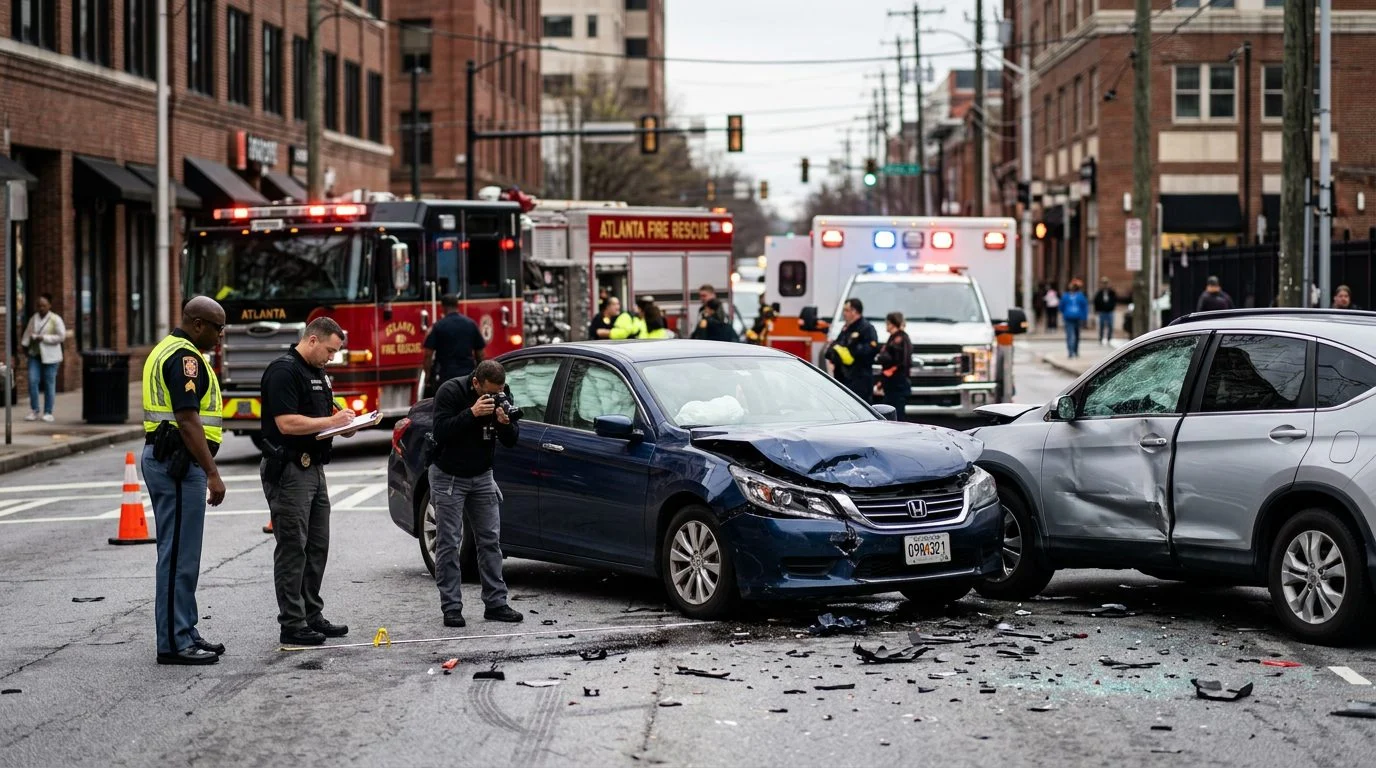
Car Accidents | Duluth, Georgia
Who Pays When You Sue After a Car Accident?
A plain-language guide to the insurance, parties and costs that often come up after a crash in Georgia, from the team at Slam Dunk Attorney.
By Peter F. Jaraysi · Published November 6, 2026
In most Georgia car accident claims, the at-fault driver’s liability insurance pays first. Who pays when you sue in a car accident? Usually that driver’s insurer, and a lawsuit is a later step if the claim can’t be settled. This guide walks through each possible source in plain terms. It is general information, not legal advice, and the answer in any crash depends on the facts.
Who Usually Pays First in a Georgia Car Accident Claim
The at-fault driver’s liability insurance is usually the first place payment comes from. Your claim is against the person who caused the crash, so that person’s insurer is the main target. Most injured people first make a claim with that insurer. A lawsuit usually comes only if that claim doesn’t resolve.
Georgia claims turn on fault. The Insurance Information Institute explains how fault-based auto systems differ from no-fault systems, including who pays first and whether accident victims may sue.
There’s a limit to keep in mind. An insurer usually pays only up to its policy limits. If your losses are larger than those limits, the money from that policy may fall short.
If you're still sorting out who will cover your medical bills and car repairs, our team can review your situation in a free, confidential first consultation. Talk it through with our team — the first consultation is free, confidential, and carries no obligation.

Policy Limits and Why They Matter in Georgia Claims
Policy limits are generally the most an insurer must pay for a covered loss under that policy, and the specific obligations depend on the terms of the policy and the facts of each claim. Every auto policy has them. The declarations page, usually near the front of the policy, lists the limits for each type of coverage. Check it before you assume how much money is available.
Some drivers carry more coverage than their basic policy. That choice changes how much is available in a claim. Because limits differ from driver to driver, the at-fault driver’s policy is often the first thing a claim looks at.
Serious injuries can produce losses above any single policy. Medical care, lost pay and long-term needs can add up quickly. When losses go past the limits, the question of who else can pay becomes important.
When the At-Fault Driver’s Insurance Is Not Enough
When the at-fault driver’s insurance falls short, the driver’s own money may come into play. A lawsuit names the driver personally. If a judgment goes past the insurance, the driver’s assets may be at stake.
Some drivers buy an umbrella policy, which adds coverage above their auto limits. You won’t know one exists until the driver or insurer tells you. Ask early.
Other people can share responsibility too. Georgia law can hold an employer liable for harm a worker causes within the scope of the business. That employer’s coverage can become another source of payment. See O.C.G.A. § 51-2-2.
Your own fault matters, too. If you are 50 percent or more responsible, you cannot recover damages. When several people are at fault, each pays only its own share, under O.C.G.A. § 51-12-33.
Your Own Policy: Uninsured and Underinsured Motorist Coverage
Your own auto policy can pay when the at-fault driver has no insurance or not enough. This is called uninsured motorist (UM) coverage. Underinsured motorist (UIM) coverage works in a similar way when the at-fault driver’s limits are too low.
Georgia law sets out how this coverage fits with the other driver’s liability coverage. It is not meant to duplicate those payments.
Your policy’s choices matter. Georgia law lets an insured reject certain coverage and select a narrower option in writing. Review what your policy actually shows.
If your policy includes medical payments coverage, it can help with medical bills. It can apply no matter who caused the crash. Not every policy includes it.
If the other driver can’t be identified, say so early. Hit-and-run cases raise their own questions.
Trucks, Commercial Vehicles and Employer Coverage
In a truck crash, the trucking company’s commercial policy often becomes a major source of payment. The driver’s own coverage may also apply. See 49 U.S.C. § 31139.
Commercial policies often carry different limits than personal auto policies. The actual limits must be confirmed in the policy itself. Don’t assume a figure based on what other trucks carry.
Employer responsibility comes up often in truck claims. When a driver was working, the company may be liable under the employer rule described above.
Some truck crashes involve specific problems, such as underride or driver fatigue. Our truck accident guide covers the broader picture of these cases.
Damages: What Insurers and Courts Look At
Damages are the money a claim seeks for your losses. Each injury claim depends on its own facts, so the details of your case matter. Special damages are losses you must prove, such as medical bills and lost wages. General damages are losses the law presumes come from the injury. They can be recovered without proof of an exact amount. See O.C.G.A. § 51-12-2.
Medical bills get close review. Special damages must be proved in order to be recovered, and under O.C.G.A. § 51-12-1.1, medical special damages are limited to the reasonable value of medically necessary care. See O.C.G.A. § 51-12-1.1. If you have health insurance, the evidence shall include both the amounts charged and the amounts actually needed to satisfy those charges under your insurance contract, whether or not the insurance has been used.
If Medicare paid for your accident care, the same Georgia rule applies, because it covers any form of public or private health insurance. Medical bills after an accident can raise questions about health coverage, including Medicare, and our team can review those questions with you during a free, confidential consultation with no obligation to continue.
Insurers usually review medical records, treatment history, bills and the police report. Steady, documented treatment makes the picture clearer. Pain and suffering is harder to measure than a bill, so insurers and juries weigh it differently. No settlement or verdict amount can be predicted or promised. The value of any claim depends on its facts.
Not sure what your next step is?
Talk it through with our team — the first consultation is free, confidential, and carries no obligation.
When a Lawsuit Is Filed and What It Costs
A lawsuit is usually filed when a claim cannot be resolved with the insurer. Georgia sets a deadline. Most lawsuits for injuries to the person must be brought within two years after the right of action accrues. See O.C.G.A. § 9-3-33. Loss of consortium claims have a four-year period under the same statute.
Many personal injury lawyers work on a contingency fee. Under that arrangement, the fee is a share of any recovery, and the client may still be responsible for court costs and case expenses.
Common Questions
Does my own insurance pay if the other driver is at fault?
It can, through medical payments or uninsured motorist coverage, if your policy includes them.
How long do I have to sue after a car accident in Georgia?
For most injury claims, the deadline is two years after the right of action accrues (O.C.G.A. § 9-3-33; Kenneth B. Cameron v. Jmp Pizza, Inc (2026)).
Can I still recover if I was partly at fault?
Yes, if your share of fault is less than 50 percent. Georgia reduces your damages by that share.
Getting Your Claim Information Organized
Keeping records early helps answer who pays, no matter which payer applies. Start with a short list:
- The police report and crash report number
- The other driver’s insurance information, if you have it
- Your own policy’s declarations page
- Medical records, bills and receipts
- Photos of the scene, vehicles and injuries
- A simple log of missed work and daily symptoms
Treatment records and missed-work records show what you lost and when. Keep copies of everything you receive.
Insurance adjusters may contact you soon after a crash. Think carefully before you give a recorded statement. Your words can affect how the claim is handled.

Talk Through Your Situation With Our Team
If you were hurt, or you’re helping a family member through this, you may be juggling doctor visits, a damaged car and calls from an insurance adjuster. Figuring out who will pay can feel like one more weight on top of all that.
Slam Dunk Attorney represents people hurt in car, truck and motorcycle accidents, along with pedestrian, rideshare and other cases. We serve Duluth, metro Atlanta and communities across Georgia. If you’re still sorting out who will cover your bills and repairs, reach out through our contact page for a free, confidential first consultation. It carries no obligation to continue.
Disclaimer: This page is general information, not legal advice. No outcome or settlement amount is promised. The responsible lawyer for this page is Peter F. Jaraysi of Slam Dunk Attorney, Duluth, Georgia. Contact information is available on our contact page.
How Our Team Can Help
Plain-language answers
We explain how insurance, liability and lawsuits work so you can make informed decisions about your case.
Confidential, free first consultation
Your first consultation is free, confidential and without obligation to continue.
Metro Atlanta and Georgia focus
Our lawyers and staff represent injured people across metro Atlanta and throughout Georgia, from our Duluth office.
Organized case review
We help you gather the information an insurer or court will ask about, including medical records and accident details.
Before You Accept Any Offer
Insurance adjusters may contact you quickly and ask for a recorded statement or a signed release. Speak with a lawyer before you give a statement, sign paperwork or accept a settlement, especially if your injuries are still being treated.
Common Sources of Payment After a Crash
Your own auto policy
Some Georgia policies include medical payments coverage or uninsured and underinsured motorist coverage. Whether these apply depends on the terms of your policy.
The other driver's liability insurance
Claims against an at-fault driver are often handled through that driver's liability policy, up to the limits of that policy.
Health insurance and medical bills
Health plans may cover treatment after a crash, and some plans seek reimbursement from a later recovery. Reviewing these terms early can help your case.
Other responsible parties
In some accidents, a commercial vehicle owner, employer or other party may share responsibility. Our team reviews every possible source during your consultation.
Talk With Peter F. Jaraysi and Our Team About Your Car Accident
Related practice areas
- Truck Accident Lawyers in Duluth & Metro Atlanta, GA