
Truck Accidents | Duluth, Georgia
Jackknife Truck Accident Help for Injured Georgians
Slam Dunk Attorney represents people hurt in jackknife and other tractor-trailer crashes across metro Atlanta and Georgia. Your first consultation is free, confidential and without obligation.
By Peter F. Jaraysi · Published November 4, 2026
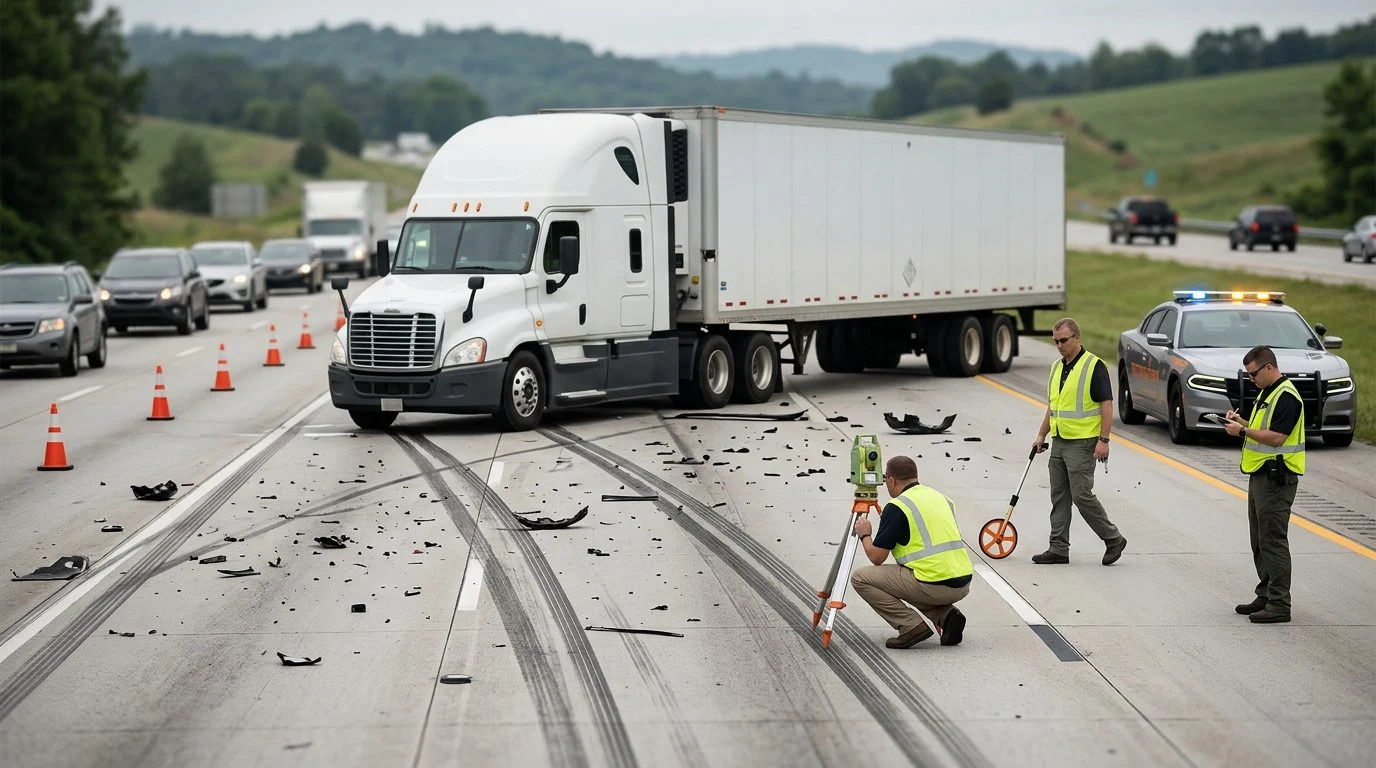
A jackknife truck accident happens when a tractor-trailer folds toward itself and the trailer swings out of line. Responsibility can rest with the driver, the trucking company, and sometimes other parties. This guide explains how these crashes happen and how Georgia law looks at fault. If you were hurt, a jackknife truck accident lawyer can review the facts with you.
What a Jackknife Truck Accident Is and Why the Trailer Swings Out
A jackknife happens when the cab and trailer form a sharp V-shape. It usually starts when the trailer’s wheels lock or lose grip while the cab keeps moving. Once the trailer breaks loose, it can slide across lanes, into oncoming traffic, or off the road.
That swing is why jackknife crashes often involve several vehicles. A car may be struck by the trailer, clipped by the cab, or forced into another lane while trying to avoid the truck.
Most jackknife claims turn on one central question. Who controlled the trailer, and did they act with reasonable care? The driver controls braking, speed, and steering. Those decisions sit at the center of most cases.
If a trailer swung into your lane and left you or someone you love hurt, our team can help you understand who may be responsible. Your first consultation is free. Talk it through with our team — the first consultation is free, confidential, and carries no obligation.
Common Causes of Jackknife Accidents
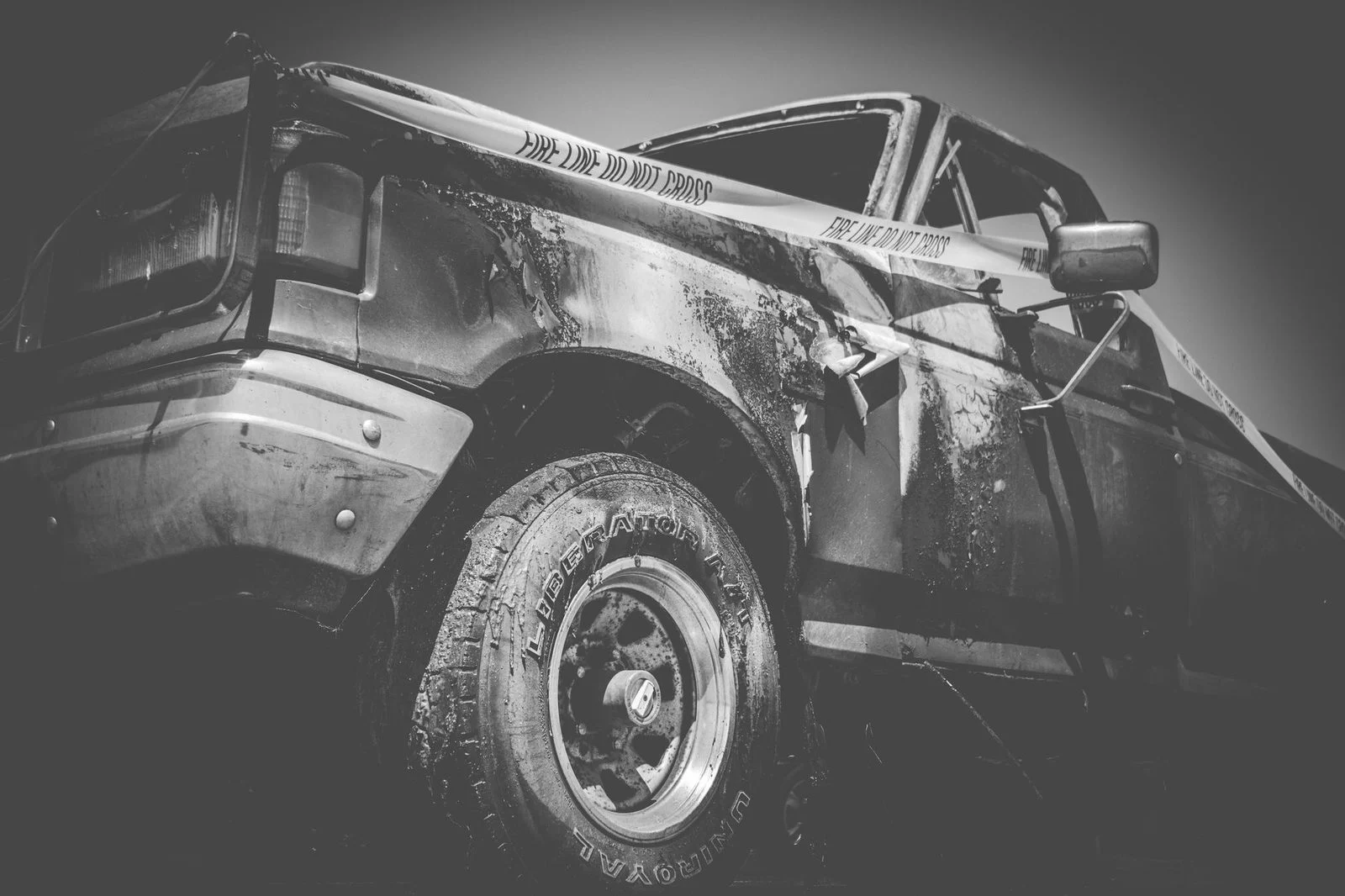
Hard braking on a slick road is one of the most common triggers. Wet, icy, or debris-covered pavement reduces grip. When the trailer wheels lock, the trailer can push the cab out of line.
Speed matters too. Driving too fast for the road, traffic, or weather leaves less room to correct a skid. Equipment problems add risk. Federal rules require brakes to be capable of operating at all times, with listed exceptions, per 49 C.F.R. § 393.48.
Cargo can also play a role. Federal rules say cargo must be firmly immobilized or secured, except bulk commodities that lack structure or fixed shape and are carried in a tank, hopper, box, or similar device that forms part of the vehicle’s structure, as set out in 49 C.F.R. § 393.106.
Fatigue is another factor. Federal rules cap driving time. Hours-of-service records can show whether a driver stayed within those limits.
The Truck Driver as a Potentially Responsible Party
The truck driver is usually the first party to examine. A driver controls the brakes, speed, and steering. When a driver makes a careless choice, that choice can form the basis of a claim.
Georgia law defines ordinary diligence as the care an ordinarily prudent person uses under the same or similar circumstances. The absence of that care is ordinary negligence, per O.C.G.A. § 51-1-2. For a professional driver, the question is whether the driver reacted with reasonable care for the conditions at the time.
A police report or traffic citation can be useful evidence. Neither one decides fault by itself. The driver’s account, physical evidence, and records all matter. A careful review looks at the whole sequence of events, not a single document.
Trucking Companies, Employers, and Vicarious Liability
A trucking company can answer for a driver’s conduct on the job. Georgia law makes a person liable for torts committed by a servant within the scope of the person’s business, per O.C.G.A. § 51-2-2. Lawyers call this vicarious liability, meaning one party answers for another’s conduct.
The key question is whether the driver was working at the time. Who is responsible when a driver is on the job can depend on the specific facts of each trip. A commute or a purely personal errand may fall outside it.
Companies can also face their own claims. A carrier may be challenged over how it hired, trained, supervised, or kept a driver. Dispatch decisions that pushed a driver to drive unsafely can matter too. Federal rules require carriers to keep driver qualification files for as long as the driver is employed and for three years thereafter, except as provided in paragraph (d) of this section, per 49 C.F.R. § 391.51.
Maintenance Contractors, Cargo Loaders, and Equipment Makers
Other parties can share responsibility when their work or products played a part. Brakes, tires, and couplings are among the vehicle parts that may be examined after a crash. Georgia law also makes an employer answerable for a contractor’s negligence in certain listed situations, per O.C.G.A. § 51-2-5.
Loading companies and shippers may share fault if poorly secured cargo shifted and changed the trailer’s balance. Manufacturers may be involved if a defective brake part or trailer hitch contributed to the loss of control.
Identifying these parties often takes records the injured person does not have at the scene. Federal rules require maintenance records to be kept for 1 year where the vehicle is housed or maintained, and for 6 months after it leaves the carrier’s control, per 49 C.F.R. § 396.3. That timeline is one reason early action helps.
When Another Driver Shares Fault and How Georgia Fault Rules Work
Another driver can share fault. A car that cuts in front of a truck, brakes hard for no reason, or follows too closely can contribute to a jackknife.
Georgia divides fault among everyone who contributed to the injury. The trier of fact considers all of them, whether or not each was named in the lawsuit, per O.C.G.A. § 51-12-33. Damages are reduced in proportion to the injured person’s own percentage of fault.
Under the same statute, a plaintiff who is 50 percent or more responsible for the injury cannot recover damages (O.C.G.A. § 51-12-33; Quynn v. Hulsey (2020)). Each liable person pays only its own apportioned share, not a joint amount.
Defendants can also name a nonparty as partly at fault. That notice must be filed not later than 120 days before trial. Fault percentages can shift what a person recovers, so the details of each vehicle’s movements matter.
Not sure what your next step is?
Talk it through with our team — the first consultation is free, confidential, and carries no obligation.
Evidence That Often Matters in a Jackknife Case
Driving records are often central. Federal rules require motor carriers, except private motor carriers of passengers (nonbusiness), to make drivers record their duty status for each 24-hour period. Each change of duty status must include the city, town, or village and the State abbreviation, per 49 C.F.R. § 395.8.
Dashcam video, data from the tractor’s onboard systems, and GPS or telematics can show speed, braking, and timing. Maintenance and repair records show whether known problems were fixed. Police reports, scene photos, and witness names also matter.
Post-crash drug and alcohol testing is another area. The FMCSA’s drug and alcohol testing guidance explains which tests federal rules require and when they occur.
Keep your own records too. Save photos, medical bills, and notes about what you remember while it’s fresh. Be careful about giving a recorded statement to the trucking company’s insurer before you understand your options.
How Long You Have to File a Claim in Georgia
Georgia generally allows two years to file a personal injury lawsuit. The statute requires actions for injuries to the person to be brought within two years after the right of action accrues, except as otherwise provided in this article, per O.C.G.A. § 9-3-33. Loss of consortium claims involving injuries to the person have a four-year period under the same statute.
Wrongful death claims follow their own filing rules, so the timing in a death case can differ. Because the deadline is firm, the date of the crash is the first date to note.
Evidence can also disappear. Logs, video, and vehicle data may be overwritten or lost. Evidence from a crash can be lost or changed over time, so it can help to talk with a lawyer early about what should be preserved.
Serious Injuries in Jackknife Crashes and What to Document
Some jackknife crashes cause serious, long-term injuries. Our firm handles catastrophic injuries, including spinal cord injuries, traumatic brain injuries, amputations, and severe burns. Many of these injuries need ongoing care.
Full medical records matter. Keep every discharge summary, imaging report, and appointment note. Track bills, missed work, and the help you need at home. These records show the real effect of the crash on your daily life.
For families facing a death, the wrongful death process is different. Our firm also handles wrongful death matters, and the records and timelines in those cases need careful attention.
Talk to a Georgia Truck Accident Lawyer About Your Jackknife Crash
Who is responsible in a jackknife crash can involve the driver, the trucking company, and other parties, and the answer depends on what the records show.
Slam Dunk Attorney is based in Duluth, Georgia. Peter F. Jaraysi is the responsible lawyer for this page. Our team and our lawyers represent people hurt in truck, car, motorcycle, and rideshare crashes across Georgia.
Frequently Asked Questions
Who can be responsible in a jackknife truck accident?
The driver, the trucking company, maintenance shops, cargo loaders, and sometimes other drivers can share fault.
How long do I have to file a claim in Georgia?
Georgia generally allows two years from the date of injury to file a personal injury lawsuit (O.C.G.A. § 9-3-33; Kenneth B. Cameron v. Jmp Pizza, Inc (2026)).
Can I recover if I was partly at fault?
Georgia reduces damages by your percentage of fault (O.C.G.A. § 51-12-33; Quynn v. Hulsey (2020)). A person who is 50 percent or more at fault cannot recover damages.
Our first consultation is free, confidential, and carries no obligation to continue. If a jackknifed trailer left you or a family member injured, contact our team at slamdunkattorney.com/contact-us to request your free first consultation.
Conditions That Can Contribute to a Jackknife
Sudden braking
When a big rig brakes hard, the trailer can swing out and push the cab into a skid.
Wet or icy roads
Rain, ice and slick pavement reduce traction and make trailers harder to control.
Improper loading
Cargo that is unevenly distributed or poorly secured can shift and destabilize the trailer.
Mechanical problems
Brake, tire or suspension failures can cause a truck to lose control, especially under load.
How We Approach Your Case
Early evidence review
Crash reports, photos, dash camera footage and trucking records can be important. We work to identify and request them early.
Looking beyond the driver
The trucking company, maintenance providers and cargo loaders may all play a role in a jackknife crash.
Plain-language communication
We explain each step of the process in clear terms so you know what to expect.
Attention to your recovery
We focus on your physical, financial and family needs while your claim moves forward.
Be Careful With Insurance Adjusters
An insurance adjuster may ask you for a recorded statement soon after a crash. Before you agree, consider speaking with a lawyer. Our team can explain your situation at a free, confidential consultation.
Hurt in a Jackknife Crash? Talk With Slam Dunk Attorney Today.
Related practice areas
- Truck Accident Lawyers in Duluth & Metro Atlanta, GA