
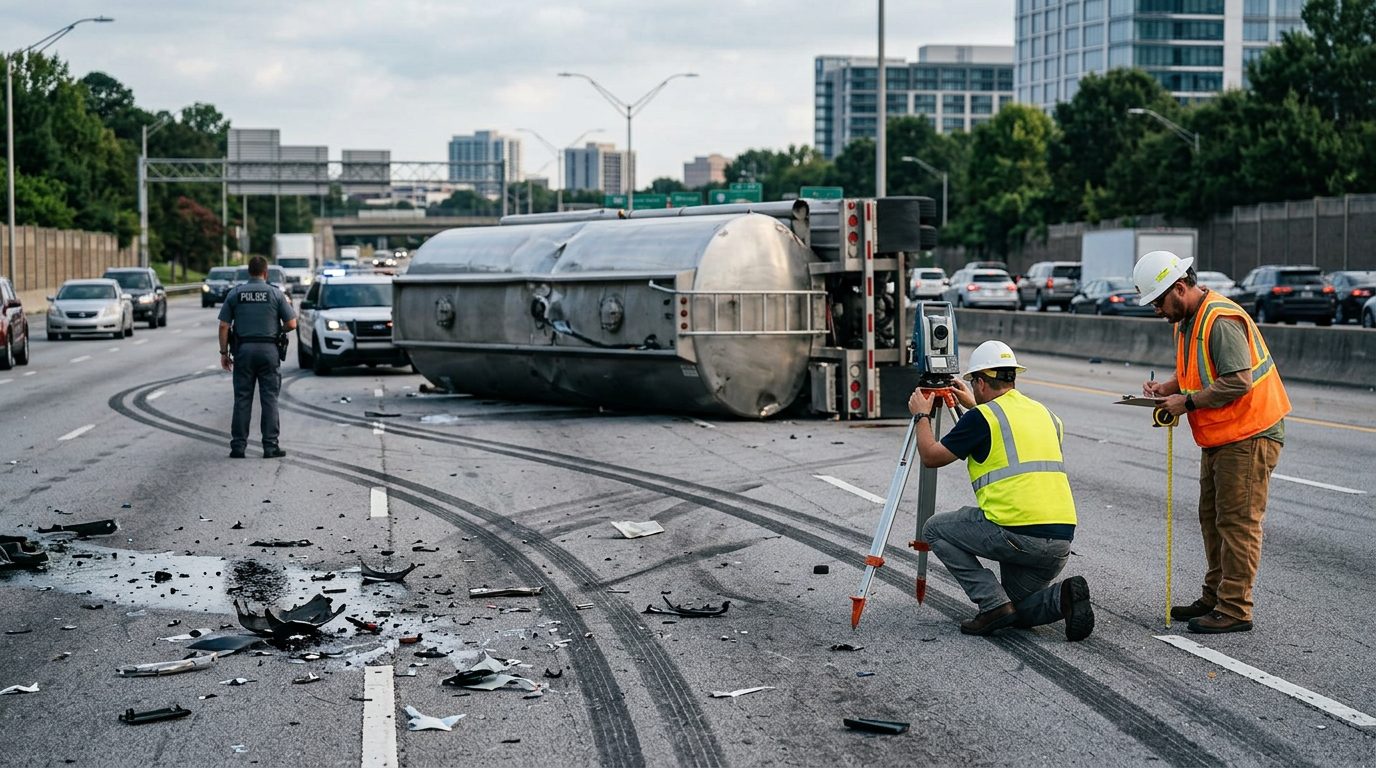
Truck Accidents | Atlanta and Georgia
Hurt in a Tanker Truck Crash? Talk With Our Atlanta-Area Injury Attorneys
Tanker trucks carry heavy loads of fuel and chemicals, and their crashes can cause severe injuries and complicated claims. Slam Dunk Attorney, based in Duluth, Georgia, focuses on helping people and families harmed in these accidents across metro Atlanta.
By Peter F. Jaraysi · Published October 22, 2026
A tanker truck crash is different because the truck carries liquid, gas, or chemicals in bulk. That cargo can add fire, spill, and evacuation risks on top of the usual crash injuries. Families in Atlanta and across Georgia often find that more companies and more records are involved than in a typical truck case.
If you are looking for a tanker truck accident attorney in Atlanta, GA, this page explains what tends to matter after one of these crashes. It is general information, not legal advice about your case.
Why a Tanker Truck Crash Is Different From Other Truck Accidents
A tanker truck crash is different because the cargo moves. Liquid can surge forward, backward, or sideways when the truck brakes or turns. That movement changes how the truck handles and can raise the risk of a rollover.
Federal rules recognize this. A tank vehicle endorsement requires knowledge of cargo surge and braking when a tank is empty, full, or partly full. 49 C.F.R. § 383.119
Hazardous loads add another layer. They show what was on board.
Drivers need more than a standard license. An operator must hold state-issued endorsements to drive a tank vehicle or a truck that carries hazardous materials. Each endorsement requires its own test. 49 C.F.R. § 383.93
If a family member is in the hospital after a tanker truck crash, you don't have to sort out the insurance calls and deadlines alone. Our team is ready to talk through what happened with you. Talk it through with our team — the first consultation is free, confidential, and carries no obligation.

Who May Share Responsibility After a Tanker Accident
More than the driver can share responsibility. The company that employs or leases the driver may be involved. So may the company that owns or loaded the cargo, a terminal operator, and contractors who maintain or inspect the tank and brakes. In some cases, equipment makers may also be part of a claim.
Georgia law can hold a business responsible for its workers. Every person is liable for torts committed by a servant in the prosecution and within the scope of the person’s business, whether by negligence or on purpose.
Georgia also divides fault among those who share it. O.C.G.A. § 51-12-33 That is why identifying each party early matters. Which parties are responsible depends on the facts of each crash, and that answer is decided case by case.
Evidence That Tends to Matter Early
The records that show what was on board, how long the driver worked, and what testing followed tend to matter most early. Evidence can disappear fast, so early requests matter.
Start with the paperwork. Shipping papers and placard photos identify the load. Motor carriers must keep duty-status records and supporting documents for at least six months from receipt. Except for a private motor carrier of passengers (nonbusiness), motor carriers must require each driver to record the driver’s duty status for each 24-hour period. 49 C.F.R. § 395.8 provides: “(a)(1) Except for a private motor carrier of passengers (nonbusiness), as defined in § 390.5 of this subchapter, a motor carrier subject to the requirements of this part must require each driver used by the motor carrier to record the driver’s duty status for each 24-hour period using the method prescribed in paragraphs (a)(1)(i) through (iii) of this section, as applicable.” Separately, 49 C.F.R. § 395.3 limits how long drivers of property-carrying commercial motor vehicles may drive, such as no driving without first taking 10 consecutive hours off duty. 49 C.F.R. § 395.3
Testing windows are short. If an alcohol test is not given within two hours, the employer must keep a record of why. 49 C.F.R. § 382.303
Also gather police and fire reports, spill-response reports, dashcam or nearby camera video, and photos of the scene and vehicles.
Georgia Deadlines and Fault Rules to Know
Georgia law generally sets a two-year deadline to file an injury lawsuit, counted from when the right of action accrues (O.C.G.A. § 9-3-33; Cameron v. JMP Pizza, Inc. (2026)). Wrongful death claims have their own timing, so ask about them early.
O.C.G.A. § 51-12-33 This is called comparative fault (shared fault).
Insurers often call early. An adjuster may ask for a recorded statement or offer a quick settlement. The deadline keeps running while a claim is being evaluated.
Injuries and Losses Tanker Crashes Can Involve
Tanker crashes can cause burns, chemical exposure, and injuries from impact or rollover. Severe cases can involve spinal cord injury, paralysis, traumatic brain injury, amputation, and severe burns. Our catastrophic injuries information covers these in more detail.
Georgia Governor’s Office of Highway Safety
Families also face medical bills, lost income, and long-term care needs. These losses often build over months, not days.
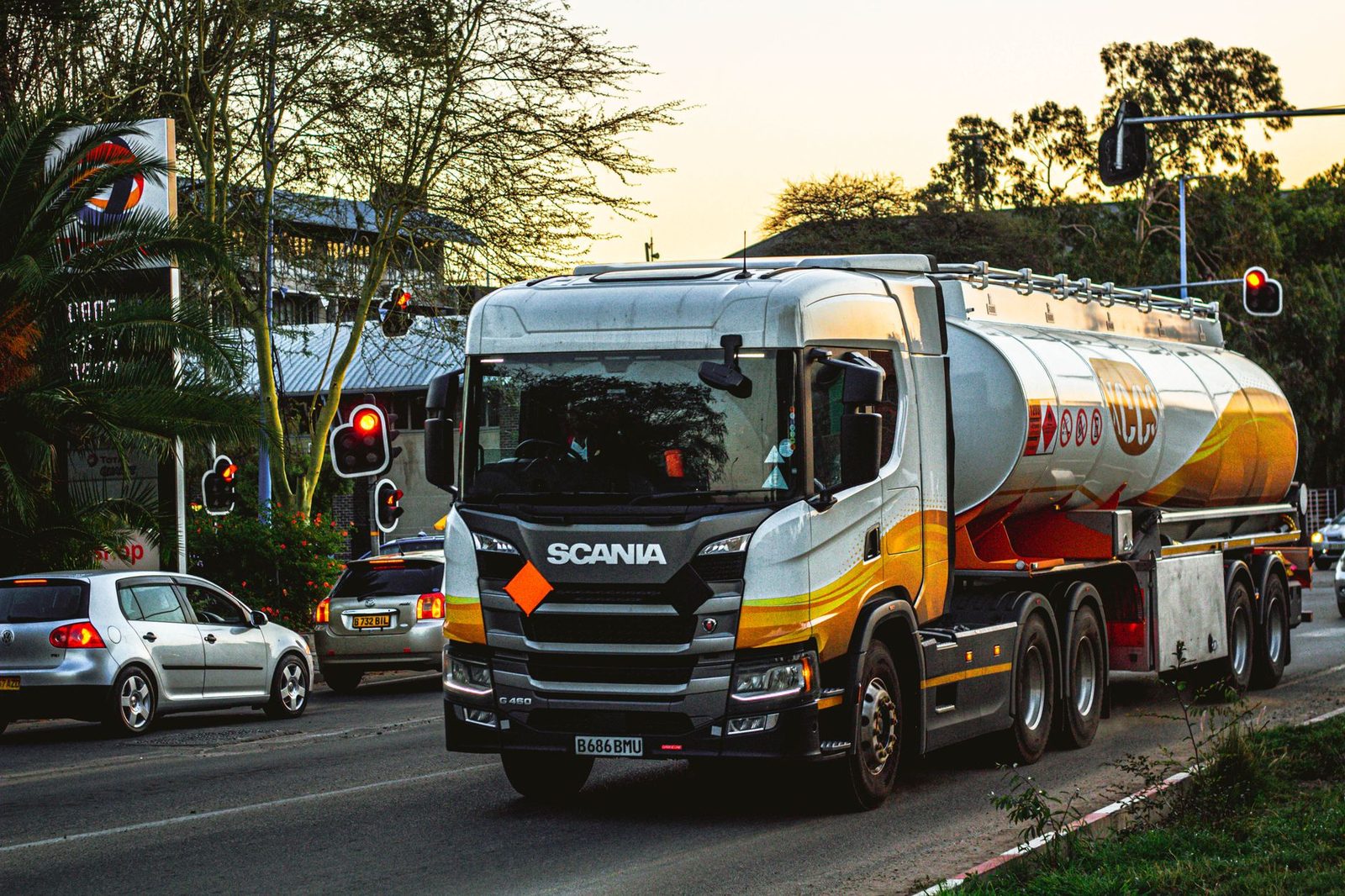
Talking With a Lawyer About a Family Member’s Tanker Crash
If you are at a hospital bedside or waiting for news, you may also be taking insurance calls and trying to understand what happened. That is a lot at once. You don’t have to work out the deadlines and paperwork on your own.
Our lawyers, Peter F. Jaraysi and Brian D. Wright, can talk through the crash and your options with you. The first consultation is free, confidential, and carries no obligation to continue. Reach out through the contact page.
For more background, read the Georgia truck accident guide.
Common Questions
How long do I have to sue after a tanker truck crash in Georgia?
Georgia generally allows two years after the right of action accrues for actions for injuries to the person, but claims for loss of consortium must be brought within four years (O.C.G.A. § 9-3-33; Cameron v. JMP Pizza, Inc. (2026)).
Does Georgia reduce compensation if I was partly at fault?
Yes, damages are reduced by your share of fault (O.C.G.A. § 51-12-33; Quynn v. Hulsey, 310 Ga. 473 (2020)). You cannot receive damages if you are 50 percent or more responsible (O.C.G.A. § 51-12-33; Quynn v. Hulsey, 310 Ga. 473 (2020)).
Should I give a recorded statement to the trucking company’s insurer?
Insurers may ask early. Ask a lawyer about it before you agree.
Disclaimer: This page is general information, not legal advice. Results depend on the facts of each case, and no outcome is promised. Responsible lawyer: Peter F. Jaraysi, Slam Dunk Attorney, Duluth, Georgia. Contact: contact page.
How Our Team Can Help
Protecting Your Rights
We focus on identifying everyone who may share responsibility for a tanker truck crash, including carriers, drivers, and other parties.
Careful Investigation
We work to gather crash reports, trucking records, and other evidence that can help explain what happened.
Support for Families
When a crash causes a death, we help surviving family members understand their options and handle the process with compassion.
Serving Metro Atlanta
We represent people injured in tanker truck accidents throughout Atlanta, Duluth, Alpharetta, Marietta, Norcross, Lawrenceville, and across Georgia.
Clear Communication
We explain each step in plain language so you always know where your case stands.
Important Safety Tip
If you are able, move to a safe location away from the vehicles, and call 911 right away. Tanker trucks may carry fuel or hazardous materials, so do not approach a spill or leaking tank. Seek medical care even if your injuries seem minor, and keep your records.
Why Tanker Truck Cases Require Careful Attention
Hazardous Cargo
Crashes involving fuel, chemicals, or other hazardous materials can cause fires, explosions, burns, and long-term environmental and health concerns.
Multiple Parties
A tanker crash may involve the driver, the trucking company, the cargo owner, a maintenance contractor, or an equipment manufacturer, making it important to look at every source of responsibility.
Federal and State Rules
Commercial carriers are generally subject to federal safety regulations, including limits on driving hours and vehicle inspection requirements. Records of compliance can matter in an investigation.
Severe Injuries
Tanker collisions can cause spinal cord injuries, traumatic brain injuries, burns, and other catastrophic harm that may need long-term medical care.