
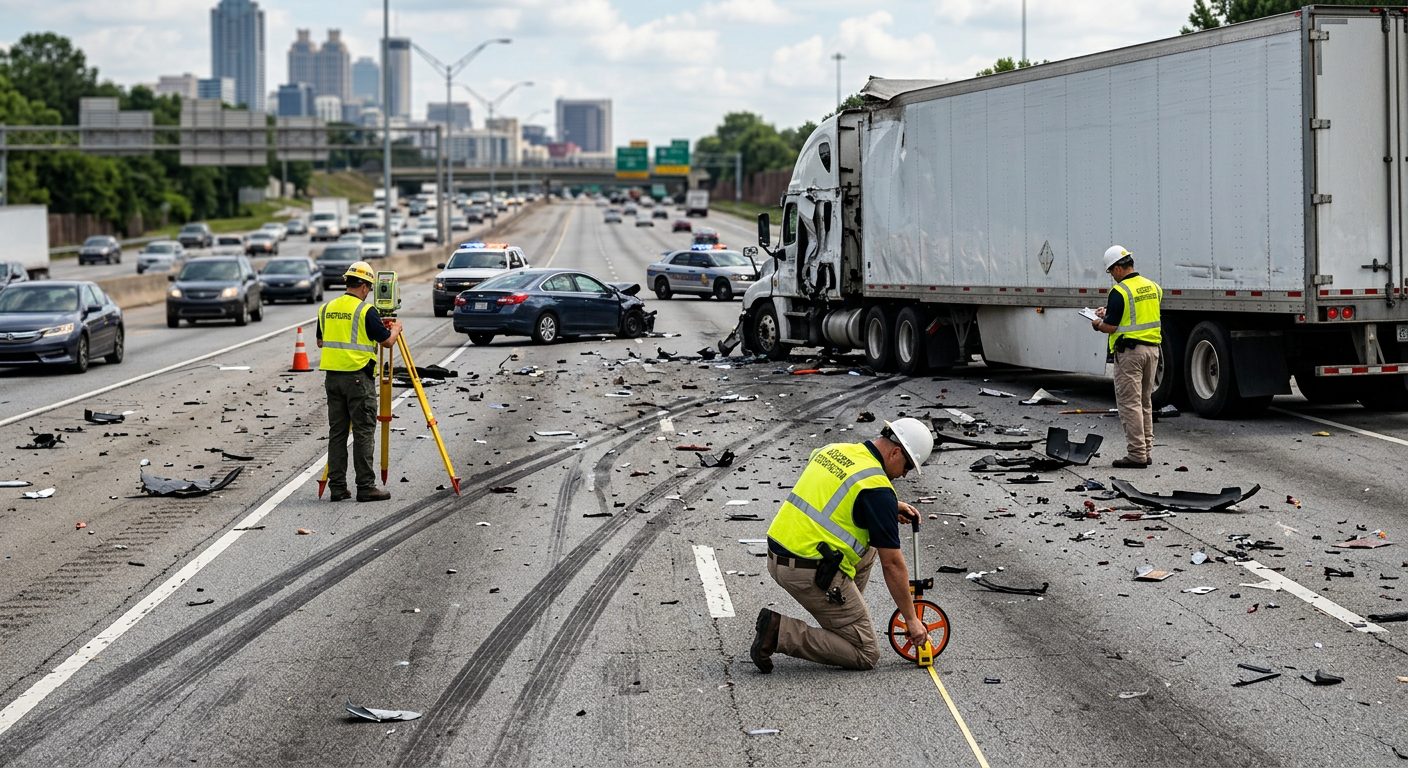
Truck Accidents Atlanta
Injured in a Truck Accident? Know Your Rights
Truck collisions are more complex than car crashes. We help injured people across Georgia understand what happened and what comes next.
By Peter F. Jaraysi · Published September 15, 2026
Truck Accidents in Atlanta: What You Need to Know
Truck accidents in Atlanta are fundamentally different from car crashes. A fully loaded semi-truck weighs up to 80,000 pounds—roughly 20 times heavier than a passenger vehicle—which means the force of impact, the severity of injuries, and the legal complexity are all dramatically greater.
If you’ve been injured in a collision with a commercial truck on I-75, I-285, I-85, or any Atlanta roadway, you’re not just dealing with a standard accident claim. You’re facing federal regulations, multiple potentially liable parties, aggressive insurance defense, and injuries that often require long-term medical care. This guide explains what makes truck accidents unique and why early legal representation is critical.
Not sure what your next step is?
Talk it through with our team — the first consultation is free, confidential, and carries no obligation.
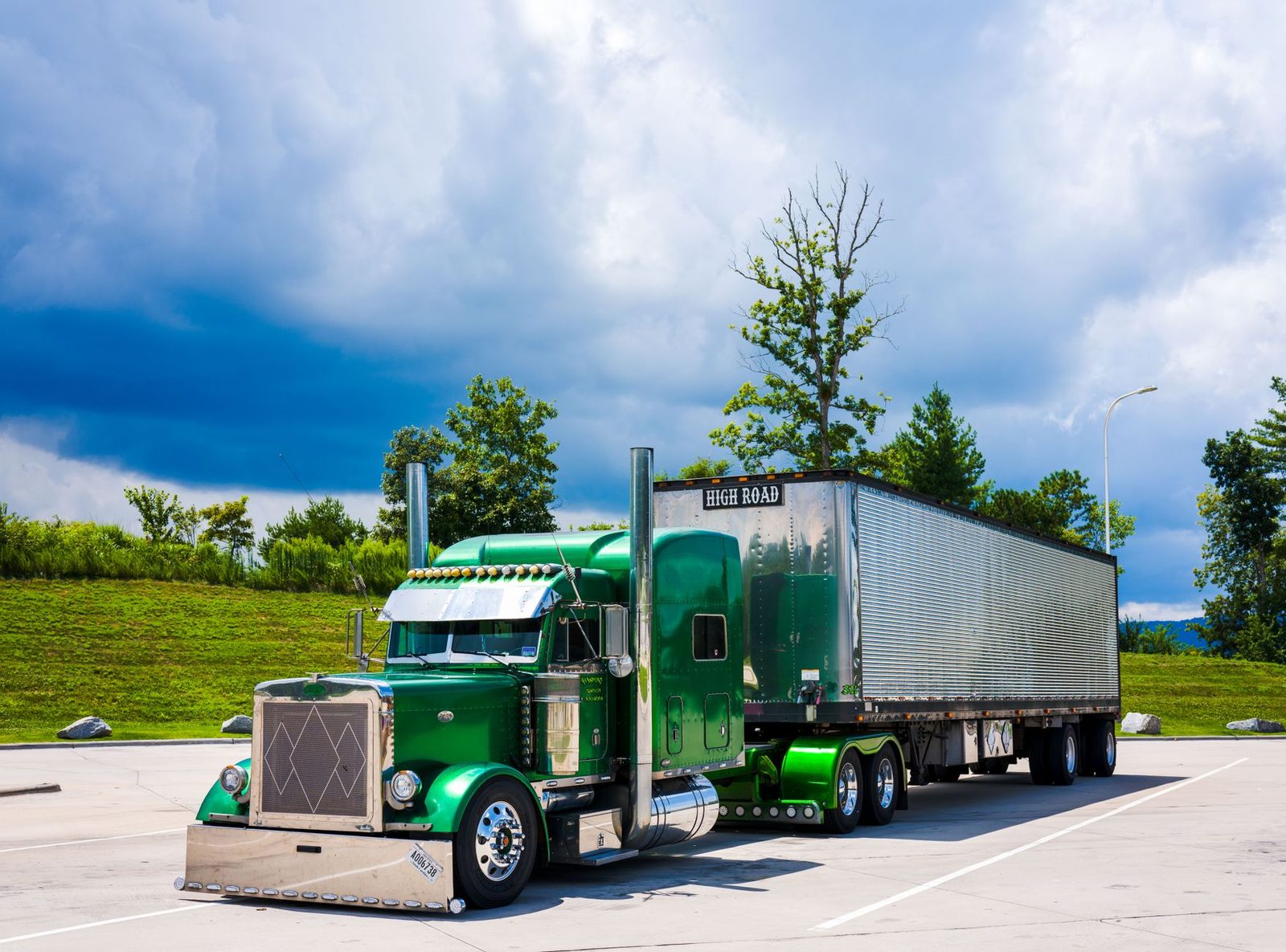
Truck Accidents in Atlanta: A Different Kind of Injury Case
Truck accidents cause more severe injuries than passenger vehicle collisions because of the weight differential and the physics of impact. When a semi-truck collides with a car, the truck’s momentum and mass overwhelm the smaller vehicle’s frame, creating crushing forces that passenger-car safety features cannot absorb.
Common Atlanta truck accident scenarios include:
- Highway collisions on I-75, I-285, and I-85 where trucks merge, change lanes, or brake suddenly
- Loading dock and delivery route accidents in commercial areas where trucks maneuver in tight spaces
- Intersection crashes where truck blind spots hide other vehicles
- Rear-end collisions where a truck’s longer stopping distance leads to impact
After a truck accident, your immediate priorities are safety, medical attention, and evidence preservation. Move to a safe location if possible. Call 911. Seek medical care—some injuries (internal bleeding, spinal damage, traumatic brain injury) don’t show symptoms immediately. Take photos of the accident scene, the truck, vehicle damage, road conditions, and any visible injuries. Get the truck driver’s name, company, license plate, and insurance information. Collect contact information from witnesses. Do not discuss fault or sign anything for the insurance company without legal counsel.
Who Is Liable in an Atlanta Truck Accident?
Identifying all liable parties is essential because each may carry insurance or assets that can compensate you for your injuries and losses.
The truck driver may be liable for negligent driving—speeding, distraction, fatigue, or reckless behavior. However, under Georgia law, the driver’s employer (the trucking company) is typically liable for the driver’s negligence under the legal doctrine of respondeat superior (employer responsibility for employee actions).
The trucking company itself bears direct liability for failing to hire qualified drivers, inadequate training, insufficient vehicle maintenance, or pressuring drivers to violate federal safety rules. Trucking companies also bear liability for violations of hours-of-service regulations that contribute to driver fatigue.
Third parties may include: – Maintenance contractors who failed to repair brakes, tires, or steering – Cargo loaders who improperly secured freight, causing instability – Other drivers whose negligence contributed to the collision – Vehicle manufacturers if a defect caused the accident
In the truck accident cases our attorneys investigate, we often uncover violations of federal safety standards, inadequate maintenance records, or driver logbook falsification—evidence that strengthens your claim and expands the pool of liable defendants.
Federal Regulations and Truck Accident Claims
Federal Motor Carrier Safety Administration (FMCSA) regulations govern commercial trucking and create a legal framework that distinguishes truck accident claims from ordinary car crashes.
Hours-of-service rules limit commercial truck drivers to 11 hours of driving per 14-hour workday and require 10 consecutive hours off-duty between shifts. Violations of these rules are common in truck accident litigation. When a driver has exceeded legal driving hours, that violation can establish negligence—the driver was fatigued, and the trucking company failed to enforce safety standards.
Vehicle maintenance and inspection requirements mandate regular inspections of brakes, tires, steering, lights, and safety equipment. Trucking companies must maintain detailed maintenance records. If an accident investigation reveals that the truck had known mechanical defects or failed inspections, that evidence strengthens your claim.
Electronic logging devices (ELDs) and driver logbooks record driving hours, location, speed, and braking patterns. This “black box” data is critical evidence. It can reveal whether the driver was speeding, braking erratically, or violating hours-of-service rules at the time of the collision. Defense attorneys will fight to suppress or minimize this evidence, which is why early investigation and expert analysis are essential.
Violations of federal regulations don’t automatically mean the trucking company is liable, but they establish a pattern of negligence and demonstrate that the company failed to comply with safety standards designed to protect the public.
Common Injuries from Truck Accidents in Atlanta
Truck accident injuries are often severe and long-lasting because of the force involved.
Spinal cord and back injuries range from herniated discs and nerve damage to complete spinal cord injury resulting in partial or total paralysis. These injuries often require surgery, physical therapy, and lifelong medical management.
Traumatic brain injury (TBI) occurs when the force of impact causes the brain to move or twist inside the skull, damaging brain tissue. Symptoms include loss of consciousness, memory loss, cognitive impairment, personality changes, and chronic headaches. TBI can affect your ability to work and perform daily activities for years.
Broken bones and crush injuries are common when a truck’s weight compresses a vehicle. Crush injuries can cause compartment syndrome (tissue death due to pressure), requiring emergency surgery and potentially resulting in amputation.
Internal injuries and organ damage may not be immediately apparent. Bleeding in the abdomen, liver or spleen damage, and ruptured organs can be life-threatening if not treated promptly.
Medical documentation is essential for your case. Seek immediate medical evaluation even if you feel “okay.” Get copies of all medical records, imaging (CT scans, MRIs), surgical reports, and provider notes. Document your ongoing treatment, medications, and any permanent limitations or disabilities. This medical evidence forms the foundation of your damages claim.
Insurance and Settlement Challenges
Trucking company insurance is fundamentally different from personal auto insurance. Commercial trucking policies typically carry coverage limits of $1 million or more, but the insurers are sophisticated, well-resourced, and aggressive.
Early settlement offers from trucking company insurers are often inadequate. Insurance adjusters know that many injured people are desperate for quick cash to cover medical bills and lost wages. They may offer a settlement that seems reasonable at first but fails to account for long-term medical care, permanent disability, lost earning capacity, or pain and suffering.
Before you negotiate or accept any settlement, you need expert investigation. An attorney should: – Obtain the police report and all accident scene documentation – Secure black box data and driver logbooks before they’re destroyed or lost – Hire an accident reconstructionist to analyze the collision – Coordinate with medical experts to establish the full scope of your injuries and long-term prognosis – Identify all liable parties and their insurance coverage
This investigation takes time and resources, but it builds a strong case. Armed with evidence of negligence, federal violations, and thorough medical documentation, you can negotiate from a position of strength—or prepare for litigation if the insurance company refuses a fair offer.
Not sure what your next step is?
Talk it through with our team — the first consultation is free, confidential, and carries no obligation.
What Slam Dunk Attorney Does in Truck Accident Cases
Our approach to truck accident cases is thorough, aggressive, and focused on building a case for fair compensation based on your actual damages.
Immediate investigation begins within days of your accident. We document the scene, interview witnesses while their memories are fresh, obtain police reports and traffic camera footage, and request preservation of black box data and driver logbooks from the trucking company. We also review the truck’s maintenance records and the driver’s history.
Coordination with experts is central to our strategy. We work with accident reconstructionists who analyze collision dynamics, speed, braking, and driver behavior. We engage medical experts who evaluate your injuries, project long-term care needs, and calculate the cost of future treatment. These expert opinions are critical in settlement negotiations and trial.
Handling insurance communication means you don’t have to. We manage all contact with the trucking company’s insurance carrier and defense counsel. This protects you from making statements that could undermine your claim and ensures that deadlines and procedural requirements are met.
Building your case means gathering evidence of negligence, federal violations, inadequate maintenance, driver fatigue, or reckless behavior. We calculate your damages—medical expenses, lost wages, pain and suffering, permanent disability—and present a compelling demand that reflects the true value of your claim.
Why Local Representation Matters
Slam Dunk Attorney is based in Duluth, Georgia, and we know Atlanta’s truck accident landscape intimately. We understand the high-traffic corridors where truck accidents cluster: I-75 through downtown Atlanta, the I-285 perimeter, I-85 north, and the commercial trucking routes through Marietta, Kennesaw, and Alpharetta.
We’re familiar with Georgia law, including Georgia’s comparative negligence statute, which allows you to recover damages even if you’re partially at fault, as long as you’re less than 50% responsible for the accident (O.C.G.A. § 51-12-33; Quynn v. Hulsey, 310 Ga. 473 (2020)). We understand local court procedures, judges, and the defense bar. We have established relationships with local accident reconstructionists, medical providers, and expert witnesses who know Georgia courts and juries.
Local representation also means we can respond quickly to your accident. Evidence degrades fast. Witnesses move or forget details. Black box data can be overwritten. Early action preserves your claim.
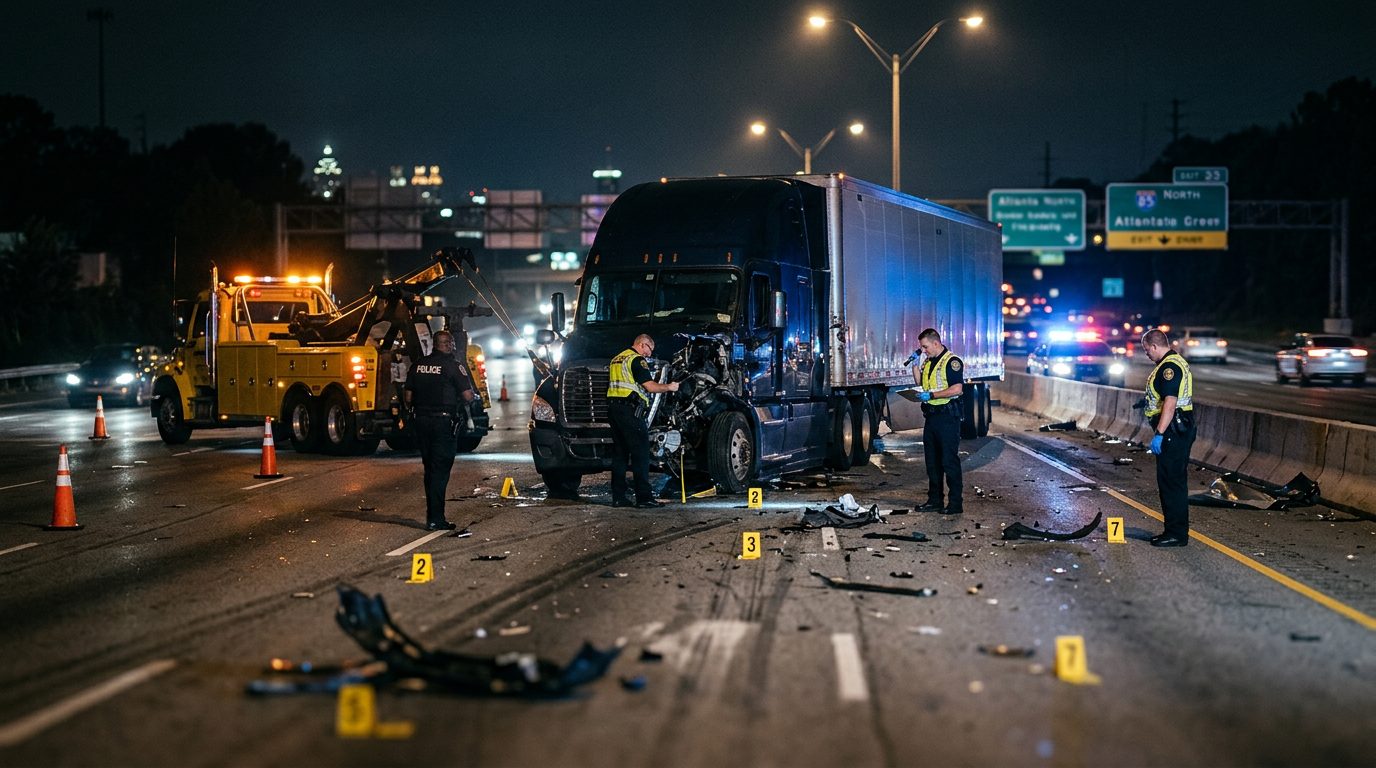
Next Steps After a Truck Accident
Preserve evidence immediately. Take photos and video of the accident scene, the truck, vehicle damage, road conditions, skid marks, and your injuries. Get the police report number. Obtain medical records and imaging from your emergency room or hospital visit. Keep all medical bills, prescription receipts, and documentation of lost wages. Save text messages, emails, and any communication with the insurance company.
Do not sign anything or give recorded statements to the insurance company without legal counsel. Insurance adjusters may seem friendly, but their job is to minimize the company’s payout. Anything you say can be used against you. Politely decline and refer them to your attorney.
Avoid social media discussion of the accident. Don’t post photos, updates about your injuries, or complaints about the trucking company on Facebook, Instagram, or other platforms. Defense attorneys will use your social media posts to argue that your injuries are less severe than you claim.
Contact an attorney as soon as possible. Georgia’s statute of limitations for personal injury claims is two years from the date of injury, but waiting that long is a mistake. Early legal representation protects your rights, preserves evidence, and gives you the best chance at fair compensation.
If you’ve been hit by a truck in Atlanta, you’re facing complex liability questions and aggressive insurance defense. People in your situation can contact Slam Dunk Attorney to protect their rights and build a strong claim. Request a free consultation today or call us for a free case review. We’ll answer your questions, explain your options, and help you understand what happens next.
Act Quickly After a Truck Accident
Evidence disappears fast—truck maintenance records, driver logs, and eyewitness accounts matter. The sooner you document what happened, the stronger your position. Don't wait to reach out.
What Makes Truck Accidents Different
Federal Regulations Apply
Commercial trucks are governed by federal safety rules—hours of service, maintenance standards, cargo securement. These rules create a roadmap for what should have been done and what went wrong.
Multiple Liable Parties
The driver, the trucking company, the cargo loader, the truck owner, and the maintenance provider may all share responsibility. Identifying who is liable requires investigation and legal knowledge.
Severe Injuries Are Common
A fully loaded semi-truck weighs up to 80,000 pounds—roughly 20 times heavier than a passenger car. The force of impact often causes catastrophic injuries and significant damages.
Insurance Companies Fight Back
Trucking insurers have teams of lawyers and investigators. They move quickly to minimize their exposure. You need someone who understands their tactics and protects your interests from day one.
How Slam Dunk Attorney Can Help
Thorough Investigation
We gather police reports, electronic data from the truck's onboard systems, maintenance records, driver logs, and witness statements to build a clear picture of liability.
Understand the Rules
Federal Motor Carrier Safety Regulations and Georgia law are complex. We translate them and show how violations contributed to your injury.
Identify All Responsible Parties
We don't stop at the driver. We trace responsibility through the trucking company, owner, maintenance provider, and others who may have contributed to the crash.
Clear Communication
We explain what happened, what your options are, and what to expect—in plain language, without legal jargon or pressure.
No Fees Unless There Is a Recovery
We work on contingency. You pay no attorney fees unless there is a settlement or judgment. You may still owe case costs.
Focused on Georgia & Metro Atlanta
We know the roads, the courts, and the local insurance players across Atlanta, Lawrenceville, Johns Creek, Alpharetta, Marietta, and throughout Georgia.
What to Do After a Truck Accident
Get Medical Attention
Your health comes first. Some injuries don't show up immediately. See a doctor and keep all medical records—they document the harm you've suffered.
Preserve Evidence
Take photos of the scene, vehicle damage, road conditions, and traffic signs. Get the truck driver's name, company, license plate, and insurance information. Write down what you remember while it's fresh.
Report the Accident
File a police report and request a copy. The report is official documentation of what happened and who was involved.
Contact Us Before Talking to Insurance
Insurance adjusters will contact you. Before you give a statement, talk to us. We help you protect your rights and avoid statements that could hurt your claim.