
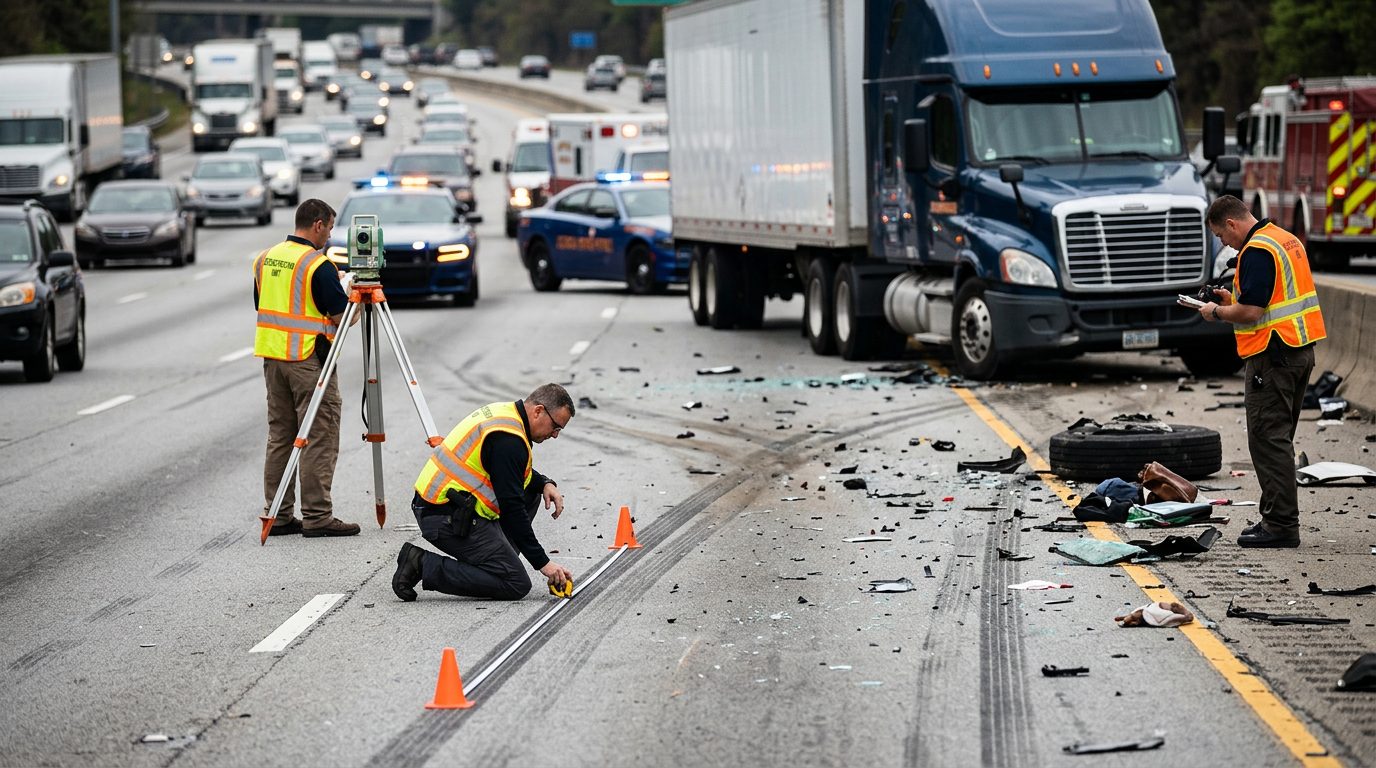
Truck Accident Claims
Can You Sue a Truck Driver? Yes—Here's How Georgia Claims Work
Truck drivers are not immune from lawsuits. Learn who is liable, what the process looks like, and how to move forward after a collision.
By Peter F. Jaraysi · Published October 05, 2026
Yes, you can sue a truck driver if their negligence caused your injuries or property damage. In Georgia, injured parties have the legal right to pursue a civil claim against a driver whose careless or reckless conduct directly caused an accident. This is separate from any criminal charges the driver might face, and it’s how you recover compensation for medical bills, lost wages, pain and suffering, and other losses.
Yes, you can sue a truck driver—here’s what that means
Suing a truck driver means filing a civil lawsuit to hold them legally responsible for harm they caused. When you sue, you’re asking a court to find that the driver breached their duty to drive safely and that this breach caused your injury. You’re seeking monetary compensation—called damages—to cover your losses.
It’s important to understand that suing a truck driver is a civil matter, not a criminal one. Even if the driver faces criminal charges for reckless driving or DUI, you can still file a separate civil claim to recover money. The two processes happen independently.
Georgia law supports your right to pursue this claim. The state’s civil courts regularly handle personal injury cases where a driver’s negligence caused harm to another person.
If a truck driver's careless actions left you or a family member injured, you may have a claim worth pursuing—reach out to discuss your situation at no cost. Talk it through with our team — the first consultation is free, confidential, and carries no obligation.
What makes a truck driver liable?
A truck driver is liable when their negligence—failure to exercise reasonable care—directly causes an accident and injures you. Negligence has four parts: the driver owed you a duty of care, they breached that duty, the breach caused the accident, and you suffered real harm.
All drivers owe a duty of care to others on the road. A truck driver breaches this duty through actions like:
- Speeding or driving too fast for conditions
- Distracted driving (texting, phone use, eating)
- Drowsy or fatigued driving
- Failure to maintain safe following distance
- Improper lane changes or turns
- Violating traffic laws
- Failure to inspect or maintain the truck
Large trucks weigh 20–30 times more than passenger vehicles, according to the Insurance Institute for Highway Safety. This size difference means that even at moderate speeds, a truck’s stopping distance is much longer and the force of impact is far greater. A truck driver’s negligence therefore carries outsized risk of serious injury or death.
Suing the truck driver versus the trucking company
You can sue the truck driver individually, but in practice, most claims are filed against both the driver and the trucking company. Here’s why the company often matters more:
Vicarious liability. Under Georgia law, a trucking company is responsible for negligence committed by its drivers while they’re acting within the scope of their employment. This means you don’t have to prove the company itself did anything wrong—only that the driver was negligent and was working for the company at the time.
Direct company liability. A trucking company can also be held directly liable for its own failures, including:
- Hiring or retaining a driver with a poor safety record
- Failing to train drivers on safety procedures
- Failing to maintain the truck properly
- Failing to enforce safety rules or speed limits
- Allowing drivers to work while fatigued (violating federal hours-of-service rules)
- Pressuring drivers to meet unrealistic schedules
The truck driver’s personal insurance is often limited, while the trucking company carries commercial liability insurance with much higher coverage limits. Suing the company gives you access to those resources and a realistic path to recovery.
Other parties who might share liability
Liability in a truck accident isn’t always limited to the driver and company. Depending on what caused the accident, you may also have a claim against:
- The truck manufacturer (if a defect in the vehicle, brakes, tires, or coupling caused or contributed to the accident)
- The cargo loader (if improper loading caused the truck to become unstable or lose its load)
- A maintenance contractor (if failure to service the truck caused a mechanical failure)
- Another driver involved in the accident
- A property owner or government entity (if unsafe road conditions or poor maintenance contributed)
Identifying all liable parties is important because each may carry insurance or have assets that could compensate you.
What you’ll need to prove
To succeed in a claim against a truck driver, you must establish four elements:
-
Duty of care. The driver owed you a duty to operate the truck safely. This is automatic—all drivers have this duty to others on the road.
-
Breach of duty. The driver failed to exercise reasonable care. You’ll show this through evidence of speeding, distracted driving, drowsy driving, or other negligent conduct.
-
Causation. The driver’s breach directly caused the accident and your injury. You must connect the driver’s conduct to the crash itself.
-
Damages. You suffered measurable harm: injury, property damage, medical expenses, lost income, or pain and suffering. Medical records, bills, and wage statements prove this.
Evidence that strengthens your case includes accident reports, witness statements, photos and video from the scene, medical records, the truck’s logbook or electronic data recorder (black box), phone records showing distraction, traffic citations, and expert analysis of the accident mechanics or the driver’s conduct.
Deadlines and legal limits in Georgia
Georgia law sets strict time limits on filing a lawsuit. Under O.C.G.A. § 9-3-33 (Cameron v. JMP Pizza, Inc. (2026)), you generally have two years from the date of your injury to file a personal injury lawsuit (O.C.G.A. § 9-3-33; Cameron v. JMP Pizza, Inc. (2026)). If you miss this deadline, your claim is barred and you lose the right to sue.
Insurance claims may have shorter notice requirements, so reporting the accident promptly to the insurance company is also important.
Georgia also follows a rule called modified comparative fault (O.C.G.A. § 51-12-33; Quynn v. Hulsey, 310 Ga. 473 (2020)). Under O.C.G.A. § 51-12-33 (Quynn v. Hulsey, 310 Ga. 473 (2020)), if you’re found to be partially at fault for the accident, your damages are reduced by your percentage of fault. However, if you’re 50 percent or more responsible, you recover nothing. If you’re 49 percent or less at fault, you still recover, but the award is reduced.
This rule means that even if you bear some responsibility, you may still have a valid claim—but the amount you receive will reflect your share of fault.
Not sure what your next step is?
Talk it through with our team — the first consultation is free, confidential, and carries no obligation.
Why you may want legal help
Truck accident claims are complex. They involve multiple parties, federal regulations (such as hours-of-service rules), state law, large insurance companies, and technical evidence like logbooks and electronic data recorders. Investigating the accident thoroughly, identifying all liable parties, gathering and preserving evidence, and negotiating with insurers requires skill and experience.
Insurance companies often try to minimize payouts or shift blame to you. An attorney protects your interests and ensures you’re not pressured into a low settlement.
Most personal injury attorneys, including Slam Dunk Attorney, work on a contingency fee basis. This means you pay no upfront fee, and the firm is paid only if you recover money. However, you may still be responsible for court costs and case expenses, which are separate from the attorney’s fee.

Frequently Asked Questions
Can truck drivers be sued?
Yes. Truck drivers are not immune from lawsuits. However, the driver’s personal insurance or the company’s commercial policy typically covers the claim, so you’re usually pursuing the insurance rather than the driver’s personal assets.
How long do I have to sue a truck driver in Georgia?
Generally, two years from the date of injury (O.C.G.A. § 9-3-33; Cameron v. JMP Pizza, Inc. (2026)). After that, the statute of limitations expires and you lose the right to file a lawsuit.
Can I sue both the truck driver and the trucking company?
Yes. In most cases, both are named as defendants because the company is responsible for the driver’s negligence under vicarious liability, and the company often bears direct liability for its own safety failures.
What if I was partially at fault for the accident?
Georgia’s modified comparative fault rule allows you to recover even if you’re partially responsible—as long as you’re 49 percent or less at fault (O.C.G.A. § 51-12-33; Quynn v. Hulsey, 310 Ga. 473 (2020)). Your award will be reduced by your percentage of fault.
If a truck driver’s careless actions left you or a family member injured, you may have a claim worth pursuing. The two-year deadline moves quickly, and early investigation can make a real difference. Contact Slam Dunk Attorney for a free consultation to discuss what happened and explore your options.
Key Facts About Suing a Truck Driver in Georgia
Truck Drivers Can Be Sued
Truck drivers are not immune from lawsuits. However, claims typically proceed against the driver's insurance policy or the trucking company's commercial coverage rather than the driver's personal assets.
The Two-Year Filing Window
In Georgia, you generally have two years from the date of injury to file a lawsuit against a truck driver. Missing this deadline can bar your claim entirely.
Who Else May Be Liable
Beyond the driver, you may have claims against the trucking company, the truck owner, a maintenance contractor, or the cargo loader—depending on what caused the accident.
Insurance Usually Pays
Commercial trucking policies are designed to cover these claims. Your recovery typically comes from insurance rather than the driver's personal funds.
Act Quickly After a Truck Accident
Evidence disappears fast. Truck maintenance records, driver logs, and scene photos are critical to building your claim. The sooner you reach out, the sooner we can begin preserving evidence and investigating what happened.
How We Help With Your Truck Accident Claim
Investigate the Full Picture
We identify all liable parties—the driver, the company, the owner, maintenance providers, and others—so you're not limited to one defendant.
Handle Complex Insurance Claims
Commercial trucking policies are different from standard auto insurance. We know how to navigate them and negotiate with insurers.
Preserve Critical Evidence
We move quickly to secure driver logs, maintenance records, dispatch data, and witness statements before they're lost or destroyed.
Communicate on Your Behalf
You don't have to speak directly with insurance companies or the trucking company. We handle all negotiations and correspondence.
Ready to Discuss Your Truck Accident?
Related practice areas
- Truck Accident Lawyers in Duluth & Metro Atlanta, GA
- Truck Accident Lawyer Lawrenceville Georgia | Free Consultation
- Truck Accident Lawyer Alpharetta Georgia | Free Consultation
- Truck Accident Lawyer Marietta Georgia | Free Consultation