
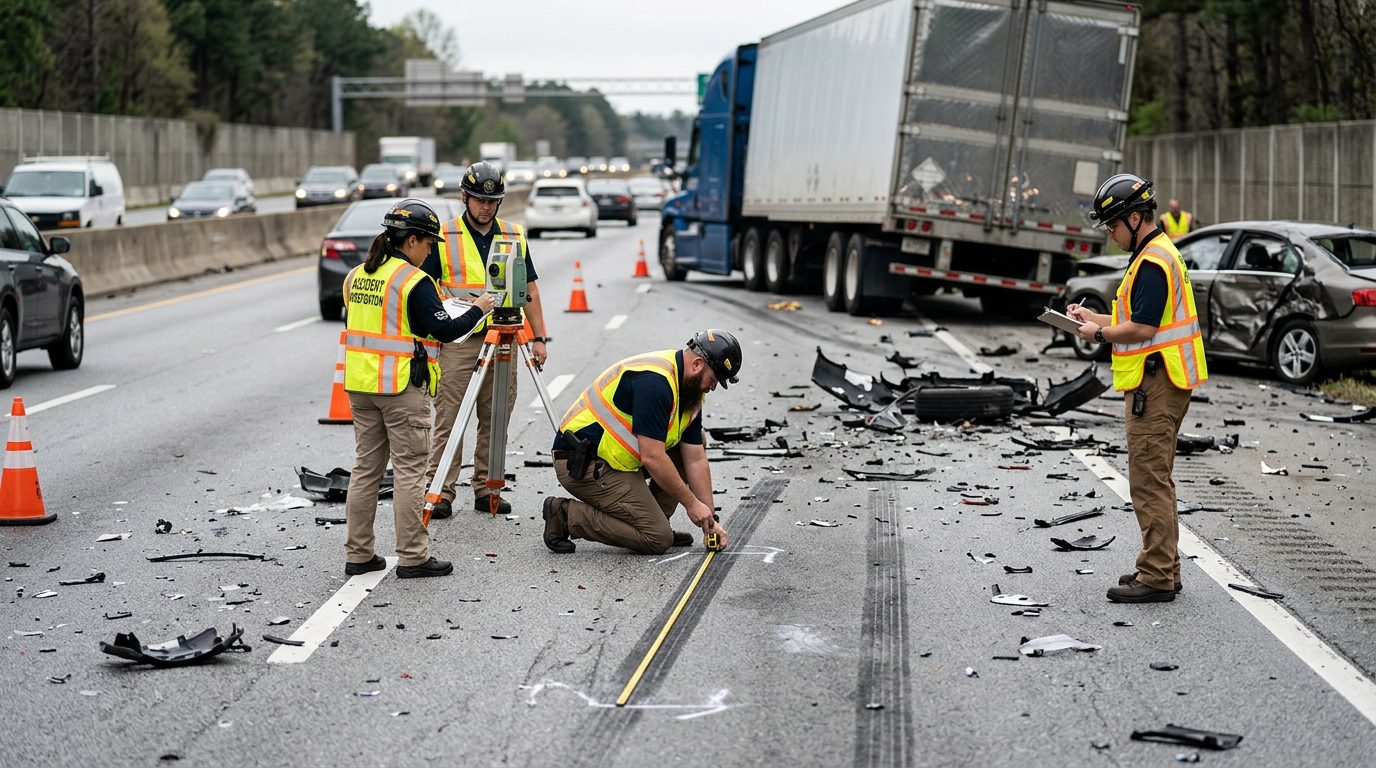
Truck Accidents in Georgia
Protect Your Assets After a Truck Accident in Georgia
When a truck collision damages your property or injures you, your financial recovery matters. Slam Dunk Attorney helps you understand your options and pursue fair compensation.
By Peter F. Jaraysi · Published October 05, 2026
How to Protect Your Assets After a Truck Accident in Georgia
After a truck accident, your immediate concern is safety—but your next priority must be protecting your financial interests. Truck accidents often involve substantial damage and injury claims that can exceed insurance limits, leaving you exposed to personal liability. Understanding Georgia’s insurance requirements, liability rules, and the steps you must take right after the accident helps you preserve your rights and avoid costly mistakes.
If a truck accident has left you facing damage claims or injury costs, understanding your coverage and liability is your first step—reach out to discuss your situation and what options may be available to you. Talk it through with our team — the first consultation is free, confidential, and carries no obligation.

Why Asset Protection Matters After a Truck Accident
Truck accidents differ from typical car collisions because the vehicles are heavier, the damage is often severe, and the liability exposure is greater. A single accident can trigger claims for vehicle damage, medical expenses, lost wages, and ongoing care—amounts that may far exceed the at-fault driver’s insurance coverage.
Georgia law sets minimum liability requirements, but knowing what those limits are and whether additional coverage applies is essential. If you’re found responsible and your insurance doesn’t cover the full claim, the injured party may pursue your personal assets. Acting quickly—documenting the scene, filing your claim promptly, and understanding your coverage—protects you from that exposure.
Understand Georgia’s Minimum Auto Insurance Requirements
Georgia requires drivers to carry minimum liability coverage of $25,000 per person and $50,000 per accident for bodily injury, plus $25,000 for property damage. This is the floor; many drivers and commercial truck operators carry higher limits.
Liability coverage protects you if you’re found responsible for injury or damage to others. If your liability limits are $25,000 per person and a claim reaches $75,000, your insurance pays only $25,000. The remaining balance becomes your personal responsibility—unless you have additional coverage or the injured party cannot collect.
Commercial trucks may carry higher federal insurance requirements depending on the cargo type and vehicle weight. Understanding what coverage applies—your policy, the truck owner’s policy, or a cargo liability policy—helps you know your true exposure.
Determine Who Is Liable and What Coverage Applies
Liability in truck accidents is rarely straightforward. The driver may have been negligent, but the truck owner, the cargo loader, a maintenance contractor, or even a third party could share responsibility. Mechanical failure, improper loading, fatigue, or road conditions all play a role.
Georgia follows modified comparative fault: your damages are reduced by your percentage of fault (O.C.G.A. § 51-12-33; Quynn v. Hulsey, 310 Ga. 473 (2020)). If you’re found 50 percent or more responsible, you recover nothing. This rule makes early documentation critical—the facts you gather at the scene help establish who actually caused the accident.
Your insurer will investigate. The other party’s insurer will do the same. Multiple insurance policies may apply simultaneously. Understanding the facts early—through police reports, photos, and witness statements—helps you and your legal counsel establish liability before settlement discussions begin.
Document Everything at the Scene and Immediately After
The evidence you collect in the first hours after an accident is often the most valuable. Photograph vehicle damage, road conditions, traffic signs, skid marks, and the accident scene from multiple angles. Collect contact information from witnesses, the other driver, and responding officers. Obtain the police report number and file a report if you haven’t already.
Keep records of all medical treatment, repair estimates, and communications with insurers. Don’t admit fault or make statements beyond basic facts to the other party or their insurer. Statements like “I didn’t see the truck” or “I should have been paying more attention” can be used against you later.
What Not to Tell Your Insurance Company
Your insurer is on your side, but adjusters are trained to minimize payouts. Avoid speculating about how the accident happened or accepting blame. Don’t exaggerate injuries or damages; stick to facts.
Don’t discuss settlement amounts or your financial situation unless directly asked. Don’t sign documents or agree to recorded statements without understanding what you’re authorizing. Provide factual information about what happened—when, where, how the vehicles collided—but let your insurer and legal counsel handle liability questions.
And never post about the accident on social media. Photographs, comments, or updates can be discovered and used to argue you weren’t injured as severely as you claim or that you were partially at fault.
Not sure what your next step is?
Talk it through with our team — the first consultation is free, confidential, and carries no obligation.
Review Your Insurance Policy for Additional Coverage
Your auto policy may include coverage beyond basic liability. Uninsured/underinsured motorist (UM/UIM) coverage protects you if the other driver lacks sufficient insurance to cover your damages. If the at-fault driver has only $25,000 in liability coverage and your damages total $100,000, your UM/UIM coverage can bridge the gap—up to your policy limit.
Collision coverage pays for damage to your vehicle regardless of fault. Medical payments coverage (MedPay) covers medical expenses for you and passengers immediately, without waiting for a liability determination. Comprehensive coverage protects against theft, weather, and other non-collision events.
Check your policy limits and deductibles. Higher limits provide more protection; lower deductibles mean you pay less out of pocket for repairs or medical care. If your current limits are low, you may be underinsured for a serious accident.
File Your Insurance Claim Promptly and Accurately
Notify your insurer as soon as possible. Most policies require prompt notice; delays can affect claim eligibility. Provide a clear, factual account of the accident without admitting liability. Submit all documentation: the police report, photos, medical records, repair estimates, and witness statements.
Keep copies of everything you submit and all correspondence with your insurer. Track claim status and follow up regularly. Delays in processing can affect your recovery, especially if medical bills are mounting or your vehicle needs urgent repair.
Understand Liability Limits and Underinsurance Risk
If the other driver’s liability coverage is insufficient to cover your damages, you have limited options. Your own UM/UIM coverage can bridge the gap if you have it. Georgia law allows you to pursue a claim against the at-fault driver’s personal assets in some cases, but collection is difficult and time-consuming.
Knowing your coverage limits and the other driver’s coverage early helps you plan your next steps. If you’re significantly underinsured, you may need to explore a claim against your own UM/UIM coverage or seek legal guidance to understand your options.
Protect Yourself From Third-Party Claims
If you’re found liable, the injured party may pursue your personal assets to satisfy a judgment. Homeowners or renters insurance may provide additional liability protection beyond your auto policy. An umbrella policy offers extra liability coverage across all your assets—your home, savings, and future wages.
Understanding your total coverage helps you know what is at risk. If you lack sufficient liability coverage, an umbrella policy is an affordable way to protect yourself.
Avoid Common Mistakes That Undermine Your Claim
Don’t delay seeking medical attention. Injuries documented weeks or months after the accident are harder to link to the truck accident itself. Don’t communicate directly with the other party’s insurance company without legal guidance; adjusters are skilled at obtaining statements that undermine your claim.
Don’t accept a quick settlement offer without understanding the full scope of your damages. Medical expenses, lost wages, and ongoing treatment costs may not be apparent for weeks or months. Don’t ignore deadlines for filing claims or lawsuits. Georgia law gives you two years from the date of injury to file a personal-injury lawsuit and four years for property damage, but acting sooner preserves evidence and strengthens your position.
If a truck accident has left you facing damage claims or injury costs, understanding your coverage and liability is your first step—reach out to discuss your situation and what options may be available to you. Talk it through with our team — the first consultation is free, confidential, and carries no obligation.
When to Seek Legal Guidance
If injuries are serious or ongoing, legal counsel helps ensure you recover all damages you’re entitled to. If liability is disputed or unclear, an attorney can investigate and build your case. If the other driver’s insurance is insufficient, an attorney can explore additional recovery options.
If the insurer denies your claim or offers an unreasonably low settlement, legal representation protects your interests. Early consultation helps you understand your rights and avoid costly mistakes—and many attorneys offer free case reviews so you can ask questions without obligation.

Frequently Asked Questions
How long do I have to file a truck accident claim in Georgia?
Most insurance policies require notice within days of an accident, and Georgia law gives you two years from the date of injury to file a personal-injury lawsuit. Acting sooner preserves evidence and strengthens your position.
What if the at-fault driver’s insurance isn’t enough to cover my damages?
Your own uninsured/underinsured motorist (UM/UIM) coverage can bridge the gap if you have it; otherwise, you may pursue the driver’s personal assets, though collection is difficult.
Should I talk to the other driver’s insurance company?
Provide factual information about the accident, but avoid speculating about fault or accepting blame—let your insurer and legal counsel handle liability questions.
What should I do if the insurance company denies my claim?
Document everything, appeal the denial in writing, and consider seeking legal guidance to understand your options and protect your rights.
Can I recover compensation for property damage and medical expenses?
Yes, but your recovery is reduced by your percentage of fault under Georgia’s modified comparative fault rule, and you recover nothing if you’re found 50 percent or more responsible (O.C.G.A. § 51-12-33; Quynn v. Hulsey, 310 Ga. 473 (2020)).
If a truck accident has left you facing damage claims or injury costs, understanding your coverage and liability is your first step. Reach out to discuss your situation and what options may be available to you. Contact us for a free case review—we’ll help you understand your rights and the steps to protect your financial interests.
Act quickly to protect your claim
Georgia law requires notice to insurance companies within a specific timeframe, and evidence can disappear fast. The sooner you document the accident and preserve records, the stronger your position.
What happens after a truck accident
Report and document
File a police report, photograph the scene and vehicle damage, collect witness information, and keep all medical and repair records. This evidence supports your claim.
Notify insurance
Contact both your own insurer and the at-fault driver's insurance promptly. Provide facts but avoid admitting fault or signing anything without legal review.
Understand coverage limits
Georgia requires minimum liability insurance, but it may not cover all your losses. We help you identify all available sources of recovery, including underinsured motorist coverage.
Get legal guidance
Insurance companies often minimize payouts. An attorney protects your rights, handles negotiations, and pursues full compensation for medical bills, lost wages, property damage, and pain and suffering.
Why you need a truck accident attorney
Protection from unfair settlements
Insurance adjusters work to reduce payouts. We negotiate on your behalf to ensure you're not shortchanged.
Handling complex claims
Truck accidents often involve multiple vehicles, commercial policies, and regulatory violations. We untangle the details so you don't have to.
Preserving your rights
Deadlines matter. We track filing windows and ensure nothing falls through the cracks.
Clear communication
We explain your options in plain language and keep you informed every step of the way.
Common questions about truck accident claims
What if the at-fault driver's insurance isn't enough?
Georgia allows you to pursue underinsured motorist coverage under your own policy, or to pursue the driver's personal assets in some cases. We explore every avenue to maximize your recovery.
Can I still recover if I was partially at fault?
Georgia follows comparative negligence rules. Even if you bear some responsibility, you may still recover damages reduced by your percentage of fault. We build a strong case to minimize any fault assigned to you.
What damages can I recover?
Medical expenses, lost wages, vehicle repair or replacement, pain and suffering, and in cases of severe injury or death, additional damages. We document all losses to support your claim.
How long does a truck accident claim take?
Simple claims may resolve in months; complex cases can take longer. We work efficiently while never rushing to accept an unfair offer. Your recovery is worth the time it takes.
Don't navigate this alone
Related practice areas
- Truck Accident Lawyers in Duluth & Metro Atlanta, GA
- Truck Accidents in Lawrenceville