
Truck Accident Lawyer in Lawrenceville, Georgia
Hurt in a Truck Accident? Talk With Our Team Before You Decide Anything
Slam Dunk Attorney is based in Duluth, Georgia, and represents people injured in truck accidents across Lawrenceville, Gwinnett County and metro Atlanta. Your first consultation is free, confidential and comes with no obligation to continue.
Our First Step Is Listening
Free
First consultation
Confidential
Your conversation stays private
No obligation
Decide whether to move forward
By Peter F. Jaraysi · Published October 28, 2026
A truck accident claim seeks compensation for people hurt in a crash with a commercial truck, or for the family of someone killed in one. If you are looking for a truck accident lawyer in Lawrenceville, GA, this guide explains how these claims work in Georgia and what to expect early on.
What a Truck Accident Claim Is and Who It Helps
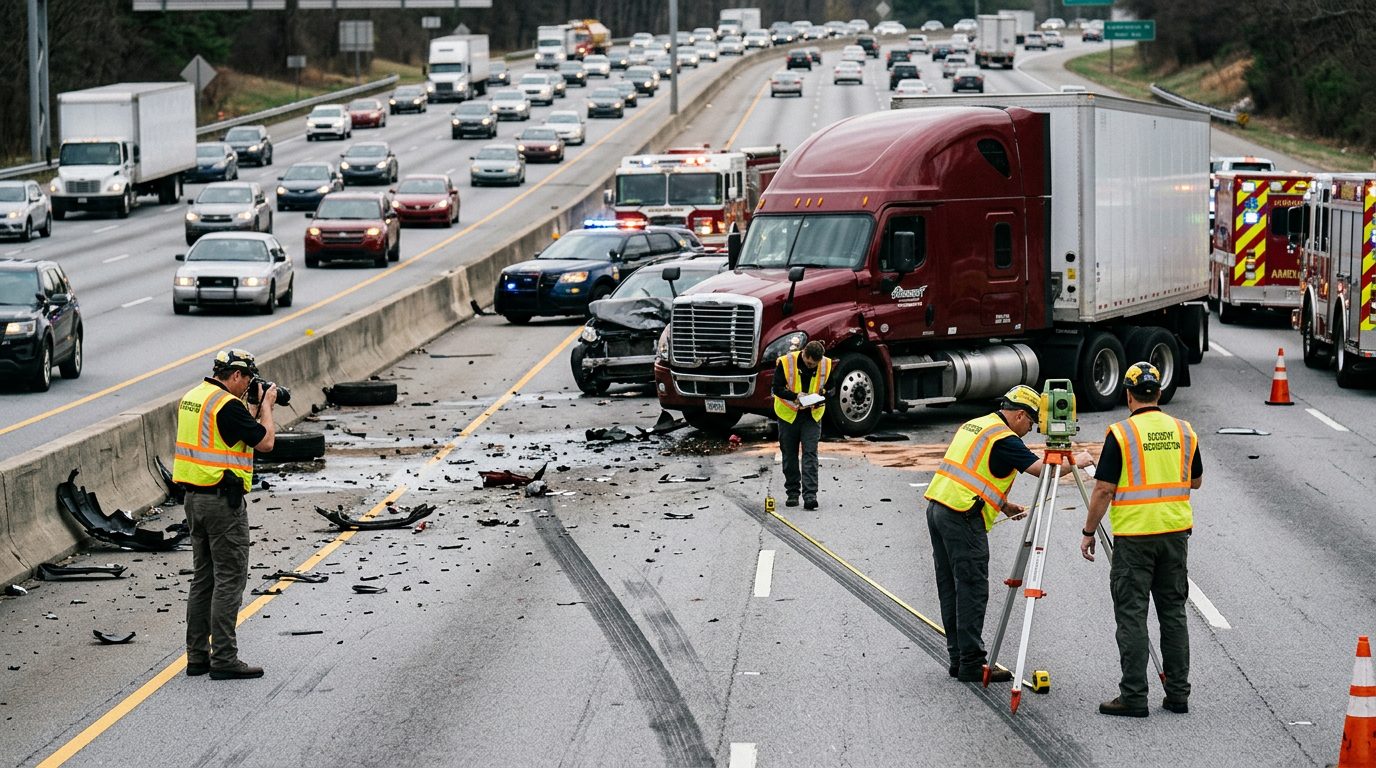
A truck accident claim is a personal injury or wrongful death claim that arises from a collision involving a commercial vehicle. That includes semis, 18-wheelers, box trucks and delivery vehicles.
The injured person may have a claim. If a crash killed someone, the family may have a claim through the estate’s personal representative. When a death results from a crime or from criminal or other negligence, Georgia law allows the personal representative to recover the funeral, medical and other necessary expenses that resulted from the death (O.C.G.A. § 51-4-5).
These cases often involve larger vehicles, federal trucking rules and several insurance companies. That is why many people want guidance early. If you’re not sure your situation qualifies, you can describe what happened at a free consultation.
If a commercial truck left you hurt or grieving, you may have a claim worth understanding, and our team is glad to talk through it with you. Talk it through with our team — the first consultation is free, confidential, and carries no obligation.
Common Causes of Truck Accidents in Metro Atlanta
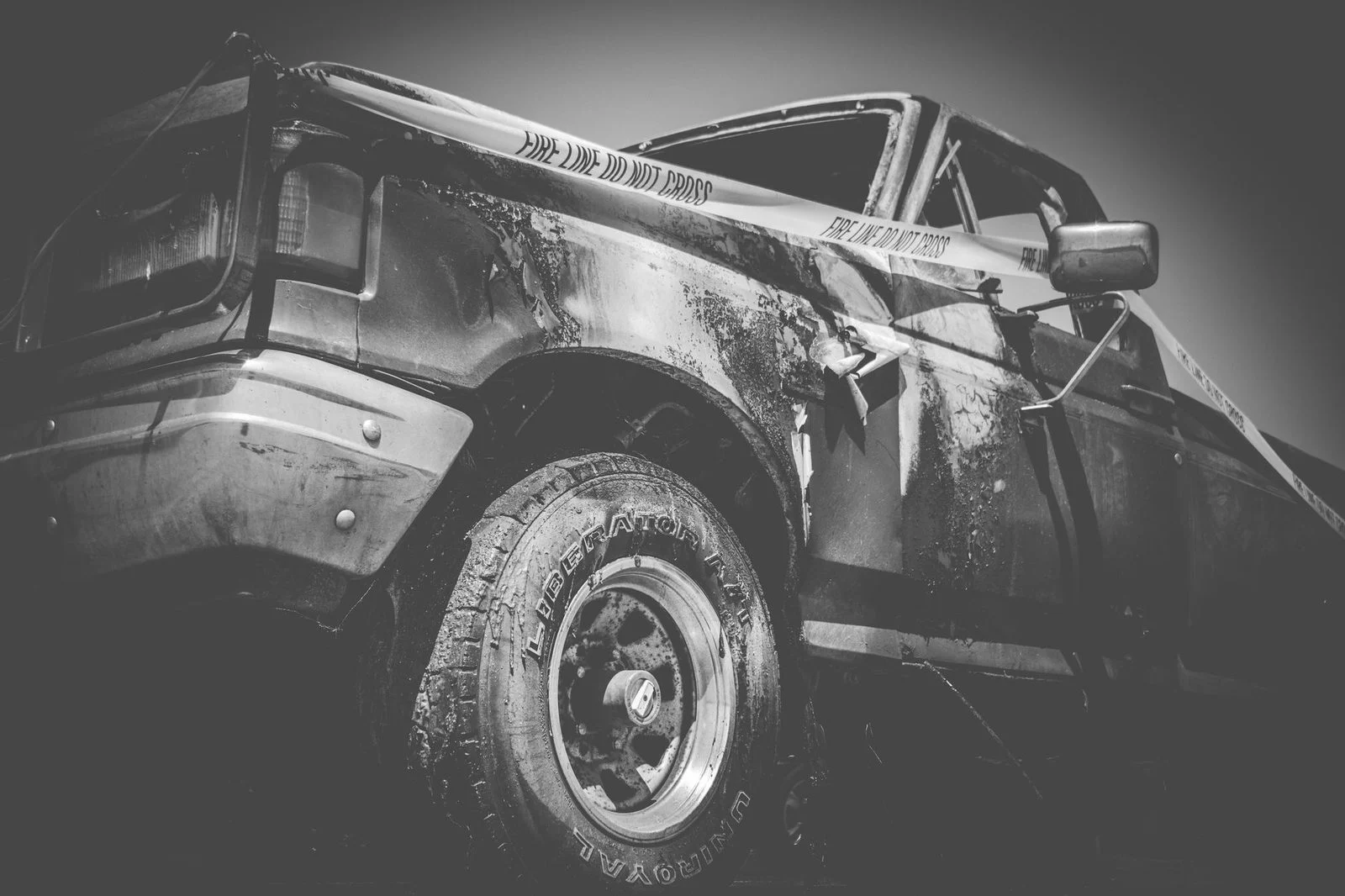
Truck crashes often trace back to a few recurring causes. Heavy commercial traffic on corridors like Interstate 285 and State Route 400 means these problems can show up across metro Atlanta.
- Fatigue and hours-of-service violations. Federal rules limit how long a driver may work. A driver may not drive after 14 consecutive hours following 10 consecutive hours off duty (49 C.F.R. § 395.3).
- A driver may not operate a commercial vehicle, and a carrier may not require or allow it, while the driver’s ability or alertness is so impaired by fatigue, illness or any other cause that driving is unsafe. The only exception is a grave emergency where complying would increase the hazard. In that case the driver may continue only to the nearest place where that hazard is removed (49 C.F.R. § 392.3).
- Distraction, speeding and unsafe lane changes. These include blind-spot collisions and following too closely.
- Brake, tire and steering failures. Carriers must keep parts such as brakes, wheels, axles and steering in safe operating condition (49 C.F.R. § 396.3).
- Cargo securement problems. Loads that shift or fall can cause loss of control.
Finding the cause usually depends on the crash report, driver logs and maintenance records. Those records are the proof that connects a crash to its cause.
Who Can Be Responsible in a Truck Accident Case
Responsibility can reach beyond the driver. The facts of each crash decide who is named.
Georgia law says a person is liable for torts committed by a servant in the scope of that person’s business (O.C.G.A. § 51-2-2). In practice, this can make the trucking company answerable for a driver who was working when the crash happened.
An employer can also face claims for its own conduct.
Other people may matter too. A vehicle owner, a maintenance contractor or another driver may have a role. Georgia requires the jury to consider the fault of everyone who contributed to the harm, including people not named in the lawsuit, but a nonparty’s fault is considered only if the plaintiff settled with that nonparty or a defending party gives notice not later than 120 days before trial that the nonparty was wholly or partially at fault (O.C.G.A. § 51-12-33).
What a Truck Accident Claim Can Cover
A claim can seek money for both financial losses and personal harm. The exact losses depend on your injuries and your situation.
- Medical expenses. These can include emergency care, hospital stays, surgery, rehabilitation and future treatment. Georgia limits these damages to the reasonable value of medically necessary care (O.C.G.A. § 51-12-1.1).
- Lost wages. This covers missed work and reduced ability to earn in the future.
- Property damage. This covers the vehicle and personal items lost in the crash.
- Pain and suffering. In a case where the entire injury is to a person’s peace, happiness or feelings, Georgia law leaves the amount of damages to the enlightened consciences of impartial jurors, and punitive damages are not awarded in that kind of case (O.C.G.A. § 51-12-6).
- Catastrophic injuries. Spinal cord injury, brain injury, amputation and severe burns can call for long-term care and planning.
Georgia also uses modified comparative fault. Your award is reduced by your share of fault, and you recover nothing if you are 50 percent or more responsible (O.C.G.A. § 51-12-33).
How the Free Consultation Works
The firm offers a free initial consultation. It is confidential and carries no obligation to continue.
Bring what you have. A short list helps:
- The crash report number and any police report copy
- Photos of the scene, vehicles and injuries
- Medical records or discharge papers
- Letters from insurers
- Names of witnesses
Expect questions about the crash, your injuries, your treatment, time away from work, and any statements you have already given to an insurer. Ask about the process, the timeline and what a claim would involve. You can start by reaching out through the firm’s contact page.
Step-by-Step Process and Timeline
Most truck claims move through five stages. Each stage can take a different amount of time.
- Get medical care and keep records. Treatment records are central to proving your injuries.
- Preserve evidence early. Carriers must keep maintenance records for 1 year, and for 6 months after a vehicle leaves their control (49 C.F.R. § 396.3). Companies subject to this federal records part may destroy records after the minimum retention periods it sets, at management’s discretion, but this does not excuse compliance with another governmental body’s lawful requirement to keep any category of records longer (49 C.F.R. § 379.3). Early written requests help protect what matters.
- Investigate and demand. This includes the crash report, driver and carrier records, and communication with insurers.
- Negotiate. Many claims resolve without a lawsuit, though this varies from case to case.
- File suit if needed. For personal injury, Georgia generally requires an action within two years after the right of action accrues (O.C.G.A. § 9-3-33).
How long a case takes depends on the injuries, the number of parties and whether the case goes to trial.
Not sure what your next step is?
Talk it through with our team — the first consultation is free, confidential, and carries no obligation.
Why Injured Readers Work With Our Firm
Our firm is based in Duluth, Georgia, and represents people hurt in truck, car, motorcycle, pedestrian and rideshare accidents. We also handle dog bites, premises liability, slip and fall, negligent security, nursing home abuse, wrongful death, catastrophic injuries and short-term rental injuries, across metro Atlanta and Georgia.
Our lawyers include Peter F. Jaraysi and Brian D. Wright. Our team, including assistants and office staff, handles the day-to-day work on each file.
When you talk with our team, you may want to ask:
- How much of their work involves trucking cases?
- Who will handle my file day to day?
- How will I get updates?
- How are fees and case costs explained, in writing?
Frequently Asked Questions About Truck Accident Claims
How much are truck accident settlements?
The value depends on your injuries, treatment, lost income, fault and available insurance. No lawyer can predict an amount.
What percentage do accident lawyers take?
Fee arrangements are explained at your free consultation. You may still be responsible for court costs and case expenses, so ask how these are handled.
How long does a truck accident lawsuit take?
Timelines vary with the injuries, the number of parties and whether the case goes to trial. Georgia generally requires a personal injury suit within two years (O.C.G.A. § 9-3-33).
Do I have to talk to the trucking company’s insurer?
Insurers may contact you directly. Talking with a lawyer first can help you understand what you’re being asked.
Can I still have a claim if I was partly at fault?
Georgia reduces damages by your share of fault. You recover nothing if your share is 50 percent or more (O.C.G.A. § 51-12-33).
Talk With a Lawyer About Your Truck Accident
If you’re recovering from injuries, caring for a loved one, or still trying to understand a crash you did not choose, you don’t have to sort out the process alone. Reach out for a free, confidential consultation to talk through what happened and what your options look like.
Disclaimer: This page is for general information and is not legal advice. Peter F. Jaraysi is the responsible lawyer for this page. Our firm is based in Duluth, Georgia. Contact us through the firm’s contact page.
What to Do After a Truck Accident
Get medical care right away
Some injuries, including back, neck and head injuries, may not show symptoms until hours or days later. A prompt medical evaluation protects your health and creates a record of your injuries.
Document the scene
If you are able, take photos of the vehicles, the road, visible injuries and any skid marks or debris. Write down the company name and vehicle number on the truck, and collect contact information from witnesses.
Keep your records
Save police reports, medical bills, prescriptions, repair estimates and time missed from work. Organized records make it easier to explain what happened and what it has cost you.
Be careful with insurance calls
An insurance adjuster may ask for a recorded statement early on. Speak with a lawyer before answering detailed questions about the crash or your injuries.
How Our Team Can Help
Plain-language answers
We explain the process in terms you can understand, so you know what to expect at each stage of your case.
Support for you and your family
Truck crashes can affect your work, your home and the people who depend on you. Our team keeps you informed and helps coordinate the details.
Serving Lawrenceville and metro Atlanta
Our firm is based in Duluth, Georgia, and represents injured people throughout Gwinnett County and the surrounding metro Atlanta communities.
Clear answers about fees
Fee arrangements are explained at your free consultation. You may still be responsible for court costs and case expenses, so ask us how these are handled before you sign anything.
Important: Do Not Wait to Get Help
Evidence from a truck accident, such as electronic logs, maintenance records and driver information, can be difficult to obtain. Speaking with a lawyer early helps protect what matters to your case.