
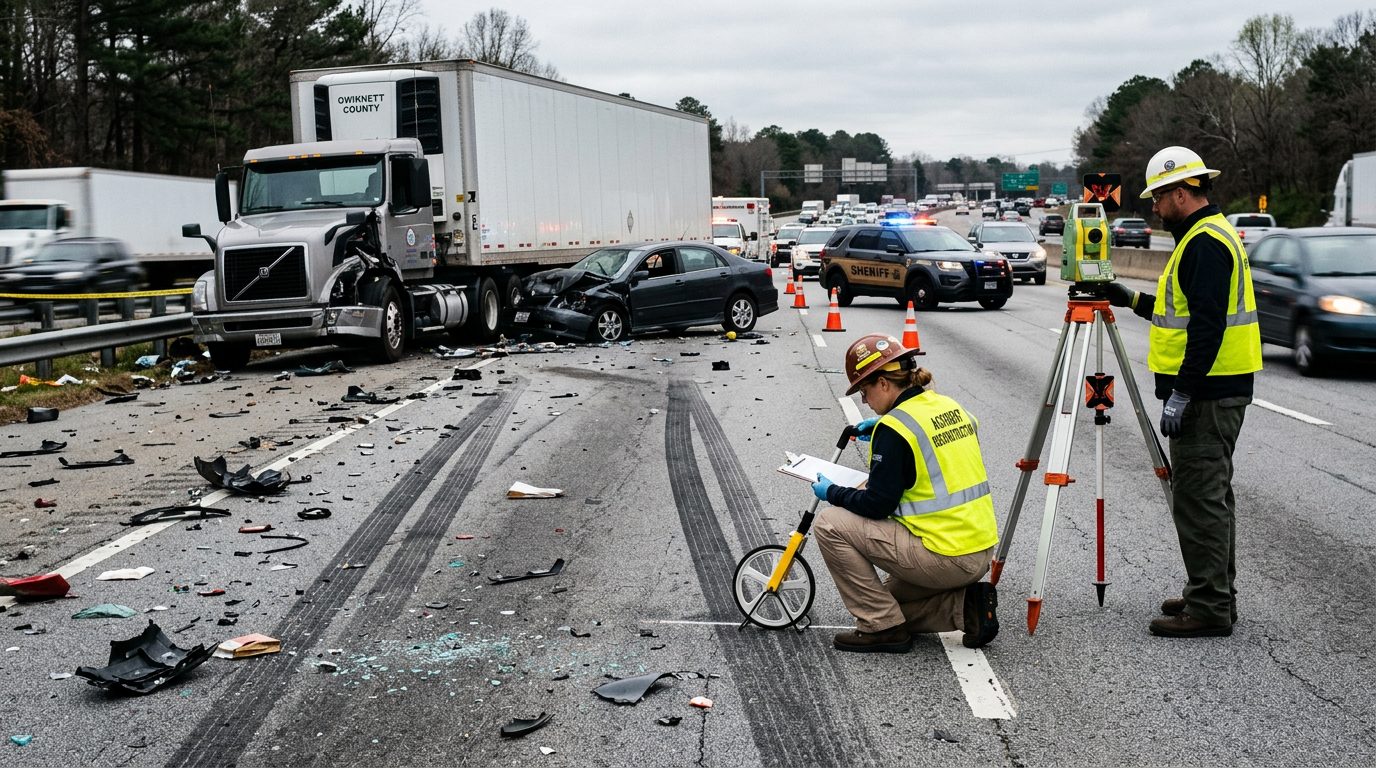
Truck Accidents | Gwinnett County, Georgia
Hurt in a Truck Crash? Take These Steps Now
Get medical care, protect your safety, and record what happened. Slam Dunk Attorney, based in Duluth, Georgia, represents people injured in truck accidents across Gwinnett County and metro Atlanta.
By Peter F. Jaraysi · Published October 18, 2026
After a truck crash in Georgia, get medical care first. Then protect your safety, write down the truck’s details, and keep every record. Truck cases often involve a trucking company, its insurer and federal rules, so the first steps matter. If you’re searching for a truck accident attorney Gwinnett residents can call, the steps below come first. Here they are, in order.
Get Medical Care First, Even If You Feel Fine
Get medical care first, even if you feel fine. A doctor can check for injuries you can’t feel yet. Treatment also creates a dated record that links your care to the crash.
Tell the provider exactly how the crash happened. Describe every symptom, even small ones. That includes neck pain, back pain, headaches, dizziness, trouble sleeping and changes in mood. Many people brush these off, but writing them down helps your doctor and helps you later.
Keep every follow-up visit. If your doctor refers you to another doctor, go, and keep a copy of the referral. Don’t skip recommended care because the bills worry you or because you want to get back to work. Gaps in treatment can make it harder to show how the crash affected you. Ask for copies of your visit notes and imaging reports, too.
If a truck crash left you hurt and the trucking company's insurer keeps calling, you don't have to sort out the next steps alone. Our team can talk with you in a free, confidential first consultation. Talk it through with our team — the first consultation is free, confidential, and carries no obligation.
Call 911 and Make Sure a Police Report Is Filed
Call 911 if anyone is hurt, if the road is blocked, or if the truck driver seems impaired or leaves the scene. Dispatch can send police and medical help to the location.
A responding officer creates a report. It records the parties, the vehicles, the location and what the officer observed. That report often becomes an early record of how the crash happened.
Ask the officer for the report number. Request a copy of the completed report when it’s ready. Check that names, plates and the location are correct.
At the scene, share facts. Give your name and insurance details. Don’t guess about who was at fault, and don’t admit fault, even out of politeness. Stick to what you saw and felt.
Record the Truck’s Company Name, DOT Number and License Plate
Write down the trucking company name, the USDOT number and the truck’s license plate before you leave. Look on the cab or trailer for the USDOT number.
The DOT number helps identify the carrier that operates the truck. That carrier may not be the driver’s direct employer or the truck’s owner. Federal driver log rules require a driver’s record to show the motor carrier’s name. They also require the truck’s identifying number, or its license number and licensing State. That is why these details matter later.
Also note the trailer number, any company logo, the time, and the direction you were traveling. Get the driver’s full name and license information. Exchange insurance details with the driver.
Write down the names and phone numbers of anyone who saw the crash. Witnesses can forget details quickly, so ask for their contact information while they’re still there.
Photograph and Document the Scene
Take photos of the scene as soon as it’s safe. Photos capture details that fade from memory within hours.
Photograph the damage to each vehicle. Capture where the vehicles stopped, skid marks, debris, road conditions, traffic signs, lane markings and the weather. Take wide shots and close-up shots.
Photograph your injuries too, and repeat those photos over several days. Bruises and swelling change in appearance over time.
Write a short, factual account while your memory is fresh. Include the order of events, the time, your direction of travel and what each person said. Stick to facts, not guesses.
Save any dashcam or phone video. Keep the original file rather than only screenshots, because the original keeps more detail.
Keep Every Bill, Record and Work Note
Keep every medical bill, receipt, prescription record and work note in one place. A single folder, paper or digital, keeps everything together.
Include receipts for trips to appointments. Mileage and parking add up. Keep the police report and your photos in the same place.
Track lost wages carefully. Save pay stubs, time-off records and a note from your employer about missed work. If you’re self-employed, keep records showing the work you could not do.
Keep a simple daily journal. Note your pain level, what you could not do, and how the injuries affect sleep, chores, driving and family life. A few lines a day is enough.
Keep these records even if the bills seem small. Small bills add up, and a complete file shows the full effect of the crash.
Why a Truck Crash Can Move Faster on the Trucking Company’s Side
A trucking company and its insurer often start their own investigation soon after a crash. That can happen while you’re still in treatment. The company also controls most of the records that show what happened.
Commercial trucks create many records. Driver logs track each change in duty status, with the city and State. Dispatch messages, maintenance files and electronic data also exist. The company holds most of them.
Federal alcohol and drug testing rules also run on clocks. If an alcohol test isn’t given within two hours, the employer must record why. After eight hours, it must stop trying. For drug tests, the window is 32 hours.
Those windows show why timing matters. Early in a case, a written request for records can make clear what must be kept. Records may be preserved in many forms, and legible copies can take the place of originals.
The Georgia Governor’s Office of Highway Safety also publishes data on large-truck crashes in Georgia, including who was affected. That data shows why these crashes get close attention.
Not sure what your next step is?
Talk it through with our team — the first consultation is free, confidential, and carries no obligation.
Be Careful With Insurance Adjusters and Early Offers
An insurance adjuster works for the insurance company, not for you. Even a friendly call comes from the other side’s insurer.
You don’t have to give a recorded statement on the spot. You can ask for requests in writing. Before you sign a medical release, understand what it covers. Ask who will receive your records.
Early offers can come before the full extent of your injuries is known. That includes future medical needs. You don’t have to accept an offer quickly. Take time to understand your injuries first.
Fault matters too. A plaintiff found 50 percent or more responsible for the injury or damages claimed is not entitled to receive any damages (O.C.G.A. § 51-12-33; Quynn v. Hulsey, 310 Ga. 473 (2020)). Insurers may raise this point, so keep your account consistent.
Keep notes of every call. Write down the date, the time, the name of the person you spoke with, and what was said.

Talk With Slam Dunk Attorney Before You Decide What to Do Next
A free, confidential first consultation is a good place to talk through your options after a truck crash. Georgia generally gives two years to file a personal injury lawsuit. That period starts when the right of action accrues, under O.C.G.A. § 9-3-33. Other deadlines can apply, and time limits and options depend on the facts.
Slam Dunk Attorney represents people hurt in car, truck and motorcycle accidents, dog bites, unsafe properties, nursing home abuse and wrongful death across metro Atlanta and Georgia. The first consultation is free, confidential, and carries no obligation to continue.
If a truck hit you or someone you love, you don’t have to sort out the next steps alone. You can reach out through our contact page to set up your free first consultation.
Quick Answers to Common Questions
How long do I have to sue after a truck accident in Georgia?
Georgia generally allows two years for personal injury lawsuits. The clock starts when the right of action accrues.
Does Georgia reduce my recovery if I share fault?
Yes. Damages are reduced by your percentage of fault (O.C.G.A. § 51-12-33; Quynn v. Hulsey, 310 Ga. 473 (2020)). At 50 percent or more, you recover nothing (O.C.G.A. § 51-12-33; Quynn v. Hulsey, 310 Ga. 473 (2020)).
Why does the DOT number matter?
It helps identify the carrier that operates the truck, which may differ from the driver’s employer.
Is the first consultation free?
Yes. It is free, confidential, and carries no obligation to continue.
Responsible lawyer: Peter F. Jaraysi, Slam Dunk Attorney, Duluth, Georgia. Contact details are on our contact page.
Attorney advertising: No particular result can be promised in any case. The firm does not advertise case results. This page is general information, not legal advice for your situation.
The First Steps After a Truck Accident
1. Get Medical Care First
Even if you feel fine, see a doctor. Some injuries, including internal and soft-tissue injuries, may not show symptoms right away. A medical record also documents your injuries from the start.
2. Protect Your Safety
If you can do so safely, move out of traffic, turn on hazard lights, and call 911. Stay at the scene until police arrive, and do not argue about fault.
3. Document the Truck
Write down the trucking company's name, the truck's number and license plate, the driver's name, and the company's DOT number if it is visible. Photograph the truck from several angles.
4. Keep Every Record
Save medical bills, pay stubs, repair estimates, photos, and notes about your pain and daily limits. Keep a file of every letter or call from insurers.
How Our Team Can Help
Free First Consultation
Your first consultation is free, confidential, and comes without obligation to continue. We will listen to what happened and explain your options in plain language.
Focused on Injury Claims
Our practice focuses on helping people hurt in car, truck, and motorcycle accidents, along with other personal injury matters across Georgia.
Based in Duluth, Georgia
Our team serves people throughout Gwinnett County and metro Atlanta, including Lawrenceville, Johns Creek, Alpharetta, Marietta, Norcross, Kennesaw, and Dunwoody.
Support Staff Who Keep You Informed
Our support staff helps keep your case organized, so you know what is happening and what comes next.
Important: Be Careful With Insurers
A trucking company's insurer may contact you quickly. Before you give a recorded statement, sign a release, or accept a settlement offer, talk with a lawyer about what you are being asked to do.
Talk With Our Team About Your Truck Accident
Related practice areas
- Truck Accident Lawyers in Duluth & Metro Atlanta, GA
- Athens Truck Accident Lawyer | Tanker & Hazmat Crashes