
Wrongful Death Claims
When a Loved One Dies Due to Someone Else's Negligence
A family guide to understanding wrongful death claims in Georgia, and how to move forward.
By Peter F. Jaraysi · Published September 15, 2026
Wrongful Death Claims in Georgia: What Families Need to Know
Wrongful death is a civil claim that allows surviving family members to seek compensation when someone dies because of another person’s or entity’s negligence, recklessness, or intentional act. It’s separate from any criminal case and exists to help grieving families recover damages and hold the responsible party accountable. If you’ve lost a loved one in an accident or due to someone else’s failure to act safely, understanding your legal rights is the first step toward healing and justice.

Not sure what your next step is?
Talk it through with our team — the first consultation is free, confidential, and carries no obligation.
What Is Wrongful Death?
Wrongful death occurs when someone’s death results directly from another party’s breach of a duty of care—meaning they owed a responsibility to act safely and failed to do so. This is a civil matter, not a criminal prosecution; the goal is compensation for the family’s losses, not punishment through the criminal justice system (though criminal charges may also be filed separately).
For a wrongful death claim to succeed in Georgia, you must show that the defendant owed a duty of care to the deceased, breached that duty through negligence or recklessness, and that breach directly caused the death. The causes are as varied as the accidents themselves: a speeding driver who strikes a pedestrian, a nursing home that fails to provide adequate supervision, a property owner who ignores a dangerous condition, or a dog owner whose animal attacks without provocation.
Who Can File a Wrongful Death Claim in Georgia?
Georgia law (O.C.G.A. § 51-4-2) (Keais v. Kelley (2026)) specifies exactly who has the legal right to bring a wrongful death action. Surviving spouses, children, and parents are the primary beneficiaries and may file a claim. In some cases, other dependents or the deceased’s estate may also have standing, though the rules are narrower.
The claim is typically filed by an executor or representative of the deceased’s estate, who acts on behalf of all eligible family members. This person may be named in the will, appointed by the court, or agreed upon by the family.
Time is critical. Georgia’s statute of limitations for wrongful death is generally two years from the date of death. This deadline is firm; once it passes, your family loses the right to file a claim entirely. Early legal action preserves evidence, prevents witnesses’ memories from fading, and protects your family’s right to compensation.
Types of Damages in a Wrongful Death Case
Damages in a wrongful death case fall into three categories:
Economic damages compensate for measurable financial losses: medical and funeral expenses, lost wages the deceased would have earned, and lost earning capacity over their remaining lifetime. These are calculated using financial records, employment history, and expert testimony about future earning potential.
Non-economic damages address the intangible but profound losses your family suffers: loss of companionship, emotional suffering, loss of guidance and support, and the loss of the deceased’s presence in your life. These are harder to quantify but no less real, and Georgia law recognizes them as legitimate components of compensation.
Punitive damages may be awarded in cases of gross negligence or intentional conduct. These damages are meant to punish the defendant and deter similar behavior in the future, not to compensate your family directly. They’re available only when the defendant’s conduct was particularly egregious.
It’s important to understand that damages are intended to compensate your family for your losses—not to guarantee a specific amount. Each case is unique, and the value depends on the facts, evidence, and applicable law.
Wrongful Death from Car, Truck, and Motorcycle Accidents
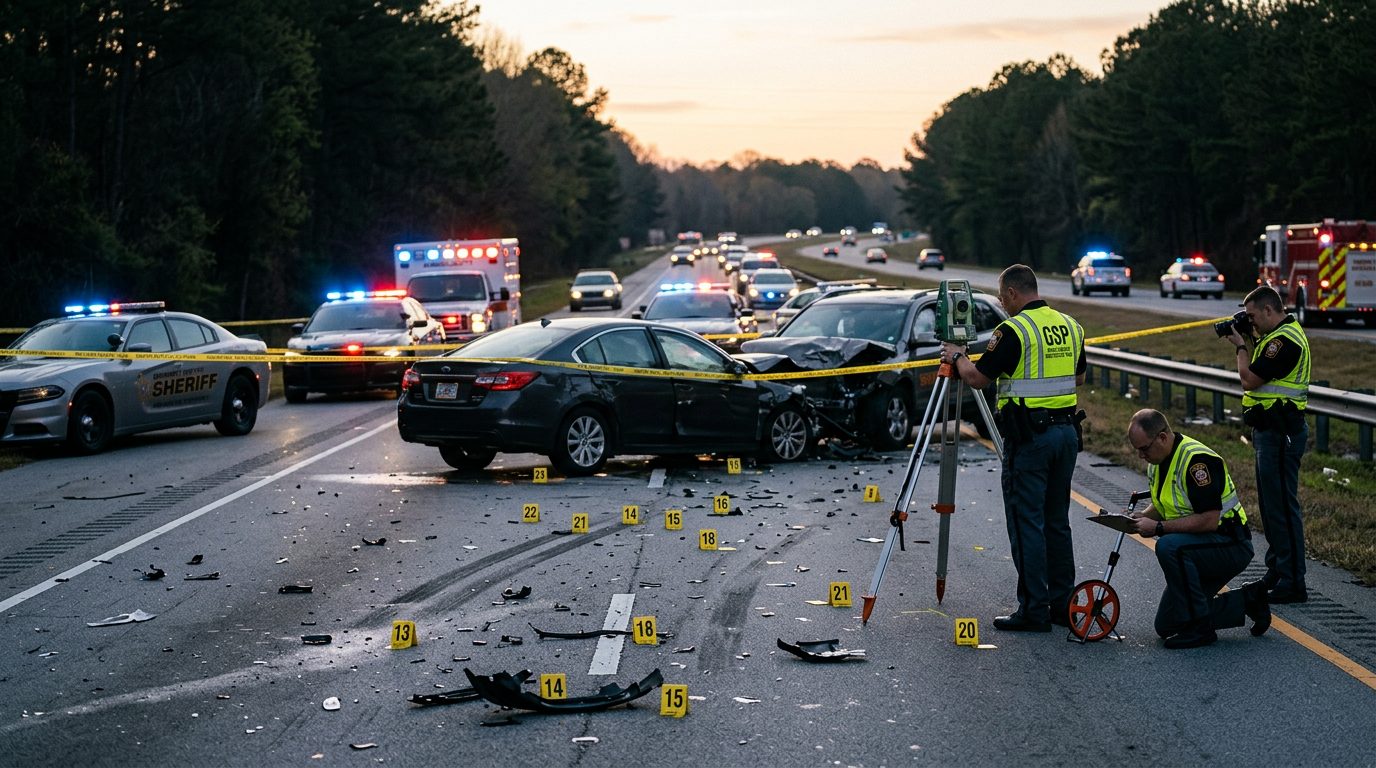
Fatal traffic accidents are among the most common causes of wrongful death claims. They result from speeding, reckless driving, impaired driving, distracted driving, or failure to follow traffic laws. In the fatal accident cases our attorneys handle, establishing liability often requires careful analysis of police reports, witness statements, vehicle data, and sometimes accident reconstruction experts.
Truck accidents present added complexity. A fatal collision with a commercial truck may involve multiple liable parties: the truck driver, the trucking company, maintenance providers, or even the manufacturer if a mechanical failure contributed. These cases often result in larger damages because commercial vehicles cause more severe injuries and deaths.
Motorcycle accidents frequently result in fatal injuries because riders lack the protection of an enclosed vehicle. A motorcycle rider struck by a car or truck faces catastrophic risk. Liability may rest with the other driver, but investigation is essential to establish exactly what happened and who bore responsibility for the unsafe conduct.
Wrongful Death from Pedestrian Accidents
Drivers have a legal duty to exercise reasonable care around pedestrians. When a driver fails to yield, speeds in pedestrian areas, or drives while distracted or impaired, and a pedestrian dies as a result, the family may have a wrongful death claim.
Liability may extend beyond the driver. If a property owner or municipality created or allowed an unsafe condition—poor lighting, blocked sightlines, or inadequate traffic control—they may also bear responsibility for the death.
Have questions about what happened?
Ask our team directly. The first conversation is free, confidential, and there is no obligation to continue.
Wrongful Death from Dog Bites and Animal Attacks
Under Georgia law (O.C.G.A. § 51-2-7), a dog owner is strictly liable if their dog injures a person without provocation. While fatal dog attacks are rare, they do occur and are devastating. A dog owner whose animal kills someone may be held responsible for the death.
Liability may also extend to property owners who knew a dangerous animal was on their premises and failed to warn or control it. If a guest or invitee is killed by a dog the owner knew was aggressive, the owner’s negligence may support a wrongful death claim.
Wrongful Death from Unsafe Property Conditions
Property owners have a legal duty to maintain safe conditions and warn visitors of known hazards. When a property owner’s negligence leads to a fatal injury, the family may pursue a wrongful death claim. This includes fatal falls from poorly maintained structures, deaths from environmental hazards, or injuries caused by inadequate security.
Negligent security is a specific type of premises liability claim. If a property owner failed to provide adequate security—locks, lighting, guards, or surveillance—and a visitor was killed as a result of criminal activity or assault, the owner may be liable for the death.
The owner’s duty of care varies depending on the visitor’s status. An invitee (a customer or guest invited onto the property) receives the highest level of protection; a licensee (someone with permission but no business purpose) receives less; and a trespasser receives the least. But in all cases, an owner cannot knowingly allow a dangerous condition to exist that causes death.
Wrongful Death from Nursing Home Abuse and Neglect
Nursing homes are regulated by the Georgia Department of Community Health and have a clear duty of care to residents. This duty includes proper supervision, adequate nutrition and hygiene, timely medical attention, and protection from harm.
When a resident dies due to negligence or abuse, the family may file a wrongful death claim. Fatal neglect can take many forms: medication errors, falls due to inadequate supervision, untreated infections, malnutrition, or physical abuse. Families often discover problems only after death; thorough investigation of medical records, facility policies, and staff conduct is critical to establishing liability.
Violations of state regulations may support a wrongful death claim and demonstrate the facility’s breach of duty. Documentation of the resident’s condition before and after admission, communications with staff, and expert medical review all play a role in building the case.
The Wrongful Death Legal Process in Georgia
A wrongful death claim typically follows this path:
Investigation and evidence gathering begin immediately. Your attorney collects medical records, accident reports, witness statements, photographs, and expert analysis. This foundation is crucial to establishing liability and valuing damages.
Demand and negotiation come next. Your attorney presents the claim to the liable party’s insurance company or legal representatives, explaining the facts, the law, and the damages your family has suffered. Many cases resolve through settlement at this stage.
Settlement or litigation follows. If the parties reach agreement, the case settles and your family receives compensation. If not, the case proceeds to trial, where a judge or jury decides liability and damages.
Timeline varies widely. Simple cases may resolve in months; complex cases involving multiple parties, significant investigation, or disputed facts may take years. Families should expect the process to take time, but early action and thorough preparation strengthen the claim and often speed resolution.
No outcome is guaranteed; each case depends on its specific facts and evidence.
Why You Need an Attorney for a Wrongful Death Claim
Wrongful death claims involve complex legal and procedural requirements. Statutes of limitations, filing deadlines, evidence rules, and court procedures all have strict rules. Missing a deadline or filing incorrectly can cost your family the right to compensation.
Insurance companies and defendants have legal representation. Your family deserves an advocate with equal resources and experience to negotiate or litigate on your behalf.
Valuing damages requires experience. Calculating economic losses (lost wages, medical expenses, funeral costs) and non-economic losses (loss of companionship, emotional suffering) demands knowledge of Georgia law and realistic assessment of what a jury or settlement would support.
Establishing liability often requires investigation and expert witnesses. Accident reconstruction specialists, medical experts, and other professionals may be necessary to prove the defendant’s negligence and its connection to the death.
An attorney handles all communication with insurance adjusters and opposing counsel, manages settlement discussions, and represents your family in court if litigation becomes necessary. This allows you to focus on grieving and healing rather than navigating a complex legal system.
Wrongful Death Claims Across Metro Atlanta and Georgia
Slam Dunk Attorney serves families throughout metro Atlanta and Georgia, including Duluth, Atlanta, Lawrenceville, Johns Creek, Alpharetta, Marietta, Norcross, Kennesaw, and Dunwoody. Local knowledge of Georgia law, court procedures, and insurance practices strengthens your claim and helps your family recover the compensation you deserve.
Whether your loved one died in a car accident, a nursing home, on an unsafe property, or in another incident covered by our practice areas, we understand the local legal landscape and the specific challenges families face.
Want to know where you stand?
Tell us what happened and our team will walk you through the options available to you, at no cost.
What to Do If You’ve Lost a Loved One
In the immediate aftermath of a death caused by someone else’s negligence, take these steps:
Preserve evidence. Secure photographs of the accident scene, medical records, witness contact information, and any communications with the at-fault party or their insurance company. Evidence fades and witnesses move; early preservation protects your claim.
Do not discuss the case with insurance adjusters without legal counsel. Adjusters are trained to minimize payouts. Anything you say can be used against your family’s claim.
Document your family’s losses. Keep records of medical and funeral expenses, lost income, and the impact the death has had on surviving family members’ lives.
Act quickly. Georgia’s two-year statute of limitations is firm (O.C.G.A. § 9-3-33; Cameron v. JMP Pizza, Inc. (2026)). Early legal action preserves evidence, strengthens your claim, and ensures your family doesn’t lose the right to compensation.
Seek legal guidance. A wrongful death attorney can evaluate your situation, explain your legal rights, and guide your family through the process.

FAQ
What is the difference between a wrongful death claim and a criminal case?
A wrongful death claim is a civil lawsuit seeking compensation for your family’s losses; a criminal case is a prosecution by the state seeking to punish the defendant. Both may proceed separately after the same incident.
How long do wrongful death cases take in Georgia?
Timelines vary depending on complexity, but cases typically take months to years from filing to resolution, whether through settlement or trial.
Can I file a wrongful death claim if my loved one was partially at fault?
Georgia’s comparative negligence law may allow recovery even if the deceased was partially at fault, though damages may be reduced based on the degree of fault assigned to your loved one (O.C.G.A. § 51-12-33; Quynn v. Hulsey, 310 Ga. 473 (2020)).
What if the at-fault party doesn’t have insurance?
Your attorney can explore other sources of recovery, including the defendant’s personal assets, umbrella policies, or uninsured motorist coverage if applicable.
Do I have to pay attorney fees upfront?
Many wrongful death attorneys work on a contingency fee basis, meaning they are paid only if your family recovers compensation through settlement or judgment. Discuss fee arrangements during your consultation.
If your family has lost a loved one due to someone else’s negligence—in a traffic accident, on an unsafe property, in a nursing home, or another incident—you likely have questions about your legal rights and what happens next. Families in your situation can reach out to discuss their options, and we’re here to listen, answer your questions, and explain the path forward. Contact us for a free consultation to speak with an attorney who understands Georgia law and your family’s needs.
Time Matters
Georgia law sets strict deadlines for filing a wrongful death claim. The sooner you reach out, the sooner we can protect your family's rights and preserve critical evidence.
Key Questions About Wrongful Death Claims
What is a wrongful death claim?
A wrongful death claim is a civil lawsuit that allows your family to seek compensation when someone dies as a result of another person's or entity's negligence, recklessness, or intentional conduct. It is separate from any criminal case that may be brought by the state.
Who can file a wrongful death claim in Georgia?
Georgia law allows the deceased's surviving spouse, children, and parents to file. If none of these relatives exist, other family members or the estate's representative may have rights. The specific rules depend on your family's circumstances.
What types of losses can be recovered?
Wrongful death claims may seek compensation for medical and funeral expenses, lost income and financial support the deceased would have provided, loss of companionship and guidance, and pain and suffering endured before death. Each case is unique.
How long does a wrongful death case take?
Timelines vary widely depending on the complexity of the case, the willingness of parties to negotiate, and court schedules. Some cases resolve within months; others take years. We will keep you informed throughout the process.
Why Choose Slam Dunk Attorney
We listen with compassion
We understand that losing a loved one is devastating. We treat your family with respect and empathy at every step.
We handle the legal work
From gathering evidence to negotiating with insurance companies and defendants, we manage the details so you can focus on your family.
We focus on your rights
We are committed to protecting your family's legal interests and pursuing fair compensation for your losses.
We are accessible
Based in Duluth, Georgia, we serve families across metro Atlanta and throughout Georgia. We are here when you need us.
Wrongful Death Claims We Handle
Car and truck accidents
When a fatal collision is caused by negligent or reckless driving, we investigate the crash and hold the responsible parties accountable.
Motorcycle accidents
Motorcycle accidents often result in catastrophic injuries and death. We pursue claims against drivers, manufacturers, and others whose actions caused the tragedy.
Pedestrian accidents
Pedestrians struck by vehicles face severe injury and death. We investigate these incidents and seek compensation from negligent drivers.
Unsafe properties and premises liability
Deaths resulting from unsafe conditions—such as inadequate security, poor maintenance, or hazardous premises—may give rise to a wrongful death claim against the property owner.
Nursing home abuse and neglect
When a resident dies due to abuse, neglect, or inadequate care in a nursing home, families have the right to pursue a wrongful death claim.
Dog bites and animal attacks
Fatal dog attacks and other animal incidents may result in wrongful death claims against the animal's owner or the property where the attack occurred.
About Fees
We work on a contingency basis: no fees unless there is a recovery. You may still be responsible for certain case costs, which we will discuss with you upfront.