
Nursing Home Wrongful Death | Georgia
When Negligent Care Causes Loss
If a loved one died due to inadequate care at a nursing home, you deserve answers and accountability. Slam Dunk Attorney represents families across Georgia.
By Peter F. Jaraysi · Published September 17, 2026
Nursing Home Wrongful Death Lawyer in Georgia
When a loved one dies in a nursing home due to neglect, abuse, or inadequate care, the loss is devastating—and families often have legal rights. A nursing home wrongful death claim allows you to seek compensation on behalf of the deceased’s estate and surviving family members when the facility or its staff failed in their duty of care.
At Slam Dunk Attorney, we represent families across metro Atlanta and Georgia who have lost residents to preventable deaths. We understand the grief and anger you’re experiencing, and we’re here to handle the legal work so you can focus on your family.
If your loved one died in a nursing home under suspicious or negligent circumstances, you may have a claim—and families in your situation can contact us to understand their options. Talk it through with our team — the first consultation is free, confidential, and carries no obligation.
What Is a Nursing Home Wrongful Death Claim?
A nursing home wrongful death claim is a legal case filed when a resident dies because the nursing home or its staff failed to provide adequate care, resulting in negligence, abuse, or neglect. Under Georgia law, you can recover damages when death results from the wrongful act, neglect, or default of another party.
Key distinctions:
- Wrongful death vs. other claims: Wrongful death is specific to fatal outcomes. Other claims (like personal injury) cover non-fatal harm. Wrongful death claims recover damages on behalf of the deceased’s estate and surviving family members.
- Who can file: A spouse, adult children, parents, or other dependents can bring a wrongful death claim. The claim is typically filed by the estate’s representative or next of kin.
- Negligence standard: You do not need to prove the nursing home intentionally harmed your loved one. Negligence—failure to provide adequate care—is sufficient.
Who This Is For
This service is for families who lost a loved one in a Georgia nursing home and suspect the death was caused by or contributed to by the facility’s negligence, abuse, or neglect.
You may have a claim if your loved one:
- Died following a pattern of poor care, medication errors, or inadequate supervision
- Suffered preventable injuries (such as falls or pressure ulcers) that led to death
- Died from an infection or medical complication that proper care could have prevented
- Was abused or neglected by staff or other residents
- Lived in a facility with inadequate staffing or unsafe conditions
We serve families across metro Atlanta and surrounding Georgia counties—including Lawrenceville, Johns Creek, Alpharetta, Marietta, Norcross, Kennesaw, and Dunwoody. If you have questions about whether you have a claim and want to understand your legal options, we’re here to help.
What a Nursing Home Wrongful Death Claim Covers
Wrongful death damages in Georgia may include:
- Medical expenses incurred before death that were not paid by insurance or the estate
- Funeral and burial costs
- Loss of financial support the deceased would have provided to surviving family members (such as a spouse or dependent children)
- Loss of companionship, guidance, and emotional support (called “loss of consortium”)
- Pain and suffering of the deceased before death, if applicable
- Punitive damages in cases of gross negligence or intentional misconduct (Georgia allows these in limited circumstances to punish wrongful conduct)
- Attorney fees and court costs, typically recovered from the settlement or judgment, not paid upfront by the family
The specific damages in your case depend on the facts, the deceased’s age and earning capacity, and the nature of the negligence or abuse.
Common Causes of Nursing Home Deaths We Investigate
In the wrongful death cases we handle, we investigate deaths caused by:
- Neglect: Failure to provide adequate nutrition, hydration, hygiene, toileting assistance, or supervision
- Medication errors: Administering the wrong drug, the wrong dose, or failing to give prescribed medication on time
- Pressure ulcers (bedsores): Preventable wounds that develop from prolonged immobility and lack of repositioning or skin care
- Falls: Inadequate supervision, missing safety equipment (such as grab bars or bed rails), or hazardous conditions in the facility
- Infections: Poor sanitation practices, inadequate wound care, or failure to treat infections promptly
- Physical, emotional, or sexual abuse by staff or other residents
- Inadequate staffing: Insufficient nurses or nursing aides, leading to poor care and inability to respond to emergencies
- Failure to respond to medical emergencies or communicate with family members about changes in the resident’s condition
Each of these failures can be investigated through medical records, nursing documentation, staff credentials, and expert consultation.
How the Wrongful Death Process Works
Here’s what to expect when you work with Slam Dunk Attorney:
Step 1 – Free Consultation You contact us and speak with an attorney about your loved one’s death. We listen to the facts, ask clarifying questions, and explain whether a claim may be viable based on Georgia law.
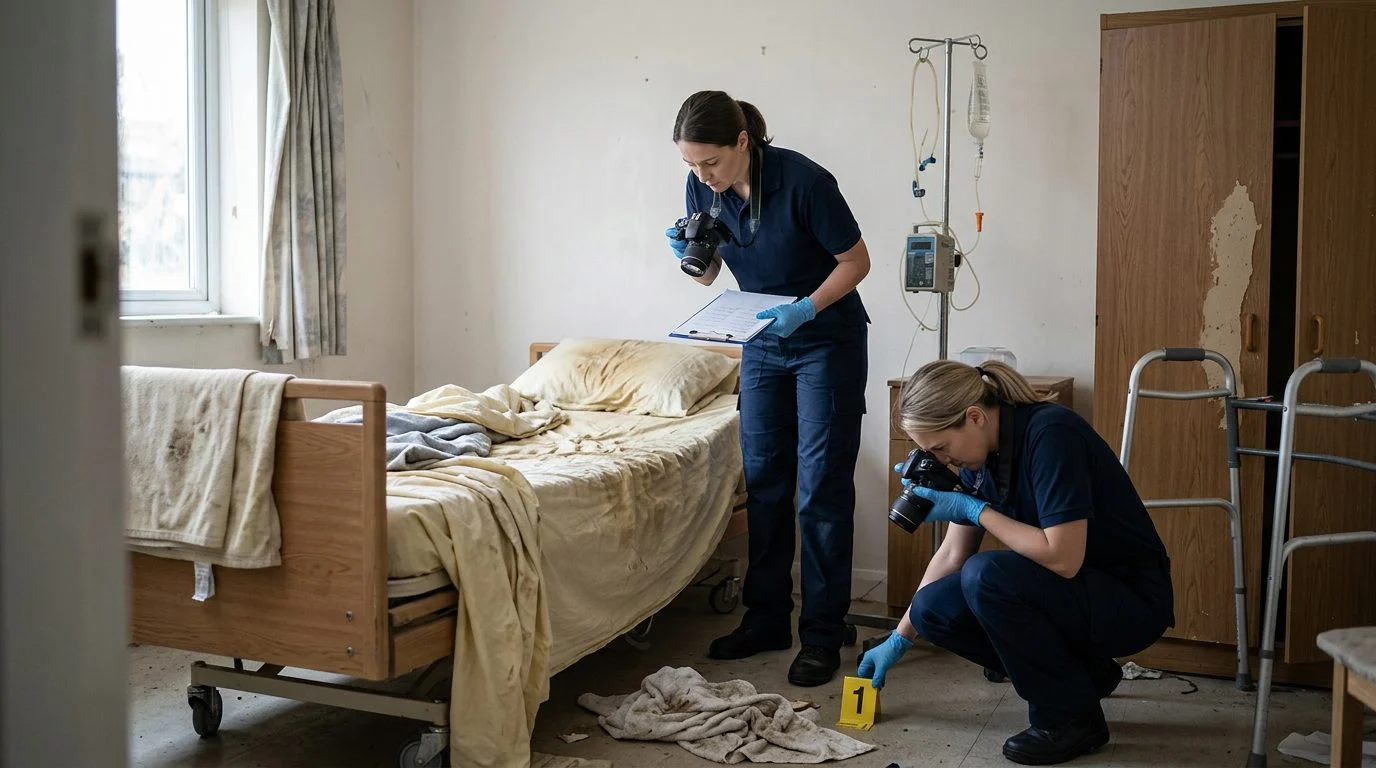
Step 2 – Investigation If we take your case, we obtain medical records, nursing home records, incident reports, staff credentials, and inspection reports. We may consult with medical experts to determine whether negligence or abuse occurred and whether it caused or contributed to the death.
Step 3 – Demand Letter We send a detailed letter to the nursing home’s insurance company outlining the facts, the breach of duty, and the damages. We request fair compensation.
Step 4 – Negotiation The insurance company may respond with an offer, a counteroffer, or a refusal. We negotiate on your behalf to reach a settlement that reflects the true value of your claim.
Step 5 – Lawsuit (if necessary) If settlement talks fail, we file a wrongful death lawsuit in Georgia court. Discovery (the formal exchange of evidence) and depositions (sworn testimony) follow.
Step 6 – Trial or Settlement Most wrongful death cases settle before trial, but we prepare every case as if it will go to a jury. We are ready to present your case in court if the nursing home refuses a fair offer.
Step 7 – Resolution Once settled or judged, funds are distributed to the estate and surviving family members according to Georgia law.
Not sure what your next step is?
Talk it through with our team — the first consultation is free, confidential, and carries no obligation.
Timeline: What to Expect
Every case is unique, but here’s a realistic timeline:
- Initial consultation: 1–2 weeks from your call
- Investigation and records gathering: 2–4 months
- Demand letter and negotiation: 1–3 months
- Lawsuit filing (if needed): 6–12 months after initial consultation
- Discovery and depositions: 6–12 months
- Settlement or trial: 1–2 years from filing, depending on court schedule and case complexity
We keep you informed at every stage and explain what’s happening in plain language.
Why Families Choose Slam Dunk Attorney
Local experience: We are based in Duluth, Georgia, with deep knowledge of Georgia wrongful death law and nursing home standards of care specific to our state.
Nursing home experience: We handle multiple nursing home abuse and neglect cases. We understand common failures and how to prove them.
No upfront cost: We work on a contingency fee basis. You pay nothing unless we recover compensation for you. You may still owe case costs (like expert fees or court filing fees), which we discuss upfront.
Transparent communication: We explain the law and your options in plain language, not legal jargon. We answer your questions honestly.
Compassionate approach: We understand you are grieving. We handle the legal work so you can focus on your family.
Thorough investigation: We don’t accept the nursing home’s account at face value. We dig into records, interview witnesses, and consult medical experts.
Frequently Asked Questions
Q: How long do I have to file a wrongful death claim?
Georgia law generally allows two years from the date of death, but act quickly—evidence can disappear and memories fade.
Q: Do I need to prove the nursing home intentionally harmed my loved one?
No. Negligence—failure to provide adequate care—is enough. We must show the nursing home owed a duty of care, breached that duty, and the breach caused the death.
Q: What if the nursing home says my loved one had pre-existing conditions?
Pre-existing conditions do not eliminate liability. If negligence or abuse accelerated or contributed to the death, you may still have a claim.
Q: Can I sue the individual staff members, or only the nursing home?
You can pursue claims against both the nursing home and individual employees, depending on the circumstances. We evaluate all responsible parties.
Q: What if the nursing home has already settled with the family on other matters?
A prior settlement does not necessarily bar a wrongful death claim. We review the terms and advise you on your options.
Q: Will this case go to trial?
Most wrongful death cases settle before trial, but we prepare every case as if it will. We are ready to present your case to a jury if needed.
Q: How much will my case be worth?
We cannot predict a specific amount, but we evaluate medical expenses, funeral costs, lost financial support, and non-economic damages like loss of companionship. We discuss realistic expectations during your consultation.
What You Should Do Now
If you believe your loved one’s death was caused by nursing home negligence or abuse:
- Gather documents: Collect medical records, the death certificate, nursing home records, and any correspondence with the facility.
- Write down details: Document the timeline of events, changes in your loved one’s condition, and any concerns you raised with staff.
- Preserve evidence: Do not discard items from the nursing home room; they may be relevant to your case.
- Avoid signing documents: Do not sign any settlement or release from the nursing home without legal advice.
If your loved one died in a nursing home under suspicious or negligent circumstances, you may have a claim—and families in your situation can contact us to understand their options. Request a free consultation with Slam Dunk Attorney today. We’ll listen to your story, answer your questions, and explain what comes next—at no cost to you.
Why Families Choose Slam Dunk Attorney
Focused on Nursing Home Abuse Cases
We focus exclusively on personal injury and wrongful death claims, including negligent care in nursing homes across Georgia.
We Understand Your Loss
We approach every case with empathy and respect for your family. Our goal is to hold facilities accountable and pursue fair compensation.
Thorough Investigation
We examine medical records, facility policies, staffing levels, and care documentation to build a clear picture of what happened.
No Fees Unless There's a Recovery
We work on contingency—you pay no attorney fees unless there is a recovery. You may still owe case costs.
Time Matters
Georgia law generally allows two years from the date of death to file a wrongful death claim. Evidence can disappear and memories fade. The sooner you reach out, the sooner we can investigate and protect your family's rights.
Common Signs of Nursing Home Negligence
Inadequate Care or Supervision
Failure to provide necessary medical attention, medication errors, poor hygiene, or lack of monitoring that leads to injury or death.
Understaffing and Neglect
Insufficient nursing or care staff, resulting in residents not receiving timely assistance, meals, hygiene, or wound care.
Unsafe Conditions
Falls, infections, pressure ulcers, or other preventable injuries caused by unsanitary environments or lack of safety measures.
Abuse or Mistreatment
Physical, emotional, or financial abuse by staff or other residents, often enabled by poor oversight and training.
What You Need to Know About Wrongful Death Claims
You Don't Need to Prove Intent
Negligence—failure to provide adequate care—is enough. We must show the nursing home owed a duty of care, breached that duty, and your loved one's death resulted from that breach.
Who Can File
Typically, immediate family members—spouses, children, or parents—may bring a wrongful death claim. We'll advise you on your standing and options.
What Damages May Be Pursued
Wrongful death claims may seek compensation for medical expenses, funeral costs, lost income, and other losses. Each case is unique.
Investigation Is Critical
We gather medical records, incident reports, staff records, and expert opinions to establish negligence and build your case.
Our Approach
Listen and Understand
We begin by hearing your story and understanding the circumstances of your loved one's death.
Investigate Thoroughly
We obtain and review all relevant records, consult with medical professionals, and identify breaches in the standard of care.
Explain Your Options
We explain the law, your rights, and the realistic path forward—always in plain language, never legal jargon.
Pursue Accountability
We advocate for your family, negotiate with insurers, and litigate if necessary to hold the facility responsible.