
Wrongful Death | Duluth, Georgia
Losing a Loved One: What a Police Report Can and Cannot Tell You
Grief comes first, and questions about paperwork can feel like one more weight. Here is a clear, plain-language look at how the crash report fits into a wrongful death matter.
By Peter F. Jaraysi · Published November 11, 2026
If someone you love died in a crash, a dog attack, or a fall on someone else’s property, you may be asking whether the police report matters. Police reports can be useful evidence in some incidents.
This page explains what a report does, what fills the gap when there isn’t one, and which deadlines to keep in view. If you’re handling this for a family member while grieving, you don’t need every answer today. Start with the records you can reach.
What a Police Report Is and Who Writes It
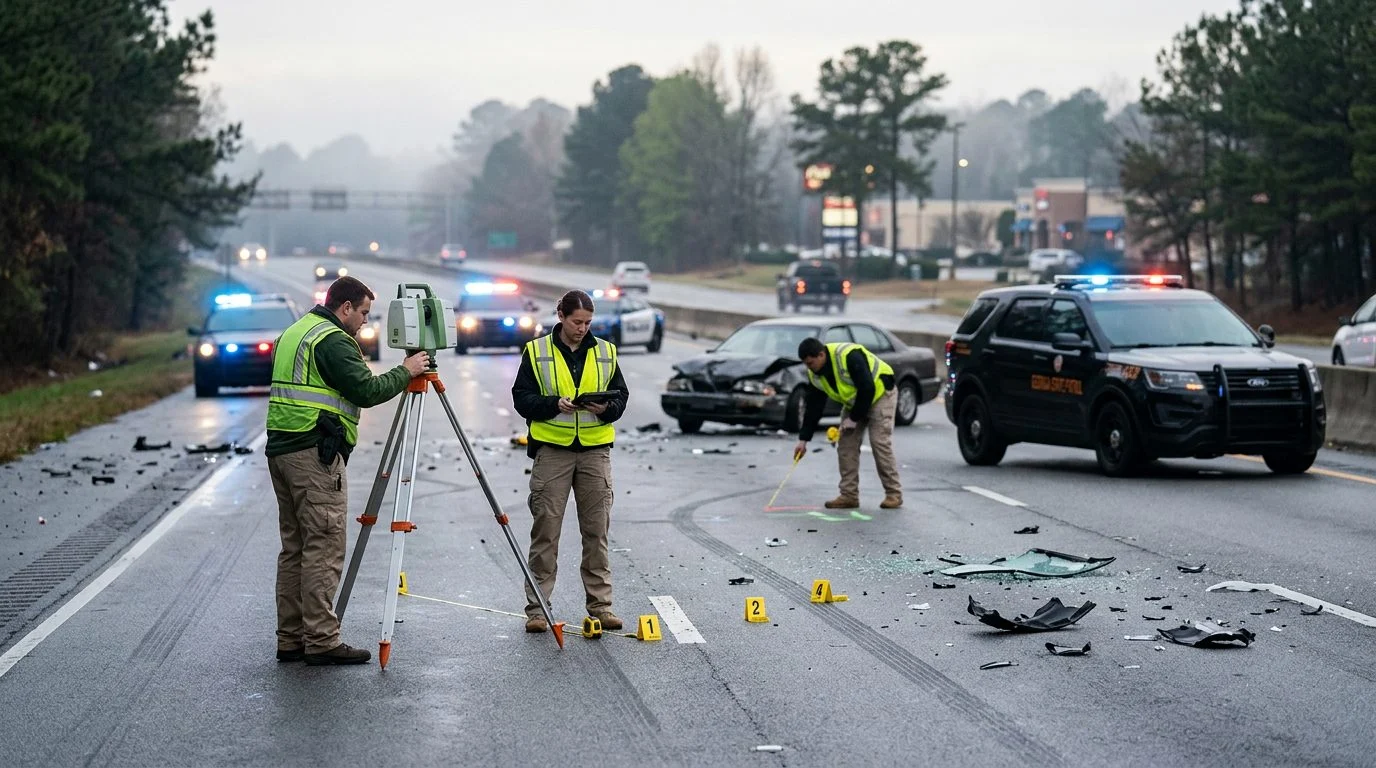
A police report, often called a crash report, is the written record an investigating agency creates after responding to an incident. The responding officer usually records the date, time, and location. The report also lists the people involved, the vehicles or conditions, any witnesses the officer could identify, and any citations issued.
Georgia law also sets a reporting duty for drivers. A driver involved in a crash that causes injury, death, or property damage to an apparent extent of $500.00 or more must immediately give notice by the quickest means. Inside a city, that notice goes to the local police department. Outside a city, it goes to the county sheriff or the nearest state patrol office (O.C.G.A. § 40-6-273).
Copies usually come from the agency that responded, and they can take time to arrive. Ask early. Officers often work from partial information at a chaotic scene, so read the report as a starting point. A report is one record of the event. It is not a finding of who is legally at fault.
If you're still sorting through a crash report or other records after losing someone you love, our team is glad to review them with you. Talk it through with our team — the first consultation is free, confidential, and carries no obligation.

Is a Police Report Required for a Georgia Wrongful Death Claim?
Georgia’s wrongful death law focuses on who may sue and what caused the death.
A surviving spouse may recover for the homicide of a spouse or parent. If there is no surviving spouse, a child or children may do so (O.C.G.A. § 51-4-2). In legal terms, “homicide” is broad. It covers deaths from a crime, from criminal or other negligence, or from defectively made property (O.C.G.A. § 51-4-1).
When no one is entitled to sue directly, the administrator or executor (the person appointed to manage the estate) may bring the action for the next of kin (O.C.G.A. § 51-4-5).
So the claim is built from proof of what happened. That proof can come from many places, including medical records, the death certificate, witness statements, photos, and property or facility records. A family may feel rushed while those records are still being gathered. That’s a normal reaction. List what exists and who holds it first.
How a Police Report Can Help a Wrongful Death Claim
A police report can fix the basic facts of a fatal crash in one place: the date, time, location, and parties involved. Diagrams, measurements, and witness contact details can help rebuild how the event unfolded. That matters most when the person who could describe it has died.
Citations and officer observations can be useful evidence. They aren’t always conclusive. Errors happen, so a report should be checked against other records.
Which agency wrote the report depends on where the crash happened. A crash on a Gwinnett County road might involve a city police department, the county sheriff, or the state patrol. In practice, a report is often one of several records a lawyer reviews alongside medical files and other documents. Request a copy and keep it with the rest.
When There Is No Police Report
Many incidents never involve a police response, so a family may have no report at all. A dog attack, a fall on a property, a death in a nursing home, a negligent security incident, or an injury at a short-term rental can all happen without officers arriving. Each one leaves a different trail.
Useful records include incident reports filed with a property owner or manager, facility records, photographs, and surveillance footage where it still exists. Request footage quickly, because it may not be kept long. Medical records and the death certificate help establish cause and timing.
Georgia’s coroner and medical examiner rules add another layer, as set out in the Georgia Death Investigation Act.
Ask for every record that already exists. Keep copies of everything you receive, with dates and the names of who sent it.
How Fault and Evidence Affect a Georgia Wrongful Death Claim
Georgia’s comparative fault rule (shared fault) can reduce a recovery if the injured person is found partly responsible (O.C.G.A. § 51-12-33; Quynn v. Hulsey (2020)). Under O.C.G.A. § 51-12-33, damages are reduced in proportion to the plaintiff’s percentage of fault. A plaintiff who is 50 percent or more responsible is not entitled to any damages.
The law also lets fault of nonparties be considered if the plaintiff entered into a settlement agreement with the nonparty or if a defending party gives notice that the nonparty was wholly or partially at fault. A defending party may give notice not later than 120 days before trial that a nonparty was wholly or partly at fault, by filing a pleading in the action designating the nonparty, with the nonparty’s name and last known address (or the best identification of the nonparty possible under the circumstances) and a brief statement of the basis for believing the nonparty to be at fault. How this rule applies when the person who died shared some responsibility is a question for a lawyer to review. The Georgia Supreme Court’s decision in Quynn v. Hulsey addresses how fault is apportioned in wrongful death actions.
Evidence is how fault gets sorted. Witness statements, photos, skid marks, surveillance video, and physical evidence can support or challenge each account. How strong that evidence is shapes how a case is evaluated. Every case depends on its facts. For a broader look at claim value, see our Georgia wrongful death claim guide.
Deadlines to Keep in Mind
Georgia’s general deadline for actions for injuries to the person is two years after the right of action accrues (O.C.G.A. § 9-3-33). Families often ask how that rule applies after a death. A lawyer can review the dates early so nothing is missed.
Some criminal cases pause the clock. If a criminal prosecution is pending, the period for a civil claim by the victim of the alleged crime is tolled, or paused, until the prosecution becomes final or is otherwise ended. That pause cannot exceed six years, except as otherwise provided in O.C.G.A. § 9-3-33.1 (O.C.G.A. § 9-3-99).
Start early so records can be preserved while the claim is reviewed. Mark the date of death on a calendar now. Other rules can apply in some situations, so bring the dates to a lawyer rather than counting them alone.
Not sure what your next step is?
Talk it through with our team — the first consultation is free, confidential, and carries no obligation.

Talk to a Georgia Wrongful Death Lawyer About Your Situation
A Georgia wrongful death lawyer can look at which records exist and which dates apply to your family’s situation. Slam Dunk Attorney is based in Duluth, Georgia, and represents people across metro Atlanta and Georgia, including Johns Creek. The firm handles car, truck, and motorcycle crashes, pedestrian and rideshare accidents, dog attacks, property hazards, nursing home cases, negligent security incidents, and short-term rental injuries.
The firm offers a free first consultation that is confidential and carries no obligation to continue.
Who can file a Georgia wrongful death claim?
A surviving spouse may recover for the homicide of a spouse or parent. If there is no surviving spouse, a child or children may do so (O.C.G.A. § 51-4-2).
What is the deadline to file?
Georgia’s general deadline for injury actions is two years after the right of action accrues (O.C.G.A. § 9-3-33). Under O.C.G.A. § 9-3-33, that two-year period applies except as otherwise provided in this article, and some criminal cases pause it under other Code sections.
Does a police report decide who is at fault?
No. A report records the scene and what the officer saw and was told. It is one record among several.
If you’re still sorting through a crash report or other records after losing someone you love, our team is glad to review them with you. Responsible lawyer: Peter F. Jaraysi, Slam Dunk Attorney, Duluth, Georgia. Contact us.
How Slam Dunk Attorney Can Help
Compassionate Listening
We take time to hear what happened and to understand your family's situation, at your pace.
Records Review
We look at the police report alongside medical records, photos, witness information and insurance details.
Protecting Your Family's Rights
Our attorneys focus on wrongful death claims across metro Atlanta and Georgia, and we work to hold responsible parties accountable.
Plain-Language Updates
We explain each step clearly so you always know where your case stands and what comes next.
Do Not Assume a Missing Report Closes Your Options
A police report is only one piece of evidence. Some crashes are not documented, reports can be incomplete, and other records may still matter. Speak with a lawyer about what information exists before you decide anything.
Other Evidence That May Matter
Witness Information
Names, contact details and accounts from people who saw the crash or arrived soon after can fill gaps in the official record.
Photos and Video
Scene photos, dashcam footage, traffic camera images and surveillance video may show what the report does not.
Medical and Care Records
Hospital, emergency and treatment records document the injuries and the events that followed the incident.
Insurance and Vehicle Documents
Policy information, repair estimates and vehicle damage records help piece together how the incident happened.