
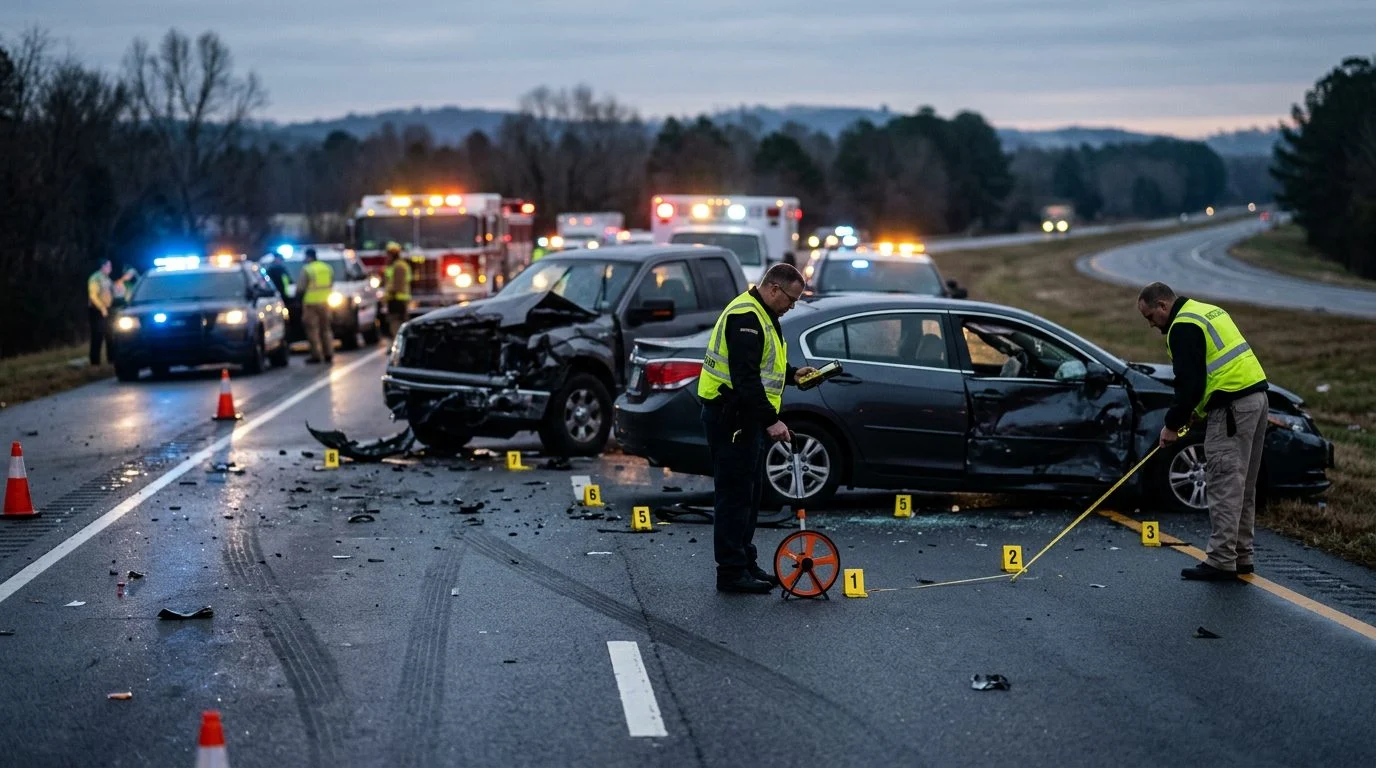
Wrongful Death of a Spouse · Georgia
Losing a Spouse Is Devastating. You Don't Have to Face the Legal Questions Alone.
Slam Dunk Attorney helps surviving spouses and families across metro Atlanta and Georgia understand their options after a fatal accident or injury. Your first consultation is free, confidential, and comes with no obligation to continue.
By Peter F. Jaraysi · Published November 4, 2026
A surviving spouse in Georgia can bring a wrongful death claim after a short-term rental death caused by someone’s wrongful act or negligence. The claim is a civil case, separate from any criminal matter, and it seeks money damages for the family’s losses. This guide explains who can file, who may be responsible, what must be shown, and when the clock starts running. Slam Dunk Attorney handles wrongful death of a spouse matters in Georgia, and this page is written for families who are still early in that process.
What a Spouse’s Wrongful Death Claim Means After a Short-Term Rental Death
A wrongful death claim is a lawsuit filed after a person dies because another party’s wrongful act or negligence caused the death. A death at an Airbnb, VRBO, or similar rental can support one when unsafe conditions or missing warnings played a role.
Common examples include:
- Falls from unguarded balconies, stairs, or railings.
- Drownings in pools or hot tubs without safety barriers or warnings.
- Carbon monoxide exposure from faulty fuel-burning equipment.
- Fires linked to defective wiring or smoke alarms that were missing or not working.
The claim is a separate legal process from any criminal case. It runs alongside your grief. You do not have to finish funeral plans before you ask questions.
If your spouse died at a short-term rental and you're still sorting out what comes next, you don't have to face those questions alone, and our team is ready to talk. Talk it through with our team — the first consultation is free, confidential, and carries no obligation.
Can a Spouse File a Wrongful Death Claim in Georgia?
Yes. Georgia’s wrongful death statute allows a surviving spouse to recover for the homicide of a spouse, and the spouse comes first. If there is no surviving spouse, a child or children may recover instead.
The statute allows recovery of “the full value of the life of the decedent, as shown by the evidence.” When a spouse and children share a recovery, the spouse receives no less than one-third.
Timing is the next question. Georgia’s general injury filing deadline is two years after the right of action accrues. When that right accrues in a particular case depends on the facts, so ask early. Waiting on insurance replies or records can use up time you need. Early review also helps preserve evidence before it changes or disappears.
Who May Be Responsible for an Unsafe Short-Term Rental
The host, a property manager, and sometimes a contractor can each carry responsibility. Who is responsible depends on who controlled the property and what they knew.
- The host or owner. Georgia’s premises liability statute says an owner or occupier who invites people onto the property must use ordinary care to keep the premises and approaches safe. Ordinary care means the care an ordinarily prudent person would use in similar circumstances, as Georgia’s negligence definition explains.
- The property manager. A manager who handles repairs, inspections, or guest safety can be part of the claim. Their records often show what was reported and when.
- A contractor. Georgia’s contractor liability statute can make a company liable for a contractor’s negligence in certain cases. These include when the company keeps control over how the work is done, or when the work is dangerous to others however carefully it is performed.
- The booking platform. Claims against Airbnb or VRBO raise different legal questions than claims against a host. Each one is reviewed case by case.
- A criminal act. If an assault at the rental contributed to the death, Georgia’s negligent security statute asks whether the attack was reasonably foreseeable. The statute looks at prior similar incidents on the property, or within 500 yards, that the owner knew about.
What a Spouse Must Show: Duty, Breach, Causation, and Damages
Claims involving a spouse depend on the facts of each family’s situation, so it is worth discussing them with a lawyer. The responsible party owed a duty, broke that duty, and the break caused the death. The family must also show the losses that followed.
- Duty. The owner or manager owed guests ordinary care to keep the rental reasonably safe.
- Breach. Examples include a loose railing, a dead smoke alarm, an unrepaired carbon monoxide problem, or a repair complaint that was ignored.
- Causation. The breach must link to the death. Medical examiner or coroner findings and fire or police reports often carry weight here.
- Damages. These are the losses the surviving family suffered, covered in the next section.
Many families lose the strongest proof first. Listings get edited, guest messages get deleted, and repair requests disappear from a phone. Saving these items early keeps the breach and causation questions answerable.
What Damages a Surviving Spouse May Seek
A surviving spouse may seek the full value of the decedent’s life, as shown by the evidence. Georgia law also allows recovery of certain costs tied to the death.
- Funeral, burial, and medical costs. When death results from criminal or other negligence, the personal representative may recover funeral, medical, and other necessary expenses. See Georgia’s personal representative statute.
- Losses measured in money. Damages compensate for injuries that can be estimated in money, under Georgia’s damages statute.
- Estate debts. No recovery under the wrongful death statute is subject to the decedent’s debts or the estate’s liabilities.
- Who sues when no one is entitled. If no one is entitled to bring the action under the wrongful death statute, the administrator or executor may bring it for the next of kin.
- Shared fault. Georgia’s fault apportionment statute reduces damages in proportion to a plaintiff’s fault. It bars recovery when the plaintiff is 50 percent or more responsible.
- Medical bills. Questions about who pays for accident-related care can be complicated, so they are worth discussing with your lawyer. Medicare Secondary Payer rules explain how this works.
How a Wrongful Death Claim Moves Forward and Mistakes to Avoid
A claim usually moves through five steps, from first review to resolution.
- First review. You describe the rental, the incident, and any reports you have. We review the facts and explain your options.
- Preserve evidence. Save the booking confirmation, listing photos and description, house rules, guest messages, reviews, repair requests, and photos of the property.
- Investigate. Records from the host and platform, plus police, fire, and medical examiner or coroner reports, help build the case.
- Demand and negotiation. Claims are often presented to insurers first. If a fair resolution is not reached, a lawsuit may be filed before the deadline.
- Litigation and resolution. A lawsuit involves exchanging records and sometimes depositions. It can take months or longer, depending on complexity.
Common mistakes to avoid:
- Giving a recorded statement to an insurance adjuster before getting advice.
- Signing a release or accepting a payment before review.
- Posting about the death or the rental on social media.
- Deleting phone messages, emails, or booking records.
Not sure what your next step is?
Talk it through with our team — the first consultation is free, confidential, and carries no obligation.
Why Families Work With Slam Dunk Attorney
Slam Dunk Attorney is a personal injury firm based in Duluth, Georgia. It handles wrongful death, car and truck accidents, motorcycle and rideshare accidents, premises liability, negligent security, nursing home abuse, and catastrophic injury matters across metro Atlanta and Georgia, including short-term rental injuries.
Peter F. Jaraysi is the responsible lawyer for this page. The firm’s lawyers include Peter F. Jaraysi and Brian D. Wright, supported by assistants and office staff.
Our team explains each step in plain language. We pay close attention to the evidence families often lose first, such as messages, listing history, and repair records. The firm serves Atlanta, Lawrenceville, Johns Creek, Alpharetta, Marietta, Norcross, Kennesaw, Dunwoody, and the surrounding area.
For a shorter overview, read our wrongful death claim for a spouse guide.
Frequently Asked Questions About Short-Term Rental Wrongful Death Claims
Short answers to common questions follow.
Can a spouse file if the death happened at a VRBO outside Georgia?
The state where the rental sits can affect which laws and courts apply. Slam Dunk Attorney’s practice is based in Georgia.
Does the claim have to wait until the estate is settled?
Not always. When no one is entitled to sue under the wrongful death statute, the estate’s administrator or executor may bring the claim for the next of kin.
What evidence should a family gather first?
Save the booking confirmation, listing photos, house rules, guest messages, repair requests, and photos of the property. Keep copies of any police, fire, or medical examiner reports you receive.
Is the host always liable?
No. Liability depends on what the host knew or should have known, and on the conditions involved.
What happens at the first consultation?
You describe the incident, and we review the facts and your options. The first consultation is free, confidential, and without obligation to continue.
Talk With Slam Dunk Attorney About Your Family’s Situation
If you are still deciding what to do, you can start with a conversation. You may be planning a funeral, waiting on a medical examiner’s report, or hearing from a host or booking platform for the first time. You don’t have to sort out the legal questions alone. To talk through the rental, the incident, and the timing, request a free case review.
This page is general information, not legal advice. Responsible lawyer: Peter F. Jaraysi, Slam Dunk Attorney, Duluth, Georgia. Contact us through our contact page.
How our team supports your family
Compassion first
We understand that a wrongful death case is about more than paperwork. We take time to listen to your family's story and your concerns.
Plain-language answers
Our lawyers explain the process, your questions and possible next steps in clear terms, so you always know what to expect.
Advocacy for your family
We focus on holding the responsible parties accountable and pursuing fair compensation for the losses your family has suffered.
Confidential and no obligation
Your initial consultation is free and confidential, with no obligation to continue after we talk.
Start gathering information now
Keep copies of the accident or incident report, medical and funeral records, bills, photos, and any messages about what happened. Sharing these early helps our team understand your situation more fully.
Situations our firm handles
Car and truck crashes
Fatal collisions involving passenger vehicles, commercial trucks and other large vehicles on Georgia roads.
Motorcycle and pedestrian deaths
Families of riders and pedestrians who were killed in accidents caused by another driver's negligence.
Rideshare and rental incidents
Deaths connected to Uber or Lyft trips, or to unsafe short-term and vacation rental properties.
Premises and security failures
Fatal incidents linked to unsafe property conditions, slip and fall hazards, or inadequate security.
Talk with a Georgia wrongful death lawyer about your family's next steps
Related practice areas
- Wrongful Death in Johns Creek
- Legal Action for Nursing Home Abuse in Georgia