
Nursing Home Abuse | Duluth, Georgia
What Constitutes Neglect in a Nursing Home?
Neglect is a failure to give a resident the care, supervision, or attention they need. Learn the warning signs, and see how Peter F. Jaraysi and our team in Duluth can help families across metro Atlanta and Georgia.
By Peter F. Jaraysi · Published October 17, 2026
Nursing home neglect happens when a resident does not get the care, supervision, or attention they need. It can be deliberate, but it is often careless. If you are asking what constitutes neglect in a nursing home, you are probably worried about a parent, spouse, or friend. This page explains the common types, the warning signs, the records that matter, and when a wrongful death claim may come up.
What neglect means in a nursing home
Neglect is a failure to give a resident the care, supervision, or attention they need. It counts whether the failure was intentional or careless. What constitutes neglect in a nursing home? The answer starts with the care a resident is owed.
Georgia law says each resident must get care that is adequate and appropriate. That care must be given with reasonable care and skill (O.C.G.A. § 31-8-108). Families often have questions about how a nursing home is protecting a loved one’s safety and dignity.
A resident’s care plan lists what the facility agreed to provide. Gaps between that plan and what really happened are a key question. A resident or guardian also has the right to take part in planning care and treatment.
Every nursing home situation is different, and the facts of each case matter. A resident at risk of falling needs more supervision than one who walks on their own.
If you are watching someone you love struggle in a care facility, you do not have to figure out what to do alone. Our team is ready to talk with you. Talk it through with our team — the first consultation is free, confidential, and carries no obligation.
Types of nursing home neglect
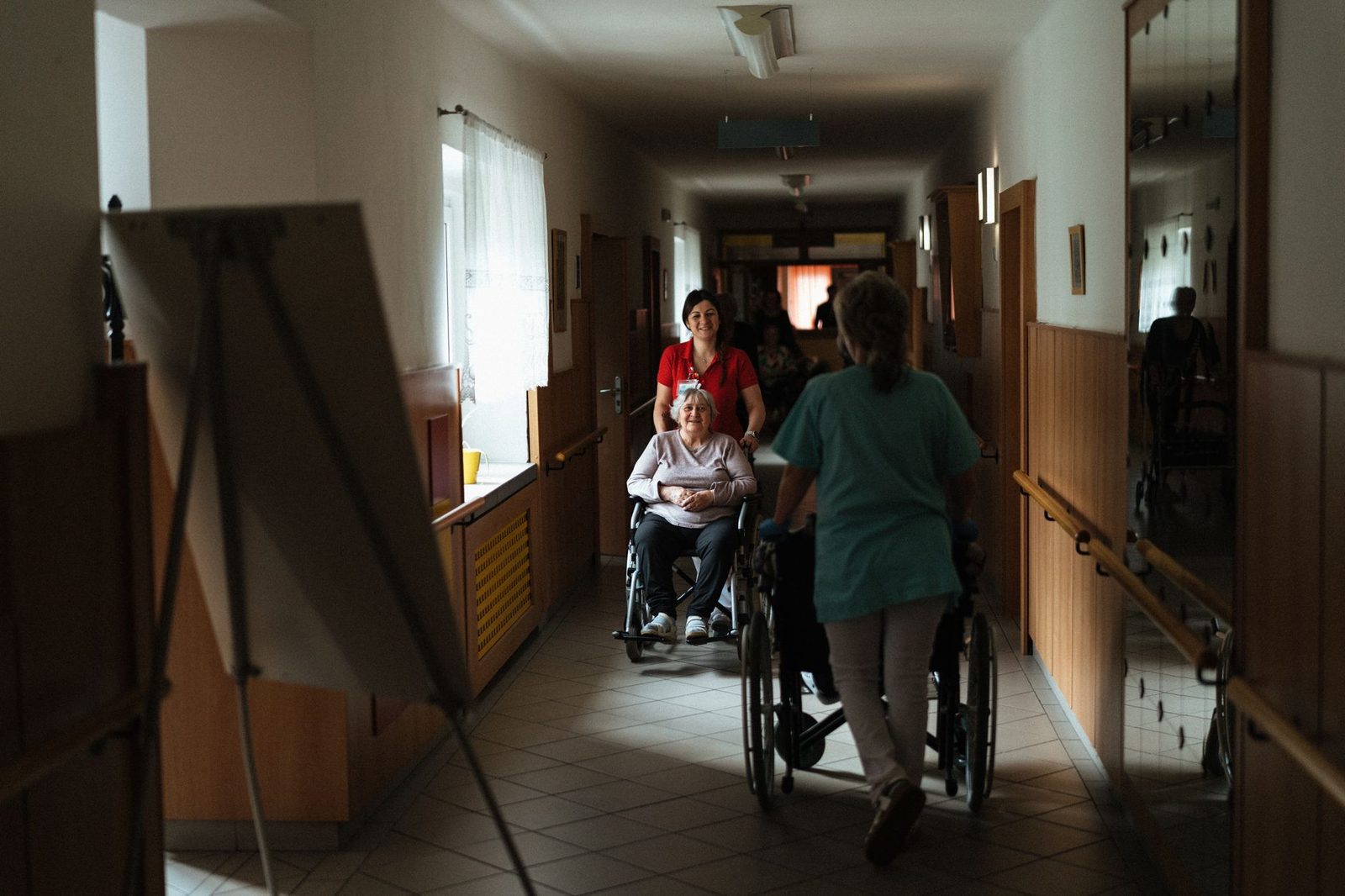
Neglect usually falls into four areas: basic needs, medical care, emotional and social needs, and supervision. Each one can cause harm on its own. They often overlap.
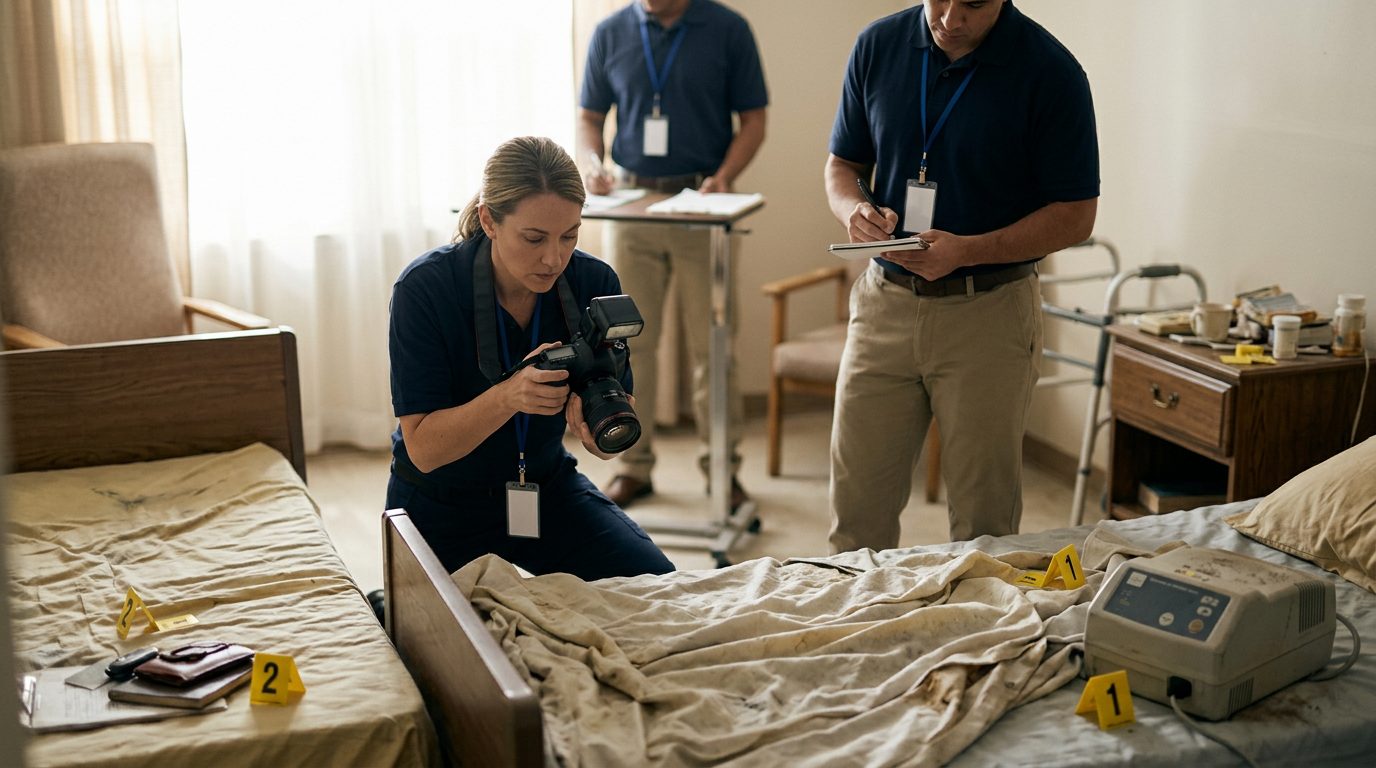
Neglect of basic needs includes too little food or fluid, poor hygiene, soiled bedding, untreated incontinence, and unsafe or unclean rooms. A resident left in wet clothes for long periods is an example.
Medical neglect covers missed or wrong medications, delayed treatment, failure to call a physician, and ignored changes in condition. Small problems that go unnoticed can become serious ones.
Emotional and social neglect includes long periods of isolation, requests for help that go unanswered, and little meaningful contact with staff. A withdrawn resident who is ignored is at real risk.
Supervision neglect covers falls, wandering, and injuries that happen because staff did not watch a resident who needed watching. Many falls fall into this group.
Passive neglect versus abuse
Passive neglect is a failure to act. Abuse involves intentional harm. Federal survey guidance describes abuse as conduct that causes physical harm, pain, or mental anguish. It also covers deprivation of needed goods or services (CMS State Operations Manual, Appendix PP).
Passive neglect looks like a call bell left unanswered or a repositioning schedule that is not followed. Abuse looks like hitting, restraining, or exploiting a resident.
The two can overlap. Both can support a claim, depending on the facts. A facility can answer for neglect by its staff when those staff were acting in their jobs.
Many families hold off on raising a concern. They think neglect must be on purpose. A failure to act can still harm a resident, and it still matters.
Warning signs families may notice
Watch for pressure sores, unexplained weight loss, repeated falls, poor hygiene, and sudden changes in mood. Write down what you see and when you see it.
- Pressure sores, especially on the heels, hips, tailbone, and shoulder blades
- Weight loss, dehydration, dry mouth, or a loved one who seems weaker
- Repeated falls, fractures, or bruises with vague explanations
- Poor hygiene, strong odor, dirty clothing or bedding, and untreated infections
- Sudden withdrawal, fear of staff, or new depression or agitation
Many of these signs can also have medical causes. A physician evaluation helps sort out what is happening.
Your loved one has rights to their records. A resident can get a current explanation of diagnosis and treatment in understandable language. A resident can also inspect and copy medical records, unless medically contraindicated. The facility may charge a fee, but it cannot exceed actual cost (O.C.G.A. § 31-8-108). Ask for records early, and ask in writing.
Is it hard to prove nursing home neglect?
It can be, and how hard it is depends on the facts. Most key proof sits in the facility’s own files. Good notes and quick requests matter.
Records that usually matter include:
- Medical charts and care plans
- Medication logs
- Staffing and shift records
- Incident reports
- Photos and visitor notes
A written timeline kept by family can help. Note dates, what you saw, what staff said, and who you spoke with.
Oversight records can add context. The Georgia Department of Community Health describes state oversight of nursing homes. It also explains how residents or others can report concerns about safety or care. Medicare Care Compare provides federal nursing-home quality information, including inspection ratings.
A negligence claim depends on the facts of each case. Did the facility owe a duty of care? Did it fail to meet that duty? Did that failure cause harm?
Can you sue a nursing home for negligence?
Yes, a resident harmed by neglect may have a claim against the facility. Georgia law allows a person harmed by a facility’s violation of resident rights to bring a cause of action for damages (O.C.G.A. § 31-8-126).
If neglect causes a death, Georgia’s wrongful death law may allow a claim. A surviving spouse may recover the full value of the life of the decedent, as shown by the evidence. If there is no surviving spouse, a child or children may recover it (O.C.G.A. § 51-4-2). Georgia’s definition of homicide includes death from criminal or other negligence (O.C.G.A. § 51-4-1).
When no one is entitled to sue, the administrator or executor may bring the action for the next of kin. The same statute lets the personal representative recover funeral and medical expenses (O.C.G.A. § 51-4-5).
Time limits matter. Georgia sets a two-year limit for actions for injuries to the person (O.C.G.A. § 9-3-33). Other deadlines can apply to other claims. Because the clock keeps running, early review matters.
This section explains how these claims generally work. It is not advice about your own situation.
Not sure what your next step is?
Talk it through with our team — the first consultation is free, confidential, and carries no obligation.
Talk with Slam Dunk Attorney about a possible neglect concern
If you think someone you love is being neglected, you may feel scared, guilty, or unsure of your next step. You did not choose this situation, and you do not have to sort it out alone.
Common questions
What constitutes neglect in a nursing home?
Neglect is a failure to give a resident the care, supervision, or attention they need. It can be intentional or careless.
What are common signs of nursing home neglect?
Pressure sores, unexplained weight loss, repeated falls, poor hygiene, and sudden withdrawal are common warning signs.
Is there a time limit to act?
Georgia sets a two-year limit for certain injury claims, and other deadlines can apply. Early review helps you understand your options.
Slam Dunk Attorney is based in Duluth, Georgia, and handles nursing home abuse and wrongful death matters. Peter F. Jaraysi is the responsible lawyer for this page. Our team can talk through what you have seen and which records to keep. Our first consultation is free, confidential, and comes with no obligation to continue. You can reach out through our contact page when you are ready.
How our team supports families
Clear, compassionate guidance
Watching a loved one struggle is painful. We explain your options in plain language, at your pace.
Careful review of records
We help families gather and organize medical and facility records so that what happened can be understood.
Serving metro Atlanta and Georgia
Based in Duluth, Georgia, we assist families in Atlanta, Lawrenceville, Johns Creek, Alpharetta, Marietta, Norcross, Kennesaw, Dunwoody and throughout the state.
Free, confidential first consultation
Your initial consultation is free, confidential and without obligation to continue.
Document what you notice
If you see signs of neglect, write down dates, what you observed, and the names of staff involved. Keep copies of any records you receive. Careful notes can be helpful when you speak with a lawyer.
Common warning signs of nursing home neglect
Physical changes
Pressure sores, unexplained weight loss, dehydration, or repeated falls can point to care that is not being provided properly.
Hygiene and living conditions
Poor personal hygiene, soiled bedding, unsanitary rooms, or spoiled food may signal that basic needs are being overlooked.
Medical and medication gaps
Missed medications, untreated infections, or delayed medical attention are important warning signs to raise promptly.
Emotional and behavioral shifts
Sudden withdrawal, fear of certain staff members, agitation, or depression may reflect a resident who is not getting the attention they need.