
Wrongful Death
How Hard Is It to Win a Wrongful Death Lawsuit in Georgia?
Understand the legal standard, what you must prove, and how Georgia law affects your case.
By Peter F. Jaraysi · Published October 01, 2026
How Hard Is It to Win a Wrongful Death Lawsuit in Georgia?
Winning a wrongful death lawsuit isn’t as simple as proving someone made a mistake—you must prove four specific legal elements, and the strength of your evidence determines your realistic chances. Most wrongful death cases settle before trial rather than going to a jury verdict, and the outcome depends entirely on the facts of your situation, not on any guaranteed result.
If someone you loved died because of another person's negligence, you're likely asking whether pursuing a claim makes sense—and families in exactly that position reach out to us regularly to understand their options. Talk it through with our team — the first consultation is free, confidential, and carries no obligation.

What “Winning” Means in a Wrongful Death Lawsuit
In Georgia, “winning” a wrongful death case means recovering compensation for your family’s losses through either a settlement agreement or a court judgment—it doesn’t necessarily mean a trial verdict. The vast majority of wrongful death cases never reach a jury; instead, families and defendants resolve them through negotiation, often with the help of mediation. When you do win, you’re proving your case by a standard called the preponderance of the evidence, which means “more likely than not”—a much lower burden than the “beyond a reasonable doubt” standard used in criminal cases. This lower standard makes civil wrongful death claims more achievable than criminal prosecutions for the same death, but it doesn’t make them automatic.
The Core Elements You Must Prove
Every viable wrongful death claim rests on four legal pillars. If you can’t establish all four, your case will fail—even if the death was tragic and someone behaved carelessly.
Duty of care: The defendant owed a legal obligation to protect the deceased from harm. In Georgia, this duty exists in nearly every scenario—drivers owe a duty to other road users, property owners owe a duty to visitors, employers owe a duty to employees, and dog owners owe a duty to the public. The specific nature of the duty depends on the relationship and circumstances.
Breach of duty: The defendant failed to meet that obligation through negligence, recklessness, or intentional wrongdoing. A breach might be a traffic violation, failure to maintain safe premises, neglect in a nursing home, or failure to control a dangerous animal. You must show the defendant’s conduct fell below what a reasonable person would have done in the same situation.
Causation: The defendant’s breach directly caused the death. This is often the hardest element to prove. You must establish not just that the defendant’s actions were negligent, but that those specific actions led to the death—not some other factor, medical condition, or unforeseeable event. For example, in a car accident, you’d need to show the defendant’s reckless driving caused the collision that killed your loved one, not a pre-existing heart condition that happened to occur at the same time.
Damages: Your family suffered measurable losses as a result of the death. Damages include funeral and medical expenses, lost income the deceased would have earned, loss of companionship and emotional support, and in some cases, punitive damages if the defendant’s conduct was especially egregious. You must be able to quantify these losses, at least in part.
Factors That Affect Your Chances
Not all wrongful death cases are equally strong. Several factors influence whether you’re likely to reach a favorable settlement or succeed at trial.
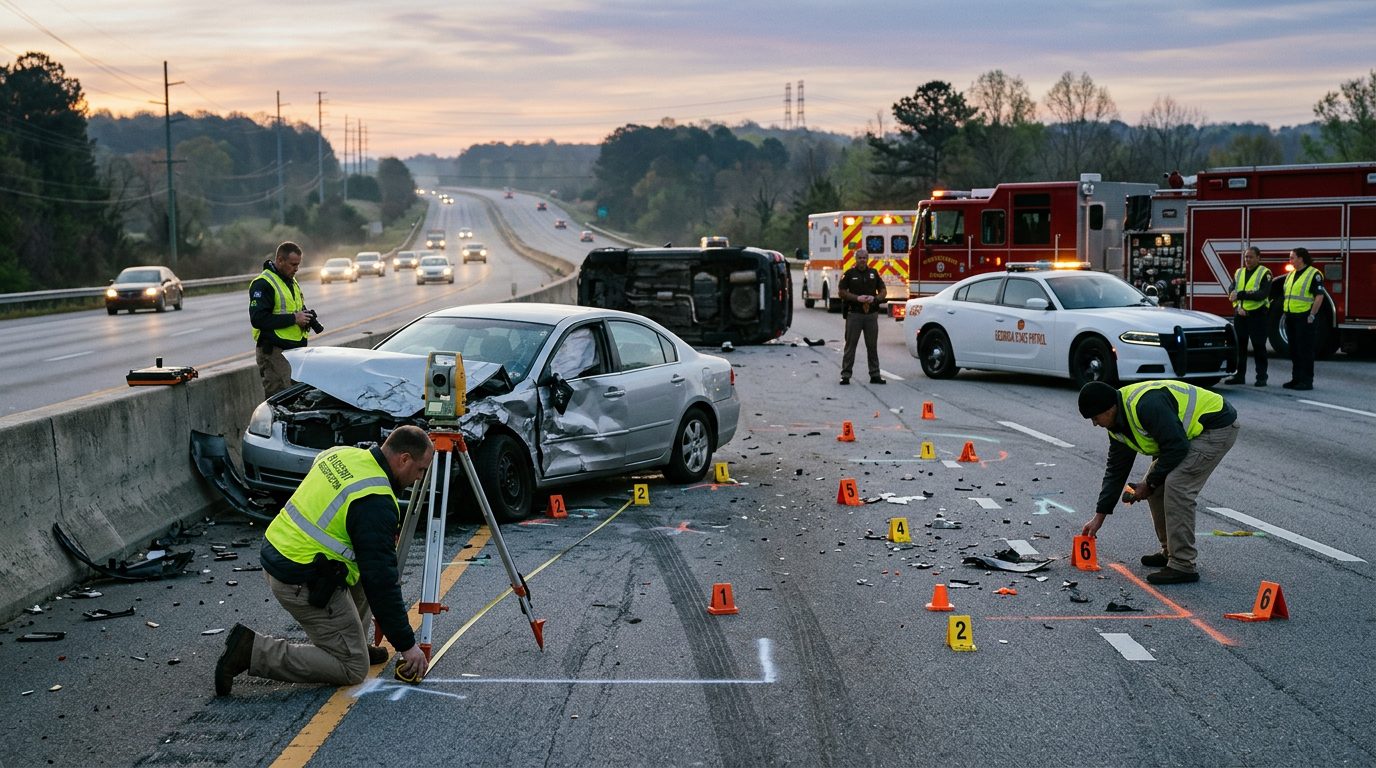
Strength of evidence is paramount. Clear documentation—accident reports, medical records, photographs, video footage, witness statements—makes your case significantly stronger. Expert witnesses, such as accident reconstructionists in car crashes or medical examiners in nursing home cases, can help establish causation and credibility. Weak evidence, conflicting witness accounts, or gaps in documentation make settlement and trial success much harder.
Liability clarity matters enormously. Cases where the defendant’s fault is obvious—such as a driver running a red light and causing a fatal crash, or a nursing home’s documented failure to provide required care—are generally much stronger than cases involving disputed responsibility or shared fault. If multiple parties bear some responsibility, the case becomes more complex and your recovery may be reduced.
Georgia’s comparative fault rule can limit your recovery. Under Georgia law, if the deceased bore any percentage of responsibility for the incident, your family’s damages award is reduced by that same percentage. For example, if a jury finds the deceased 20% at fault and the defendant 80% at fault, your family recovers only 80% of the total damages awarded. This rule makes cases involving any shared fault more difficult to value and settle.
The defendant’s resources affect whether a judgment can actually be collected. A defendant with robust insurance coverage or significant assets is far more likely to pay a judgment than one without. Even if you win, collecting from an uninsured or judgment-proof defendant may be impossible.
Jurisdiction and local law shape the case. Georgia’s specific wrongful death statutes, court rules, and the practices of judges and juries in your county all influence strategy, settlement value, and trial prospects. A local attorney familiar with these factors can better advise you on realistic outcomes.
Quality of legal representation directly impacts your chances. An experienced wrongful death attorney knows how to investigate thoroughly, identify and retain the right experts, anticipate defense arguments, and present evidence persuasively. Poor representation can sink even a strong case.
Common Wrongful Death Scenarios in Georgia
Wrongful death claims arise in many contexts, and each presents its own evidentiary challenges.
Car, truck, and motorcycle accidents are among the most common. Negligent driving, speeding, reckless behavior, or traffic violations cause fatal crashes. Proving liability is often straightforward if police reports document a violation, but causation can be complicated if multiple factors contributed—mechanical failure, road conditions, or the deceased’s own driving.
Dog bites leading to death are rare but devastating. You must prove the owner knew or should have known the dog was dangerous and failed to control it. This requires evidence of prior incidents, warnings, or the dog’s known aggressive tendencies.
Unsafe property conditions—slip and fall, negligent security, or hazardous premises—require showing the property owner knew or should have known of the danger and failed to warn or remedy it. Proving the owner’s knowledge can be the hardest part.
Nursing home abuse or neglect involves proving the facility failed to provide required care, supervision, or medical attention, and that failure directly caused death. Medical expert testimony is usually essential.
What Makes a Wrongful Death Case Difficult
Beyond the four required elements, several practical challenges make wrongful death cases harder to win.
Proving causation is the most common stumbling block. Death often results from multiple factors. You must isolate the defendant’s conduct as the direct cause, not merely a contributing circumstance. In a car accident, the defendant’s recklessness caused the crash, but did the crash cause the death, or did a medical condition or delay in emergency care? Defendants often argue that some other factor—not their conduct—was the true cause.
Defending against comparative fault complicates recovery. If the deceased had any role in the incident—jaywalking before being hit by a car, for example, or failing to follow nursing home instructions—the defendant will argue the deceased bore responsibility. Even a small percentage of fault reduces your award.
Quantifying non-economic losses is inherently subjective. How much is the loss of a spouse’s companionship worth? A parent’s guidance? A child’s future presence in the family? Juries and settlement negotiators struggle with these questions, and defendants often argue for minimal amounts.
Defendant disputes add time and uncertainty. The at-fault party may deny liability entirely, claim the death was unforeseeable, or argue that emergency responders’ actions—not their negligence—caused the death. Resolving these disputes requires investigation, expert testimony, and often litigation.
Time and cost are real burdens. Wrongful death cases often require multiple expert witnesses, extensive discovery, and years of litigation. Families already grieving must endure a lengthy legal process, and attorney fees and costs can be substantial—though many wrongful death attorneys work on contingency (meaning they’re paid only if you recover).
Not sure what your next step is?
Talk it through with our team — the first consultation is free, confidential, and carries no obligation.
Is a Wrongful Death Lawsuit Worth It?
Whether pursuing a wrongful death claim makes sense depends on your specific circumstances and what matters most to your family.
Financial recovery can be substantial. Funeral expenses, medical bills, lost income, and support for surviving dependents add up quickly. A successful claim can provide financial security for your family and cover costs you couldn’t otherwise afford.
Non-financial value is equally important for many families. Holding the responsible party accountable, getting answers about what happened, and forcing a public acknowledgment of negligence can bring a sense of justice and closure that money alone cannot. Some families pursue claims primarily for these reasons.
Each family’s situation is unique. What matters to you—whether financial recovery, accountability, or answers—should guide your decision. An experienced attorney can help you weigh these factors and evaluate whether your specific case justifies the time, emotional toll, and expense of litigation.
How Long Does a Wrongful Death Case Take?
Timeline expectations vary widely depending on case complexity and whether parties reach agreement.
Settlement negotiations may resolve a case within months to a year or two, especially if liability is clear and damages can be agreed upon relatively quickly. Many families prefer settlement because it’s faster, more predictable, and avoids the stress of trial.
Litigation can extend several years if the case proceeds to trial. Discovery (exchanging evidence), expert reports, motions, and court schedules all add time. Even after trial, appeals can extend the process further.
Early evaluation by an attorney familiar with wrongful death cases can give you a realistic sense of what to expect in your situation. Factors like evidence availability, defendant cooperation, and court backlog all affect timeline.
Next Steps If You’re Considering a Wrongful Death Claim
If you believe your loved one’s death was caused by another person’s negligence, taking these steps can help clarify your options.
Gather documentation. Collect medical records, the death certificate, accident or incident reports, witness statements, photographs, and any communications with the defendant or their insurance company. This documentation forms the foundation of your case.
Understand Georgia’s deadline. Wrongful death claims in Georgia must generally be filed within two years of the date of death. After that, your claim is barred by the statute of limitations and cannot be pursued. Don’t delay.
Consult with an attorney experienced in wrongful death. A free case review can clarify whether the facts support a viable claim, what evidence you’ll need, and what your case might be worth. An attorney can also explain Georgia’s specific wrongful death laws and how they apply to your situation.
Understand your options and realistic expectations. A good attorney will be honest about your case’s strengths and weaknesses, settlement prospects, litigation risks, and realistic timelines. They should never promise a specific outcome or dollar amount.

Frequently Asked Questions
What is the burden of proof in a wrongful death case?
You must prove your case by a preponderance of the evidence—meaning it’s more likely than not that the defendant caused the death through negligence or wrongful conduct. This is a lower standard than “beyond a reasonable doubt” in criminal cases.
Can the deceased’s own negligence reduce my recovery?
Yes. Under Georgia’s comparative fault rule, if the deceased bore any percentage of responsibility, your family’s damages award is reduced proportionally.
How long do I have to file a wrongful death claim in Georgia?
You generally have two years from the date of death to file a wrongful death lawsuit in Georgia. After that deadline, your claim is barred.
Do wrongful death cases always go to trial?
No. Most wrongful death cases settle before trial through negotiation or mediation. Settlement is often faster and more predictable than trial.
What damages can I recover in a wrongful death case?
You can recover economic damages (funeral costs, medical bills, lost income) and non-economic damages (loss of companionship, emotional suffering). In cases involving gross negligence or intentional conduct, punitive damages may also be available.
Do I need an expert witness in a wrongful death case?
In most wrongful death cases, expert witnesses—such as accident reconstructionists, medical examiners, or safety specialists—are necessary to establish causation and strengthen your case.
If someone you loved died because of another person’s negligence, you’re likely asking whether pursuing a claim makes sense—and families in exactly that situation reach out to us regularly to understand their options. We can review your circumstances, explain the legal elements you’d need to prove, and give you an honest assessment of your case’s viability and likely path forward. Contact us for a free consultation to discuss what happened and what comes next.
What You Must Prove in a Georgia Wrongful Death Case
Burden of Proof
You must prove your case by a preponderance of the evidence—meaning it's more likely than not that the defendant caused the death through negligence or wrongful conduct. This is a lower standard than 'beyond a reasonable doubt' used in criminal cases.
Negligence or Wrongful Conduct
You must show that the defendant owed a duty of care to the deceased, breached that duty, and that breach directly caused the death. The defendant's actions or failure to act must be the reason the death occurred.
Causation
There must be a clear link between what the defendant did (or failed to do) and the fatal injury or condition. Proving causation can be complex and often requires medical or expert testimony.
Damages
You must demonstrate the losses your family suffered—including medical expenses, funeral costs, lost income, and the loss of companionship and support the deceased would have provided.
Comparative Negligence in Georgia
Georgia law allows recovery even if the deceased was partly at fault. However, if the deceased was 50% or more responsible for their own death, you cannot recover. If the deceased was 49% or less at fault, your recovery is reduced by that percentage. This rule can significantly affect the outcome of your case.
Factors That Affect the Difficulty of Your Case
Evidence Quality
Strong evidence—police reports, medical records, witness statements, and expert testimony—makes your case stronger. Weak or conflicting evidence makes it harder to prove negligence.
Defendant's Liability
If the defendant's fault is clear and undisputed, your case is simpler. If liability is contested or unclear, you'll need to work harder to prove negligence.
Insurance and Resources
Defendants with insurance or significant assets may fight harder and have more resources to defend themselves. This can make settlement negotiations more complex.
Type of Incident
Some cases are more straightforward than others. A clear car accident with police documentation may be easier to prove than a nursing home neglect case, which often requires expert medical testimony.
Common Wrongful Death Scenarios We Handle
Car, Truck & Motorcycle Accidents
Fatal crashes caused by reckless driving, speeding, impaired driving, or negligent operation. Police reports and traffic laws often make liability clear.
Pedestrian Accidents
Deaths involving pedestrians struck by vehicles. Witness testimony and traffic camera footage can be critical evidence.
Premises Liability & Slip and Fall
Fatal injuries on someone else's property due to unsafe conditions, inadequate maintenance, or failure to warn of hazards.
Nursing Home Abuse & Negligence
Deaths resulting from neglect, abuse, medication errors, or failure to provide proper care. These cases often require medical experts and facility records.
Dog Bites
Fatal attacks by dangerous dogs. Georgia's strict liability law for dog owners can make these cases more straightforward.
Negligent Security
Deaths caused by criminal acts that could have been prevented with adequate security measures, lighting, or staff.
Time Matters
Georgia law sets strict deadlines for filing wrongful death claims. Evidence can disappear, witnesses' memories fade, and the longer you wait, the harder your case becomes. Acting quickly preserves your legal rights and strengthens your position.