
Truck Accidents | Wrongful Death | Duluth, Georgia
Truck Wrongful Death Cases in Georgia: Understanding Fees and Costs
Families facing a sudden loss often have hard questions about money. Here is a plain-language guide to what a claim may involve and how to start the conversation.
By Peter F. Jaraysi · Published November 13, 2026
A tractor-trailer crash that kills someone you love leaves a family with funeral bills, hard questions, and insurance calls that start fast. One practical question comes up early: what does a wrongful death attorney cost? A contingency fee is one common way these cases are paid. The fee is a share of what is recovered, not an hourly bill. The first consultation with our firm is free, confidential, and carries no obligation to continue.
What a Truck Accident Wrongful Death Claim Is and Who It Is For
A truck accident wrongful death claim is a civil lawsuit that surviving family members bring after a death caused by another party’s negligence. It is separate from any criminal case. Its purpose is to compensate the family.
Georgia law sets out who may recover. A surviving spouse may recover for the homicide of a spouse or parent. If there is no surviving spouse, a child or children may recover (O.C.G.A. § 51-4-2).
If no one is entitled to sue under that section, the administrator or executor may bring the action for the next of kin (O.C.G.A. § 51-4-5).
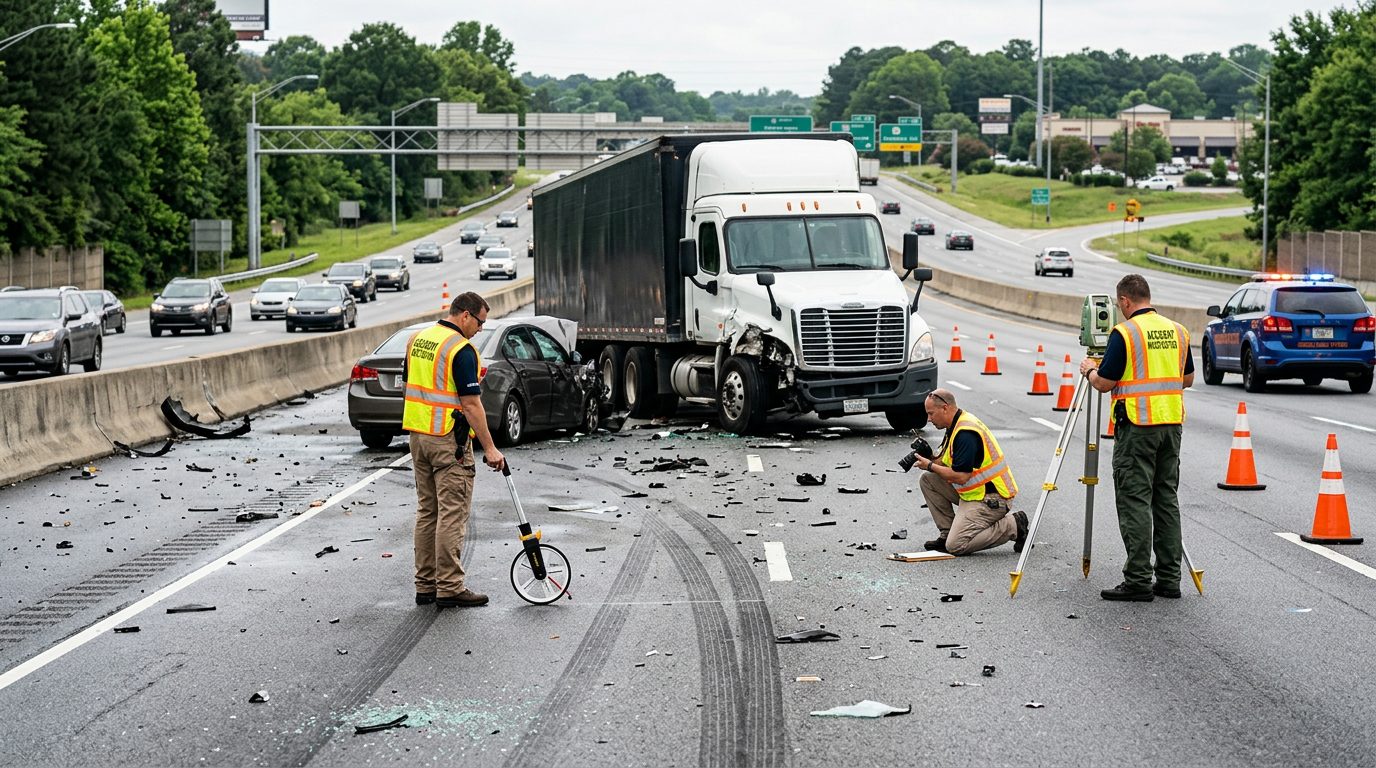
This claim fits when a tractor-trailer, semi-truck, box truck, delivery truck, or dump truck is involved in a fatal collision. These commercial carriers operate under federal safety rules. Those rules create records that ordinary car crash cases often lack.
If a tractor-trailer crash took someone you love, you don't have to sort out the claim and the bills alone. Request a free consultation and we'll talk through your family's options. Talk it through with our team — the first consultation is free, confidential, and carries no obligation.

What a Truck Wrongful Death Case Covers
Potentially liable parties can include the driver, the motor carrier, the vehicle owner, a leasing company, maintenance contractors, cargo loaders, or a freight broker. The right list depends on the facts.
Georgia makes the jury assign a percentage of fault to everyone who contributed. Each liable person pays only its own share. Damages are not joint, so one defendant does not pay another’s share (O.C.G.A. § 51-12-33).
When a death results from a crime or from criminal or other negligence, the personal representative of the deceased can recover funeral, medical, and other necessary expenses resulting from the injury and death (O.C.G.A. § 51-4-5).
Trucking cases also turn on carrier records:
- Hours-of-service logs. Carriers must have drivers record their duty status for each 24-hour period, including total miles driven that day (49 C.F.R. § 395.8). All entries about a driver’s duty status must be legible and made by the driver.
- Driver qualification files. Under 49 C.F.R. § 391.51, each motor carrier must maintain a driver qualification file for each driver it employs. Each file must be retained for as long as the driver is employed by that motor carrier and for three years thereafter, except as provided in paragraph (d) of the section, under which certain records may be removed from the file three years after the date of execution.
- Maintenance records. Carriers must inspect, repair, and maintain their vehicles (49 C.F.R. § 396.3).
An employer that admits it answers for its driver can still face claims for its own negligent hiring, training, and supervision (Quynn v. Hulsey).
How the Process Works, Step by Step
The process moves from a free consultation to investigation, a written demand, and, if needed, a lawsuit. Here is what to expect:
- Free, confidential consultation. We review the crash, your questions, and any police report or records you already have.
- Preservation letters. Early letters ask the carrier and other parties to keep electronic logs, dash camera footage, maintenance files, and driver records. Some records are kept only for set periods, so timing matters.
- Testing review. After a qualifying crash, federal rules require the carrier to test surviving drivers for alcohol and drugs as soon as practicable. Alcohol testing stops after eight hours (49 C.F.R. § 382.303).
- Investigation. This can include scene review, medical and billing records, and witness interviews.
- Claim presentation. A written demand, backed by the evidence, goes to the insurers.
- Filing suit. If a fair resolution is not reached, a lawsuit may be filed. Georgia’s general deadline for claims for injuries to the person is two years after the right of action accrues (O.C.G.A. § 9-3-33).
Cases can resolve through negotiation, mediation, or trial. Timelines vary with the complexity of the case.
Wrongful Death Attorney Pricing: Fees, Costs, and What the Family May Still Owe
A contingency fee is a percentage of any money recovered. The family may still be responsible for court costs and case expenses. Read these two points together, because both affect what the family keeps.
Our fees work on a contingency basis, and the terms are set out in a written agreement. The client may still be responsible for court costs and case expenses. These can include filing fees, medical and crash records, depositions, and witness fees, as the written agreement describes.
Ask our team to explain how fees and case costs work during your free, confidential consultation. Ask what the family would keep after the fee and costs, and what is spent on the case. The first consultation is free, confidential, and carries no obligation to continue.
Why Families Work With Our Firm
Our firm is a personal injury law firm based in Duluth, Georgia. We handle wrongful death, truck accident, and catastrophic injury claims for clients across metro Atlanta and Georgia.
Our lawyers include Peter F. Jaraysi and Brian D. Wright. Our team of assistants and office staff supports them.
Our work on these cases focuses on records. Many families know about the crash report. Our team also looks at the carrier-side records described above, including logs, driver files, testing records, and maintenance files. These records can answer questions a police report does not.
Factors That Shape the Size of a Wrongful Death Recovery
The size of any recovery depends on the facts, and no lawyer can predict the amount. A typical review looks at the decedent’s age, earnings, and work history. It also looks at the number of dependents and each family member’s relationship to the person who died.
Insurance matters too. The number of liable parties, and the coverage each one carries, affects what may be available.
Fault matters as well. Georgia reduces damages by the plaintiff’s percentage of fault. A plaintiff who is 50 percent or more responsible may not receive any damages (O.C.G.A. § 51-12-33).
Records matter. Logs and other carrier records that do not line up with each other can be important evidence. Claims that a carrier should have known a driver was unfit are harder. Negligent entrustment requires actual knowledge that the driver was incompetent or habitually reckless (Zaldivar v. Prickett). Showing the carrier should have known is not enough (Western Industries v. Poole).
Not sure what your next step is?
Talk it through with our team — the first consultation is free, confidential, and carries no obligation.
Frequently Asked Questions About Truck Accident Wrongful Death Claims
These short answers cover common questions about filing and fees.
Who can file a wrongful death claim in Georgia?
A surviving spouse may file. If there is no surviving spouse, a child or children may file.
How long do families have to file?
Georgia’s general deadline for injury claims is two years after the right of action accrues (O.C.G.A. § 9-3-33; Kenneth B. Cameron v. Jmp Pizza, Inc (2026)). An early call gives the case time to be reviewed before that deadline.
Is there a charge for the first consultation?
No. The first consultation is free, confidential, and carries no obligation to continue.
Does the family owe anything if no money is recovered?
The family may still be responsible for court costs and case expenses, as the written agreement describes.
What if we are not sure the driver caused the crash?
A review of the crash report, carrier records, and other evidence can help answer that question.
What should we bring to the consultation?
Bring the police or crash report, funeral and medical bills, the death certificate, the decedent’s work information, and any photos, messages, or insurance letters.

Talk to a Duluth Wrongful Death Lawyer About Your Family’s Case
If a commercial truck crash has left your family facing a death, the next step is a conversation about your facts. Insurance calls, records requests, and funeral decisions can all arrive at once. You can request a free consultation or call us for a free case review. The call is confidential and carries no obligation.
Peter F. Jaraysi is the responsible lawyer for this page. Contact details are on our contact page. This page is general information, not a promise of any result.
How our firm approaches a wrongful death case
Compassion first
We understand that a death in the family is more than a legal matter. We listen, answer your questions directly, and give you time to decide what is right for your family.
Clear explanations
We explain how fees, court costs and case expenses work in writing, before you decide whether to move forward, so there are no surprises.
Responsive communication
Our team keeps you informed about the status of your case and makes sure your calls and questions get a timely response.
Serving metro Atlanta and Georgia
From our Duluth office, we represent families across metro Atlanta and throughout Georgia, including Lawrenceville, Johns Creek, Alpharetta, Marietta, Norcross, Kennesaw and Dunwoody.
Ask about costs before you commit
Our first consultation is free, confidential and comes with no obligation to continue. Even when a case moves forward, you may still be responsible for court costs and case expenses. Ask us to walk you through every cost in full before you decide.
Common questions families ask us
What does the first meeting involve?
A free, confidential consultation where we listen to what happened, answer your questions, and explain the next steps. You are under no obligation to continue.
What costs might come up?
Court costs and case expenses are separate from attorney fees. We explain what these may include so you understand them before anything is decided.
How are fees explained?
We discuss our fee arrangement openly and in plain language, so you know what to expect at every stage of the process.
Can we talk if we are not sure yet?
Yes. Many families reach out while they are still gathering information. Our team is available to help you think through your options.