
Nursing Home Abuse | Duluth, Georgia
Signs a Nursing Home May Not Be Providing Safe Care
A plain-language guide to the warning signs Georgia families should know, and how to raise concerns with the facility and with our team.
By Peter F. Jaraysi · Published October 17, 2026
What are the signs that a nursing home is in bad condition? They usually show up in four places: on the resident’s body, in the resident’s mood, in the room, and in how staff and the facility respond to questions. No single sign proves anything. A pattern of signs, though, is a reason to pay closer attention.
This guide explains what to look for, how to write it down, and where Georgia families can take their concerns. If you’re reading this, you may be worried about a parent, grandparent or other loved one in a nursing home. You may still be gathering information before you decide what to do. That’s a sensible place to start.
Why the early signs of a bad nursing home are easy to miss
Early signs are easy to miss because they look like small changes from one visit to the next. A bruise here, a thinner face there, a quieter voice on the phone. It’s common to wonder whether you’re reading too much into it.
A single change can have a harmless cause. A resident may have a cold, a new medicine, or a poor night’s sleep. Patterns over time matter more than one observation. Write down what you see, and watch whether it repeats or gets worse.
The signs below are warning signals to document and discuss. They are not proof that anyone did something wrong. Only a review of the full records can show what caused a change. For a fuller explanation of what counts as neglect, read our nursing home neglect guide.
If a recent visit left you uneasy about your loved one's care, you don't have to work out what it means alone; our team can talk it through with you. Talk it through with our team — the first consultation is free, confidential, and carries no obligation.
Physical signs on the resident’s body
The clearest early signs are often on the body. They can be seen, recorded and discussed with staff.
- Pressure sores (bedsores) on the back, hips, heels or tailbone, especially sores that look worse from one visit to the next.
- Bruises, cuts, burns, fractures or head injuries that staff can’t explain, or whose explanation keeps changing.
- Weight loss, dehydration, dry mouth or cracked lips.
- Poor hygiene, such as unwashed hair, dirty nails or soiled clothing.
The CMS State Operations Manual explains how that definition works for nursing homes.
Note the date, the location of any injury and what the resident says about it. Take photos only with permission.
Changes in mood, behavior and alertness
A sudden change in mood or alertness is a sign to ask questions. This is especially true when the change is new and out of character.
- Sudden withdrawal, fear, agitation or crying, especially around certain staff members.
- New sleepiness, confusion or a clear drop in alertness.
- A resident who stops joining meals, activities or visits they used to enjoy.
- Reluctance to speak freely when staff are nearby.
Note these changes without assuming the cause. A change in mood can come from illness, medicine, grief or a move. Medical notes help sort that out. If a resident seems suddenly less alert, tell the nurse on duty that day and ask that the doctor be told.
Problems with the room and daily living conditions
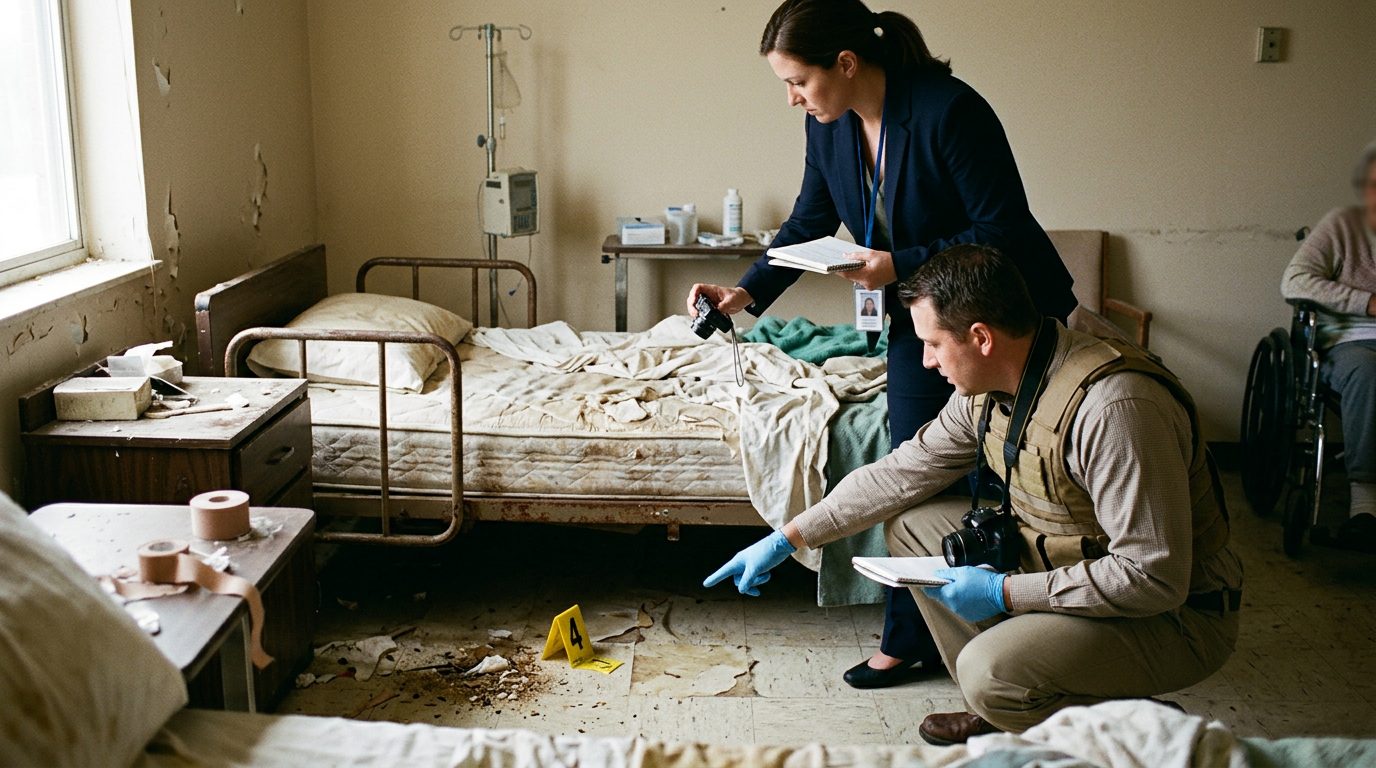
A room that is dirty, broken or hard to use shows that basic daily care may be slipping.
- Soiled bedding or clothing left for long periods, and lasting odors of urine or feces.
- Pests, unsanitary bathrooms, or spoiled food in the room.
- Broken beds, wheelchairs, call buttons or other equipment that stays broken.
- Call lights that go unanswered for long stretches, or residents left in bed or a chair for hours.
- No safe drinking water within reach, missed meals, or no help with eating.
Georgia law says each resident shall receive care that is adequate and appropriate. That care must be given with reasonable care and skill and in compliance with applicable laws and regulations. Under O.C.G.A. § 31-8-108, each resident of a facility is to receive care, treatment, and services that are adequate and appropriate, provided with reasonable care and skill, in compliance with applicable laws and regulations, without discrimination in quality based on the source of payment, with respect for the resident’s personal dignity and privacy, and with the goal of the resident’s return home or to another environment less restrictive than the facility. When a room or daily routine falls short, write down exactly what you saw.
Staffing and care-delivery warning signs
Staffing problems show up in how fast residents get help and how often the faces change.
- High staff turnover and frequent new faces, which makes steady care harder.
- Few aides on the floor during meals or shift changes.
- Slow responses to residents’ needs, and staff who look rushed or stretched thin.
- Care plans that aren’t followed, or that the resident and family never saw.
Under Georgia law, a resident or guardian may take part in planning the resident’s care. The facility must inform them of that right each time a substantial change in the treatment plan is made. Ask for a copy of the current care plan and ask when it was last reviewed.
Public data can help too. Medicare Care Compare publishes inspection ratings and facility compliance information for nursing homes.
Medication, medical care and hospital transfer red flags
Missed medications and slow medical responses suggest that clinical care isn’t being watched closely.
- Missed, late or incorrect medications, or doses that differ from what was prescribed.
- Signs of infection that go untreated, such as fever, wounds that get worse, or new coughing or trouble breathing.
- Delays in calling a doctor or sending a resident to the hospital when symptoms change.
- Repeated emergency room visits or hospital stays that follow a pattern of preventable problems.
Ask for the resident’s medication records and physician notes. Georgia law says each resident has the right to a significant health change being reported to people the resident chooses, within a reasonable time. A resident may also inspect and receive copies of medical records, unless medically contraindicated. The facility may charge a reasonable copying fee, and that fee may not exceed actual cost. Under Georgia law, each resident is to receive care, treatment, and services that are adequate and appropriate, provided with reasonable care and skill, in compliance with applicable laws and regulations, and with respect for the resident’s personal dignity and privacy.
Not sure what your next step is?
Talk it through with our team — the first consultation is free, confidential, and carries no obligation.
Signs the facility is not being open with families
A facility that answers questions directly and shares incident reports is easier to trust. One that doesn’t should raise concerns.
- Staff who are evasive, dismissive or defensive when you ask about an injury or change.
- Incident reports that are missing, late, or never shared with you.
- Pressure to keep concerns quiet, or a resident who says they were hurt and no one followed up.
Dates and written records are useful if you later need to review what happened. Georgia law allows a person who is aggrieved when a long-term care facility violates or fails to provide a residents’ right to bring a cause of action against the facility for damages and other relief the court deems proper. Under O.C.G.A. § 31-8-126, a person aggrieved because a long-term care facility violated or failed to provide a right granted under this article may bring an action against that facility for damages and other relief the court having jurisdiction deems proper, and failing to exhaust administrative or other relief does not bar that action.
What to do if you notice these signs
Start by writing down what you saw. Then ask the facility for answers in writing and report your concerns.
- Write down dates, times, what you saw or heard, and the names of staff involved. Take photos only with consent.
- Ask the facility, in writing, for an explanation and for the resident’s care records.
- Report your concerns to the facility’s administrator. For state oversight, the Georgia Department of Community Health explains how concerns about resident safety and care are reported.
- For abuse, neglect or exploitation of a vulnerable adult, the Georgia Division of Aging Services page explains how Georgia defines these terms and what to watch for.
If a resident is in immediate danger, call 911 first. If a loved one died or was seriously harmed, our wrongful death guide covers the next steps. Georgia sets filing deadlines for injury claims, so don’t wait to ask questions.
Talk with our team about what you are seeing
Many families reach this point after a visit that felt wrong. A parent seems to be declining, and you’re deciding what to do next. You may be asking whether to speak up, whether to request records, or whether to talk with a lawyer. Those are fair questions.
Slam Dunk Attorney is a personal injury law firm based in Duluth, Georgia. The firm represents people hurt in car, truck and motorcycle accidents, dog bites, unsafe properties, nursing home abuse and wrongful death across metro Atlanta and Georgia. Our team supports the work of attorney Peter F. Jaraysi.
Common questions about nursing home warning signs
Is one bruise a sign of neglect?
One bruise may have a harmless cause. Repeated or unexplained injuries deserve a written question to the facility.
Can I get a copy of my parent’s nursing home records?
A resident may inspect and receive copies of their medical records. The facility may charge a fee that does not exceed actual cost.
Who do I report a bad nursing home to in Georgia?
Start with the facility’s administrator. The Georgia Department of Community Health explains how to report concerns to the state.
Our first consultation is free, confidential and carries no obligation to continue. If a visit left you uneasy, you can contact our team to talk it through.
Disclaimer: This page is general information, not legal advice. Peter F. Jaraysi is the responsible lawyer for this page. Slam Dunk Attorney, Duluth, Georgia. Contact: https://slamdunkattorney.com/contact-us/
Warning Signs to Watch For
Unexplained Injuries
Bruises, cuts, fractures, or burns that are not clearly explained, or that appear again and again, deserve a direct question to the facility.
Weight Loss and Dehydration
Sudden weight loss, dry skin, or a resident who seems thirsty or underfed may signal problems with meals, assistance, or monitoring.
Bedsores and Poor Hygiene
Pressure sores, soiled bedding, or unwashed clothing can point to missed repositioning and care routines.
Changes in Mood or Behavior
Withdrawal, fearfulness, agitation, or reluctance to be near a particular staff member can be important signals to take seriously.
Missing Belongings or Money
Items or funds that disappear from a resident's room or account should be documented and reported.
Unsafe Conditions
Blocked exits, broken equipment, unsanitary rooms, or repeated falls suggest the facility may not be keeping residents safe.
How Our Team Can Help
Free First Consultation
Call or reach out to discuss what you have seen. The first consultation is free, confidential, and carries no obligation to continue.
Organized Review of Records
We help families gather and review care notes, incident reports, and medical records that may shed light on your loved one's care.
Clear, Plain-Language Updates
Our team explains each step in terms you can follow, so you always know where things stand.
A Focus on Your Loved One's Safety
We understand how difficult it is to question a facility that cares for someone you love, and we approach every case with empathy and respect.
If Someone Is in Immediate Danger
Call 911 or the facility's emergency line right away. Your loved one's safety comes first, and you do not need to finish gathering information before getting help.
Concerned About a Loved One? Speak With Our Team Today
Related practice areas
- Can You Sue an Employer for Wrongful Death in Georgia?