
Premises Liability & Slip and Fall
Is Premises Liability Hard to Prove? Georgia Law Explained
Understanding your rights when you're injured on someone else's property—and what it takes to hold them accountable.
By Peter F. Jaraysi · Published October 05, 2026
Premises liability cases are challenging to prove because the injured person—not the property owner—must establish four separate legal elements: that the owner owed a duty of care, breached that duty, directly caused the injury, and that you suffered measurable harm. Success depends on the specific facts of your situation, the quality of evidence preserved, and how Georgia’s comparative negligence rules apply to your case (O.C.G.A. § 51-12-33; Quynn v. Hulsey, 310 Ga. 473 (2020)).
What Makes Premises Liability Cases Challenging
Proving a premises liability claim requires more than showing you were hurt on someone else’s property. You must demonstrate that the property owner’s negligence—not accident, bad luck, or your own actions—caused your injury.
The burden of proof rests entirely on you, the injured person. The property owner doesn’t have to prove they were careful; you must prove they weren’t. Property owners and their insurance companies routinely dispute whether they knew or should have known about a hazard. If a wet floor existed for only five minutes before you fell, the owner may argue they had no reasonable opportunity to discover it. If it had been there for hours, the evidence points differently.
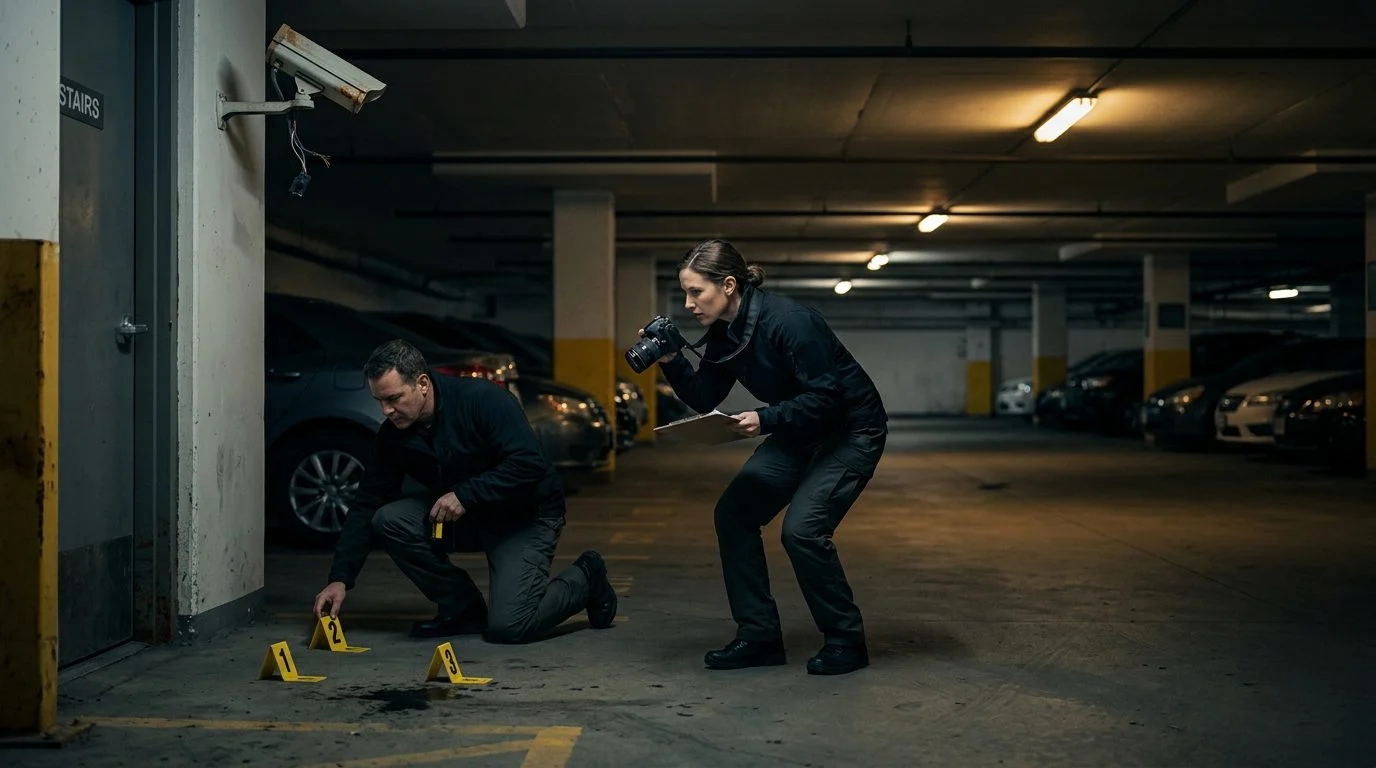
Timeline matters enormously. How long a hazard existed before your injury, whether anyone reported it, and whether the owner inspected the area all factor into whether negligence can be proven. Evidence also deteriorates quickly: hazards get repaired, witnesses’ memories fade, security footage is automatically deleted after weeks or months, and photographs taken at the scene may be the only visual proof that remains.
Not sure what your next step is?
Talk it through with our team — the first consultation is free, confidential, and carries no obligation.
The Four Elements You Must Prove
Under Georgia law, you must establish each of these four elements to hold a property owner liable:
Duty. The property owner owed you a legal duty of care. Under O.C.G.A. § 51-3-1 (Holston v. Aboebarensi, Inc. (2026)), a property owner must keep premises and approaches safe for invitees—people invited onto the property for business purposes, such as customers in a store or guests at a restaurant. The duty is lower for licensees (social guests), who receive a warning of known dangers but not active maintenance. Trespassers receive minimal protection. Your visitor status directly affects whether the owner owed you a duty and how high that duty was.
Breach. The owner failed to maintain safe premises or failed to warn you of a known dangerous condition. Breach means the owner either knew about the hazard or should have known about it through reasonable inspection, and did nothing to fix it or warn you.
Causation. The unsafe condition directly caused your injury. This seems straightforward but often becomes disputed. If you tripped on a step and fell, was the step itself defective, or did you simply miss seeing it? If you were bitten by a dog, did the owner know the dog was dangerous? Causation requires a direct link between the hazard and your harm.
Damages. You suffered measurable injury or loss. Damages include medical bills, lost wages, pain and suffering, and in severe cases, permanent disability or disfigurement. You must document these losses with medical records, pay stubs, receipts, and other evidence.
Common Types of Premises Liability Cases
Premises liability claims arise from many different situations:
- Slip and fall accidents on wet floors, uneven surfaces, or debris left on walkways
- Dog bites on the owner’s property when the owner knew or should have known the dog was dangerous
- Injuries from inadequate security or negligent security measures that failed to prevent assault or theft
- Unsafe conditions in rental properties or commercial spaces, including broken stairs, faulty railings, or poor lighting
- Nursing home neglect or abuse leading to injury, illness, or death
Each type of case requires proving the four elements, but the specific evidence and arguments differ.
What Evidence Strengthens a Premises Liability Case
Strong evidence is what separates a viable claim from a weak one. Collect and preserve:
- Photographs or video of the hazardous condition, taken as soon as safely possible after the injury
- Medical records documenting the injury, treatment, and ongoing care
- Witness statements from people who saw the condition before the accident or who witnessed the incident itself
- Maintenance and inspection records from the property owner, showing whether the area was regularly checked and repaired
- Prior complaints or incident reports about the same hazard, showing the owner knew or should have known about it
- Expert testimony about industry safety standards and whether the property met those standards
- Security footage from the property, if available, showing the condition or the accident itself
The absence of evidence can hurt your case. If no one took photographs of the hazard, witnesses cannot recall details, and the property owner has no maintenance records, proving what actually existed becomes much harder.
How Comparative Negligence Affects Your Claim
Georgia follows a modified comparative negligence rule under O.C.G.A. § 51-12-33 (Quynn v. Hulsey, 310 Ga. 473 (2020)). This means your recovery may be reduced if you were partially at fault for the accident—but there is a critical threshold: if you are 50 percent or more responsible for your injury, you cannot recover any damages at all (O.C.G.A. § 51-12-33; Quynn v. Hulsey, 310 Ga. 473 (2020)).
Property owners and their insurers frequently argue that you were careless. They may claim you weren’t paying attention, failed to notice an obvious hazard, were wearing inappropriate footwear, or were rushing. Your actions before the injury—what you were doing, where you were looking, how fast you were moving—become relevant to the case.
If evidence shows you were 40 percent at fault and the owner 60 percent at fault, you can recover 60 percent of your damages. If the split is 50-50, you recover nothing. This rule makes the comparative negligence argument a central battleground in many premises liability cases.
Are Premises Liability Cases Hard to Win?
Success depends on the specific facts. Some cases have clear evidence of negligence: a store owner ignored a spill for hours, a landlord failed to repair a known broken step, or a dog owner ignored prior complaints about an aggressive animal. Other cases are murkier. Did the property owner have a reasonable opportunity to discover the hazard? Was the condition truly unreasonably dangerous, or was it an ordinary part of the environment?
Property owners’ insurance companies investigate aggressively and often contest liability. They hire their own experts, interview witnesses, and build a defense. The outcome turns on who has the stronger evidence and the more persuasive narrative about what happened and why.
Not sure what your next step is?
Talk it through with our team — the first consultation is free, confidential, and carries no obligation.
How Long Does a Premises Liability Lawsuit Take?
Timeline varies widely. A straightforward slip-and-fall case with clear liability might settle within months. A complex case involving multiple injuries or disputed facts can take years.
Discovery—the phase where both sides exchange evidence—typically takes several months to over a year. Settlement negotiations may occur at any stage. If the case proceeds to trial, the process extends further. Under O.C.G.A. § 9-3-33 (Cameron v. JMP Pizza, Inc. (2026)), you generally have two years from the date of injury to file a lawsuit (O.C.G.A. § 9-3-33; Cameron v. JMP Pizza, Inc. (2026)). Missing that deadline bars your claim entirely.
Why You Should Not Delay
Evidence deteriorates quickly. The hazard may be repaired, eliminating the physical proof. Witnesses move away or forget details. Security footage is typically stored for only 30 to 90 days before being automatically deleted. The property owner’s maintenance records may be discarded.
The two-year statute of limitations is firm (O.C.G.A. § 9-3-33; Cameron v. JMP Pizza, Inc. (2026)). Courts do not extend it except in rare circumstances. If you wait too long, your right to sue vanishes regardless of the strength of your claim.
Early investigation by someone familiar with premises liability law preserves crucial details. Insurance companies move quickly too; having legal guidance early protects your interests and prevents you from making statements that could harm your case.
FAQ
What is the difference between an invitee, licensee, and trespasser in Georgia premises liability law?
An invitee is invited onto the property for business purposes (like a store customer) and receives the highest duty of care; a licensee is a social guest who receives a warning of known dangers; a trespasser receives minimal protection.
Can I recover damages if I was partially at fault for my slip and fall?
Yes, if you are less than 50 percent at fault under Georgia’s comparative negligence rule, but your recovery is reduced by your percentage of fault; if you are 50 percent or more at fault, you cannot recover anything (O.C.G.A. § 51-12-33; Quynn v. Hulsey, 310 Ga. 473 (2020)).
How long do I have to file a premises liability lawsuit in Georgia?
You generally have two years from the date of injury to file a lawsuit under Georgia law; missing this deadline bars your claim (O.C.G.A. § 9-3-33; Cameron v. JMP Pizza, Inc. (2026)).
What if the property owner says they didn’t know about the hazard?
The owner’s actual knowledge isn’t required; they are liable if they should have known about the hazard through reasonable inspection and maintenance of the property.
Does a “no trespassing” sign protect a property owner from liability?
No; property owners still owe a duty to avoid willful or wanton injury to trespassers, and signs do not eliminate that duty.
Next Steps
If you’ve been injured on someone else’s property in Georgia—whether from a slip and fall, dog bite, inadequate security, or unsafe conditions—the first step is understanding what evidence exists and what the law requires you to prove. Document everything you can safely preserve: photographs, witness names, medical records, and a detailed account of what happened.
If you’re navigating this after a recent injury, you’re likely still in the middle of a situation you didn’t choose. You don’t have to face it alone. Reach out to discuss your specific circumstances, what happened, and what the evidence shows so far. We can help you understand whether you may have a viable claim and what the next steps might look like.
The Three Categories of Visitors in Georgia
Invitees
You're invited onto the property for business purposes—like shopping at a store or dining at a restaurant. Property owners owe invitees the highest duty of care, including inspecting for hazards and warning of known dangers.
Licensees
You're a social guest or have permission to be there. Property owners must warn licensees of known dangers but have less obligation to inspect or maintain the property than they do for invitees.
Trespassers
You're on the property without permission. Property owners owe trespassers minimal duty, though they cannot intentionally harm them or set traps.
What You'll Need to Prove a Premises Liability Claim
The Property Owner Owed You a Duty
Your status as an invitee, licensee, or trespasser determines what duty the owner owed you. Most slip-and-fall cases involve invitees or licensees, where the duty is higher.
The Owner Breached That Duty
You must show the owner failed to maintain the property, failed to warn of a known hazard, or failed to inspect for dangers they should have discovered.
The Breach Caused Your Injury
There must be a direct connection between the owner's failure and your harm. For example, a wet floor that wasn't cleaned or marked led to your fall.
You Suffered Actual Damages
You must have real losses—medical bills, lost wages, pain and suffering—that resulted from your injury.
Comparative Fault in Georgia
Georgia follows a comparative negligence rule. If you were partially at fault for your injury—for example, you were distracted or ignored a warning sign—you may still recover damages, but your award will be reduced by your percentage of fault. However, if you are found to be 50% or more at fault, you cannot recover.
Common Premises Liability Scenarios
Slip and Fall
Wet floors, spilled liquids, ice, or debris that the owner knew about or should have discovered and failed to clean or warn about.
Inadequate Security
Injuries resulting from criminal acts on the property when the owner failed to provide reasonable security measures or warn of known dangers.
Unsafe Conditions
Broken stairs, poor lighting, uneven surfaces, or other structural defects that the owner neglected to repair or maintain.
Dog Bites
Injuries from a dog on the owner's property when the owner knew or should have known the dog was dangerous and failed to control or warn.
Evidence Matters
Proving premises liability often requires photographs of the hazard, witness statements, maintenance records, security footage, and medical documentation. The sooner you document the scene and your injuries, the stronger your case.
Why Premises Liability Cases Can Be Challenging
Timing and Notice
You must show the owner knew or reasonably should have known about the hazard. If a spill happened moments before your fall, proving the owner had time to discover it is harder.
Comparative Fault Arguments
Property owners and their insurers often argue you were careless—that you weren't paying attention or should have avoided the hazard. Georgia's comparative negligence rule means your recovery can be reduced.
Burden of Proof
You must prove your case by a preponderance of the evidence. This requires solid documentation, credible witnesses, and a clear causal link between the hazard and your injury.