
Wrongful Death Claims
When a Loved One Dies Due to Someone Else's Negligence
Understanding your legal rights and options in Georgia. Slam Dunk Attorney represents families across metro Atlanta and Georgia.
By Peter F. Jaraysi · Published September 23, 2026
Wrongful Death Claims in Atlanta and Metro Atlanta: Legal Framework & Process
A wrongful death claim in Georgia exists when someone dies as a result of another person’s or business’s negligence, recklessness, or intentional misconduct—and the deceased would have had a viable personal injury claim had they survived. This is a distinct legal action that allows the deceased’s family members and estate to recover damages for their loss. If you’re researching whether you have a claim after losing someone in the Atlanta area, understanding Georgia’s legal framework will help you know what steps come next.
Not sure what your next step is?
Talk it through with our team — the first consultation is free, confidential, and carries no obligation.

What Constitutes a Wrongful Death in Georgia
A wrongful death occurs when someone’s death is caused by the negligent, reckless, or intentional act of another person or entity. The key requirement is that the conduct causing death must be the same conduct that would have given the deceased a personal injury claim if they had survived instead of dying. This means the defendant doesn’t have to intend to cause death—negligence alone is enough.
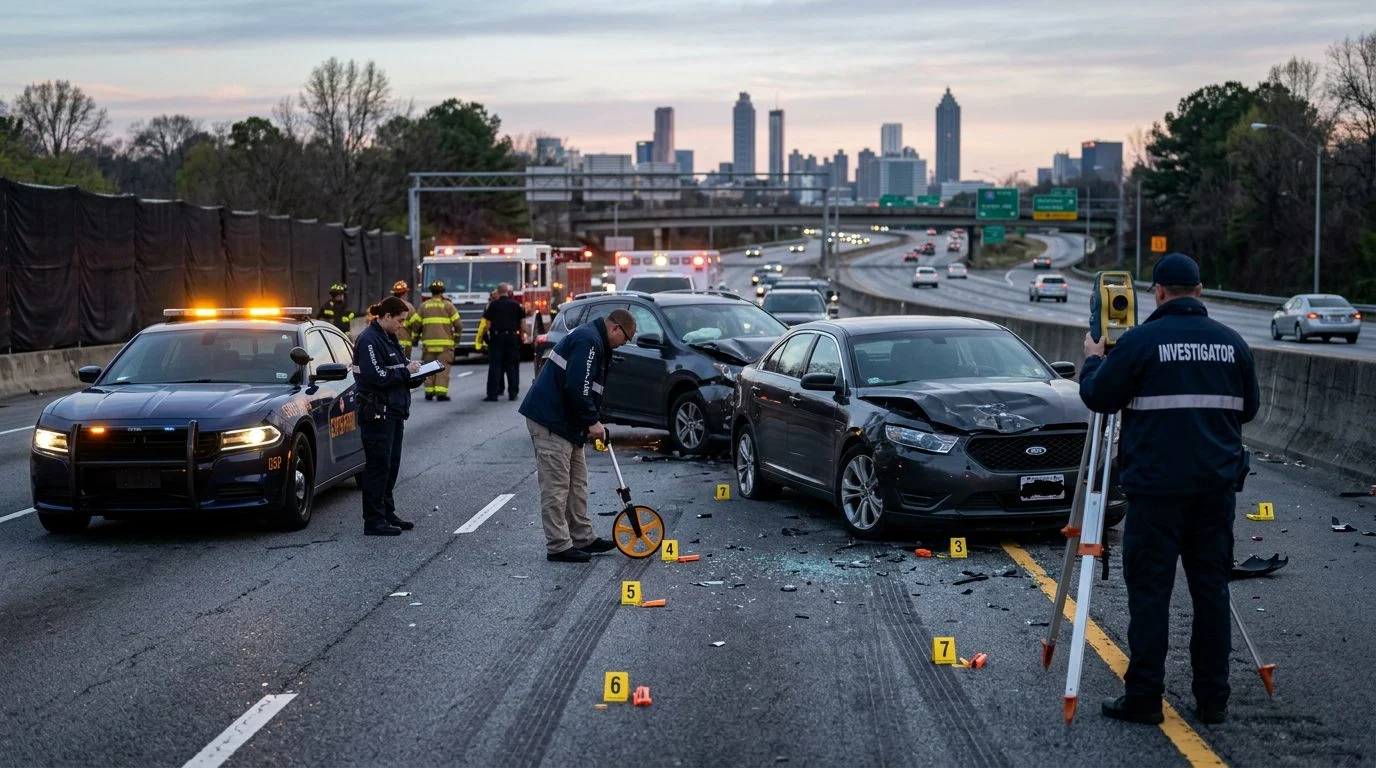
In metro Atlanta, wrongful death claims arise from many circumstances handled by personal injury law. These include car accidents on I-285, I-75, or local roads; truck accidents involving commercial vehicles; motorcycle accidents; pedestrian accidents; dog bites; slip and fall accidents on unsafe properties; negligent security leading to injury or death; and nursing home abuse or neglect. Each situation involves conduct that breached a duty of care owed to the deceased.
Who Can File a Wrongful Death Claim in Georgia
Georgia law specifies who is eligible to bring a wrongful death claim. The primary beneficiaries are the spouse, children, and parents of the deceased. If there is no spouse or children, parents may recover. In some cases, other dependents who relied on the deceased for financial support may also have claims. The claim itself is brought on behalf of the deceased’s estate, typically by an executor or administrator appointed by the court or named in a will.
When multiple beneficiaries exist—for example, a surviving spouse and adult children—Georgia law addresses how damages are distributed among them. Each beneficiary’s recovery depends on their relationship to the deceased and the damages they suffered (such as loss of financial support or loss of companionship). Courts in Fulton, DeKalb, Cobb, Gwinnett, and other metro Atlanta counties apply Georgia’s statutory framework uniformly.
Georgia’s Statute of Limitations for Wrongful Death
The statute of limitations for filing a wrongful death lawsuit in Georgia is two years from the date of death. This is a strict deadline. If a lawsuit is not filed within two years, the claim is typically barred permanently and cannot be pursued. The clock starts on the date of death, not the date of the accident or injury that led to death.
Certain circumstances—such as the defendant’s absence from Georgia—may toll (pause) the deadline in limited situations, but these exceptions are narrow. Because the two-year window is fixed and unforgiving, it’s important to understand your timeline early. If you’re unsure whether the deadline applies to your situation, consulting an attorney promptly ensures you don’t lose your right to file.
Damages Available in Georgia Wrongful Death Claims
Georgia law allows recovery of both economic and non-economic damages in wrongful death claims. Economic damages include medical and hospital expenses incurred before the death, funeral and burial costs, lost wages the deceased earned before death, and the lost earning capacity the deceased would have earned had they lived (calculated based on age, health, and work history). Non-economic damages include the pain and suffering the deceased experienced before death and the loss of companionship and society to surviving family members—often called “loss of consortium.” Mental anguish suffered by the survivors is also recoverable.
Georgia does not permit punitive damages (damages meant to punish the defendant) in most wrongful death cases, though narrow exceptions exist in specific circumstances. This means compensatory damages—those designed to make the family whole—are the primary recovery avenue. Each case’s damages are calculated based on the deceased’s individual circumstances: age, overall health, earning history, education, family relationships, and the nature of the loss to survivors. No two cases are identical.
Local Procedural Considerations in Metro Atlanta
Wrongful death cases in Atlanta and surrounding counties follow Georgia’s civil procedure rules. A case may be filed in Georgia state court (in the county where the death occurred or where the defendant resides) or, if federal jurisdiction applies—for example, if the defendant is from another state and the amount in controversy exceeds $75,000—in the U.S. District Court for the Northern District of Georgia.
Once filed, the case proceeds through discovery (the exchange of documents and information), depositions (recorded questioning of witnesses and parties), and settlement negotiations. Local court rules and judge practices vary by county, so familiarity with the specific venue—whether Fulton County Superior Court, DeKalb County, or another—matters. An attorney experienced in metro Atlanta courts understands these local nuances and how they affect case strategy and timing.
Not sure what your next step is?
Talk it through with our team — the first consultation is free, confidential, and carries no obligation.
Investigation and Evidence in Metro Atlanta Wrongful Death Cases
Establishing that the defendant was negligent requires solid evidence. In car, truck, and motorcycle accidents, police reports, traffic laws, witness statements, and accident reconstruction analysis are central. In premises liability cases (slip and fall, negligent security), property maintenance records, security footage, and inspection reports are often critical. In nursing home abuse cases, medical records, facility policies, incident reports, and staff conduct are examined closely.
Early preservation of evidence is crucial. Accident scenes change, witnesses move away, security footage is deleted, and records are lost. The sooner evidence is secured and documented—through photographs, written statements, and expert consultation—the stronger the foundation for your claim. Investigators experienced in metro Atlanta cases know which evidence matters most and how to preserve it before it disappears.
Insurance and Settlement in Georgia Wrongful Death Claims
Most wrongful death claims involve insurance. The defendant may carry auto insurance (in accident cases), homeowner’s or commercial liability insurance (in premises cases), or nursing home liability insurance. Insurance companies have their own procedures and timelines for evaluating claims and responding to demand letters. Understanding the defendant’s insurance coverage and policy limits helps set realistic expectations for settlement.
Many wrongful death cases resolve through settlement negotiations before trial. Insurance adjusters and defense attorneys evaluate the strength of the claim, the damages, and the risks of litigation. Settlement discussions often take months. If a fair settlement cannot be reached, the case proceeds to trial, where a jury decides liability and damages.
Why Local Representation Matters
An attorney based in or familiar with metro Atlanta understands the local court systems, judges, and procedural nuances that affect your case. Georgia-specific wrongful death law requires knowledge of state statutes, case law, and procedural rules that vary from other states. Local counsel can coordinate with investigators, medical experts, accident reconstructionists, and other professionals in the Atlanta area who can strengthen your claim.
Familiarity with the community and local practices—including how judges in Fulton, DeKalb, Cobb, and Gwinnett counties approach wrongful death cases—can influence case strategy, settlement discussions, and trial preparation. You shouldn’t navigate this alone.

Frequently Asked Questions
What is the statute of limitations for filing a wrongful death claim in Georgia?
You have two years from the date of death to file a wrongful death lawsuit in Georgia; missing this deadline typically bars the claim permanently.
Who is eligible to file a wrongful death claim in Georgia?
The spouse, children, and parents of the deceased are the primary eligible beneficiaries; in some cases, other dependents may also have claims.
What damages can I recover in a Georgia wrongful death claim?
You can recover economic damages (medical expenses, funeral costs, lost wages) and non-economic damages (pain and suffering of the deceased, loss of companionship, mental anguish to survivors).
Can I recover punitive damages in a Georgia wrongful death case?
Georgia does not permit punitive damages in most wrongful death cases; compensatory damages are the primary recovery avenue.
How does insurance affect a Georgia wrongful death claim?
Most wrongful death claims involve insurance coverage; understanding the defendant’s policy limits helps set realistic settlement expectations.
If you’ve lost a family member or loved one due to negligence in the Atlanta area—whether in a vehicle accident, at a property, in a nursing home, or another circumstance—you may have a wrongful death claim under Georgia law. The two-year deadline is real, and the process is complex, but you don’t have to figure it out alone. Reach out to us for a free case review. Families in your situation contact our office regularly, and we’re here to help you understand your rights and next steps.
Who Can File a Wrongful Death Claim in Georgia?
Spouses
A surviving spouse may file a wrongful death claim and seek recovery for loss of companionship, financial support, and other damages.
Children
Adult and minor children of the deceased are eligible to bring a claim for loss of parental support, guidance, and companionship.
Parents
Parents of an adult child who died due to negligence may file a claim, particularly if they depended on the deceased for financial support.
Estate Representative
The executor or administrator of the deceased's estate may pursue a wrongful death action on behalf of the estate and eligible family members.
Time Limits Matter
Georgia law sets a deadline for filing a wrongful death lawsuit. Delaying your claim can result in losing your right to pursue compensation. Contact us promptly to protect your family's interests.
Common Wrongful Death Scenarios We Handle
Motor Vehicle Accidents
Deaths resulting from car, truck, or motorcycle accidents caused by another driver's negligence, recklessness, or violation of traffic laws.
Pedestrian Accidents
Fatalities involving pedestrians struck by vehicles due to a driver's failure to exercise reasonable care or obey traffic signals.
Premises Liability & Unsafe Conditions
Deaths caused by dangerous property conditions, inadequate maintenance, poor security, or failure to warn of known hazards.
Nursing Home Abuse & Neglect
Wrongful deaths in long-term care facilities due to neglect, abuse, medication errors, or failure to provide necessary care.
Dog Bites & Animal Attacks
Fatal injuries caused by a dog or other animal when the owner failed to control or properly contain the animal.
Negligent Security
Deaths resulting from criminal acts that could have been prevented through adequate security measures or reasonable precautions.
Why Families Choose Slam Dunk Attorney
Compassionate Representation
We understand the emotional and financial toll of losing a loved one. We listen to your family's story and treat your case with the care it deserves.
Focused on Your Rights
We focus exclusively on personal injury and wrongful death claims. Our knowledge of Georgia law helps protect your family's interests.
Clear Communication
We explain the legal process in plain language, answer your questions, and keep you informed every step of the way.
Serving Metro Atlanta & Georgia
Based in Duluth, we represent families throughout the Atlanta area and across Georgia in wrongful death claims.
No Fees Unless There's a Recovery
We work on a contingency basis—you pay no attorney fees unless we recover compensation for your family. You may still be responsible for case costs.
Available for Your Questions
We're here to discuss your situation and explain your options. Contact us for a free case review with no obligation.
What a Wrongful Death Claim May Include
Loss of Financial Support
Compensation for the income and financial contributions the deceased would have provided to surviving family members.
Loss of Companionship & Guidance
Damages for the loss of the relationship, emotional support, and guidance that family members can no longer receive.
Medical & Funeral Expenses
Recovery of reasonable costs incurred for medical care before death and funeral and burial expenses.
Pain & Suffering of the Deceased
Compensation for any pain, suffering, or conscious pain experienced by the deceased before death, where applicable.
Important Note on Outcomes
Every wrongful death case is unique. We cannot guarantee a specific outcome or settlement amount. What we can do is thoroughly investigate your claim, apply our knowledge of Georgia law, and advocate for fair compensation on behalf of your family.