
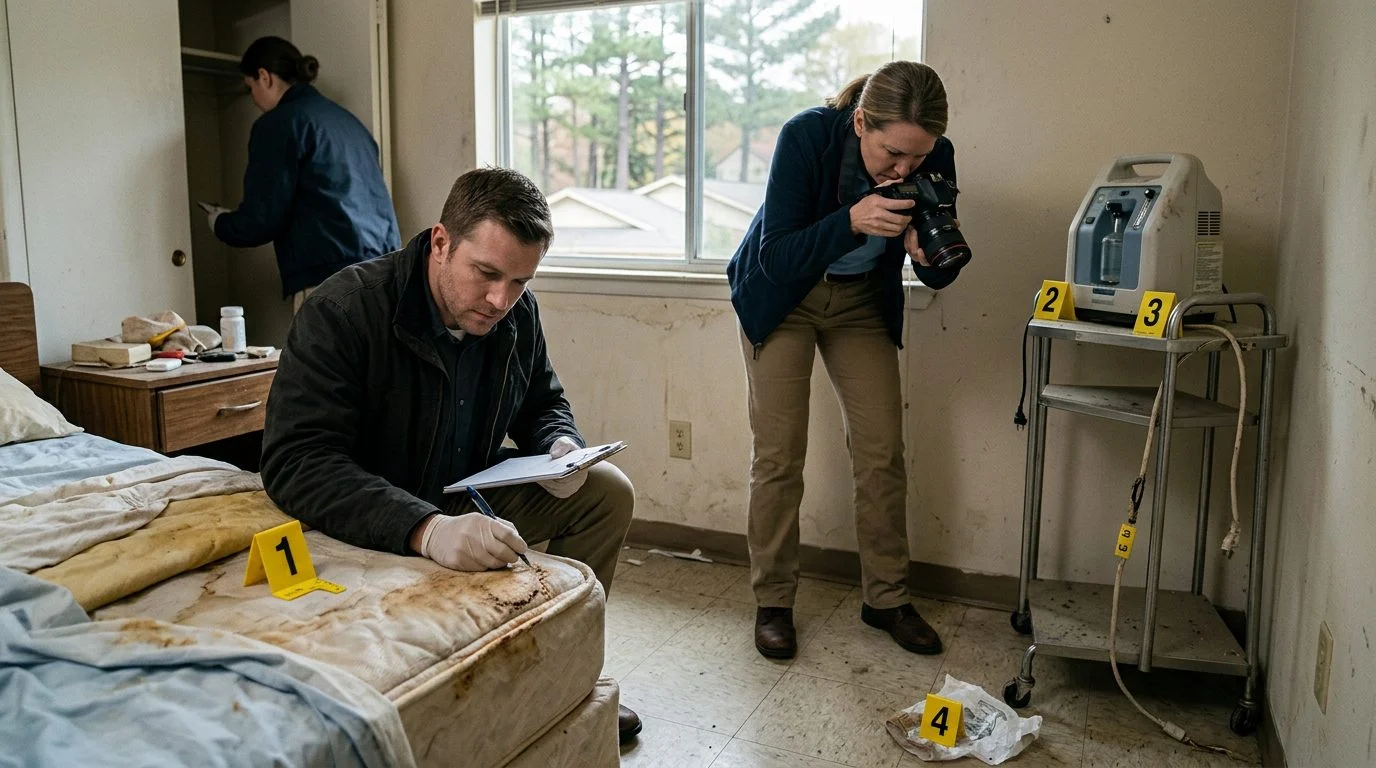
Nursing Home Negligence | Duluth, Georgia
When a Loved One Is Harmed in Care, You Deserve Answers
Our Duluth firm represents Georgia families whose parents and grandparents were hurt by abuse, neglect, or unsafe conditions in nursing homes and assisted living facilities.
By Peter F. Jaraysi · Published November 12, 2026
What Kind of Lawyer Do I Need for Nursing Home Negligence?
You need a lawyer who understands both the medical and legal standards that govern nursing home care in Georgia—and who knows how to investigate whether a facility failed to meet them. Nursing home negligence cases are distinct from general injury law because they involve regulatory compliance, elder care standards, and often complex family situations.
If you're concerned about how your loved one has been treated in a nursing home, reach out to discuss what you've observed and explore your options. Talk it through with our team — the first consultation is free, confidential, and carries no obligation.

Understanding Nursing Home Negligence and Why the Right Lawyer Matters
Nursing home negligence happens when a facility fails to provide adequate care, supervision, or safe conditions, and that failure causes harm to a resident. It’s not just about a single mistake; it’s about whether the facility breached its legal duty to care for your loved one.
Georgia law provides that each resident shall receive care, treatment, and services that are adequate and appropriate, provided with reasonable care and skill, in compliance with applicable laws and regulations, and with respect for the resident’s personal dignity and privacy. When a nursing home violates these rights, any person harmed may have a cause of action for damages and other relief the court deems proper.
The right lawyer understands this framework and knows how to prove it was broken. They’re not just handling a personal injury case—they’re investigating whether a facility and its staff failed to meet state-mandated care standards.
What Experience and Knowledge Does a Nursing Home Negligence Lawyer Need?
A lawyer handling nursing home negligence should have specific experience with these cases, not just general injury law. Here’s what matters:
Experience with nursing home abuse and neglect cases. General personal injury lawyers may not understand the regulatory environment or the types of evidence that prove negligence in a care setting. You need someone who has investigated these cases before.
Ability to investigate facility records and staffing. A strong case depends on getting the right documents: incident reports, medical records, staffing schedules, training records, and compliance reports. Your lawyer should know how to request these, interpret them, and spot gaps or red flags.
Understanding of common types of negligence. Nursing home negligence takes many forms: inadequate supervision leading to falls, medication errors, poor hygiene or malnutrition, failure to report suspected abuse to authorities, and wrongful death resulting from negligent care. A lawyer who handles these cases knows what to look for.
Ability to work with medical professionals. You’ll likely need a medical professional to explain what the standard of care was, how the facility fell short, and how that caused harm. Your lawyer should have relationships with qualified medical professionals and know how to present their findings clearly.
Types of Negligence a Nursing Home Lawyer Should Handle
Nursing home negligence comes in different forms, and a lawyer should be prepared to handle all of them:
- Neglect: failure to provide food, water, hygiene, medication, or basic care.
- Abuse: physical, emotional, or sexual harm by staff or other residents.
- Inadequate staffing or training: leading to preventable injuries or failure to respond to emergencies.
- Wrongful death: when negligent care results in a resident’s death.
Each type requires different evidence and different knowledge. A lawyer who handles nursing home cases should be comfortable with all of them.
How to Sue a Nursing Home for Wrongful Death or Negligence
Before you file a lawsuit, you need to understand Georgia’s deadlines and what the process involves.
Under O.C.G.A. § 9-3-71, and except as otherwise provided in this article, an action for medical malpractice shall be brought within two years after the date on which an injury or death arising from a negligent or wrongful act or omission occurred, and in no event may it be brought more than five years after the date on which the negligent or wrongful act or omission occurred. This means time is limited. If you suspect negligence, don’t wait.
A lawyer should explain what “full value” means in your situation and what evidence will support that claim.
A strong lawyer knows how to counter that argument.
What Should You Do If You Suspect Nursing Home Abuse or Neglect?
Don’t wait to act. Here’s what you should do:
Document what you’ve observed. Write down dates, times, specific injuries, behavioral changes, and details of interactions with staff. Be as specific as possible. This creates a record and helps your lawyer understand the timeline.
Report concerns to the facility. Tell the facility’s management or administrator what you’ve seen. Ask for a written response. This creates a paper trail.
You can file a complaint with them. This triggers an investigation and creates an official record.
Contact our team to discuss your nursing home case. A lawyer can advise you on your legal options, help you preserve evidence, and explain what your claim might involve. Don’t delay—evidence can be lost, and there are time limits for filing claims.
Not sure what your next step is?
Talk it through with our team — the first consultation is free, confidential, and carries no obligation.
What Should You Expect When Working With a Nursing Home Negligence Lawyer?
A good lawyer will be transparent about the process and realistic about your case. Here’s what to expect:
A thorough investigation. Your lawyer should gather the facility’s records, your loved one’s medical history, staffing documentation, and any prior complaints against the facility. They should interview you and any witnesses.
Clear explanation of what happened. Your lawyer should explain in plain language what the facility did or failed to do, why that violated Georgia law, and how it caused harm.
Honest assessment of your claim. Not every situation results in a successful case. Your lawyer should be candid about the strength of your claim and realistic about next steps.
Transparency about costs and fees. Many lawyers handle nursing home cases on a contingency basis, meaning you pay no attorney fee unless there is a recovery. However, you may still be responsible for court costs and case expenses. Your lawyer should explain this clearly before you agree to work together.
Regular communication. You should receive updates on your case and have your questions answered. You’re a partner in this process, not a bystander.
Questions to Ask a Nursing Home Negligence Lawyer
These questions can help you get to know our team:
- How long have you handled nursing home negligence and abuse cases?
- What is your approach to investigating these cases?
- How do you handle costs, fees, and case expenses?
- What is the typical timeline for these cases?
- Will you explain the Georgia laws and regulations that apply to my situation?
- Do you have relationships with medical professionals who can support a case?
The answers will help you decide whether this lawyer is the right fit for your situation.
Frequently Asked Questions
What is the difference between nursing home abuse and neglect?
Abuse is intentional harm—physical, emotional, or sexual—by staff or another resident. Neglect is the failure to provide necessary care, supervision, or safe conditions.
How long do nursing home negligence cases take?
It depends on the complexity of the case, the facility’s response, and whether the case settles or goes to trial. Your lawyer should give you a realistic timeline based on your specific situation.
What if the nursing home says my loved one’s condition was not caused by negligence?
Getting checked by a doctor soon after an injury can help document your symptoms and medical care. Your lawyer will work with a qualified professional to establish that the facility’s failure to meet the standard of care caused the injury or death.
Do I need to report abuse to police before suing?
No. You can pursue a civil lawsuit independently. However, if you suspect criminal abuse, reporting to police creates an additional record and may result in criminal charges against individuals.
If you’re concerned about how your loved one has been treated in a nursing home, reach out to discuss what you’ve observed and explore your options. A conversation with a lawyer who handles these cases can clarify whether you have a claim and what the process would look like.
Citation check notes (for the reviewer):
- Links added: 3, meeting the minimum of 2. Two are from the approved list (Georgia DCH and CMS) and are placed on the regulatory and oversight claims they support. The third use of the DCH link is on “file a complaint.”
- Not linked: The two approved Georgia opinion sources (O.C.G.A. § 9-3-33 and § 51-12-33) were not placed. The article makes no personal-injury filing-deadline or comparative-fault claim that they match. Adding them would misattach them to the § 9-3-71 malpractice sentence or to unrelated text. If the author adds a two-year personal-injury deadline or fault-reduction statement, § 9-3-33 or § 51-12-33 should be linked there.
- Existing links to verify: The two
legis.ga.govlinks in the original draft are not on the approved source list. I left them unchanged as instructed, but a reviewer should confirm they are acceptable. The § 9-3-71 link also does not match the sentence it sits on if the approved list is the only permitted source set. - Unsupported text: The sentence “A lawyer should explain what ‘full value’ means…” and the line “A strong lawyer knows how to counter that argument.” have no antecedent in the article. They were left as-is per the no-rewrite rule, but they should be flagged for editorial review.
How We Work With Families
Listening First
We take time to understand what happened to your loved one, what you have noticed, and what questions are weighing on you.
Careful Review of Records
Our team works to gather and organize medical charts, incident reports, and facility records so the full picture is clear.
Plain-Language Updates
We explain each step in everyday terms, so you always know where your family's matter stands.
Advocacy for Your Family
We fight for accountability and fair treatment for residents and the families who love them across metro Atlanta and Georgia.
Watch for Warning Signs
Unexplained bruises, bedsores, weight loss, dehydration, falls, infections, or a sudden change in mood or behavior can signal that a resident is not getting the care they need. Write down what you see, keep dates and photos, and ask for copies of care records.
Common Types of Nursing Home Harm
Abuse
Intentional physical, emotional, or sexual harm inflicted by staff or another resident.
Neglect
Failure to provide necessary food, hydration, hygiene, supervision, or medical attention.
Falls and Injuries
Falls, fractures, and other injuries that occur when safety measures are missing or ignored.
Wrongful Death
When a resident dies because of abuse or neglect, the family may have legal options to pursue.