
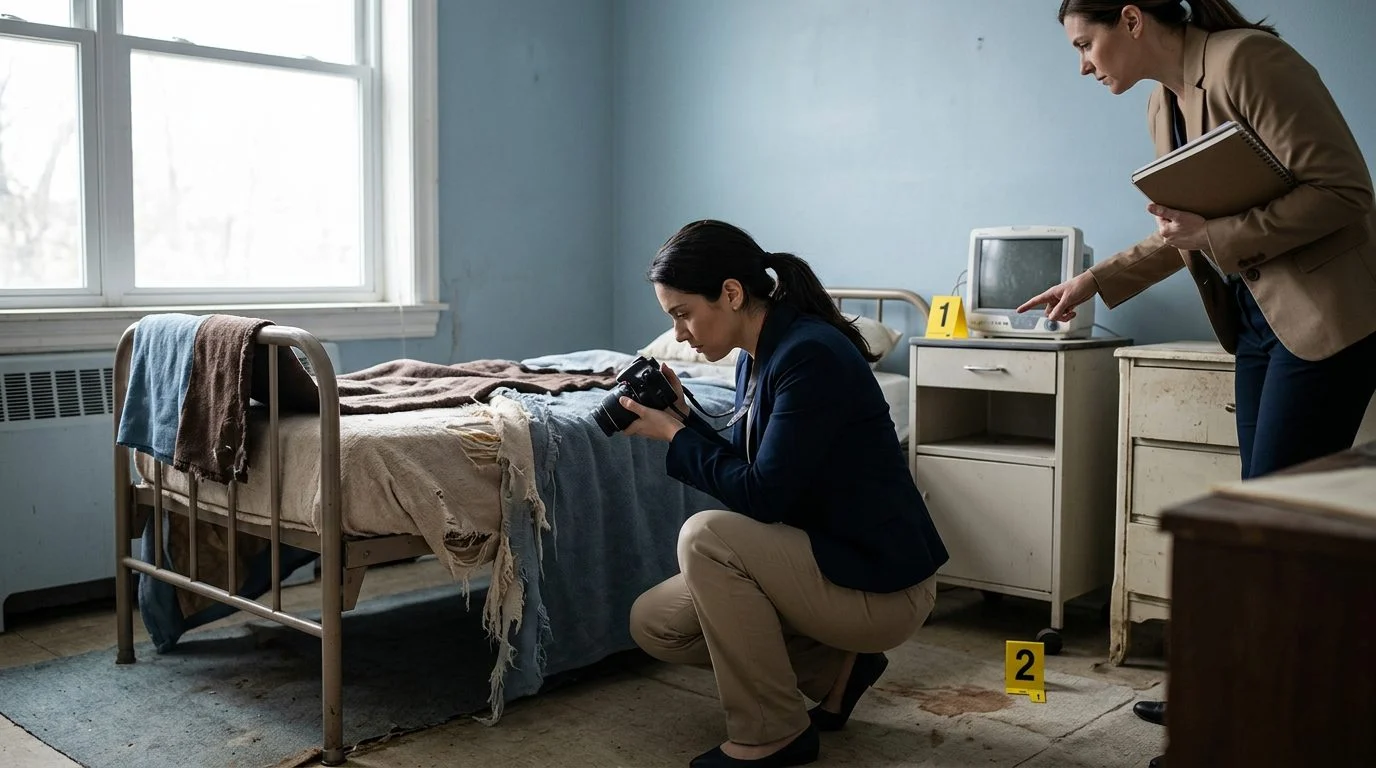
Wrongful Death & Nursing Home Abuse
When a Loved One Dies in a Nursing Home, You Deserve Answers
If abuse or neglect played a role, Slam Dunk Attorney is here to listen and help you understand your options.
By Peter F. Jaraysi · Published September 18, 2026
Wrongful Death from Nursing Home Abuse in Georgia: What You Need to Know and How We Can Help
When a loved one dies in a nursing home as a result of abuse or neglect, the loss is devastating—and the questions are urgent. A wrongful death claim from nursing home abuse is a civil lawsuit that holds the facility and its staff accountable and seeks financial recovery for your family’s losses. This guide explains what these claims cover, how we investigate them, and what to expect as you move forward.
If your loved one died in a nursing home under suspicious circumstances and you believe neglect or abuse played a role, you may have a wrongful death claim—and families in your situation can contact us to understand their options. Talk it through with our team — the first consultation is free, confidential, and carries no obligation.
What Is a Wrongful Death Claim from Nursing Home Abuse?
A wrongful death claim is a legal action brought when a resident dies as a result of abuse, gross negligence, or failure to provide adequate care by a nursing home or its staff.
In Georgia, the right to file a wrongful death claim belongs to the resident’s spouse, adult children, parents, or other dependents—or to the estate representative on behalf of the family. Unlike a criminal case (which the state may or may not pursue), a civil wrongful death claim is your family’s direct path to compensation. The facility may face criminal charges separately, but that doesn’t prevent you from seeking damages through a civil lawsuit.
Why this matters: wrongful death claims hold nursing homes accountable for preventable deaths and provide your family with financial recovery for medical expenses, pain and suffering, loss of companionship, and funeral costs. Without a civil claim, the facility has no financial incentive to change practices or compensate your family.
What Counts as Nursing Home Abuse or Neglect That Leads to Death?
Nursing home abuse and neglect take many forms—and any of them can directly cause or substantially contribute to a resident’s death.
Physical abuse includes striking, improper restraint, rough handling, or sexual assault. Neglect means the facility failed to provide food, water, hygiene, medication, wound care, or basic supervision. Medication errors—wrong drug, wrong dose, or failure to administer prescribed medication—can be fatal, especially for residents with heart disease, diabetes, or other serious conditions.
Pressure wounds (bedsores) are among the most common preventable injuries in nursing homes. These develop when a resident is not turned and repositioned regularly, not kept clean and dry, or not provided proper nutrition. A bedsore that becomes infected can lead to sepsis and death.
Falls from inadequate supervision, missing safety equipment, or failure to respond to mobility problems cause serious injuries and death in residents with fragile bones or head injury risks. Preventable infections and dehydration from neglect—failure to monitor fluid intake, provide clean environments, or respond to signs of illness—kill residents every year.
Emotional and psychological abuse can also contribute to decline and death, especially in residents with depression or cognitive decline. The key legal standard: the abuse or neglect must have directly caused or substantially contributed to the resident’s death. It is not enough that the resident was mistreated; we must show the mistreatment led to death.
What Does a Wrongful Death Claim Cover?
Georgia law allows recovery for several categories of damages in a wrongful death case. Understanding what you may recover helps you evaluate whether pursuing a claim makes sense for your family.
Medical expenses incurred before death due to the abuse or neglect—hospitalization, emergency care, treatment of infections or injuries caused by the facility’s failure to provide proper care.
Pain and suffering of the deceased compensates the resident for the physical and emotional suffering they endured before death. This is often substantial in cases involving prolonged neglect or abuse.
Loss of companionship and support damages go to surviving family members for the loss of the relationship—the guidance, love, and presence of the deceased. This can include loss of financial support if the resident was contributing to the household.
Funeral and burial costs are recoverable, as are any other expenses your family incurred as a direct result of the death.
Punitive damages may be available in cases of gross negligence or intentional conduct. These are designed to punish the facility and deter similar conduct in the future. Georgia courts award punitive damages when the defendant’s conduct is especially reckless or willful.
We do not advertise specific dollar amounts or settlement ranges because every case is unique. The value of your claim depends on the strength of evidence, the extent of the facility’s wrongdoing, the resident’s age and life expectancy, and other factors we evaluate during investigation.
How Do We Investigate and Build Your Case?
A strong wrongful death claim rests on thorough investigation and expert analysis. Here is how we build your case from the ground up.
Initial consultation: We listen to your account, gather basic facts about your loved one’s care, and explain the legal process and your options. This consultation is free and comes with no obligation.
Medical records review: We obtain the resident’s complete medical file, care plans, physician orders, incident reports, and any records from hospitals or emergency care. These documents tell the story of what happened.
Facility records: We request staffing logs, employee training records, facility policies, prior complaints filed with state regulators, and inspection reports from the Centers for Medicare & Medicaid Services (CMS). These records reveal whether the facility was understaffed, undertrained, or had a history of violations.
Expert review: We consult with medical experts—physicians, nurses, and specialists in geriatric care—to determine whether the resident’s death was preventable and whether the facility fell below the standard of care. Expert testimony is often essential to proving causation.
Witness interviews: We speak with family members, nursing staff, other residents, visitors, and anyone else with knowledge of the resident’s care and condition before death.
Timeline construction: We build a detailed chronology of events leading to death. This narrative shows the jury (or settlement negotiator) exactly what happened and when.
Liability analysis: We identify which parties bear responsibility—the nursing home itself, individual staff members, the facility’s corporate owner, contractors, or others. In many cases, multiple parties share liability.
What Is the Legal Process and Timeline?
Understanding the steps ahead helps you prepare emotionally and practically for the journey.
Pre-suit investigation typically takes 2 to 6 months. We gather evidence, consult medical experts, and analyze whether we have a strong claim before filing a lawsuit.
Statute of limitations: Georgia law generally requires that wrongful death claims be filed within 2 years of the date of death. Do not delay. Evidence can be lost, memories fade, and witnesses become unavailable. If you suspect your loved one’s death was caused by nursing home abuse or neglect, contact us now.
Filing the complaint: We file a civil lawsuit in the appropriate Georgia court, naming the nursing home, its parent company, individual staff members, and other responsible parties.
Discovery: Both sides exchange documents, medical records, expert reports, and other evidence. Depositions are taken—sworn testimony from witnesses, facility staff, and experts. This phase can last 6 to 12 months or longer in complex cases.
Settlement negotiations: Many cases resolve during or after discovery. We negotiate on your behalf, armed with strong evidence and expert opinions. Settlement discussions may continue right up to trial.
Trial (if necessary): If no settlement is reached, the case goes to a jury. We represent you throughout trial, presenting evidence, examining witnesses, and arguing your case.
Timeline varies: Simple cases may resolve in 1 to 2 years. Complex cases involving multiple parties or serious disputes over causation can take 3 to 5 years or longer. We keep you informed at every stage.
Not sure what your next step is?
Talk it through with our team — the first consultation is free, confidential, and carries no obligation.
Why Choose Slam Dunk Attorney for Your Wrongful Death Claim?
Nursing home abuse experience: We handle wrongful death cases arising from nursing home neglect and abuse across metro Atlanta and Georgia. We understand the patterns, the evidence, and the legal landscape.
Deep knowledge of Georgia law: We know Georgia’s wrongful death statutes, the damages available, and how Georgia courts evaluate these cases. We apply that knowledge to maximize your recovery.
Thorough investigation: We do not accept the facility’s account or explanations. We dig into records, interview witnesses, and consult medical experts to uncover the truth.
No upfront cost: We work on a contingency basis—you pay no attorney fees unless we recover compensation for you. However, you may still owe case costs such as expert fees, court filing fees, and deposition costs. We discuss this clearly upfront so you understand your obligations.
Compassionate approach: We understand you are grieving and overwhelmed. We handle the legal burden so you can focus on your family and healing.
Local presence: Based in Duluth, Georgia, we serve families throughout metro Atlanta and across the state.
Common Questions About Wrongful Death from Nursing Home Abuse
Q: How do I know if I have a case?
If your loved one died in a nursing home and you suspect abuse or neglect played a role, we want to hear from you. A free consultation is the best way to find out.
Q: How long do I have to file a claim?
Georgia law generally allows 2 years from the date of death. Do not wait; evidence can be lost and memories fade.
Q: What if the nursing home says it was ‘natural causes’?
We investigate independently. Medical experts can often determine whether neglect or abuse contributed to or accelerated death.
Q: Can I sue if the facility is part of a large corporation?
Yes. We identify all liable parties, including the facility, its parent company, and individual staff members.
Q: What if there was no criminal prosecution?
A civil wrongful death claim is separate from criminal charges. We can pursue compensation even if no criminal case was filed.
Q: Will this go to trial?
Many cases settle. We are prepared to go to trial if necessary, but we always pursue the best outcome for your family.
Q: What if I cannot afford an attorney?
We work on contingency—no upfront fees. We discuss case costs transparently during your consultation.
What to Bring to Your Free Consultation
Gather these documents and information before you meet with us:
- The resident’s death certificate
- Medical records or hospital discharge summaries
- Any correspondence with the nursing home
- Photos of injuries or the facility (if you have them)
- Names and contact information for witnesses (family, staff, other residents)
- Your account of events and timeline
- Insurance information for the facility (if known)
Having these materials ready helps us move quickly and ask better questions.

Next Steps: How to Get Started
If you believe your loved one died as a result of nursing home abuse or neglect, the next step is simple: reach out to us for a free case review. During that conversation, you’ll speak directly with an attorney who will listen to your story, answer your questions, and explain your legal options.
A consultation does not commit you to anything. It is a chance to understand your rights, learn what a wrongful death claim involves, and decide whether pursuing compensation makes sense for your family.
We serve all of Georgia, and we understand the urgency and emotion of your situation. Families who have lost a loved one to nursing home abuse or neglect can reach out to us—and we are here to help you seek justice and recovery.
Why Families Choose Slam Dunk Attorney
We Listen Without Judgment
Losing a loved one is devastating. We approach every conversation with empathy and take the time to understand what happened.
We Focus on Nursing Home Cases
We handle wrongful death claims involving abuse and neglect in care facilities across Georgia. This is work we know well.
We Handle the Legal Work
From reviewing records to investigating what occurred, we manage the process so you can focus on your family.
No Fees Unless There Is a Recovery
We work on contingency—you pay nothing upfront. If there is no recovery, you owe us no attorney fees. You may still owe case costs.
Time Matters
Georgia law generally allows 2 years from the date of death to file a wrongful death claim. Evidence can be lost and memories fade. Do not delay.
What We Help You Understand
Do You Have a Case?
If your loved one died in a nursing home and you suspect abuse or neglect played a role, we want to hear from you. A free consultation is the best way to explore what may be possible.
What Happens Next
We investigate the circumstances, review medical records and facility documentation, and advise you on your options. We explain the process in plain language every step of the way.
Your Rights as a Family
Families have the right to answers. We work to uncover what happened and hold responsible parties accountable on your behalf.
Serving Metro Atlanta and Georgia
We represent families across the Atlanta area and throughout Georgia. If a nursing home failed your loved one, we are ready to listen.