
Wrongful Death | Duluth, Georgia
Losing a Loved One Is Hard. Understanding the Autopsy Question Can Help.
Families often ask whether an autopsy is needed after a fatal accident or injury. Here is what to know, in plain language, and how our team at Slam Dunk Attorney can help you think through your next steps.
By Peter F. Jaraysi · Published November 5, 2026
Whether one helps depends on how the person died and what other evidence exists. This guide explains who makes that call, how autopsy results fit into a claim, and what families can do now.
What a Wrongful Death Claim in Georgia Is
A wrongful death claim is a civil lawsuit. It is filed after someone dies because of another party’s wrongful act, neglect, or default. Civil means it is a private claim for money. It is separate from any criminal case the state may bring.
Georgia law sets out who may bring the claim. A surviving spouse may recover for the death of a spouse. If there is no surviving spouse, a child or children may recover for the death of a parent. If there is no surviving spouse, a child or children may do so (§ 51-4-2).
The law measures the recovery as the “full value of the life of the decedent, as shown by the evidence” (§ 51-4-1). The cause of death sits at the center of this kind of case. Proving what caused the death is what leads families to ask about an autopsy. For the full overview, see our wrongful death guide.
If you're facing an autopsy decision and a stack of records after losing someone you love, our team is glad to talk through your situation with no obligation. Talk it through with our team — the first consultation is free, confidential, and carries no obligation.

Who Decides Whether an Autopsy Is Performed in Georgia
A coroner or medical examiner generally makes the call on whether an autopsy is ordered.
Families usually do not make that medical decision themselves. They can still ask the office handling the case about the investigation and its timing. They can also ask to be kept informed as results come in.
Each county runs its process in its own way, and the steps depend on the circumstances of the death. Ask the investigating office what its steps are and when you can expect updates. Write down the names of the people you speak with and the dates of each call.
Does a Wrongful Death Claim Require an Autopsy?
Whether one matters depends on the facts of the case.
Many claims rest on other evidence. Common examples include the death certificate, EMS and hospital records, the person’s medical records from before the death, crash or incident reports, photographs, and witness statements.
An autopsy can matter more in certain situations. These include a disputed cause of death, injuries that are internal or hard to see, and an unclear gap between the incident and the death.
An autopsy is one source of evidence. It does not, by itself, show who is at fault.
How Autopsy Findings Can Connect to a Claim
Autopsy findings describe injuries, where they are on the body, and their likely cause. Those findings can be compared with other records. In a crash, the report may be compared with the crash report, vehicle damage, and the timeline of events. In a dog bite case, it may be compared with the bite pattern and the animal’s history.
Toxicology results are lab tests for drugs and alcohol. They can be relevant in car, truck, motorcycle, and pedestrian cases. They help show what a person’s body contained at the time of death.
Medical professionals read an autopsy report alongside the full set of records. A single finding rarely tells the whole story.
Consider a nursing home death. A report that documents a pattern of injuries can be compared with facility incident logs, care notes, and the resident’s chart. Georgia law says each nursing home resident must receive care “with reasonable care and skill” (§ 31-8-108).
Accidents and Incidents Where Autopsy Evidence Often Matters
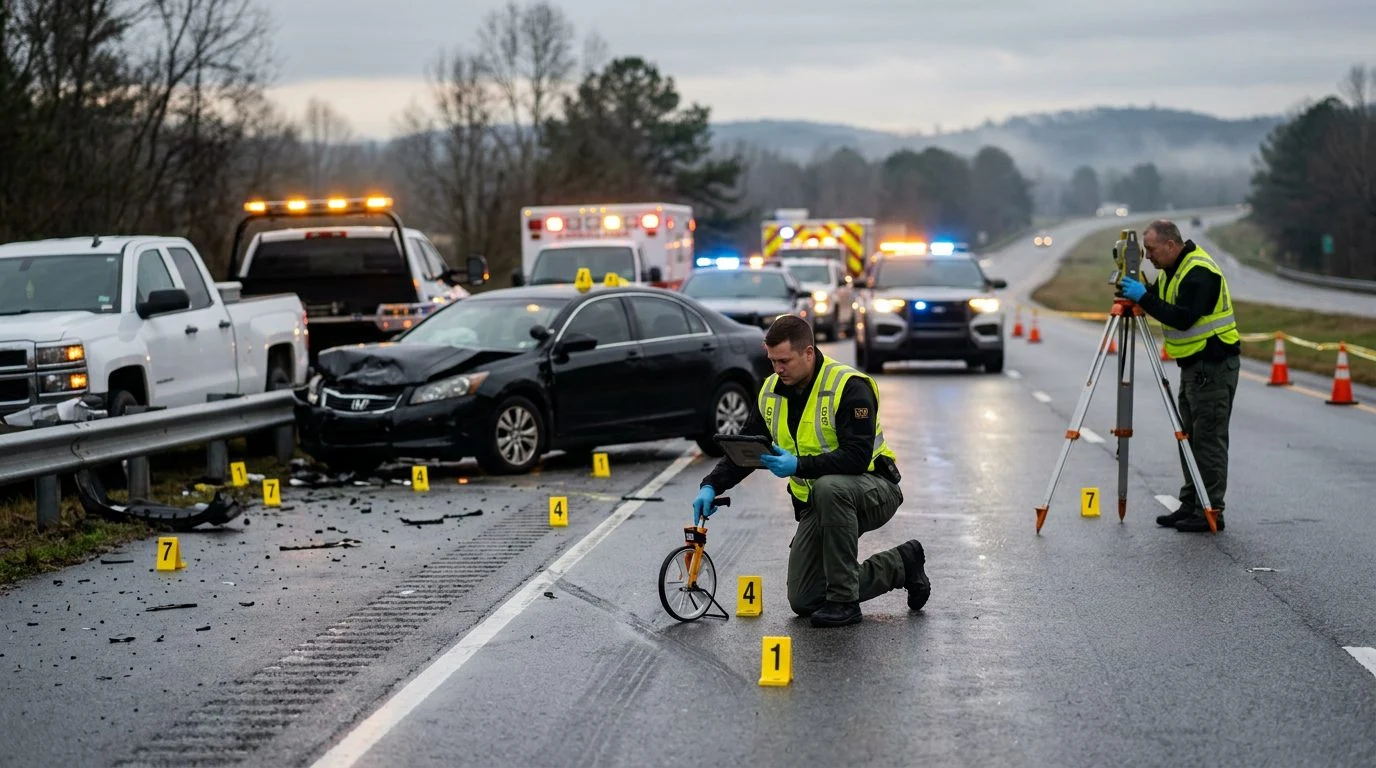
Car, truck, motorcycle, and pedestrian crashes often leave detailed records of the scene, the injuries, and the cause of death. Those records give investigators and lawyers a lot to compare.
Other cases can also involve a fatal outcome. These include dog bites, premises liability, slip and fall incidents, negligent security, rideshare accidents, and short-term rental injuries. A fatal fall on a hazard, a fatal attack on unsecured property, or a death tied to an unsafe rental each raises the same question. In each, the value of an autopsy depends on the facts.
Nursing home abuse and catastrophic injury cases can differ. A death may follow a long period of care or a severe injury, such as a spinal cord injury or traumatic brain injury. In those cases, medical records from the entire course of care often matter as much as the autopsy.
Families in Atlanta, Lawrenceville, and Johns Creek face the same Georgia rules as families anywhere else in the state.
Requesting an Existing Autopsy Report
If an autopsy was already done, the family can ask the office that handled the examination for a copy of the report. The office may ask for proof of your relationship to the deceased and a copy of the death certificate. Requirements can vary, so ask the office what it needs.
Results can take time to finish. Some findings may read “pending” until toxicology and other tests are complete. A pending line is not a final answer, so ask when the final report is expected.
Keep copies of every record, letter, and call note in one place. Include dates and names. This makes it easier to follow the timeline later.
Not sure what your next step is?
Talk it through with our team — the first consultation is free, confidential, and carries no obligation.
Time Limits and Why Early Steps Matter
Georgia’s general deadline for injury actions is two years after the right of action begins (§ 9-3-33). Families often gather records early to protect that timeline.
That two-year rule applies except as otherwise provided in this article, and the same section sets different deadlines of one year for injuries to the reputation and four years for injuries to the person involving loss of consortium.
Evidence can become harder to find over time. Scene details fade, witness memories change, and some records become harder to retrieve. Ask a lawyer to review the timing for your family’s situation promptly.
Talking With Our Team About Your Situation
Losing someone is hard. Now you may be reading about autopsies, signing forms, and gathering records. You don’t have to sort through all of it alone.
If you want to talk through your situation in your own words, reach out to our team at our contact page. Our first consultation is free, confidential, and without obligation.
Frequently Asked Questions
Other evidence often plays a major role.
Who can request an autopsy report?
The family can ask the office that handled the examination for a copy. Requirements can vary, so ask the office what it needs.
How long do families have to file?
Georgia’s general deadline for injury actions is two years (O.C.G.A. § 9-3-33; Kenneth B. Cameron v. Jmp Pizza, Inc (2026)).
Disclaimer: This page is general information, not legal advice. Responsible lawyer: Peter F. Jaraysi, Slam Dunk Attorney, Duluth, Georgia. Contact: https://slamdunkattorney.com/contact-us/
Questions Families Often Ask About Autopsies
How to request a copy of the report
The family can ask the office that handled the examination for a copy of the report. Requirements can vary, so ask the office what it needs before you submit a request.
Why the report can matter
An autopsy report can contain medical details that help explain what happened. Whether and how it is used in a wrongful death matter depends on the facts of each case.
Why timing matters
Records, reports, and evidence can take time to obtain. Speaking with a lawyer early can help you understand what documents may be needed and when.
How We Can Help Your Family
Plain-language answers
We explain the legal process and the medical records involved in a way that is clear and easy to follow, without pressure.
Help gathering records
Our team can help you think through which records, reports, and documents may be relevant to your family's situation.
Compassionate, respectful support
We understand that you are grieving. We work to treat you and your family with patience and care from the first call.
Free first consultation
Your first consultation is free, confidential, and comes with no obligation to continue.
Do not wait to ask questions
Medical examiner offices, hospitals, and other record holders may have their own procedures and timelines. Keep copies of every death certificate, report, bill, and letter you receive, and write down the names of people you speak with.