
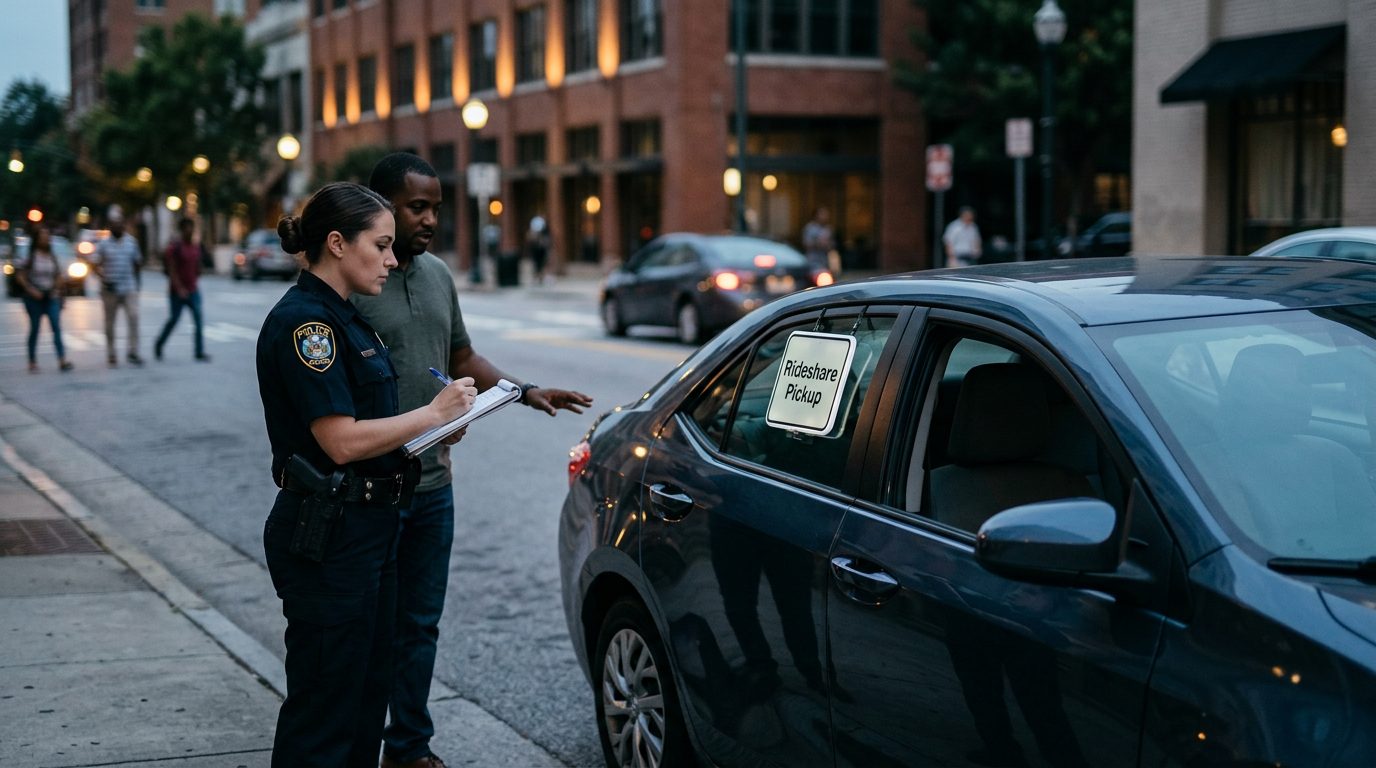
Rideshare Accidents | Duluth, Georgia
Hurt in an Uber or Lyft Crash? We Can Help You Understand Your Options
Slam Dunk Attorney represents people injured in rideshare accidents across metro Atlanta and Georgia. Rideshare claims can involve several insurance policies and companies, and we explain each step in plain language.
By Peter F. Jaraysi · Published October 24, 2026
A rideshare accident in Georgia is usually handled as a motor vehicle accident claim. The core questions stay the same: who was at fault, what injuries resulted, and what losses followed. What changes is the insurance. When an Uber or Lyft driver is involved, the driver’s app status at the moment of the crash can decide which policy applies.
Rideshare accidents can hurt passengers, drivers, pedestrians, and other motorists. The Insurance Institute for Highway Safety reports that Georgia’s 2024 motor vehicle crash fatalities totaled 1,403, a rate of 12.5 deaths per 100,000 people. This guide explains how these claims work in Georgia, in plain language.
How a Rideshare Accident Is Handled in Georgia
In most cases, a rideshare crash in Georgia is handled as a car accident claim based on negligence. Negligence means a driver failed to use reasonable care, and that failure caused harm.
The basic test is the same as in any crash. The difference is the insurance layer. Uber and Lyft drivers can be covered by several policies, depending on what the driver was doing when the crash happened.
Georgia law also requires rideshare companies to carry certain coverage. Under O.C.G.A. § 40-1-193, each rideshare network service must keep insurance for personal injury liability, property damage liability, and personal injury protection. That coverage must be available to drivers, passengers, pedestrians, and others.
So the same questions apply. Who was at fault? What injuries did the crash cause? What losses followed, such as medical bills and missed work?
If an Uber or Lyft crash left you hurt and you aren't sure whether the app was on, our team can talk through your options with you. Talk it through with our team — the first consultation is free, confidential, and carries no obligation.
Why the Driver’s App Status Matters
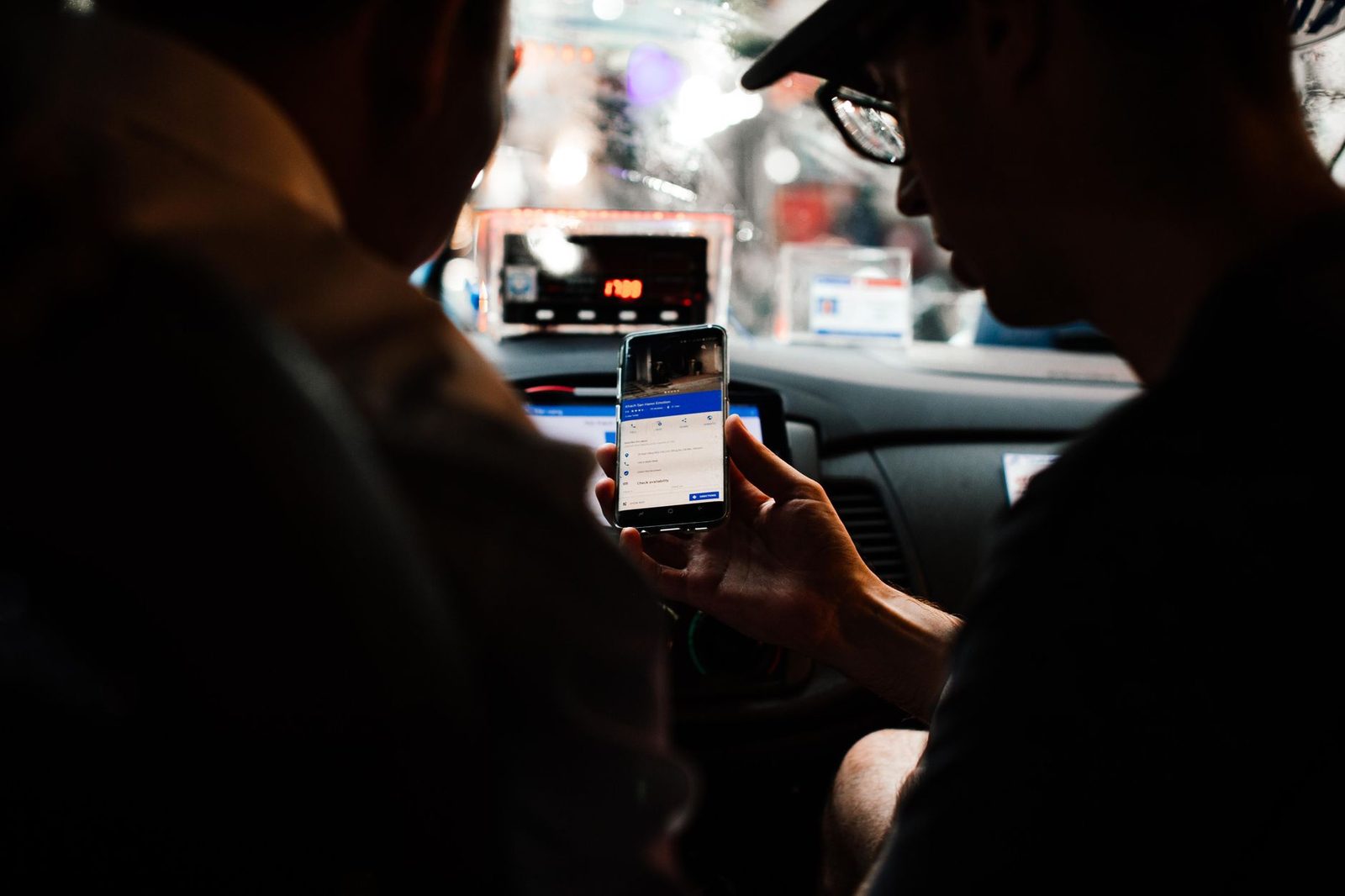
The driver’s app status at the time of the crash often decides which insurance applies. Georgia law ties coverage to specific periods of driver activity.
Think of three phases. First, the app is off, and the driver is not working on the platform. Second, the app is on, and the driver is waiting for a ride request. Third, the driver has accepted a ride and is on the trip until it ends.
Under O.C.G.A. § 33-1-24, rideshare services cover the time a driver is logged on and available. Under O.C.G.A. § 33-1-24, a separate period of coverage begins when a driver accepts a ride request on the network and lasts until the driver completes the transaction or the ride is complete, whichever is later.
The same statute lets a personal auto insurer exclude coverage while the driver is logged on or providing these services. The required coverage can come from the driver or the rideshare company, but if the driver’s insurance has lapsed or ceases to exist, the rideshare company must provide coverage that becomes primary from the first dollar of a claim. So the driver’s own policy may not respond during these periods.
Because phase can be disputed, trip records matter early. Upon request from the driver’s personal insurer for claims coverage investigation, the rideshare company must provide, within 15 days, the date and times of the accident and the precise times in the 12 hours preceding and following the accident that the driver logged on and off.
Who Can Be Held Responsible
Responsibility can fall on the rideshare driver, another driver, and in some cases the rideshare company. Each party’s role depends on the facts of the crash.
Speeding, distraction, and running a red light are among the driving behaviors that can lead to crashes. Another motorist can share fault if their driving contributed to the crash.
Georgia law also limits the rideshare company’s liability. Under O.C.G.A. § 40-1-201, a ride share network service is not liable for a driver’s operation of a personal passenger car under any theory, including vicarious liability. O.C.G.A. § 40-1-201 reads: “(a) No ride share network service shall be liable under any theory of liability, including, but not limited to, vicarious or product liability, for any injury to persons or damage to property from the operation of a personal passenger car by a ride share driver by reason of owning, operating, or maintaining a digital network or internet network to connect passengers to ride share drivers for the purpose of prearranged transportation for hire or for donation, provided that.” That protection applies only if certain conditions are met. The company must not have its own negligence or criminal misconduct, must be in compliance with the requirements of this part relating to obligations to a ride share driver and any other provision otherwise required by law, and must conduct or cause to be conducted a criminal background check, or obtain a private background check certification, for each driver at least once every two years.
Fault can also be split among several people. Under O.C.G.A. § 51-12-33, the jury assigns fault to everyone who contributed to the injury. That includes people who were not named in the lawsuit, regardless of whether they were or could have been named as a party. Their fault is considered in any case if the plaintiff entered into a settlement agreement with them or a defending party gives notice not later than 120 days prior to the date of trial that they were wholly or partially at fault.
A passenger, a pedestrian, and another motorist each have different facts. Their claims may involve different parties and different policies.
Common Injuries in Rideshare Crashes
Rideshare crashes commonly cause neck and back injuries, broken bones, and head injuries. Some injuries are catastrophic, and they often need planning over a long period.
Some symptoms do not show up right away. Pain, headaches, numbness, or dizziness can appear days after a crash. Medical evaluation comes first for your health. Your medical records also form a central part of any claim.
Catastrophic injuries include spinal cord injury and paralysis, traumatic brain injury, amputation, and severe burns. The National Institute of Neurological Disorders and Stroke explains that the spinal cord has three layers of protective tissue. Cerebrospinal fluid surrounds it to act as a cushion.
The same source notes that an injury between the C1 and C4 segments can stop breathing. Those nerves control the diaphragm and lung expansion. That is why emergency care is so important after a serious crash.
Why Rideshare Accidents Differ From Ordinary Car Crashes
Rideshare accidents often involve more insurance companies and more digital records than an ordinary crash. That can change how a claim is built.
A passenger may have claims against the at-fault driver’s policy, the driver’s personal policy, or the rideshare company’s coverage. Which one applies depends on the app phase. Each insurer may ask its own questions about the trip.
Digital evidence is another difference. A crash during an active trip can leave app timestamps, location data, and messages. Georgia law requires each rideshare driver to keep digital identification on a smartphone while active.
Acting early helps make sure this information is requested and kept.
Steps to Take After a Rideshare Accident
Get medical care, record the scene, and collect details about every vehicle and driver involved. These steps protect your health and your claim.
- Call 911 if anyone is hurt or the road is unsafe.
- See a doctor, even if you feel fine at first.
- Photograph the scene, vehicle damage, and any visible injuries.
- Write down the names, plate numbers, and insurance details of the other driver and the rideshare driver.
- Note the names and contact details of any witnesses.
- Once it is safe, take screenshots of the app trip status and trip number.
- Keep a daily log of symptoms, missed work, and activities you cannot do.
- Keep every bill, receipt, and work-absence record.
Not sure what your next step is?
Talk it through with our team — the first consultation is free, confidential, and carries no obligation.
Mistakes That Can Hurt a Rideshare Claim
The most harmful mistakes are delayed care, guessing about app status, and speaking to insurers too early. Each one can weaken an otherwise sound claim.
Delaying care creates a gap in your medical record. An insurer may use that gap to question how the injury happened. Steady treatment keeps the medical picture clear.
Social media posts can be read out of context. Avoid posting about the crash, your injuries, or your activities until your claim is resolved.
A recorded statement can be used later. Before giving one, understand what is being asked and which insurer is asking.
An early settlement offer may arrive before the full extent of your injuries is known. Take time to understand your condition before you accept anything.
Finally, do not guess about the app status. Describe what you saw accurately, and let the trip records answer the phase question.
How Rideshare Claims Move Forward in Georgia
Most rideshare claims move through investigation, a claim presented to insurers, negotiation, and, if needed, a lawsuit. Each stage can take a different amount of time.
Georgia sets a deadline for injury lawsuits. Under O.C.G.A. § 9-3-33, actions for injuries to the person must be brought within two years after the right of action accrues. Loss of consortium claims have a four-year period under the same statute.
Timelines vary. Medical recovery, the number of insurers involved, and the facts of the crash all affect how long a claim takes. Because the clock keeps running, acting early helps you keep your options open.
How Much Can You Sue Uber or Lyft For?
A dollar figure cannot be named before the facts, injuries, and evidence are known. The amount depends on the losses that can be proved.
Georgia separates general damages from special damages. Under O.C.G.A. § 51-12-2, general damages are presumed to flow from the wrong and need no proof of amount. Special damages actually flow from the wrong and must be proved.
Medical expenses must be reasonable. Under O.C.G.A. § 51-12-1.1, medical damages are limited to the reasonable value of medically necessary care. Treatment under a letter of protection is also open to review, including the letter and itemized charges.
Future economic losses may be reduced to present value. Under O.C.G.A. § 51-12-13, a 5 percent discount rate, or another rate the trier of fact deems appropriate, may apply.
If a loved one died, the law provides a separate path. Under O.C.G.A. § 51-4-2, a surviving spouse, or a child if there is no spouse, may recover the full value of the decedent’s life, as shown by the evidence. The applicable insurance and its limits also matter.
Rideshare Accident Resources and Local Coverage
Our guides cover the main questions in this cluster. Start with the Atlanta rideshare accident page or the Georgia rideshare accidents page.
Local pages cover metro cities, including Lawrenceville, Johns Creek, Alpharetta, Marietta, Norcross, Kennesaw, and Dunwoody. If your situation overlaps, see our car accident or wrongful death pages.
Can I sue Uber or Lyft for a crash caused by its driver?
Georgia law limits when a rideshare company can be held liable for its driver’s driving.
How long do I have to file a lawsuit after a rideshare accident?
For most injury claims in Georgia, the deadline is two years after the right of action accrues. Under O.C.G.A. § 9-3-33, that is the general rule for injuries to the person.
Can I recover if I was partly at fault?
Yes, unless you are 50 percent or more responsible. Under O.C.G.A. § 51-12-33, your damages are reduced by your percentage of fault.
Does my own car insurance cover me in an Uber accident?
It may not. Under O.C.G.A. § 33-1-24, a personal insurer may exclude coverage while a driver is logged on or providing rideshare services.
Talk With Our Team About Your Rideshare Crash
If you were hurt in a crash involving an Uber or Lyft vehicle, you may be dealing with unclear app status, several insurers, and a decision about when to act. Peter F. Jaraysi is the responsible lawyer for this page. Slam Dunk Attorney is based in Duluth, Georgia, and serves metro Atlanta and the state.
The first consultation is free, confidential, and without obligation to continue.
This page is general information, not legal advice. Reading it does not create an attorney-client relationship.
If an Uber or Lyft crash left you hurt and you aren’t sure whether the app was on, our team can talk through your options with you. Reach the firm through the contact page.
How We Approach Your Rideshare Claim
Rooted in Duluth, Georgia
Our office is in Duluth, and we represent clients throughout metro Atlanta and across Georgia, including Lawrenceville, Johns Creek, Alpharetta, Marietta, Norcross, Kennesaw and Dunwoody.
Plain-language guidance
We explain insurance coverage, the claims process and what to expect without legal jargon, so you can make informed decisions.
Attention to serious injuries
We understand how crashes affect your health, work and family. Our team takes the time to learn your story and your medical needs.
Free, confidential first consultation
Your initial consultation is free, confidential and comes with no obligation to continue.
Protect Your Claim Early
Insurance representatives may contact you soon after a crash. Before giving a recorded statement, signing forms or posting about the accident on social media, consider speaking with a lawyer. Keep your medical records, photos and trip details, if you have them.
Who Is Often Involved in a Rideshare Crash
Rideshare passengers
Passengers can suffer serious injuries in a collision, even when they were only in the back seat. Many passengers have questions about which policies may apply.
Drivers using the app
Drivers may be working in a rideshare app at the time of a crash, or they may be between trips. Insurance coverage can depend on the driver's app status at that moment.
Other motorists
Crashes involving rideshare vehicles often affect other drivers, their passengers and anyone else on the road.
Pedestrians and cyclists
People walking, biking or crossing near a rideshare pickup or drop-off zone can be hurt, and these cases can involve complex facts.