
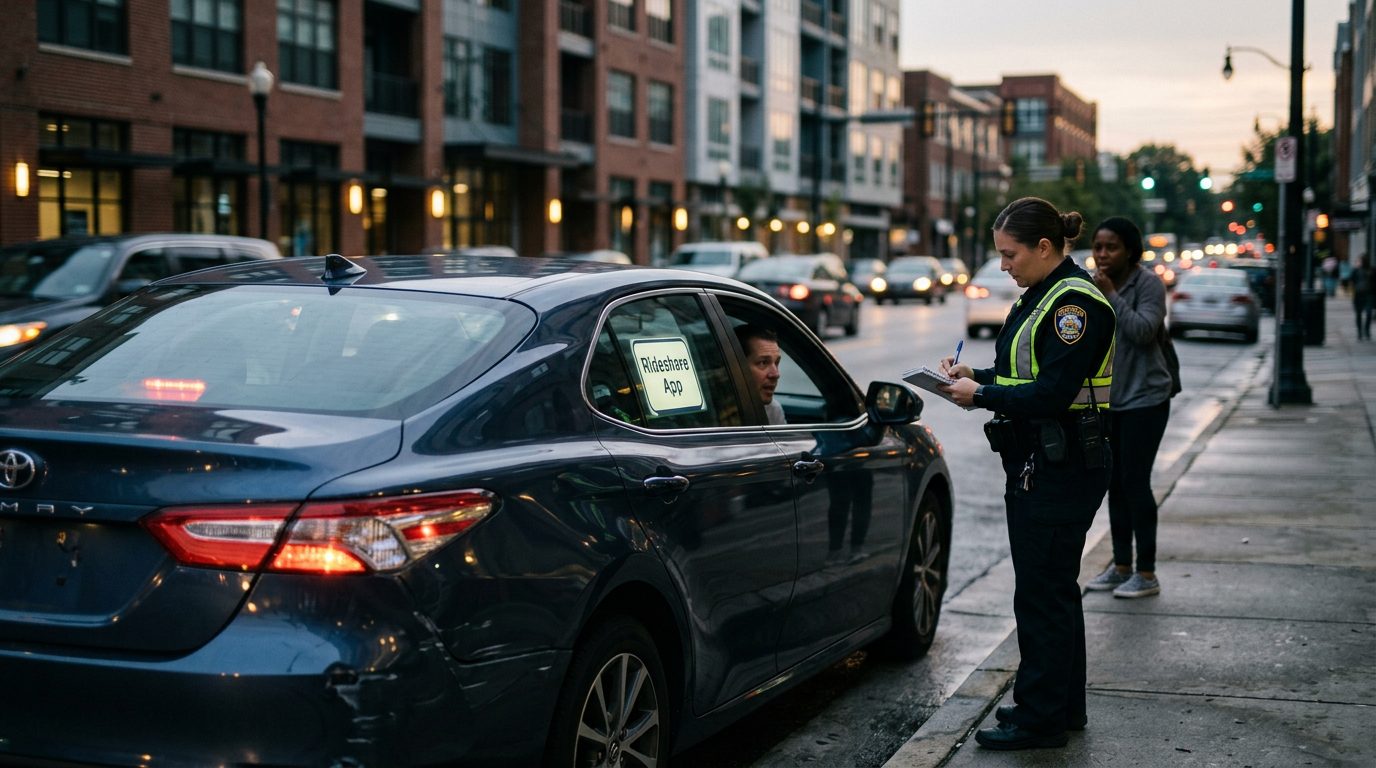
Rideshare Accidents | Duluth, GA and Metro Atlanta
Hurt in an Uber or Lyft Crash? Here's What Happens Next
Rideshare accidents involve more parties, more insurance questions and more paperwork than a typical car crash. Our team at Slam Dunk Attorney explains each step in plain language and helps you decide what to do next.
By Peter F. Jaraysi · Published October 25, 2026
The question of what happens if you get into an accident in a rideshare has a clear first answer: your health comes first. After that, your role in the crash and the app’s status at the time shape what comes next. Insurance, app records, and Georgia’s filing deadlines all matter. This guide walks through those steps in plain language. Our firm is based in Duluth, Georgia, and represents people hurt in rideshare crashes across metro Atlanta.
What to Focus on in the First Minutes After a Rideshare Crash
Check for injuries first, and call 911 if anyone is hurt. Some injuries don’t show up right away. Feeling fine at the scene doesn’t settle the question. Pain, dizziness, and headaches can build over hours or days.
If it’s safe, move out of traffic. Do this even when the crash seems minor.
Whether you were riding, driving, or walking, you can be hurt and still have options. Passengers, drivers, and pedestrians each face different insurance paths. Knowing your role early helps you sort out the next steps.
Write down what you remember while it’s fresh. Note the time, the street, and which way each car was moving.
If you were hurt in a rideshare crash, or you're helping someone who was, our team can talk through your options in a free, confidential consultation. Talk it through with our team — the first consultation is free, confidential, and carries no obligation.

Who Can Be Involved in a Rideshare Accident
Several people can be involved, and each person’s options follow their role. The main parties are the rideshare driver, the other driver, and any third party, such as a pedestrian or cyclist. The app company is part of the picture too.
Georgia law treats the app company differently from the driver. Under O.C.G.A. § 40-1-201, a ride share network service is shielded from liability for a driver’s operation of a car only when certain conditions are met. Those conditions include no negligence by the company itself and a background check for each driver at least once every two years.
Trip status matters too. Our rideshare accident page covers how these roles play out in practice.
Steps to Take at the Scene and in the Days Afterward
Document the crash, exchange information, and report it as soon as you can. Use these steps as a checklist.
- Get the other driver’s details. Collect the name, phone number, insurance company, and policy number.
- Get witness contacts. Independent witnesses can confirm how the crash happened.
- Take photos. Capture the vehicles, the road, traffic signals, and any visible injuries.
- Ask for a police report. Write down the report number.
- Report through the app. Use the app’s reporting option so the trip is recorded.
- Keep your paperwork. Save medical records, receipts, and a log of missed work.
What Insurance May Apply to a Rideshare Crash
Insurance may come from the rideshare company, the driver’s personal policy, the other driver’s policy, or your own policy. The trip stage affects which of these apply.
During an active trip, Georgia requires the rideshare company to carry at least $1 million per occurrence for death, personal injury, and property damage. That coverage does not wait for a personal insurer to deny the claim first, under O.C.G.A. § 33-1-24.
A driver’s personal auto policy works differently. The same statute lets a personal insurer exclude coverage while a driver is logged on or providing rideshare services. The Insurance Information Institute says personal auto policies typically exclude commercial rideshare use. That makes an early review of the driver’s policy important.
If you were a passenger, your own auto policy may matter. That coverage can respond when the at-fault driver has no insurance.
If Medicare or other health coverage paid for your accident care, how those bills are handled can be complicated, and the firm can review the questions with you during a free consultation.
How Georgia’s Comparative Negligence Rules Work
Georgia reduces an injured person’s damages by their share of fault. A person who is 50 percent or more at fault cannot recover under the statute (O.C.G.A. § 51-12-33; Quynn v. Hulsey (2020)).
Georgia follows modified comparative fault. Under O.C.G.A. § 51-12-33, the award is cut in proportion to the injured person’s percentage of fault. If that person is 50 percent or more responsible, they can’t recover any damages under that statute.
The jury also considers the fault of everyone who contributed to the injury. Each at-fault person pays only their own share. The statute says this is not joint liability.
Fault often gets argued. Insurers and other parties may dispute who did what. The details of how the crash happened, the app’s trip record, and your photos all help explain the facts.
Time Limits for Filing a Claim in Georgia
Most Georgia personal injury lawsuits must be filed within two years. Under O.C.G.A. § 9-3-33, actions for injuries to the person generally must be brought within two years after the right of action accrues. Loss of consortium claims have a four-year period under the same section.
Shorter notice rules can apply when a government vehicle is involved. A claim against a city must be presented in writing to the governing authority within six months, under O.C.G.A. § 36-33-5. A claim against a city must be presented in writing to the governing authority within six months, under O.C.G.A. § 36-33-5; that section covers claims against municipal corporations, not the state.
Waiting can also make evidence harder to gather. App trip records, camera footage, and witness memories become harder to pin down over time.
Not sure what your next step is?
Talk it through with our team — the first consultation is free, confidential, and carries no obligation.
Common Mistakes That Can Hurt an Injury Claim
The biggest early mistakes are speaking too soon to an insurer, skipping medical care, and sharing details online.
- Giving a recorded statement too soon. Before you give one or sign any form, understand what it releases.
- Gaps in treatment. A gap in care makes it harder to connect later symptoms to the crash.
- Posting online. Posts about the trip, your activities, or your injuries can be used to question your claim.
- Settling early. Accepting a quick payment before you know the full extent of your injuries can leave later bills unpaid.

Talk With Our Team About Your Rideshare Crash
Sorting out insurance, deadlines, and medical care after a rideshare crash can feel like a lot. You don’t have to do it alone.
What happens if you get into an accident in a rideshare?
Check for injuries and call 911 if anyone is hurt. Then document the scene, report the crash through the app, and notify your own insurer.
Does Uber’s insurance cover passengers?
During an active trip, Georgia requires rideshare companies to carry at least $1 million per occurrence. Your own policy may also matter.
How long do I have to file a claim?
If you were hurt in a rideshare crash, or you’re helping someone who was, our team can review the trip status, the insurance involved, and your deadlines. Take the next step with a free, confidential consultation with no obligation to continue.
Responsible lawyer: Peter F. Jaraysi, Slam Dunk Attorney, Duluth, Georgia. This page is general information, not legal advice. Contact the firm through the contact page.
Common first steps after a rideshare crash
Check for injuries
Call 911 if anyone is hurt, even if the injuries seem minor at first. Medical records created early can matter later.
Document the scene
If you are able, take photos of vehicle damage, the road, traffic signals and any visible injuries. Write down witness names and contact details.
Report through the app
Let the rideshare app know about the crash, and keep copies of trip details, driver information and any messages.
Talk with your own insurer
Notify your insurance company, but be careful about recorded statements. Speaking with a lawyer first can help you understand what to say and what to hold back.
Why people bring their rideshare case to us
Focused on Georgia injury cases
We represent people hurt in rideshare, car, truck, motorcycle and pedestrian accidents across metro Atlanta and throughout Georgia.
Plain-language guidance
We explain insurance coverage, the claims process and your options without legal jargon, so you can make informed decisions.
Lawyers and support staff
Jaraysi and Brian D.
Attention to serious injuries
We understand how catastrophic injuries, including spinal cord injury, traumatic brain injury and amputation, can change your daily life and finances.
Before you speak with an insurance adjuster
Insurance companies may contact you soon after a crash. Taking a moment to get advice can protect your position.