
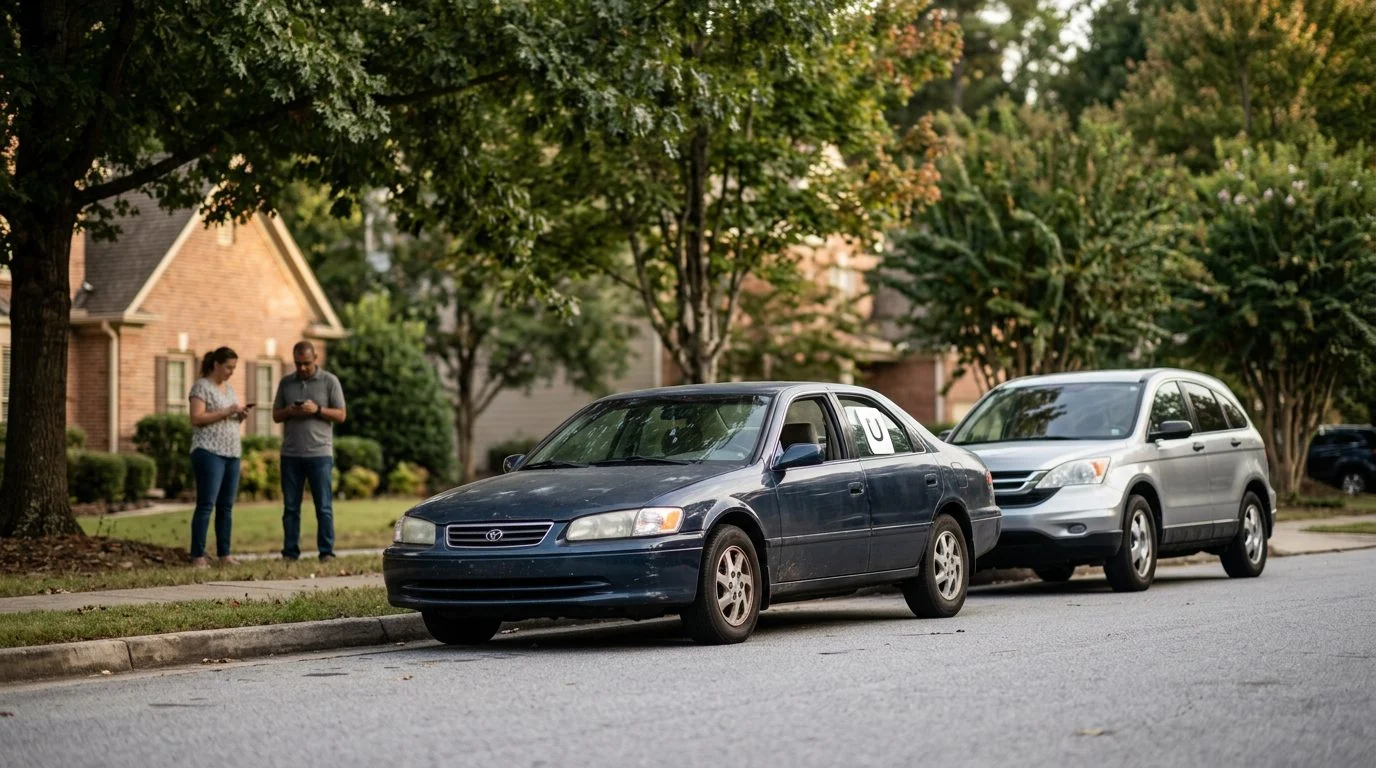
Rideshare Accidents | Duluth, Georgia
Behind the Numbers: What Uber Accident Statistics Really Measure
A plain-language look at why rideshare crash figures differ, and why a number on a chart may say little about one person's injuries.
By Peter F. Jaraysi · Published November 16, 2026
Hurt in an Uber or Lyft ride, or in a crash with a rideshare car? You may be asking how many Uber accidents are there at all, and what those numbers mean for your situation.
Nobody publishes one official total. Figures come from Uber’s own safety reports, independent research, and police crash records.
Short Answer: There Is No Single Official Count of Uber Accidents
How many Uber accidents are there? No public database counts every Uber crash in the United States. Any answer depends on the source, the year, and the measure being quoted.
Three terms get mixed up. A crash is any collision. An injury crash is one where someone is hurt. A fatal crash is one where someone dies. A total that counts every collision will always look larger than one that counts only fatal crashes.
Police records are one main source. Under O.C.G.A. § 40-6-273, a driver in a crash causing injury, death, or property damage to an apparent extent of $500.00 or more must immediately notify police in a city. Outside a city, the driver notifies the county sheriff or the state patrol. Crashes below that damage level may never appear in those records.
If you were hurt in an Uber or Lyft ride, you may still be sorting out who is responsible, and you don't have to do it alone. Our team offers a free, confidential first consultation with no obligation to continue. Talk it through with our team — the first consultation is free, confidential, and carries no obligation.
What Uber’s Own Safety Reports Publish
Uber publishes periodic U.S. Safety Reports with injury and fatality figures tied to trips on its platform. These are the company’s own counts. They reflect how Uber defines a qualifying incident and which trips it includes.
Quote any figure only with its reporting period and definition attached. A total for one year is not the same as a total for a two-year window. A count of trips on the app is not the same as a count of every crash involving a vehicle that was driving for the app.
Company-reported figures deserve a careful read. The company chooses what to count and how to report it. That does not make the numbers wrong. It does mean they should be weighed with that in mind. A company report describes groups of trips, so it cannot reconstruct one collision.
What Independent Research and Public Data Show
Independent researchers have studied rideshare crashes using city crash records. Each study covers specific places and years. Its findings apply to the cities and periods in its data, not the whole country.
Crash data is not equally available everywhere. Public crash records vary by city and state. That makes national totals hard to build and cities hard to compare fairly.
For scale in Georgia, the Insurance Institute for Highway Safety reports 1,403 motor-vehicle crash deaths in 2024, a rate of 12.5 deaths per 100,000 people. That figure covers all vehicles, not rideshare trips alone. The Georgia Department of Public Health also publishes Georgia-specific statistics on crash deaths, hospitalizations, emergency-room visits, and traffic fatalities.
Older figures need extra care. Numbers from 2019 and 2020 may not reflect current driving patterns, app use, or traffic in a given city.
Why Different Sources Report Different Numbers
Different sources report different totals because they count different things over different periods. Three choices change headline numbers most: the denominator, the reporting threshold, and the source of the record.
The denominator is what a total is divided by. A count per trip, per mile driven, or per driver can each tell a different story. A large raw total can shrink once it is divided by a very large number of trips. A small total can look bigger when divided by a small base.
Reporting thresholds matter too. A study that includes only injury crashes will show a smaller total than one that includes every collision. Police-reported and company-reported crashes overlap but are not the same set. Whether minor collisions are included can shift totals a great deal.
So a headline figure can look larger or smaller depending on the choices behind it. Three details make any number readable: the period it covers, the definition it uses, and what it is divided by.
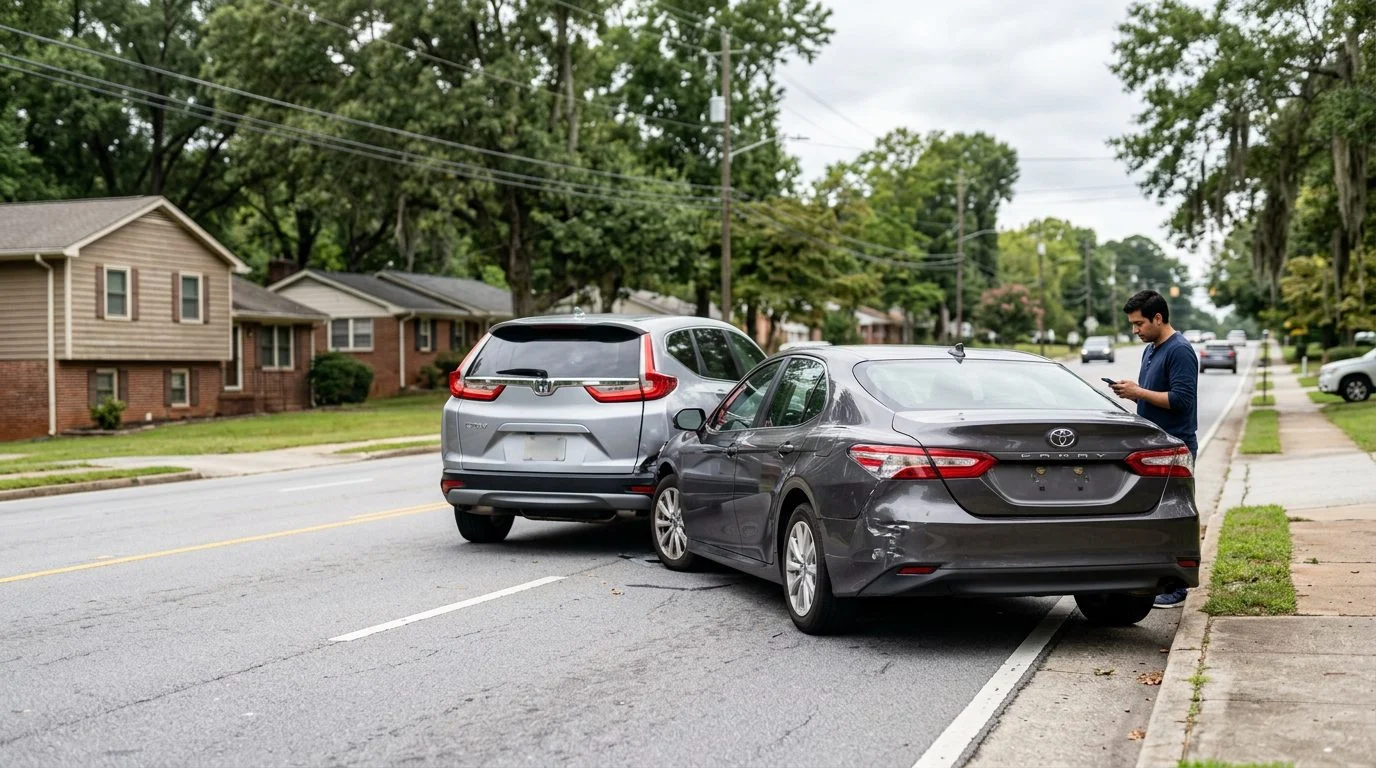
Rideshare Crashes in Georgia and Metro Atlanta
In Georgia, rideshare crashes are documented mainly through police crash reports and the company’s trip records. Georgia law sets rules for both.
Each ride share network service doing business in Georgia must register with the state. Each service must also carry insurance for each driver. That coverage includes personal injury liability, property damage liability, and personal injury protection benefits. See O.C.G.A. § 40-1-193.
Login status can also matter. Under O.C.G.A. § 33-1-24, a transportation network company’s coverage period runs from when a driver accepts a ride request until the trip is complete. A personal vehicle insurer may exclude any and all coverage afforded under the owner’s insurance policy for any loss or injury that occurs while a driver is logged on to a transportation network company’s digital network or while a driver provides transportation network company services. On request, the company must provide the accident time and the driver’s log-on and log-off times for 12 hours before and after the crash, within 15 days. Those records can matter when insurers sort out coverage.
Readers in Duluth, Lawrenceville, Alpharetta, and across metro Atlanta may want to see how these rules fit their area. Our Georgia overview and Lawrenceville page cover that context.
Who Is Usually Involved in a Rideshare Crash
People hurt in rideshare crashes include passengers, other drivers, and pedestrians, not only the driver. Common situations include a passenger injured inside the rideshare car, another driver struck by a rideshare vehicle, a pedestrian or cyclist hit near a pickup or drop-off point, and a collision on a highway.
Every driver owes care to people on foot. Under O.C.G.A. § 40-6-93, every driver must exercise due care to avoid colliding with any pedestrian upon any roadway. That duty applies to rideshare drivers as it does to every other driver.
Speed changes how severe a crash gets. The Insurance Institute for Highway Safety reports that higher vehicle speeds increase crash severity and the likelihood of serious injuries. Injuries range from minor to catastrophic, such as spinal cord injuries or traumatic brain injuries. Every injury is different, and no one can say in advance how a particular case will turn out.
Not sure what your next step is?
Talk it through with our team — the first consultation is free, confidential, and carries no obligation.
What the Numbers Can and Cannot Tell You About Your Situation
Statistics describe groups of crashes, so they cannot decide who was at fault in one collision. Each rideshare crash turns on its own police report, medical records, and app and trip data.
Georgia’s fault rules also shape any claim. Under O.C.G.A. § 51-12-33, a plaintiff’s damages are reduced in proportion to the plaintiff’s own percentage of fault (O.C.G.A. § 51-12-33; Quynn v. Hulsey (2020)). If the plaintiff is 50 percent or more responsible, the plaintiff cannot receive damages. When several people contributed to an injury, each liable person’s share is apportioned to that person.
For the bigger picture, read our rideshare accident guide for Georgia.
How many Uber accidents are there each year?
No official yearly total exists. Any yearly figure depends on its source, its definitions, and the period it covers.
Can a passenger be hurt in a rideshare crash they did not cause?
Yes. A passenger can be hurt by another driver’s negligence, and who is at fault depends on the facts of the crash.
If you were hurt in an Uber or Lyft ride, or by a rideshare driver, you may still be sorting out who is responsible. Our team at Slam Dunk Attorney offers a free, confidential first consultation, with no obligation to continue. Contact us to talk through what happened.
Disclaimer: This page is general information, not legal advice. The responsible lawyer for this page is Peter F. Jaraysi of Slam Dunk Attorney in Duluth, Georgia. Contact details are on the contact page linked above.
How to Read Rideshare Crash Data
Check the definition
Ask what counts as a crash, an injury, or a rideshare trip. Two reports can use the same word and measure different things.
Note the source
Police reports, insurance claims, company disclosures, and news coverage each capture a different slice of events.
Look at the time period
A figure for one month or one year can look very different from a figure for another period or a longer trend.
Consider the place
Crash counts depend heavily on where people drive, how many trips occur, and how each area records incidents.
Remember the people
Behind every total are individual drivers, passengers, and pedestrians, each with their own injuries and circumstances.
A Statistic Is Not a Forecast for Your Case
Group-level numbers describe many crashes at once. They do not decide how any single claim will turn out, and they cannot predict the result of your situation.
Questions the Numbers Can and Cannot Answer
How often do crashes happen?
Counts show activity in a given area and period, but they rarely capture every minor incident that goes unreported.
How serious are the injuries?
Severity is recorded inconsistently. A figure for injuries may not show whether someone needed months of medical care.
Who was at fault?
Fault is determined through facts, evidence, and sometimes disputes. Raw totals usually do not show how responsibility was assigned.
What happens afterward?
Totals seldom reveal how families cope with lost income, long recoveries, or wrongful death.
Have Questions About a Rideshare Crash?
Our Team Can Talk Through Your Situation. The First Consultation Is Free, Confidential, and Comes With No Obligation to Continue.