
Car Accidents | Metro Atlanta and Georgia
Get the Facts on File: A Plain-Language Guide to Police Reports After a Georgia Crash
Learn when to report, what to ask the responding agency, and how a crash report can support the next steps after an injury.
By Peter F. Jaraysi · Published October 27, 2026
The short answer is as soon as you can. Report the crash to police at the scene if you can. If you didn’t, contact the agency that covers the area right away and ask whether it will take a report after the fact.
If you’re asking how long after an accident you can file a police report in Georgia, you’re not alone. Most people asking this question are dealing with a crash that already happened. Maybe you’re sore and missing work. Maybe a family member was hurt, or you’re helping a friend. Here’s how the timing works, what to do now, and why the lawsuit clock is different.
The Short Answer: When Georgia Expects a Crash Report
Georgia expects drivers to report a crash promptly. The state’s Office of the Commissioner of Insurance and Safety Fire advises drivers to notify police and their insurer, gather information, and avoid admitting fault. See Georgia OCI auto claim tips.
Two separate clocks matter. The second is the deadline to file a lawsuit. Keep both in mind, because they are different timelines.
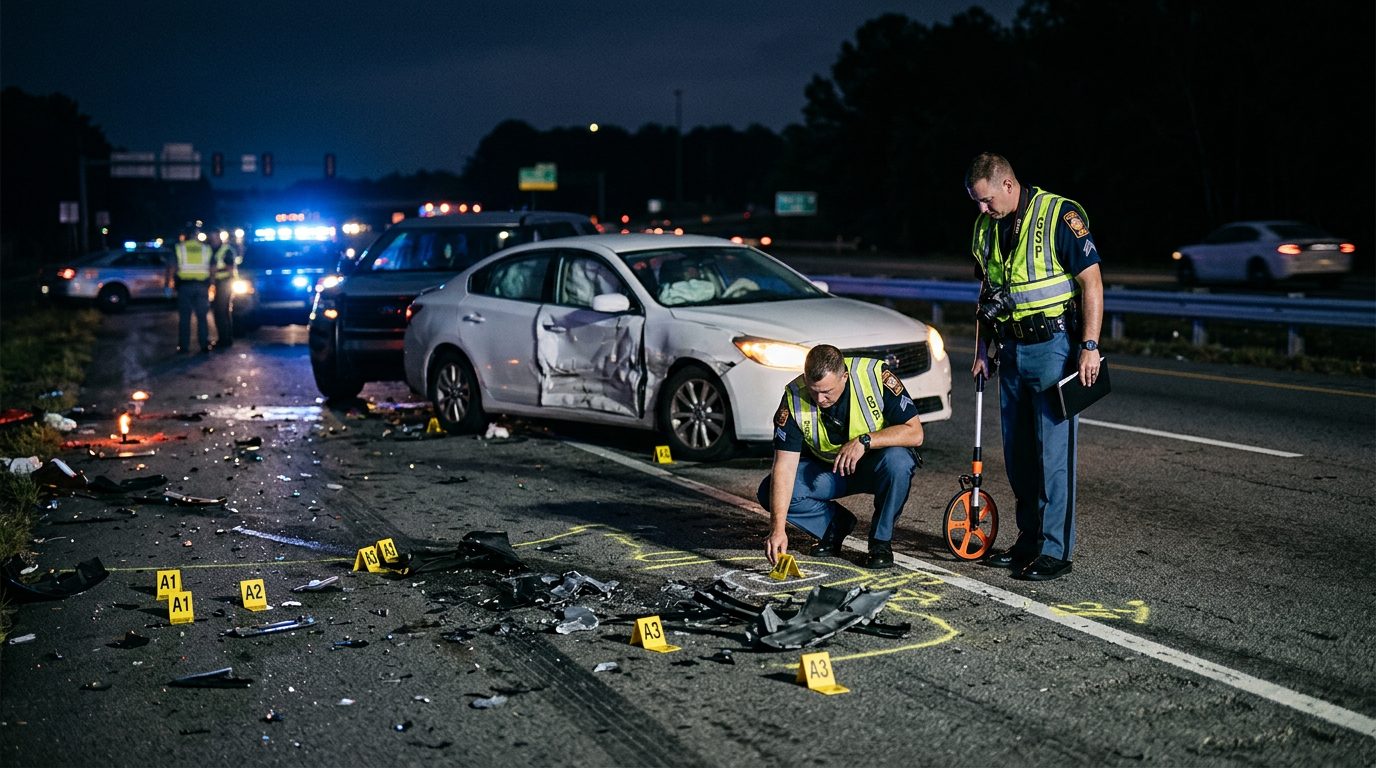
A police report records the date, the location, the vehicles, the drivers, and what the officer saw. Insurers and lawyers often rely on it when they look at fault. A late report usually leaves a thinner record. Memories fade, witnesses move on, and video can be overwritten.
If a crash has you juggling pain, time off work, and insurance calls, you don't have to sort out the timing alone. Our team can talk it through with you. Talk it through with our team — the first consultation is free, confidential, and carries no obligation.

What Georgia Law Requires Drivers to Do After a Crash
In practice, don’t drive away, even if the crash looks minor. Exchange names, contact details, and insurance information with the other driver. Note the vehicles involved and where everyone was standing.
Some injuries are not obvious at the scene. That’s why a police report matters, even for a crash that feels small. Writing down what happened while it’s fresh gives you a record to check later.
How Long You Have to Report a Crash After the Fact
The fastest route is to report as soon as you can, even if several days have passed.
Waiting does weaken the record. Insurers often ask why a crash was not reported sooner. A clear, prompt account is easier to explain than a late one.
The lawsuit deadline is a different question. Under O.C.G.A. § 9-3-33, actions for injuries to the person must be brought within two years after the right of action accrues, except for actions for injuries to the person involving loss of consortium, which must be brought within four years after the right of action accrues. For most injury claims, that is the general rule.
Don’t treat the two clocks as one. Report timing is about the crash record. Lawsuit timing is about the filing window.
How to Report an Accident to Police After the Fact
Start with the agency that covers the area where the crash happened. That may be a local police department, a county sheriff’s office, or Georgia State Patrol. Each one handles its own reports, so ask which agency has your crash.
Before you call, gather the date, time, and exact location. Write down each driver’s name and insurance details, the vehicle descriptions, witness names, and any injuries. Clear details make the call go faster.
Ask the agency whether it will take a report after the fact. Ask how the report will be recorded and whether you’ll receive a reference number.
Keep notes of everything. Write down the date, the name of the person you spoke with, and what they told you. Save any confirmation you receive, and keep copies of anything you send.
How to Get a Copy of Your Georgia Accident Report
You request your copy from the agency that investigated the crash. Each agency sets its own process, so ask how it handles requests, what it charges, and how long it takes.
The Georgia Department of Transportation describes its official crash report and how crash reports are obtained. See Georgia DOT crash reporting.
Request yours early. Insurers and attorneys often review the report when they look at fault and injuries. An early copy also gives you time to check it for errors and ask for a correction if something is wrong.
Why Reporting Timing Matters for Insurance and Injury Claims
Your police report and your insurance notice are separate steps. Both have timing, and both shape the claim. Georgia’s insurance regulator advises notifying your own insurer promptly, so don’t wait to make that call.
Fault matters too. Under O.C.G.A. § 51-12-33, a judge reduces damages in proportion to the injured person’s share of fault. A person who is 50 percent or more responsible for the injury cannot receive any damages (O.C.G.A. § 51-12-33; Quynn v. Hulsey (2020)).
Fault is weighed across everyone who contributed to the injury, not only the parties in the lawsuit. The record of what happened, including the police report, helps show who did what.
If your crash involved Uber or Lyft, Georgia has separate rules. O.C.G.A. § 33-1-24 sets minimum insurance for transportation network companies. That coverage doesn’t wait for a personal insurer to deny a claim first.
Under O.C.G.A. § 40-1-201, a ride share network service generally is not liable for a driver’s operation of a personal car. O.C.G.A. § 40-1-201 reads: “(a) No ride share network service shall be liable under any theory of liability, including, but not limited to, vicarious or product liability, for any injury to persons or damage to property from the operation of a personal passenger car by a ride share driver by reason of owning, operating, or maintaining a digital network or internet network to connect passengers to ride share drivers for the purpose of prearranged transportation for hire or for donation, provided that.” That protection depends on the service having no negligence of its own and meeting the statute’s conditions.
Delays also make evidence harder to collect. Witness memories fade, traffic camera footage may be overwritten, and vehicle damage records can be lost.
Not sure what your next step is?
Talk it through with our team — the first consultation is free, confidential, and carries no obligation.

What to Do Next If You Are Still Deciding
If you’re reading this after a crash, you may be dealing with pain, time off work, a damaged car, and insurance calls you didn’t expect. That’s a lot to handle at once.
The practical decisions are these: whether to file or update a report now, how to request your copy, and when to have a lawyer look at your claim. Earlier answers are usually easier to get than later ones.
Frequently Asked Questions
How long after an accident can you file a police report in Georgia?
As soon as you can. Report at the scene if you can, and ask the agency whether it will take a report after the fact.
Does Georgia require me to stop after a car accident?
Yes.
Can you file a police report online in Georgia?
Each agency sets its own request process. Ask the investigating agency how it takes reports and requests.
How long do I have to file a lawsuit after a Georgia car accident?
For most injury claims, Georgia gives two years under O.C.G.A. § 9-3-33. That deadline is separate from the police report timeline.
If the crash has left you hurt or unsure, you don’t have to work out the timing alone. Contact our team to talk through what happened. Your first consultation is free and confidential, with no obligation to continue.
This page is general information, not legal advice. The responsible lawyer for this page is Peter F. Jaraysi, a lawyer with Slam Dunk Attorney, based in Duluth, Georgia. Brian D. Wright is also a lawyer with the firm. Contact the firm through our contact page.
What a Police Report Can Help Document
Basic crash facts
A report typically records the date, time, location, and the vehicles or people involved.
Parties and witnesses
It can list the drivers, passengers, and anyone who saw what happened.
Scene details
Officers often note road conditions, weather, and where vehicles came to rest.
Officer observations
The report may include the officer's notes on damage, injuries, and statements made at the scene.
Practical Steps After a Crash
Report at the scene if you can
If it is safe and possible, ask for an officer to respond so the event is documented while details are fresh.
Ask about a later report
If no report was made at the scene, ask the responding agency whether it will take a report after the fact.
Write down what you remember
Note the time, weather, road conditions, and what was said, along with names and contact information for anyone involved.
Keep every record
Save the report number, any copies you receive, photos, medical paperwork, and insurance correspondence in one place.
Details Fade Quickly
Memories and evidence change fast. Gather what you can early, and keep copies of everything you receive from the responding agency. Avoid guessing about fault in writing or on recorded calls until you have spoken with someone who can review your situation.