
Rideshare Accidents | Lawrenceville, GA
Hurt in an Uber or Lyft Crash in Lawrenceville? Talk to Our Team Today
Rideshare crashes can involve several drivers, insurance policies and companies at once. Slam Dunk Attorney helps injured passengers, drivers and pedestrians in Lawrenceville and across Georgia understand their situation and their options.
By Peter F. Jaraysi · Published October 24, 2026
Rideshare Accidents in Lawrenceville: Where to Start If You Were Hurt
Start with medical care, then protect the evidence from the crash. A rideshare trip can end in a crash on the way to work, an appointment or home, and the first days afterward are often confusing.
This guide is for adults in Lawrenceville and Gwinnett County who were hurt as a rideshare passenger, as a driver or pedestrian struck by a rideshare car, or as a family member of someone killed in one.
Slam Dunk Attorney represents people hurt in rideshare accidents across metro Atlanta and Georgia. We also serve people in nearby Johns Creek, Alpharetta and Marietta. For the wider picture, read our Georgia rideshare accident guide.
If a Lyft or Uber ride left you hurt, our team can talk through your options in a free, confidential consultation with no obligation to continue. Talk it through with our team — the first consultation is free, confidential, and carries no obligation.
What Happens After a Rideshare Accident in Lawrenceville?
Get medical care first, even if you feel fine. Some injuries, including concussions and neck or back strain, can take hours or days to show symptoms.
Keep a record of every visit, prescription and missed workday. These records show what the crash has cost you.
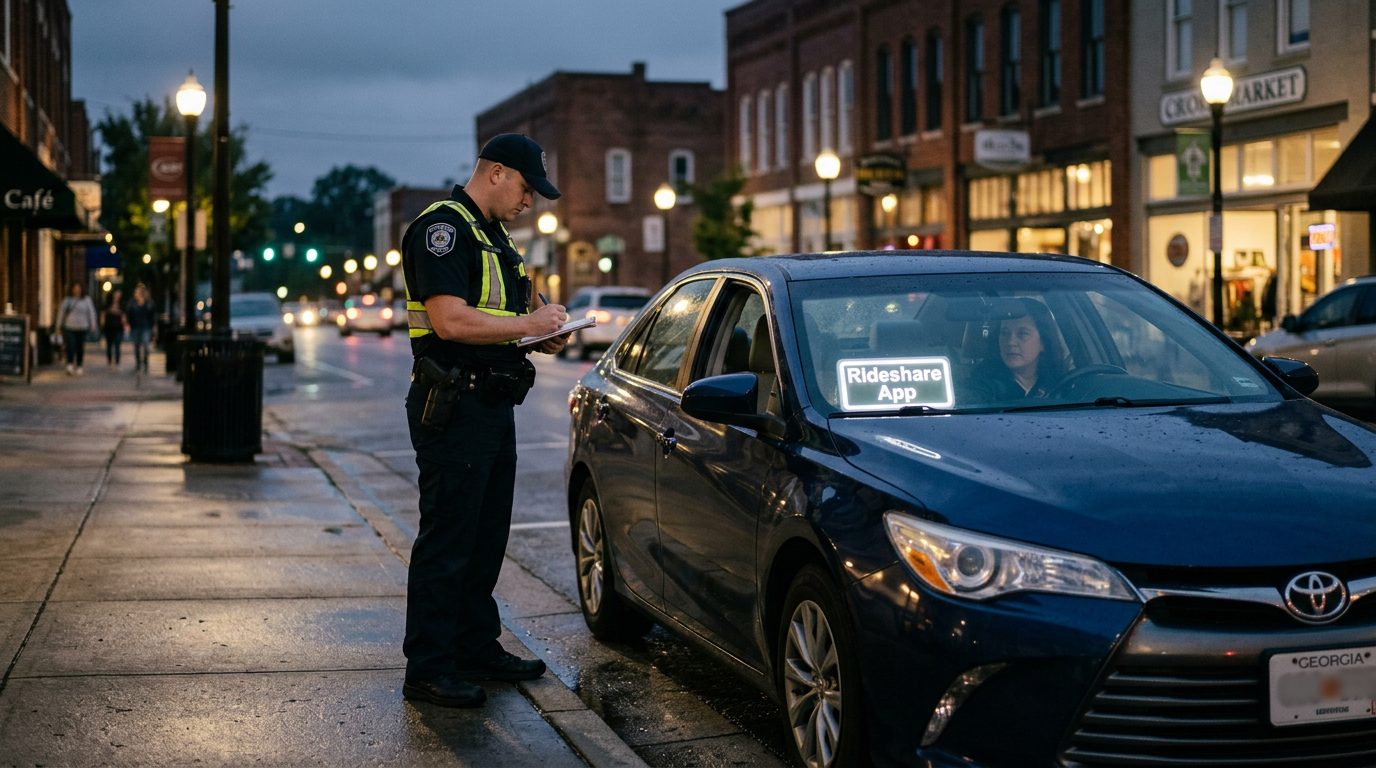
Get a police report. Write down the rideshare driver’s name, the vehicle make and model, and the license plate. Take photos of the vehicle damage, the scene, traffic signals and lane markings. Screenshot the trip details in your app.
Be careful with recorded statements and early settlement offers from insurers. A short call to talk through your options before a long statement can help protect your claim.
The app’s trip record matters. Georgia law requires each rideshare driver to keep digital identification on a smartphone while active on the network, including the driver’s name, photo, vehicle details and insurance certificates (O.C.G.A. § 40-1-193). Preserve the trip record, including whether the driver was logged on and what stage the trip was in.
Who Can Be Held Responsible in a Lyft or Uber Crash?
The at-fault party may be the rideshare driver, another driver or, in some cases, the rideshare company. Who is responsible depends on how the crash happened.
Insurance can change with the driver’s app status. Georgia law lets insurers exclude coverage under a driver’s personal auto policy while the driver is logged on to a rideshare network or providing its services (O.C.G.A. § 33-1-24). The same law sets minimum company coverage of $1 million for death, injury and property damage per occurrence during periods it defines.
Georgia law also limits when a rideshare company can be held liable for a driver’s operation of a personal car. The company must meet listed conditions, including no negligence or criminal misconduct of its own and background checks at least every two years (O.C.G.A. § 40-1-201).
An injured passenger is often not at fault. A passenger may pursue the at-fault driver and the applicable insurance.
Pedestrians have clear protection under the road rules. Every driver must use due care to avoid colliding with any pedestrian on the roadway (O.C.G.A. § 40-6-93). A pedestrian or another motorist struck by a rideshare car may bring a claim against the driver and applicable insurance.
A crash during a delivery or other commercial role can raise extra questions about who was responsible. Early review of the facts helps sort these out.
Common Causes of Rideshare Crashes on Lawrenceville and Gwinnett Roads
Most rideshare crashes in Lawrenceville involve the same risks as other driving on busy roads, plus app-related distraction. Interstate 85, Georgia Highway 316, Sugarloaf Parkway, Pleasant Hill Road and Buford Drive all have merging traffic, lane changes and congested exits.
Common causes include:
- Looking at app prompts instead of the road
- Sudden stops for pickups and drop-offs
- Failure to yield at intersections
- Fatigue from long shifts
- Impaired or reckless driving
Georgia law requires rideshare companies to have a zero tolerance policy for drug and alcohol use while drivers are on duty (O.C.G.A. § 40-1-193).
Drivers often stop in unfamiliar areas, double-park or pull onto shoulders. These stops can put passengers, cyclists and pedestrians at risk.
Speed also matters. The Insurance Institute for Highway Safety reports that higher vehicle speeds increase crash severity and the likelihood of serious injuries.
Write down the location, time and road conditions after a crash. These details help show how it happened.
Injuries Passengers, Drivers and Pedestrians Often Face
Rideshare crashes can cause everything from soft-tissue injuries to life-changing harm. Common injuries include whiplash, broken bones, concussions, back and spinal injuries, and facial or dental trauma.
The spinal cord has three layers of protective tissue, and cerebrospinal fluid surrounds it as a cushion (NINDS spinal cord injury overview). An injury between the C1 and C4 segments can stop breathing, because those nerves control the diaphragm. That is why any neck or spinal symptom needs prompt medical evaluation.
Some injuries are catastrophic. These include spinal cord injury with paralysis, traumatic brain injury, amputation and severe burns. They often require long-term care planning.
Emotional effects are real, too. Anxiety about riding or driving, sleep trouble and lost work time should be documented.
If a rideshare crash causes a death, Georgia law lets a surviving spouse recover the full value of the decedent’s life, as shown by the evidence. If there is no surviving spouse, children may recover it (O.C.G.A. § 51-4-2). When death results from a crime or from criminal or other negligence, the personal representative of the deceased person is entitled to recover funeral, medical and other necessary expenses resulting from the injury and death (O.C.G.A. § 51-4-5). Our team handles wrongful death matters.
Georgia Deadlines and Fault Rules for Lawrenceville Rideshare Claims
Georgia generally requires personal injury lawsuits to be filed within two years after the right of action accrues (O.C.G.A. § 9-3-33). Other deadlines can apply in special situations, so don’t wait to ask.
Georgia also reduces damages by the injured person’s share of fault. If a fact finder assigns you part of the blame, your award shrinks by that percentage. If you are 50 percent or more responsible, you cannot receive damages (O.C.G.A. § 51-12-33).
Georgia law separates general damages from special damages. General damages are presumed to flow from a wrong and don’t need proof of an amount. Special damages must be proved (O.C.G.A. § 51-12-2).
Trip data, dashcam footage and phone records can be important evidence. Ask a lawyer to request them quickly, because these records can be lost.
Not sure what your next step is?
Talk it through with our team — the first consultation is free, confidential, and carries no obligation.

Talk With Our Team About Your Lawrenceville Rideshare Crash
Our team offers a free first consultation. It is confidential, and there is no obligation to continue.
Peter F. Jaraysi is the responsible lawyer for this page. Contact information appears in the disclaimer below.
Can I still bring a claim if I was partly at fault?
Possibly. Georgia reduces recovery by your share of fault, and a plaintiff who is 50 percent or more responsible cannot recover damages (O.C.G.A. § 51-12-33; Quynn v. Hulsey (2020)).
How long do I have to file?
Georgia generally allows two years to file a personal injury lawsuit (O.C.G.A. § 9-3-33; Kenneth B. Cameron v. Jmp Pizza, Inc (2026)). Special situations can change that timeline.
If you were riding in a Lyft, or were struck by an Uber while walking in Lawrenceville, call for a free case review or request a free consultation now. Trip records and deadlines are easier to protect while they’re fresh.
How We Can Help After a Rideshare Accident
Plain-Language Answers
We explain how a rideshare claim works, what questions to expect and what to consider next, without legal jargon.
Attention to Insurance Questions
Rideshare crashes can involve a driver's personal policy, rideshare coverage and other drivers' insurers. We help sort through who is involved.
Organized Records
We help gather crash reports, medical records, app trip details and photos so your situation is documented from the start.
Focus on Recovery
We handle communication with insurance companies so you can concentrate on your health and your family.
Before You Speak With an Insurance Company
Insurance adjusters may ask for recorded statements soon after a crash. Before you give one, or post about the accident online, consider speaking with a lawyer. Small details can be used later in ways you did not expect.
Who Can Be Involved in a Rideshare Crash
Rideshare Passengers
Riders hurt while in an Uber or Lyft vehicle often face the most questions about which insurance applies.
Rideshare Drivers
Drivers on the app can be injured in crashes with other vehicles, and their coverage can depend on app status.
Other Motorists
People in other cars, trucks or motorcycles struck by a rideshare vehicle may need help identifying all coverage.
Pedestrians and Cyclists
Walkers and cyclists hit by rideshare vehicles can suffer serious injuries and need a clear account of what happened.