
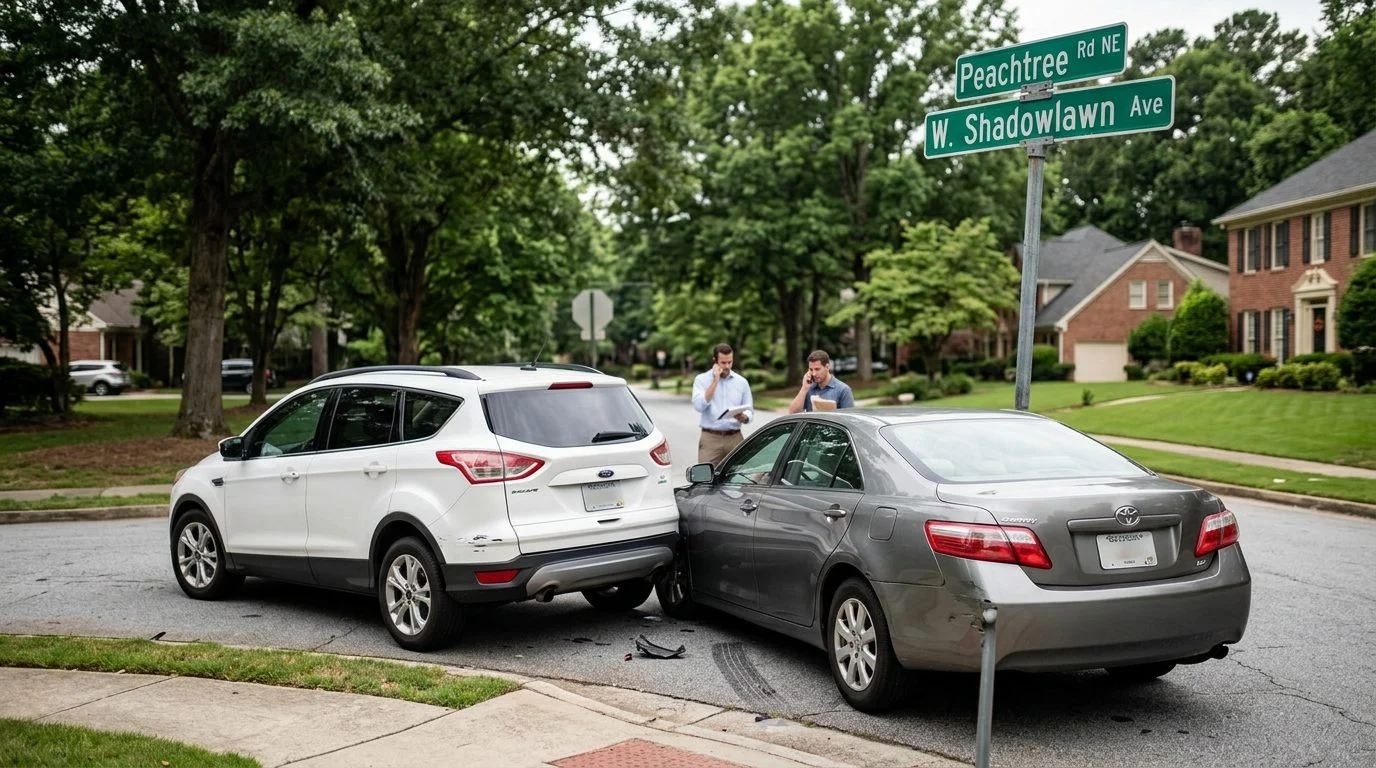
Rideshare Accidents | Duluth, Georgia
Hurt in an Uber or Lyft Crash? Start With a Clear Picture of Your Coverage
Rideshare insurance can involve several layers of coverage that apply at different times. Our team at Slam Dunk Attorney explains how they may work together after a crash.
By Peter F. Jaraysi · Published November 15, 2026
If you were hurt in a crash involving an Uber, or you were riding in one, the insurance questions can pile up fast. Most people want one answer first: does Uber pay for crashes?
Rideshare insurance can apply to a crash, but which coverage applies depends on what the app was doing at that moment. This guide explains how Georgia law sorts those moments and what to do next.
Does Uber pay for crashes? The short answer
Under Georgia law, rideshare companies such as Uber must carry insurance for some crashes that happen while their app is in use, but the required minimum coverage depends on the app status and the conditions at the time of the crash. Georgia’s rule for transportation network companies, O.C.G.A. § 33-1-24, sets minimum insurance coverage for the time a driver is logged on and available to accept ride requests, and for the time from when a driver accepts a ride request until the driver completes the transaction or the ride is complete, whichever is later.
The first period is when a driver is logged on to the app and available for ride requests. The second runs from the moment a driver accepts a ride request until the driver completes the transaction or the ride is complete, whichever is later.
The minimums differ between the two periods. While a driver is logged on and waiting, the statute requires at least $100,000 for bodily injury or death of all persons in one accident. It caps the amount for one person at $50,000, and it sets $50,000 for property damage.
That is why timing matters. A crash while a driver waits for a request falls under different numbers than a crash during a trip.
If an Uber crash left you or someone you love hurt, you may have a claim, and our team can talk through the facts of your situation with you. Talk it through with our team — the first consultation is free, confidential, and carries no obligation.
The three app periods that decide which coverage applies
Under the statute, the period when a driver has accepted a ride covers the whole trip, so the drive to a pickup and the ride that follows fall under the same accepted-ride rule.
Period one is the logged-on time. The driver is online, available, and has not accepted a request yet. Under O.C.G.A. § 33-1-24, the period during which a driver accepts a ride request on the transportation network company’s digital network lasts until the driver completes the transaction or the ride is complete, whichever is later.
The first period carries lower minimums, including $50,000.00 for loss of or damage to property of others, excluding cargo, in any one accident, while the accepted-ride period requires at least $1 million for death, personal injury, and property damage per occurrence.
Records can show which period applied. Under the same statute, a rideshare company must give a driver’s insurer the date and time of an accident, and the log-on and log-off times for 12 hours before and after it. The company must do this within 15 days of the insurer’s request. App timestamps and trip records are often central questions in a claim for this reason.
What the $1 million coverage means for injured people
The $1 million figure applies to the accepted-ride period. It is a statutory minimum, not a fund that pays every claim. Under § 33-1-24, the coverage must be at least $1 million for death, personal injury and property damage per occurrence during that period.
This is liability coverage. It is built to pay claims made against the driver. That usually means other motorists, cyclists and pedestrians. Passengers can also make claims against a driver whose negligence caused their injuries.
Liability coverage is not a benefit for the driver’s own injuries. Those needs are handled through other coverage, discussed in the next section.
During the logged-on period, the lower minimums apply. A serious injury can involve more than one source of coverage. That is why the other protections on this page matter.
Uninsured and underinsured motorist protection and injury protection
Uninsured and underinsured motorist coverage can help when the at-fault driver has no insurance or not enough.
Injury protection is a separate benefit. Under O.C.G.A. § 40-1-193, a ride share network service must carry insurance covering personal injury protection liability benefits for drivers, passengers, pedestrians and others. The amounts must match what the law requires.
Keep these protections separate in your mind. Liability coverage pays claims against the driver. Uninsured motorist and injury protection work differently, and one does not replace the other.
Why the driver’s personal auto policy may not respond
A driver’s personal auto policy may not pay for a crash that happens during app use. Under § 33-1-24, an insurer that writes personal auto policies in Georgia may exclude coverage for any loss while a driver is logged on or providing rideshare services.
The rideshare company must also tell drivers that their personal policy may exclude coverage for their own vehicle damage, medical payments, uninsured and underinsured motorist coverage, and other first-party claims.
The statute also says the rideshare company’s coverage does not depend on the personal insurer first denying a claim. A personal denial does not automatically end the rideshare coverage.
Do you have to tell your insurer that you drive for Uber? The policy wording and the insurer’s rules decide what a driver must report. Drivers should notify their own insurer promptly after any crash. How that insurer responds turns on the policy language, so the answer varies by policy.
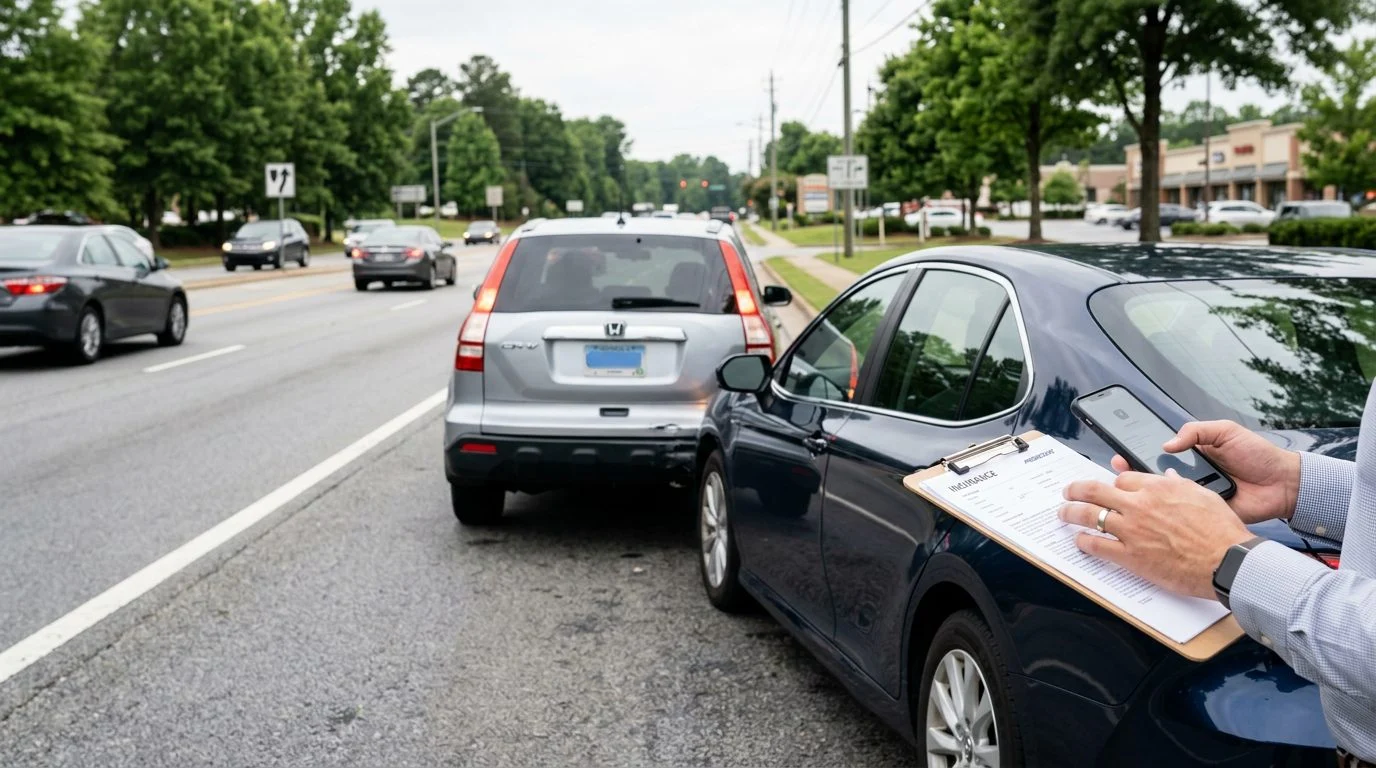
How Georgia law shapes an Uber accident claim
Georgia’s rules focus on fault, meaning who caused the crash and by what share. Under O.C.G.A. § 51-12-33, a judge reduces damages in proportion to the injured person’s share of fault. If that person is 50 percent or more responsible, the person cannot receive any damages.
Each liable person pays only its own apportioned share. Those shares are not joint liability. The trier of fact must also consider the fault of everyone who contributed to the injury, even people who were not named in the lawsuit.
Rideshare companies have a limit on their own liability, too. Under O.C.G.A. § 40-1-201, a ride share network service is not liable for a driver’s operation of a personal car simply because it runs the app. That protection applies only if the company has no negligence or criminal misconduct, follows its statutory duties, and either conducts or causes to be conducted a criminal background check or obtains a private background check certification for each driver at least once every two years. A claim against the company is not automatic.
Deadlines matter. Under O.C.G.A. § 9-3-33, actions for injuries to the person must be brought within two years after the right of action accrues. Loss of consortium claims have a four-year period. Some situations differ, so check the timing early.
Not sure what your next step is?
Talk it through with our team — the first consultation is free, confidential, and carries no obligation.
What to do after an Uber crash: checking injuries, calling for help and reporting
Start with safety. Check everyone for injuries, and call 911 if anyone is hurt. Seek medical care, even if the injuries seem minor, so your condition is recorded early.
Georgia law also requires a report. Under O.C.G.A. § 40-6-273, a driver in a crash causing injury, death, or property damage of an apparent $500 or more must immediately notify the local police. Outside a city, notice goes to the county sheriff or the nearest state patrol office.
Next, take photos. Capture the vehicles, their positions, the road, the weather, traffic signs and signals, and any visible injuries. Photos taken at the scene are hard to recreate later.
Report the crash to Uber through the app, and keep the trip record and any screenshots. Then notify your own insurer promptly. Keep a copy of every report and every claim number.
Stick to facts in what you write. Avoid guessing about who was at fault.
Evidence that helps a claim: records to keep from the start
Early records often matter most. Keep the police report number, witness names and contact details, and the other driver’s name and insurer. Save the trip ID, app times, and any dashcam footage.
Keep medical records, bills, and a simple symptom journal. Note any missed work and lost income, with dates.
Rideshare drivers must keep digital identification on their smartphones while active. Under O.C.G.A. § 40-1-193, that identification includes the driver’s name, photo, vehicle, license plate and insurance certificates. If an officer has reasonable suspicion of improper operation, the driver must, upon request, give the officer access to the phone’s digital information and trip records, but is not required to relinquish custody of the smartphone.
If you have Medicare, the rules work differently. Liability or no-fault insurance generally pays accident-related medical costs before Medicare, according to the CMS Medicare Secondary Payer overview. Medicare recovery can also apply in liability settlements.
Preserving these records early can help show how the crash happened and which app period applied. Our team can help gather and organize them when a claim is being considered.
Who can file a claim after an Uber crash in Georgia
Passengers, other drivers, cyclists and pedestrians may each have a claim. Each claim can be handled differently, based on the facts.
When someone dies, the family may have a wrongful death claim. Under O.C.G.A. § 51-4-2, a surviving spouse, or if there is none, a child or children, may recover the full value of the decedent’s life, as shown by the evidence.
Under O.C.G.A. § 51-4-5, when death results from a crime or from criminal or other negligence, the personal representative may also recover funeral, medical and other necessary expenses.
A typical claim moves through steps. These include notice to the insurers, a written demand, negotiation, and a lawsuit if needed. Some claims resolve through negotiation before any lawsuit is filed.
For a broader overview, see our rideshare accident guide.
Frequently asked questions
Do I have to tell my insurance that I drive for Uber?
Your policy wording and your insurer’s rules decide what you must report. Notify your insurer promptly after any crash.
What should I do first after an Uber crash?
Check for injuries, call 911 if anyone is hurt, and seek medical care.
Some situations differ, so check early.
Talk through your Uber crash with our team
If you’re still sorting out who pays, you don’t have to work through every insurance question alone. You may be dealing with injuries, a damaged car, a family member in the hospital, or insurance questions you didn’t expect.
Maybe you’re not sure whether the app was on when the crash happened. Maybe an insurer hasn’t answered, or a passenger is still in treatment. Peter F. Jaraysi and our team can talk through the facts of your crash with you.
The initial consultation is free, confidential and comes with no obligation to continue. You can contact our team to start that conversation.
Slam Dunk Attorney is based in Duluth, Georgia, and serves metro Atlanta and Georgia. Peter F. Jaraysi is the responsible lawyer for this page.
This page is general information, not legal advice. Every crash turns on its own facts, and results cannot be predicted.
How We Can Help After a Rideshare Crash
Plain-Language Answers
We explain insurance questions in everyday terms so you know what to expect before you make any decisions.
Attention to Coverage Questions
We look at the insurance that may apply to your crash, including coverage tied to driver status at the time of the collision.
Help Gathering Records
We help you organize trip details, police reports, medical records and insurer correspondence in one place.
Support for Injured People and Families
Whether you were a rider, a driver or a pedestrian, our team focuses on your recovery and your questions.
Before You Speak With an Insurer
Insurance companies may ask for recorded statements soon after a crash. Speaking with a lawyer first can help you understand what you are being asked and why.
Steps to Take After a Rideshare Crash
Check for Injuries
Call 911 if anyone is hurt, and seek medical care even if your injuries seem minor at first.
Document the Scene
Take photos of vehicles, license plates, road conditions and injuries. Write down names and contact details for everyone involved.
Save Your App and Trip Records
Keep screenshots of your trip status, receipts and any messages sent through the rideshare app.
Notify Your Insurer Promptly
Report the crash to your insurer soon after it happens. Our team can help you understand what your policy requires.